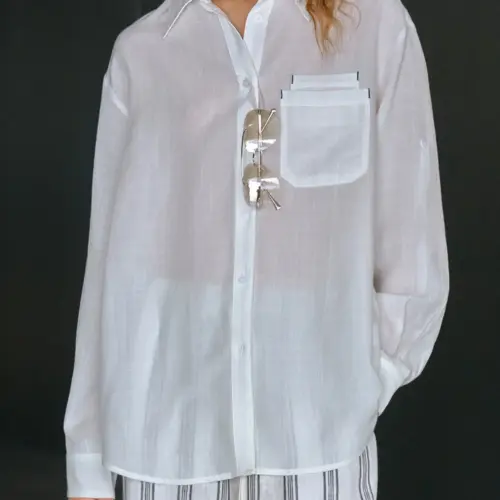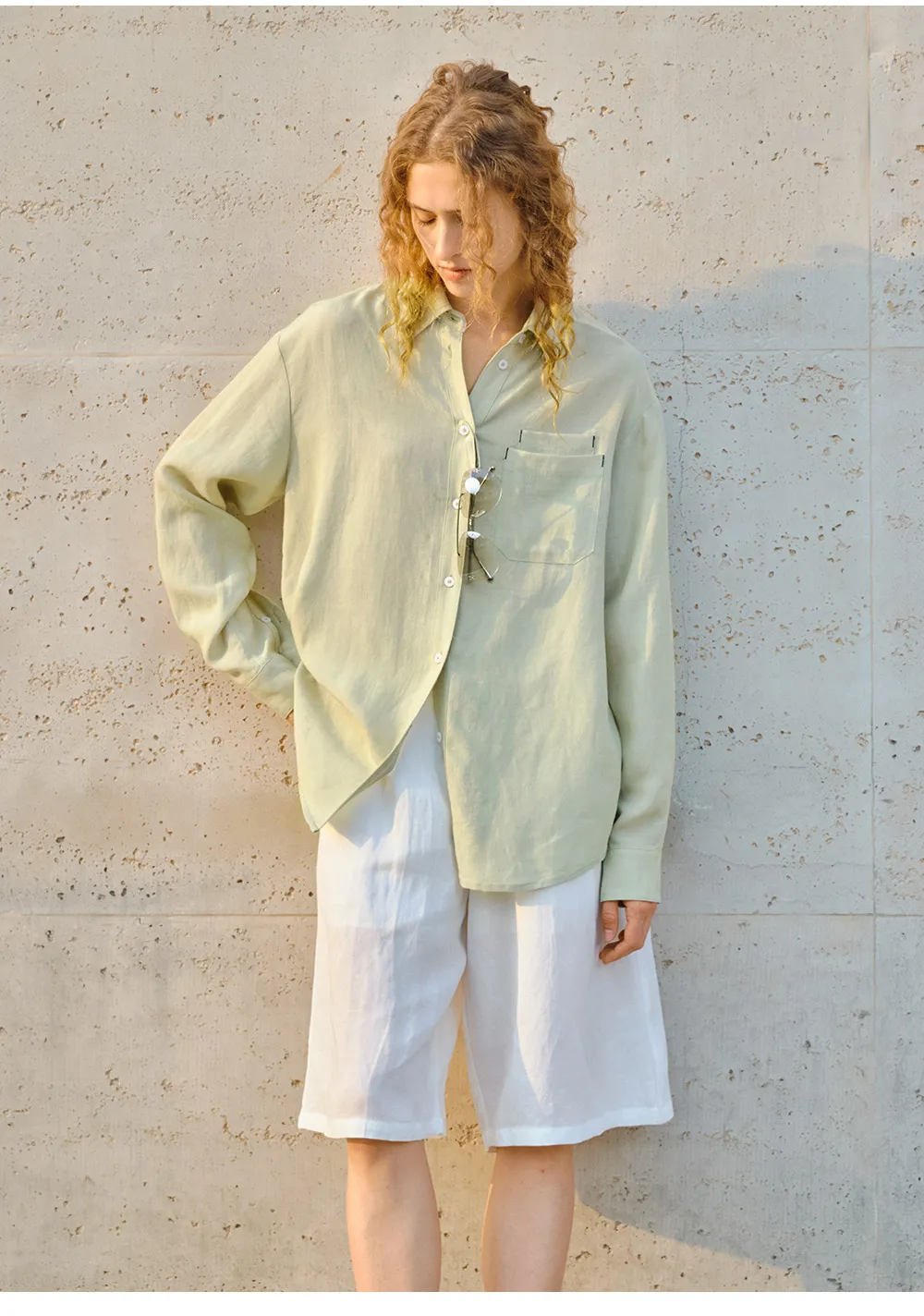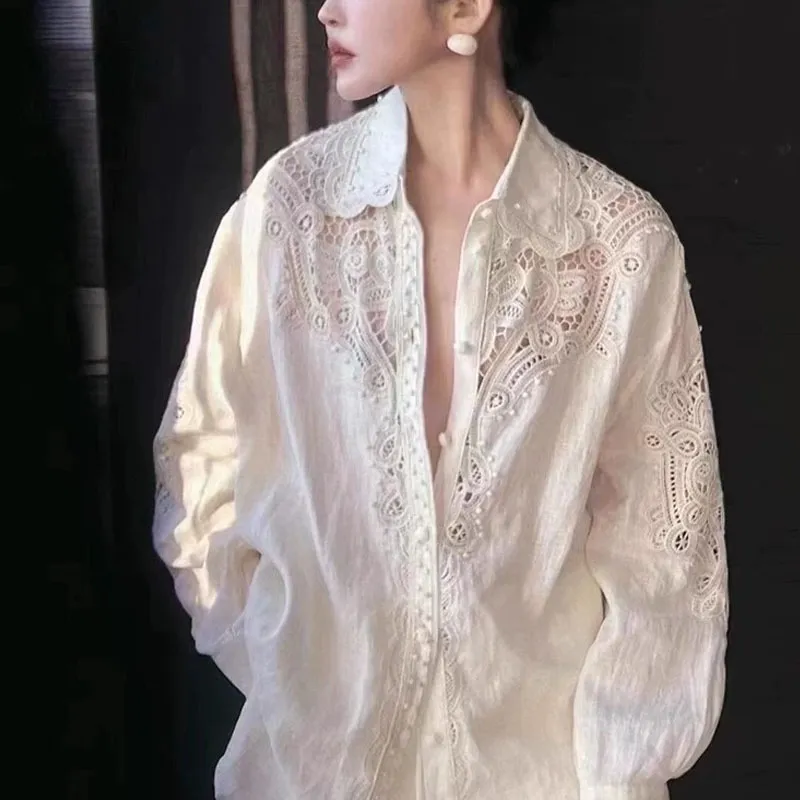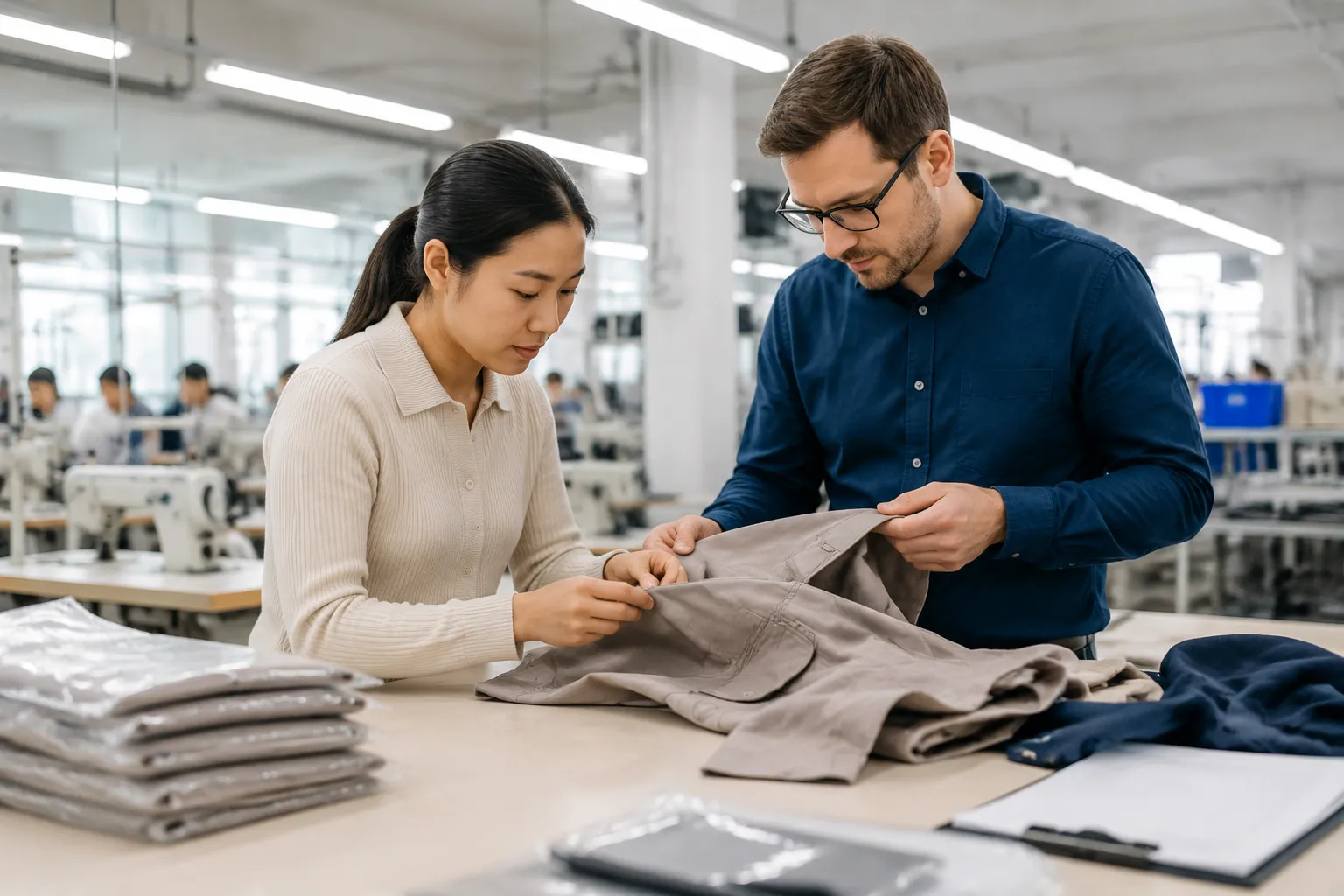

La plupart des acheteurs de vêtements s'attendent à recevoir des échantillons gratuits, mais les fabricants facturent souvent ces échantillons car leur développement nécessite du tissu, de la main-d'œuvre, du temps machine et des ouvriers qualifiés avant le lancement des commandes en gros. Comprendre le coût des échantillons permet aux acheteurs de choisir des fournisseurs sérieux et d'éviter les retards.
Les fabricants de vêtements B2B exigent généralement des frais d'échantillon car la création d'un prototype engendre des coûts de production réels : matériaux, patronage, couture, finitions et contrôles qualité. Certains fournisseurs remboursent ces frais après une commande en gros, mais la gratuité des échantillons dépend de la complexité du produit, de l'engagement de l'acheteur et de la politique de l'usine.
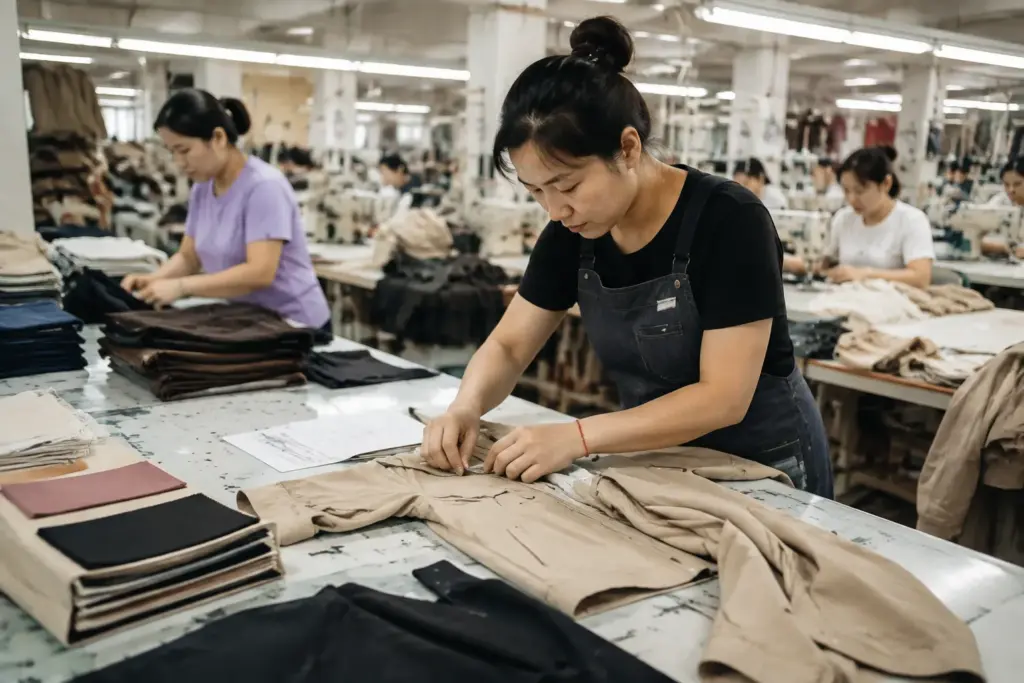
Je suis Lancy Chia de Truekung. Forte de mon expérience en usine, j'ai collaboré avec de nombreux acheteurs étrangers ayant besoin d'un service de production de vêtements OEM et ODM. Avant la production en série, nous consacrons du temps à la création d'échantillons, à la vérification des coupes, aux tests de tissus et à la validation des détails. Un échantillon représente bien plus qu'un simple vêtement : c'est un processus de production à petite échelle.
De nombreux acheteurs s'informent sur les politiques d'échantillons gratuits des fournisseurs B2B de vêtements, car ils souhaitent maîtriser leurs coûts d'approvisionnement. Cette préoccupation est légitime. Toutefois, les acheteurs doivent également comprendre le processus de fabrication en usine avant même qu'un échantillon ne leur parvienne.
Dans cet article, j'expliquerai pourquoi les fabricants de vêtements facturent des frais d'échantillon, quand les fournisseurs peuvent offrir des échantillons gratuits, ce que les acheteurs doivent vérifier avant de payer et comment préparer une meilleure demande d'échantillon.
Pourquoi les fabricants de vêtements facturent-ils des frais d'échantillon avant la production en série ?
Un échantillon erroné peut engendrer des coûts plus importants par la suite. Les acheteurs peuvent penser que les frais d'échantillon ne sont qu'un supplément, mais les usines utilisent ce processus pour fabriquer le produit adéquat avant la production en série.
Les fabricants de vêtements facturent des frais d'échantillons car leur développement mobilise les ressources de l'usine. Ces frais couvrent généralement l'approvisionnement en tissu, la création du patron, la main-d'œuvre de couture, les fournitures, les finitions et le contrôle qualité. Ils témoignent également du sérieux de l'acheteur avant la production en série.
Point de vue de l'usine
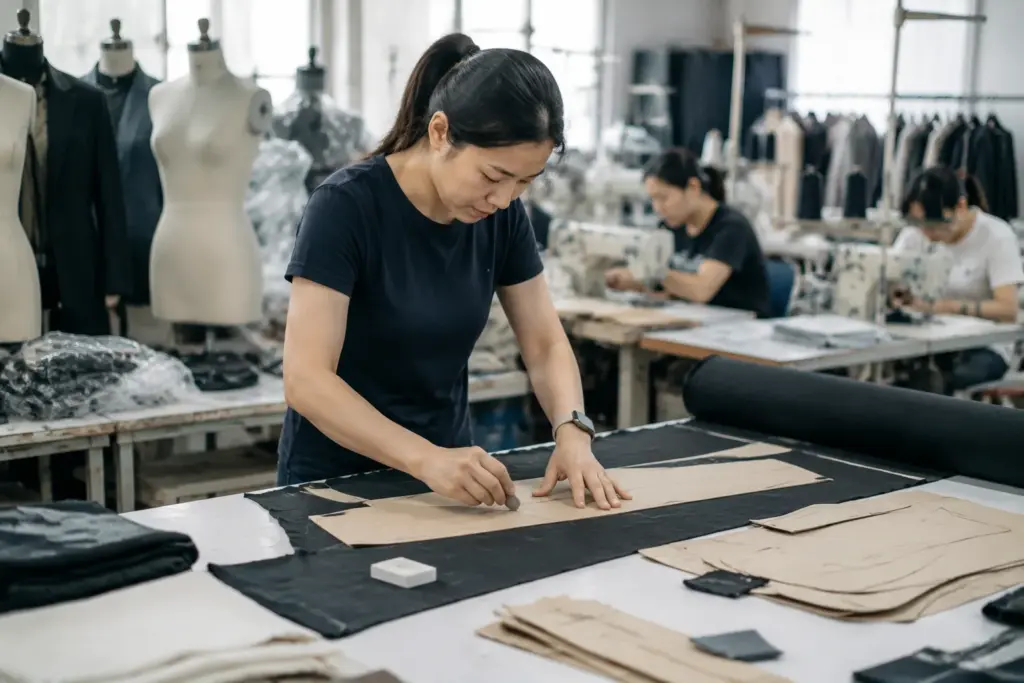
Lorsque je reçois une demande d'échantillon, mon équipe doit d'abord examiner de nombreux détails. Nous vérifions le dossier technique, les exigences relatives au tissu, les mesures, les méthodes de fabrication et les points de conception particuliers.
Pour un simple t-shirt, la mise au point d'un prototype est généralement plus facile grâce à sa structure simple. En revanche, pour les vestes, robes, jeans, doudounes ou vêtements de sport, le processus exige davantage d'attention. Une usine peut avoir besoin de créer des patrons, d'ajuster les mesures, de préparer les finitions et de tester différentes méthodes de couture.
L'atelier de confection d'échantillons est également une étape importante de la production. Des confectionneurs qualifiés ont besoin de temps pour réaliser le premier prototype. Ensuite, notre équipe vérifie la coupe, l'aspect, les coutures et les finitions avant de l'expédier à l'acheteur.
Un fournisseur de vêtements sérieux doit expliquer ce que comprennent les frais d'échantillon. L'acheteur doit savoir si ces frais couvrent uniquement les matériaux ou l'intégralité du processus de développement.
Risque pour l'acheteur
De nombreux acheteurs ne s'intéressent qu'à l'obtention d'un échantillon gratuit. Cependant, choisir un fournisseur uniquement parce qu'il offre des échantillons gratuits peut engendrer des problèmes.
Certains fournisseurs peuvent proposer des échantillons à bas prix en utilisant des chutes de tissu, des matériaux de qualité inférieure ou des méthodes de production non abouties. L'échantillon peut paraître acceptable, mais ne reflète pas nécessairement le niveau de qualité de la production en série finale.
J'ai vu des acheteurs perdre du temps pour avoir choisi un fournisseur uniquement sur la base d'un échantillon gratuit. Ils ont ensuite constaté que la production en série utilisait des tissus différents ou une qualité de fabrication différente.
Vérification pratique
| Pourquoi c'est important | Pourquoi c'est important | Ce que je recommande |
|---|---|---|
| Exemple de détails des frais | Montre ce que l'usine comprend | Demandez si le tissu, la main-d'œuvre et l'expédition sont inclus. |
| Norme de qualité des échantillons | L'échantillon doit être représentatif de la qualité en vrac | Vérifier les matériaux et la construction avant approbation |
| Politique de révision | Les modifications d'échantillons peuvent engendrer des coûts supplémentaires | Demandez combien d'ajustements sont inclus. |
| Politique de remboursement | Certaines usines remboursent après la commande. | Veuillez vérifier l'état avant le paiement. |
Aller plus loin
D'après mon expérience en usine, les frais d'échantillons ne servent pas uniquement à couvrir les coûts. Ils permettent aussi aux deux parties de gérer les attentes. La production de vêtements comporte de nombreuses variables, surtout pour les produits personnalisés.
Par exemple, une cliente peut demander une veste pour femme avec un tissu spécial, une fermeture éclair personnalisée, un logo brodé et une doublure unique. L'usine ne peut pas se contenter de couper du tissu et de coudre une pièce comme pour un produit prêt-à-porter. Nous devons préparer les matières premières, adapter les patrons et nous assurer que chaque détail corresponde à la demande de la cliente.
Le compromis est simple : un échantillon gratuit peut réduire le coût initial pour l’acheteur, mais un échantillon payant implique souvent un processus de développement plus approfondi. Lorsque les acheteurs financent le développement d’un échantillon, ils fournissent généralement des informations plus claires et un retour d’information plus rapide.
Je vous suggère de choisir un fournisseur en fonction de sa transparence, et non uniquement du prix de l'échantillon. Une usine fiable devrait vous expliquer le coût, les délais, la procédure de révision et les étapes suivant votre validation. Cette communication permet d'éviter les problèmes lors de la production en série.
Pour les acheteurs comparant les politiques d'échantillons gratuits des fournisseurs B2B de vêtements, la question pertinente n'est pas seulement “ Puis-je obtenir un échantillon gratuit ? ”, mais plutôt “ Ce fournisseur est-il capable de développer correctement mon produit et de prendre en charge ma commande en gros ? ”
Les fabricants de vêtements offrent-ils des échantillons gratuits aux acheteurs B2B ?
Les échantillons gratuits sont attrayants, mais ne conviennent pas à tous les produits ni à toutes les situations d'acheteurs. Les usines prennent généralement leur décision en fonction du potentiel de commandes, du type de produit et de la charge de travail liée au développement.
Certains fabricants de vêtements offrent des échantillons gratuits pour leurs produits habituels, leurs clients fidèles ou pour les commandes importantes. Cependant, les échantillons personnalisés OEM et ODM sont généralement payants car ils nécessitent des matériaux, des motifs et une préparation de production spécifiques.
Point de vue de l'usine
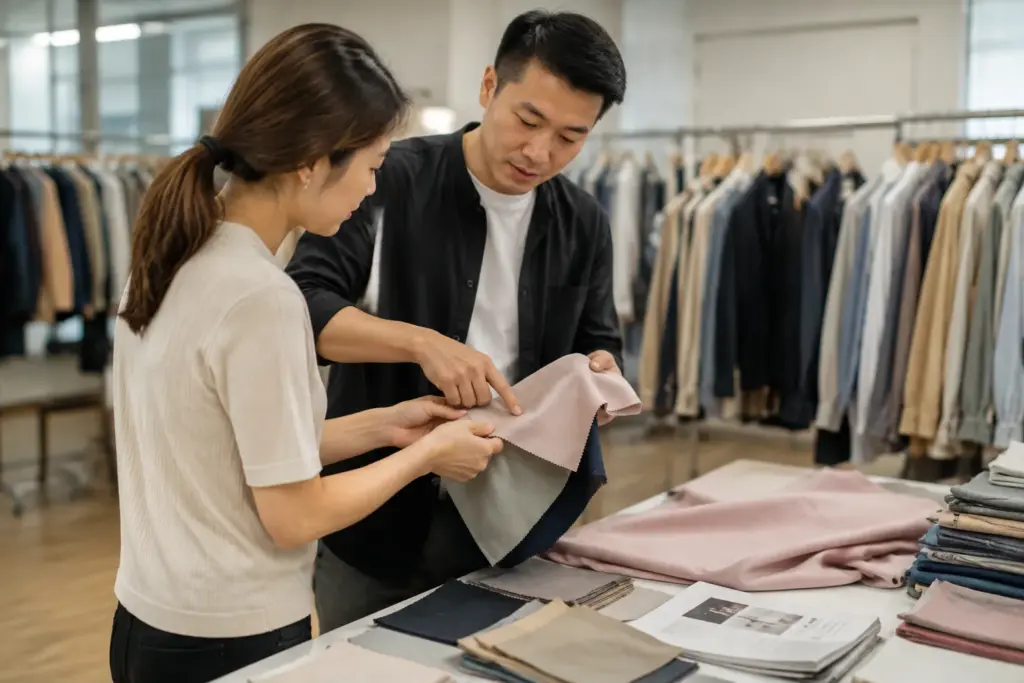
Chez Truekung, nous savons que les acheteurs souhaitent limiter les risques liés à l'approvisionnement. C'est pourquoi nous étudions attentivement les exigences en matière d'échantillons avant de commencer le développement.
Une usine peut envisager de réduire ou de rembourser les frais d'échantillon si l'acheteur a un plan de commande en gros bien défini. Cependant, chaque situation est différente. Un fournisseur doit tenir compte du coût des matières premières, du temps de travail et du calendrier de production.
Pour les produits de gros standard, des échantillons gratuits peuvent parfois être proposés car l'usine dispose déjà de modèles existants. Le travail de développement est ainsi réduit.
Pour les vêtements de marque privée, la situation est différente. L'usine doit créer un produit spécifique pour l'acheteur : étiquettes, emballages, couleurs, tissus et tailles personnalisés.
Risque pour l'acheteur
Certains acheteurs interprètent mal les politiques d'échantillons gratuits. Ils pensent qu'un échantillon gratuit signifie qu'il n'y a aucun frais. En réalité, des coûts peuvent apparaître ailleurs.
Un fournisseur peut proposer un échantillon gratuit, mais appliquer des prix plus élevés par la suite. Un autre peut fournir un échantillon gratuit, mais limiter les options de personnalisation.
Les acheteurs doivent également se méfier des fournisseurs qui promettent la gratuité sans en préciser les conditions. Une communication claire est essentielle avant toute collaboration.
Vérification pratique
| Pourquoi c'est important | Pourquoi c'est important | Ce que je recommande |
|---|---|---|
| Type de produit | Différents produits nécessitent différents efforts de développement | Demandez s'il s'agit d'une production standard ou sur mesure. |
| Possibilité de commande | Les usines prennent en compte la valeur commerciale | Veuillez indiquer la quantité estimée si disponible. |
| Exemple de chronologie | Les échantillons gratuits peuvent avoir une priorité moindre. | Veuillez confirmer le délai de livraison avant d'attendre. |
| Conditions des commandes futures | Certains frais peuvent être remboursés. | Renseignez-vous sur les conditions de remboursement. |
Aller plus loin
L'idée derrière les politiques d'échantillons gratuits des fournisseurs B2B pour les fabricants de vêtements ne consiste pas simplement à offrir quelque chose gratuitement. Il s'agit d'équilibrer les risques entre l'usine et l'acheteur.
Une usine de confection investit avant même de recevoir une commande importante. Elle achète les matières premières, mobilise la main-d'œuvre et réserve du temps de production. Si chaque demande d'échantillon était gratuite, les usines consacreraient des ressources considérables à des projets qui ne déboucheraient peut-être jamais sur de véritables commandes.
Parallèlement, je comprends les préoccupations des acheteurs. Les nouveaux acheteurs ont besoin de tester les fournisseurs avant de s'engager sur des commandes plus importantes. Je suggère donc d'avoir une discussion ouverte. Un acheteur sérieux peut expliquer la quantité commandée prévue, le marché cible et le plan de développement du produit. Un fournisseur sérieux peut expliquer le coût et la procédure d'échantillonnage.
Par exemple, si un acheteur souhaite commander 5 000 sweat-shirts personnalisés, les frais d'échantillonnage représentent un faible investissement par rapport au coût total de la production. En revanche, si l'acheteur n'a besoin que d'un seul échantillon, sans plan de production précis, la facturation de ces frais est justifiée.
La meilleure coopération commence lorsque les deux parties respectent le temps et les coûts de l'autre.
Que doivent vérifier les acheteurs avant de payer les frais d'échantillons de vêtements ?
Les frais d'échantillons sont courants dans le secteur de l'approvisionnement en vêtements, mais les acheteurs doivent tout de même vérifier les détails avant de procéder au paiement. Des questions claires permettent d'éviter les malentendus.
Avant de payer les frais d'échantillon, les acheteurs doivent confirmer le coût de l'échantillon, les services inclus, le délai de production, les matériaux, le processus de révision, le mode d'expédition et si les frais peuvent être remboursés après une commande en gros.
Point de vue de l'usine
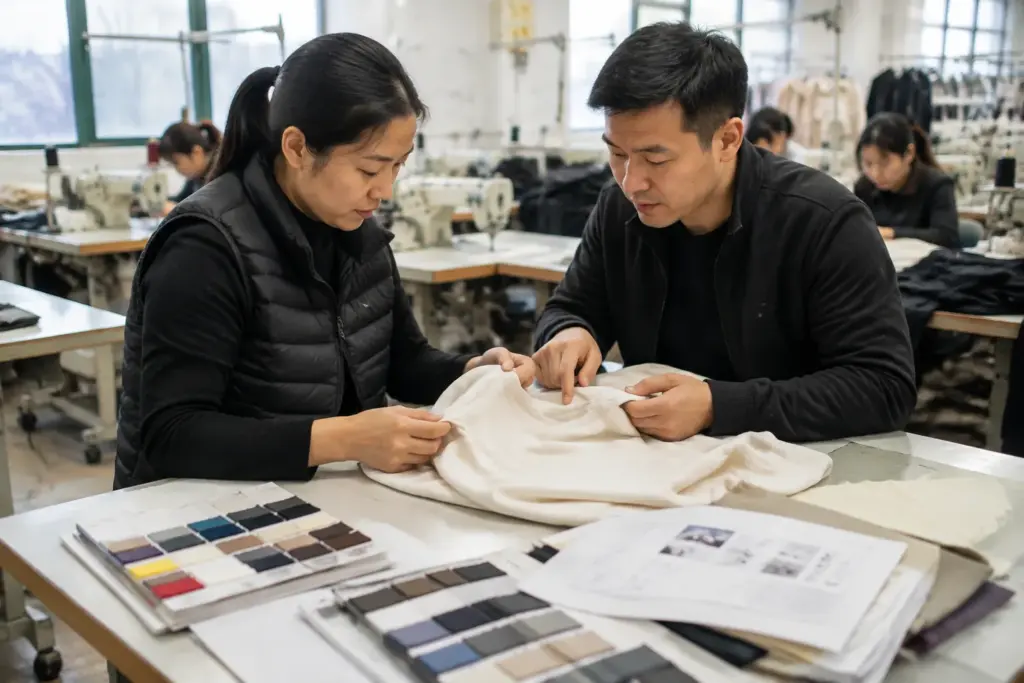
Une usine professionnelle doit fournir des informations claires avant le début du développement des échantillons.
Chez Truekung, nous vérifions systématiquement les détails des produits en premier lieu, car des informations incomplètes peuvent engendrer des problèmes ultérieurement. Par exemple, si un acheteur ne confirme pas la qualité du tissu ou les dimensions, l'échantillon peut nécessiter plusieurs retouches.
Le développement des échantillons est lié à la production en série. L'échantillon validé sert de référence aux opérateurs lors de la production de masse. Par conséquent, la précision de l'échantillonnage contribue à réduire les problèmes de contrôle qualité ultérieurs.
Les détails importants comprennent la composition du tissu, la norme de couleur, l'emplacement du logo, les exigences de couture, les détails de l'emballage et les délais de livraison.
Risque pour l'acheteur
Le plus grand risque pour l'acheteur est d'approuver un échantillon sans vérifier les détails importants.
Un échantillon peut paraître satisfaisant, mais les acheteurs doivent vérifier la qualité de la confection, le toucher du tissu, les dimensions et les finitions. Une usine ne peut produire correctement que si l'acheteur définit des critères d'approbation clairs.
Un autre risque est de négliger les délais. La mise au point d'échantillons prend du temps, surtout en période de forte production. Attendre trop longtemps pour obtenir une approbation peut retarder l'expédition finale.
Vérification pratique
| Pourquoi c'est important | Pourquoi c'est important | Ce que je recommande |
|---|---|---|
| Informations sur le tissu | Le tissu influe sur le coût et la qualité | Vérifier la composition et le poids |
| Mesures de taille | Prévient les problèmes d'ajustement | Utilisez un tableau des tailles clair |
| Processus de validation des échantillons | Évite les erreurs de production | Confirmer qui approuve l'échantillon |
| Calendrier de production | Cela affecte la date de livraison | Discutez des échéances à l'avance |
Aller plus loin
Je demande généralement aux acheteurs de considérer les échantillons comme une étape de contrôle qualité, et non comme une simple étape d'achat. L'échantillon permet aux deux parties de déceler d'éventuels problèmes avant la production en série.
Par exemple, un acheteur peut demander un échantillon de robe et se concentrer sur son apparence extérieure. Cependant, lors du contrôle en usine, nous pouvons constater que le tissu nécessite une doublure différente, que la position de la fermeture éclair doit être ajustée ou que la méthode de couture est à améliorer. Corriger ces points avant la production en série permet de réaliser d'importantes économies.
Ma règle de décision pour les acheteurs est simple : si le produit est personnalisé, complexe ou important pour votre image de marque, investir dans un échantillon approprié est généralement judicieux.
Le coût le plus bas pour un échantillon n'est pas toujours synonyme de coût d'approvisionnement le plus bas. Un processus d'échantillonnage mal conçu peut engendrer des problèmes coûteux lors de la production en série, tels que des retards, des retouches et des réclamations clients.
Un bon fournisseur expliquera ces risques et accompagnera l'acheteur tout au long du développement. C'est pourquoi la communication avant l'échantillonnage est aussi importante que l'échantillon lui-même.
Que préparer avant de contacter une usine de vêtements en Chine ?
Une demande claire aide l'usine à fournir un prix, un délai et une suggestion de production plus précis.
| Informations à préparer | Exemple | Pourquoi l'usine en a besoin |
|---|---|---|
| Catégorie de produit | veste, robe, jean, t-shirt | Comprendre les exigences de production |
| Photos de référence ou tech pack | Images de design, mesures | Confirmer les détails de la construction |
| Tissu | Coton, polyester, tissu recyclé | Estimer le coût des matériaux |
| Gamme de tailles | S-XXL | Planification de la découpe et de la production |
| Quantité par style/couleur | 500 pièces par couleur | Calculer la quantité minimale de commande (MOQ) et le coût |
| Marché cible | États-Unis, Europe, Australie | Comprendre les exigences de qualité |
| Niveau de qualité | Standard ou premium | Sélectionner les matériaux appropriés |
| Emballage | Sachet plastique, carton, emballage personnalisé | Préparer les détails d'exportation |
| Étiquetage | Étiquette de marque, étiquette d'entretien | Détails de la production |
| Date limite de livraison | Date d'expédition requise | Planifier le calendrier de production |
| Certificats | Documents de conformité requis | Confirmer les capacités de l'usine |
| Prix cible | Budget prévu | Suggérer des options appropriées |
Une demande de renseignements complète permet à l'usine de bien comprendre votre projet. Elle permet également au fournisseur de vous conseiller au mieux sur le choix du tissu, la quantité minimale de commande, le développement d'échantillons, les délais de production et les modalités d'exportation.
Quand demander un devis à Truekung ?
Si vous avez besoin d'une production de vêtements OEM/ODM, de produits de mode en marque blanche, d'une communication stable à l'exportation et d'un soutien pratique en usine, vous pouvez contacter Truekung pour discuter de votre projet.
Je travaille avec des acheteurs qui ont besoin d'une communication claire, d'un soutien au développement d'échantillons, d'une planification de la production en série, d'un contrôle qualité et d'une assistance à l'exportation.
Vous pouvez envoyer les détails de votre produit à :
[email protected]
https://truekung.com
Conclusion
Les frais d'échantillonnage font partie intégrante du développement professionnel de vêtements. Un fournisseur fiable explique clairement les coûts et aide les acheteurs à concevoir le produit idéal avant la production en série. Comprendre les politiques d'échantillonnage permet aux acheteurs de choisir les meilleurs partenaires de fabrication.
Vues : 165