
Un costume peut coûter très cher, et pourtant, il peut faire mauvaise impression. Je vois des hommes incriminer le tissu, mais le vrai problème, c'est… ajuster. L'ajustement est primordial.
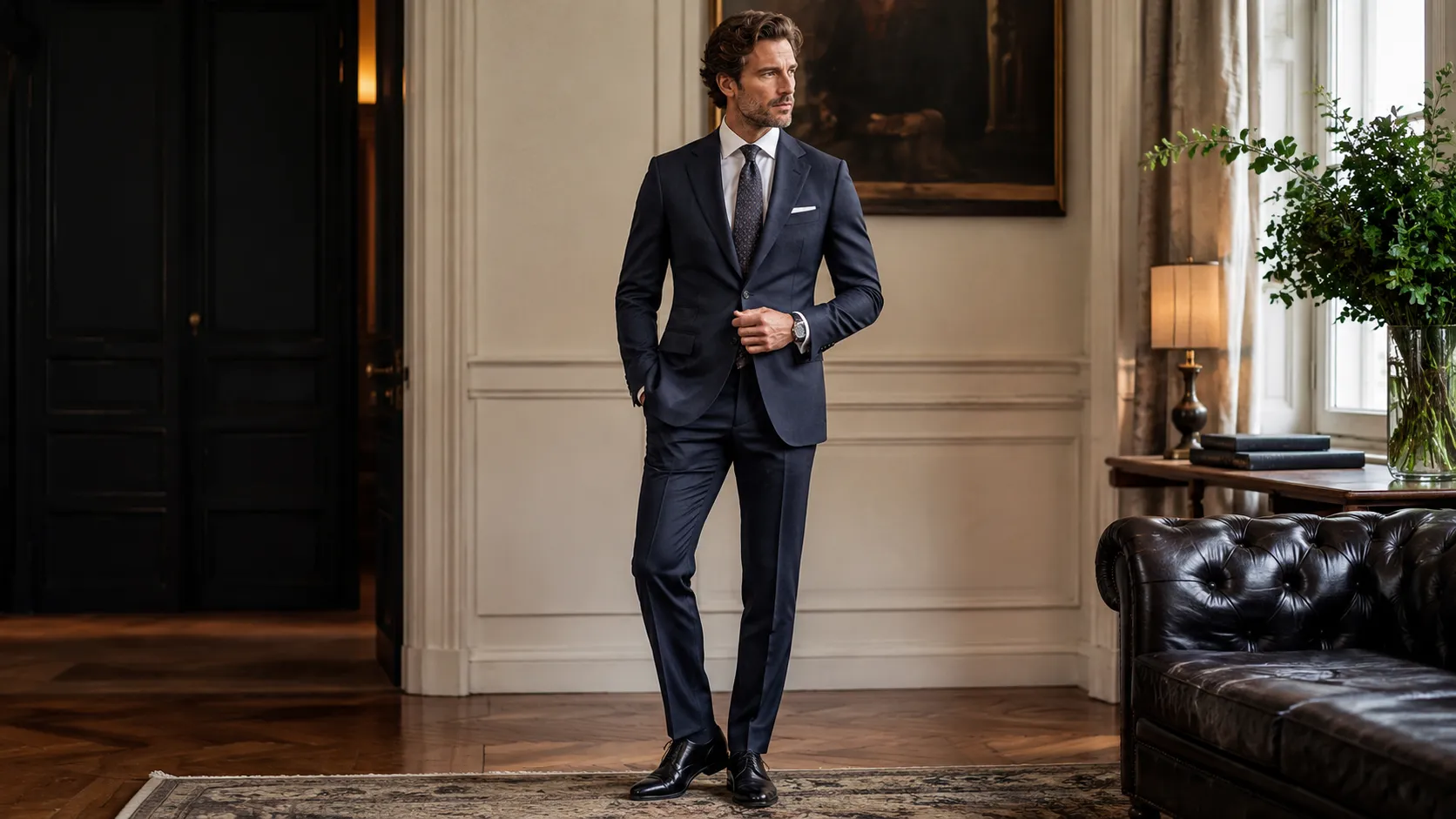
Un costume bien ajusté doit tomber parfaitement sur vos épaules, sculpter votre poitrine et votre taille sans les serrer, et laisser vos manches et pantalon Terminez par les bons endroits. L'objectif est le confort et des lignes épurées, pas un costume trop serré.
J'ai appris cela à mes dépens en aidant un acheteur à préparer une commande de costumes pour une chaîne de magasins. Le tissu d'échantillon était de bonne qualité, mais la coupe ne convenait pas à la plupart des morphologies. Les photos donnaient une impression de “ bas de gamme ”, même si le costume était de qualité. J'ai corrigé les spécifications, sans changer le tissu, et toute la collection a gagné en qualité. Si vous poursuivez votre lecture, je vous dévoilerai les mêmes critères que j'utilise, afin que vous puissiez repérer un costume à la bonne coupe en quelques minutes.
Comment une veste de costume doit-elle être ajustée pour avoir une allure impeccable dès le premier regard ?
Une veste de costume peut paraître impeccable sur un cintre et pourtant ne pas aller à un homme. Je vois souvent cette erreur. Une veste peut sembler “ correcte ”, mais le miroir révèle des plis et une longueur inesthétique.
Une veste de costume doit épouser les épaules sans les serrer, être bien ajustée au niveau de la poitrine sans créer de forme en X et se fermer confortablement. Sa longueur doit couvrir les fesses et les manches doivent laisser apparaître légèrement les poignets de la chemise.
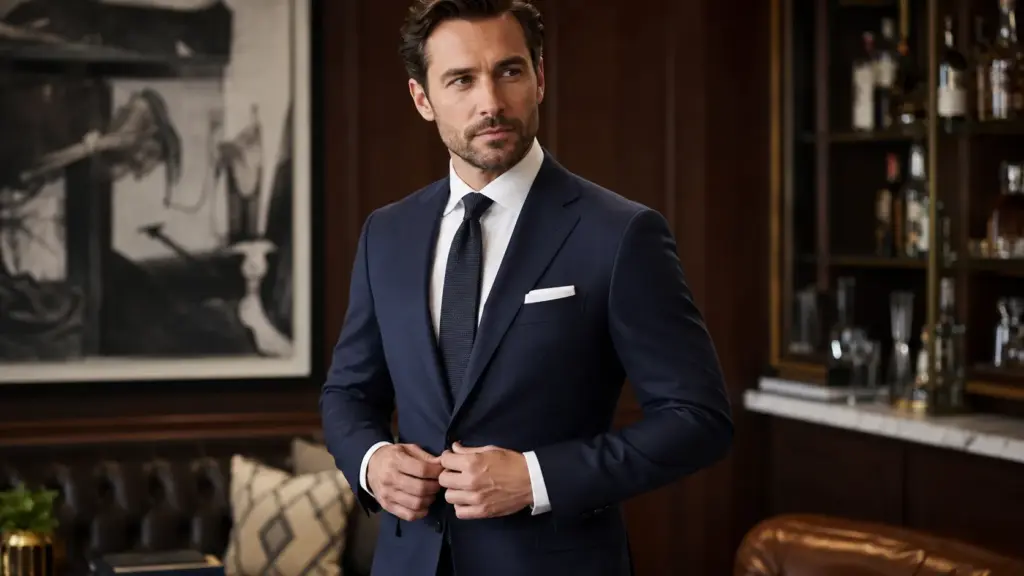
Commencez par les épaules
Je considère l'épaule comme le point d'ancrage. Je ne peux pas corriger rapidement une épaule mal taillée, même avec une coupe impeccable.
- La couture doit s'arrêter au niveau de l'os de votre épaule. Elle ne doit pas descendre le long de votre bras.
- Je repère les creux et les ondulations. Ces signes indiquent que l'épaule est trop large ou que le rembourrage gêne le corps.
- Je vérifie mes mouvements. Je lève les bras comme pour attraper un objet sur une étagère. Un costume bien coupé me permet de bouger sans que la veste ne remonte trop haut.
J'applique une règle simple : une veste doit épouser les formes, et non pas serrer.
- Lorsque je boutonne ma veste, je vérifie s'il y a un pli en forme de “ X ” au niveau du bouton. Ce pli indique souvent que le costume est trop serré.“
- Je glisse une main à plat à l'intérieur de la poitrine. Je veux un contact léger, pas du vide.
- J'examine les revers. Je veux qu'ils soient bien à plat. Un espace peut indiquer un problème au niveau de la poitrine.
Veuillez confirmer la longueur de la veste et l'extrémité des manches.
Les hommes me demandent : “ Où doit tomber la veste de costume ? ” Je recommande deux carreaux.
- Longueur de la veste : Je souhaite que la veste couvre la majeure partie du siège. C’est une longueur classique, idéale pour un costume d’intérieur et pour la plupart des costumes élégants.
- Longueur des manches : beaucoup d’hommes se demandent : “ Où doit s’arrêter la manche d’une veste de costume ? ” Je vise à laisser apparaître légèrement le poignet de la chemise, souvent d’environ la largeur d’un doigt, si la chemise est appropriée.
| Zone de la veste | Ça a l'air bien | Ça a l'air bizarre | Ce que cela signifie souvent |
|---|---|---|---|
| Épaules | Ligne épurée, sans bosses | Nids-de-poule, bosses | Largeur d'épaules incorrecte |
| Zone des boutons | Front lisse | Lignes de traction en X | Veste trop serrée |
| revers | À plat contre la poitrine | Béant | Inadéquation entre la poitrine et la posture |
| Manches | Le petit poignet montre | Couvre entièrement la chemise | Manches trop longues |
J'ai rencontré Maria, une acheteuse russe, lors d'un salon. Elle m'a confié que ses retours pour les costumes homme étaient élevés. Je lui ai demandé une photo. J'ai alors constaté que les manches couvraient la chemise et que les vestes descendaient jusqu'au-delà de la première phalange. L'uniforme semblait emprunté. Nous avons corrigé ces deux points et ses retours ont chuté.
Comment un pantalon de costume doit-il être ajusté sans ressembler à un costume trop serré ?
Beaucoup d'hommes se concentrent sur la veste et oublient le pantalon. C'est problématique, car le pantalon structure toute la silhouette. Un pantalon trop ajusté donne un effet “ costume moulant ”, même si la veste est impeccable.
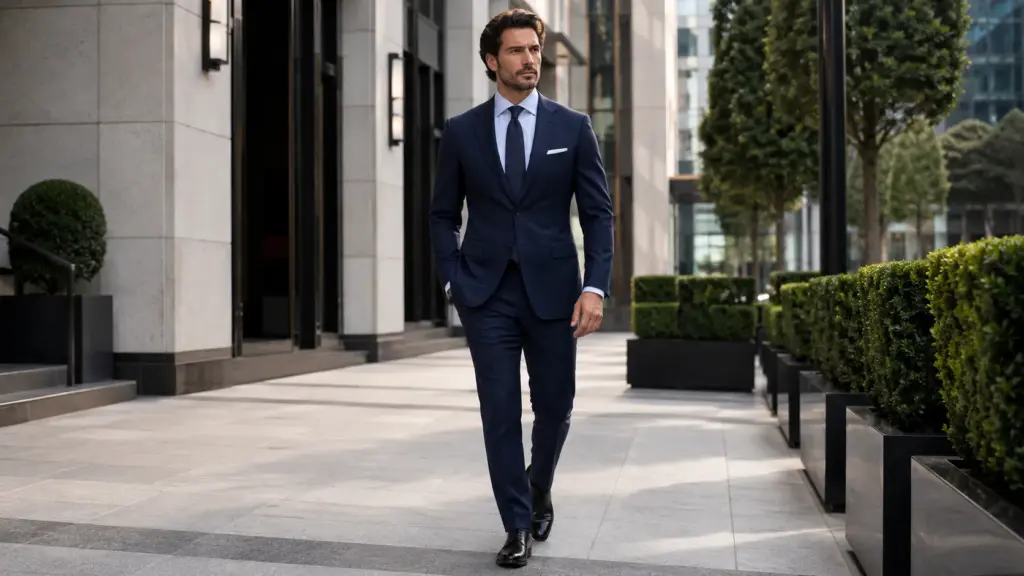
Le pantalon de costume doit se porter à une taille stable, bien épouser les formes des fesses et tomber droit, avec ou sans cassure selon votre style. Il ne doit pas mouler les cuisses et les poches ne doivent pas s'ouvrir de façon évasée.
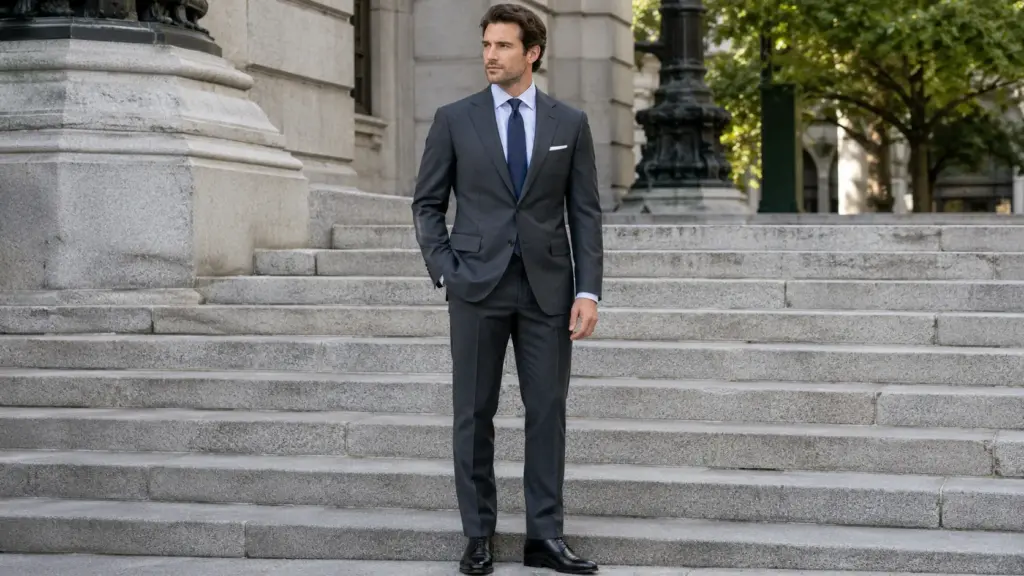
Choisissez d'abord la taille et la hauteur.
Je commence par le haut car c'est le haut qui détermine le confort.
- Je choisis une taille qui reste bien en place sans que la ceinture ne tire trop.
- Je vérifie la hauteur de la veste. Si elle est trop basse, le pantalon remonte et la chemise remonte. L'homme se sent piégé.
- Je vérifie le siège. S'il est trop serré, je vois des lignes horizontales sous les poches.
Choisissez la forme de vos jambes en fonction de votre travail et de votre morphologie.
Certains hommes veulent des costumes cintrés parce qu'ils les voient en ligne. Je comprends. Une coupe ajustée peut convenir, mais le tissu doit tout de même avoir du tombé.
- Je vérifie si la jambe est trop fine au niveau de l'entrejambe et des cuisses.
- Je vérifie le genou. Une ligne nette compte plus qu'un rétrécissement prononcé.
- Je tiens compte du tissu. Une laine épaisse a un beau tombé. Un mélange rigide peut avoir une allure élégante, mais risque de se froisser facilement s'il est trop serré.
Choisissez la cassure et l'ourlet
Les hommes me demandent : “ Comment un costume est-il censé tomber à la cheville ? ” Je fais simple.
- Pas de rupture : moderne, épuré et risqué si la longueur est même légèrement courte.
- Petite pause : sans danger pour la plupart des hommes et la plupart des chaussures.
- Cassage complet : style plus traditionnel, et cela peut paraître lourd si la jambe est également large.
| Pointe du pantalon | Signe du costume bien ajusté | Mauvais signe | Solution simple |
|---|---|---|---|
| Taille | Reste en place, sans pincement | Il lui faut une ceinture pour survivre | Ajuster la taille, modifier la hauteur de taille |
| Siège | Doux et léger | Lignes tendues sur le siège | Ajouter un siège, choisir plus grand taille |
| Cuisse | Le tissu est suspendu | câlins en tissu | Cuisse ouverte, coupe différente |
| Ourlet | Nettoyer par-dessus la chaussure | Piles ou flottants | Changement de longueur de l'ourlet |
Lorsque j'approuve des commandes en gros, je demande systématiquement aux usines de constituer un ensemble d'échantillons “ adaptés au client ”. J'y inclus un costume slim, un costume standard et un costume ample. Cet ensemble permet d'éviter la plupart des litiges ultérieurs, car l'acheteur peut ainsi expliquer ce qu'est un costume “ à la bonne taille ” pour son marché.
Où puis-je me faire conseiller pour l'achat d'un costume et éviter les costumes mal ajustés ?
Beaucoup d'hommes me demandent : “ Où puis-je me faire confectionner un costume sur mesure ? ” J'aime cette question car la qualité des essayages est aussi importante que le costume lui-même. Un bon tailleur vous évite d'acheter un costume mal ajusté, même si la taille standard n'est pas parfaite.
Vous pouvez vous faire ajuster votre tenue chez un tailleur spécialisé, dans une boutique de prêt-à-porter masculin ou dans un grand magasin de vêtements pour hommes proposant un service de retouches. Apportez les chaussures et la chemise que vous porterez, et évaluez la qualité des essayages en fonction de la façon dont le tailleur vérifie les épaules, la longueur des manches et l'équilibre de la silhouette.
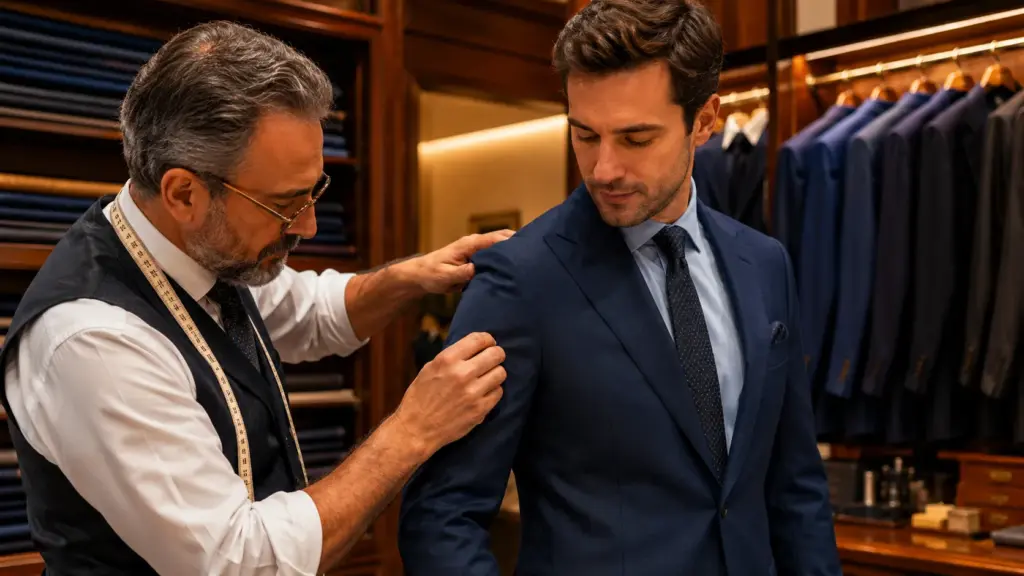
Choisissez la voie qui vous convient : prêt-à-porter, sur mesure ou confection sur mesure.
Je travaille dans le B2B, donc je vois tous les niveaux. Chaque niveau a son utilité.
- Prêt-à-porter : rapide et économique. Il faudra tout de même prévoir des retouches pour un costume parfaitement ajusté.
- Le sur-mesure est idéal si votre morphologie est très différente des tailles indiquées. De nombreux magasins appellent cela un “ essayage de costume ”, et c'est très utile.
- Sur mesure : contrôle optimal, mais plus lent. Cela peut se justifier pour les postes clés.
Utilisez une simple liste de vérification d'essayage dans la chambre
J'apporte une liste mentale à chaque fois.
- Je vérifie d'abord comment les vestes de costume sont censées tomber au niveau des épaules.
- Je vérifie l'équilibre de la veste. L'ourlet doit être horizontal. Il ne doit pas remonter dans le dos.
- Je vérifie à nouveau la longueur des manches, car c'est le signe le plus rapide d'un costume bien ajusté ou non.
- Je m'assieds. Mon costume, bien coupé, reste confortable même assis.
Qu’en est-il de la taille des vêtements Sartoria Partenopea et des autres marques ?
Certaines marques proposent des coupes plus ajustées, d'autres plus amples. De nombreux costumes italiens traditionnels (trajes) privilégient des emmanchures plus hautes et un buste plus près du corps. Cela peut donner une allure élégante, mais aussi être inconfortable si l'on choisit une taille trop petite.
- Je demande au magasin le nom de la “ ligne de coupe ” de la marque. Certaines marques en ont plusieurs.
- Je ne recherche pas la plus petite taille. Je recherche la pureté des lignes.
- Je prévois des retouches. Je m'attends à des travaux sur les manches et l'ourlet. Je ne prévois pas de reconstruction des épaules.
| Lieu approprié | Idéal pour | Risque | Ce que je fais |
|---|---|---|---|
| atelier de tailleur | Des corps durs pour s'adapter | La qualité varie | Demandez à voir leurs travaux antérieurs |
| Magasin de vêtements pour hommes + retouches | Rapide et pratique | Le personnel peut se précipiter | Exigez un chèque complet |
| Sur mesure | Meilleur équilibre | Mesure erronée | Apportez votre costume le mieux ajusté comme référence |
J'ai vu un jour un homme porter une veste de costume avec un pantalon pour une réunion. L'idée était bonne. Le problème, c'était la coupe de la veste. Les épaules étaient larges et les manches trop longues. On aurait dit qu'il portait la veste de son grand frère. On a retouché les manches et la taille, et le costume était de nouveau impeccable. Voilà pourquoi je préfère suivre une méthode plutôt que de me fier au hasard.
Conclusion
Pour qu'un costume soit bien ajusté, il faut d'abord vérifier les épaules, puis la poitrine, les manches et la longueur du pantalon. Je procède systématiquement à ces vérifications et j'évite volontairement les costumes trop serrés.
Pourquoi j’écris ceci
Je dirige Truekung en Chine et je vends exclusivement en gros. Je travaille avec une usine de plus de 200 employés et je prends en charge les commandes OEM et ODM pour des marques internationales et des supermarchés. J'ai consacré 20 ans à l'ajustement, aux spécifications et au contrôle qualité, car même de petits défauts d'ajustement entraînent des taux de retour élevés.
J'aide les acheteurs comme Maria à trouver le juste équilibre entre prix et qualité, et je les protège des retards et des faux documents grâce à des normes claires et un contrôle rigoureux de la production. Si vous souhaitez discuter de la confection de costumes sur mesure, des spécifications des tailles et de la fiabilité des livraisons, je suis Lancy Chia. Vous pouvez me contacter à l'adresse [email protected] et découvrir mon travail sur https://truekung.com.
Vues : 287