
I see buyers miss the season when the shapes feel “old” and the colors look “tired.” I also see factories waste time on styles that never get repeat orders.
In 2026, athleisure moves to sharper silhouettes, warmer neutrals, and smarter matching sets. I focus on leg shapes (bootcut, capri, wide-leg), a new neutral range (coffee, olive, slate), and 3 core set types that are easy to reorder and scale in wholesale.
I want you to picture a customer who wants comfort but still wants a clean outline. I also want you to picture a buyer who needs fewer SKUs that still look “new.” I will break down what I see, and I will show you what I would sample first so you keep reading.
Which Silhouettes Will Define 2026 Athleisure?
I often hear, “Leggings are still selling, but people want something different.” I also see returns rise when a silhouette looks good online but feels wrong in real life.
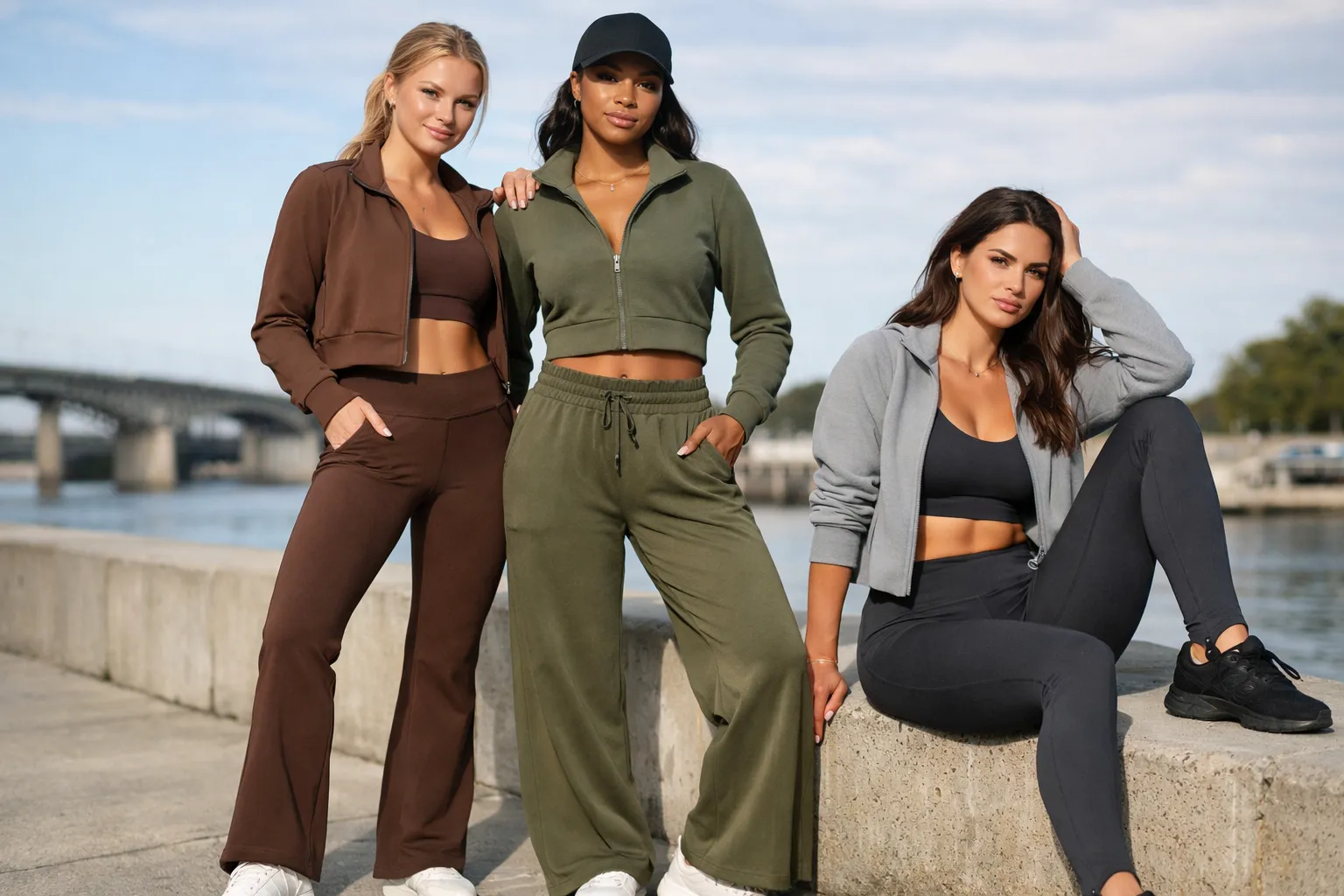
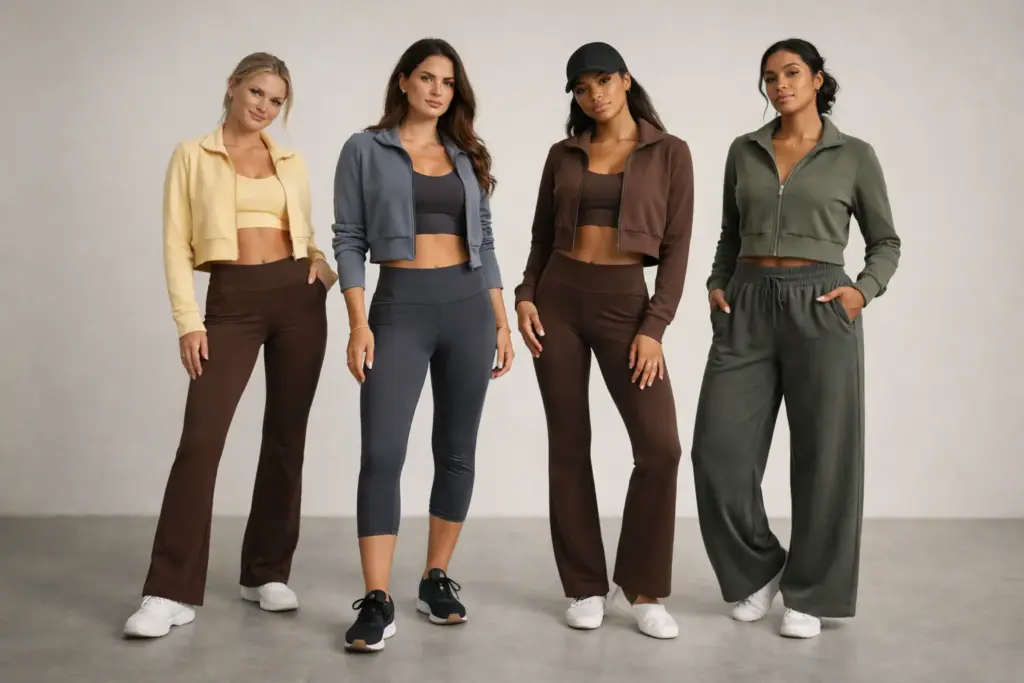
In 2026, silhouettes shift from tight-only to shape + balance. I prioritize bootcut and capri leggings, stirrup details, wide-leg track pants, and cropped zip layers because they look styled even with simple colors.
The legging update I see in real orders
I used to think the “basic legging” would never change. Then I watched how customers started to style outfits for the street. They want a leg line that works with sneakers, socks, and even a casual jacket. So I see bootcut leggings come back, and I see capri lengths return in a cleaner way. I also see stirrup leggings again because people like the pulled-down, secure feeling at the ankle. When I talk with buyers, they do not ask for 20 new tops. They ask for 2 to 3 leg shapes that make the whole wall look new.
| Silhouette | Why it sells | Easy fabric choice | Notes I give my pattern team |
|---|---|---|---|
| Bootcut legging | Balances hips, looks “styled” | Brushed interlock, 220–260gsm | Keep knee snug, flare clean, hem weight stable |
| Capri legging | Fresh for spring, easy add-on | Nylon/spandex, 200–240gsm | Add hidden pocket, avoid see-through at bend |
| Stirrup/footie | Sporty detail, good for travel | Dense stretch jersey | Reinforce foot loop, test stretch recovery |
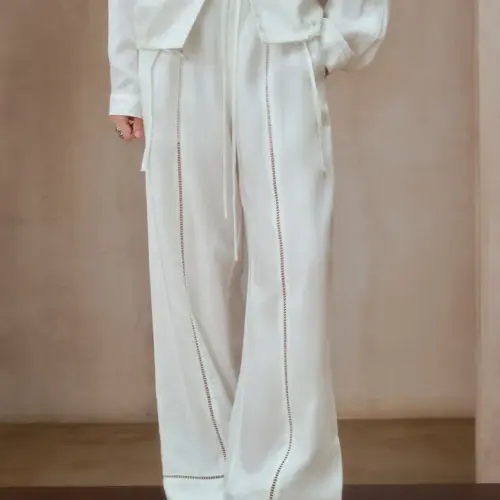
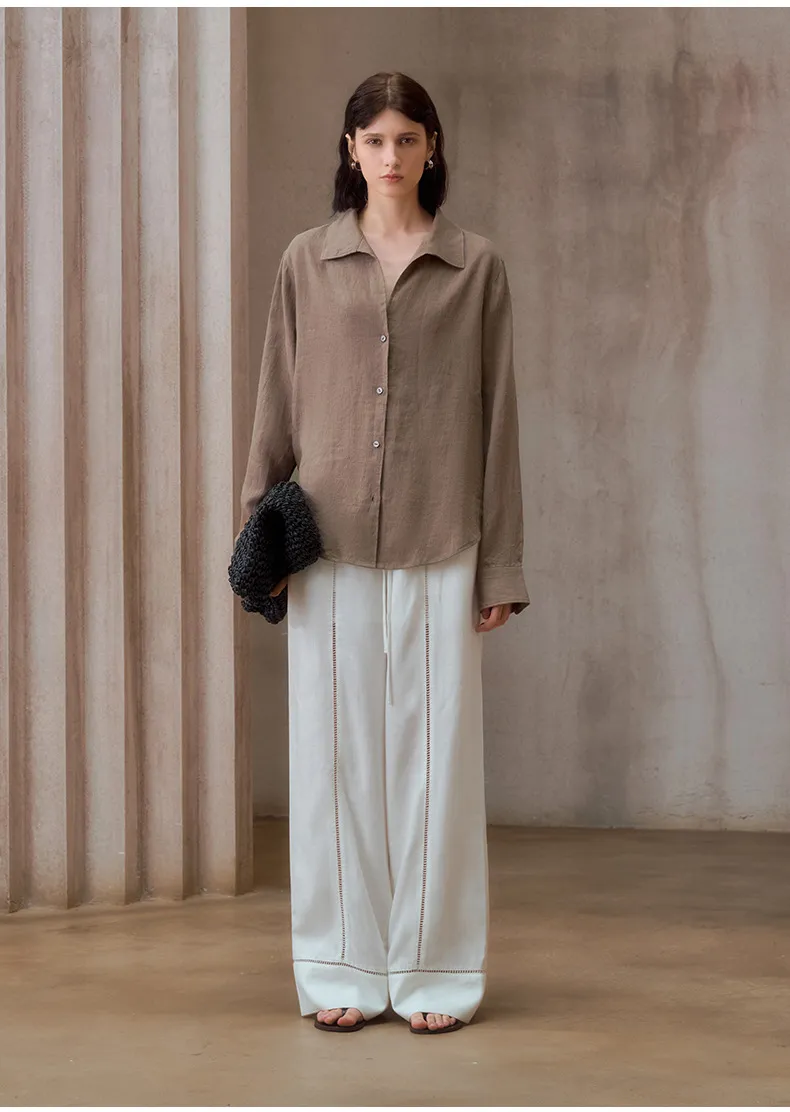
| Wide-leg track pant | Street look, comfort fit | Tech woven + mesh | Add drawcord, keep seat not too baggy |
| Cropped zip layer | Completes the set, raises AOV | Double-knit or rib | Keep zipper smooth, collar stands up |
How I control fit risk in wholesale
I learned this the hard way. One season, I approved a “new” flare legging that looked perfect on a mannequin. Then the fit ran long, and customers complained about dragging hems. Now I treat silhouette trends like a fit project, not a mood board. I insist on 3 fit checks. I check hip ease, knee position, and hem opening. I also ask for a wash test and a stretch recovery test. When the leg shape changes, the stress points change. So I upgrade bar-tacks, and I re-check seam strength at the crotch and inner thigh. This is not “fashion talk.” This is how I protect repeat orders.
What Colors and Fabric Feelings Will Buyers Reorder in 2026?
I see buyers get excited about a bright color, and then they hesitate because the reorder risk feels high. I also see factories struggle when a color looks great in lab dip but shifts after washing.
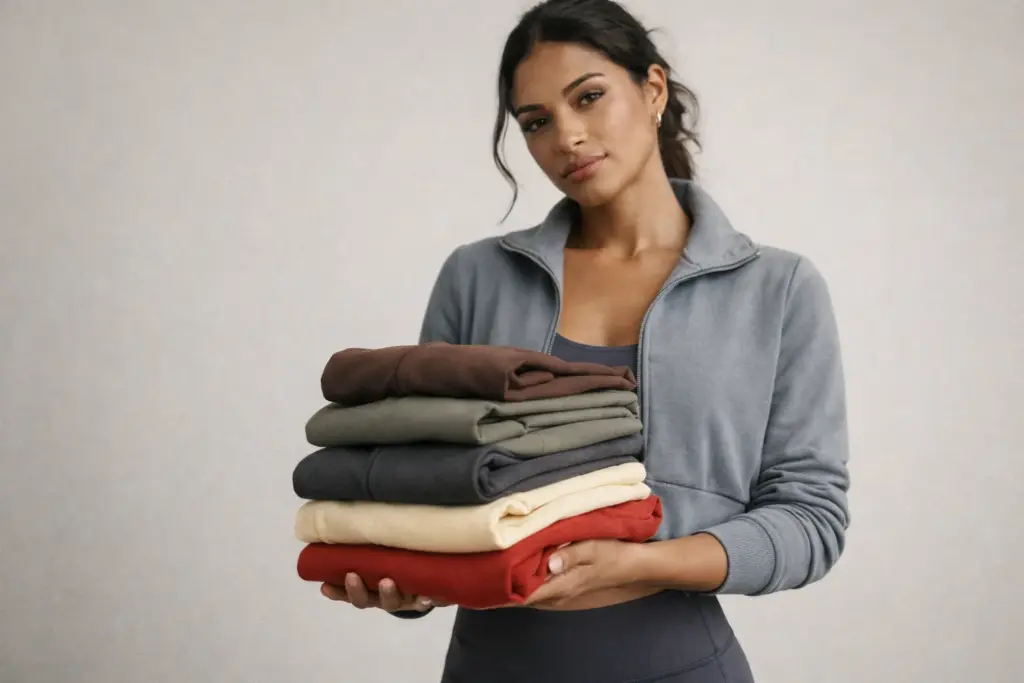
In 2026, colors split into two lanes: rich neutrals (coffee, mocha, charcoal, olive, slate) and soft lifts (butter yellow, buttermilk, pale blues). I also see bold red used as an accent or a full set for confident customers.
The color logic I use with buyers like Maria
When I speak with a buyer who cares about quality and price, I do not push “trend colors” first. I start with colors that behave well in production. Dark coffee tones hide small fabric marks, and they feel premium. Olive and slate read modern, and they also pair well with neutrals in stores. Then I add one “lift color” like butter yellow, buttermilk, or a soft blue, because the wall needs a light note. After that, I add one power color. In 2026, I often pick a clean red. I do not always do a full red set. I might do a red bra with charcoal leggings, or a red piping line on a track jacket. This keeps the trend feel, and it keeps reorder safety.
| Color lane | Key shades | Where I use it | What I test before bulk |
|---|---|---|---|
| Rich neutrals | espresso, mocha, charcoal | leggings, wide-leg pants, zip tops | colorfastness, pilling, shade consistency |
| Earth tones | olive, sage, clay | sets, outer layers | rubbing fastness, seam impression |
| Soft lifts | butter yellow, buttermilk, pale blue | bras, tees, spring sets | yellowing risk, wash change, opacity |
| Power accents | clean red, deep maroon | trims, bras, full hero set | dye bleeding, pairing with whites |
Fabric “feeling” matters as much as color
I see “Pilates studio” demand shape the market. People want soft touch, but they still want hold. So I keep two fabric families ready. One family is brushed or “buttery” hand-feel for leggings and bras. The other family is tech woven or crisp double-knit for track shapes and travel sets. I also see pointelle and rib textures used to make sets look more “fashion,” even when the pattern is simple. Texture helps the buyer. Texture gives a new look without changing the fit block too much. That is good for speed, and it is good for stable bulk production.
Which Must-Have Athleisure Sets Should You Stock for 2026?
I see stores lose money when they buy random single pieces. I also see online brands win when they sell a full look with simple photos.
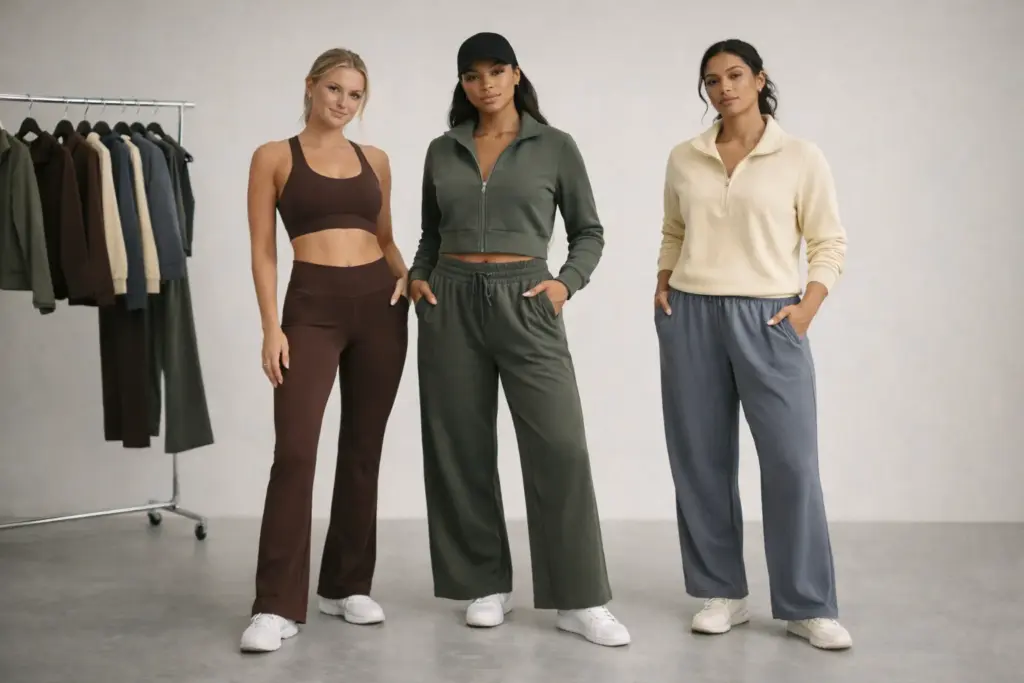
In 2026, I see 3 set types do the heavy work: a studio set (bra + legging), a street set (zip layer + pant), and a travel set (soft top + relaxed bottom). I build collections around these because they reorder well.
Set Type 1: Studio Set that looks clean on camera
This is the set I sample first. I keep it simple so it scales. I do a medium support bra, and I pair it with a bootcut or capri legging. I keep seams smooth and clean. I add one small detail like a curved waistband or a single back seam. I also keep a pocket option ready because buyers ask for it again and again. If I use butter yellow, I increase the opacity standard. If I use coffee, I focus on pilling control. This set sells because customers know how to wear it. It also sells because it looks “put together” in photos.
Set Type 2: Street Set that replaces the old tracksuit
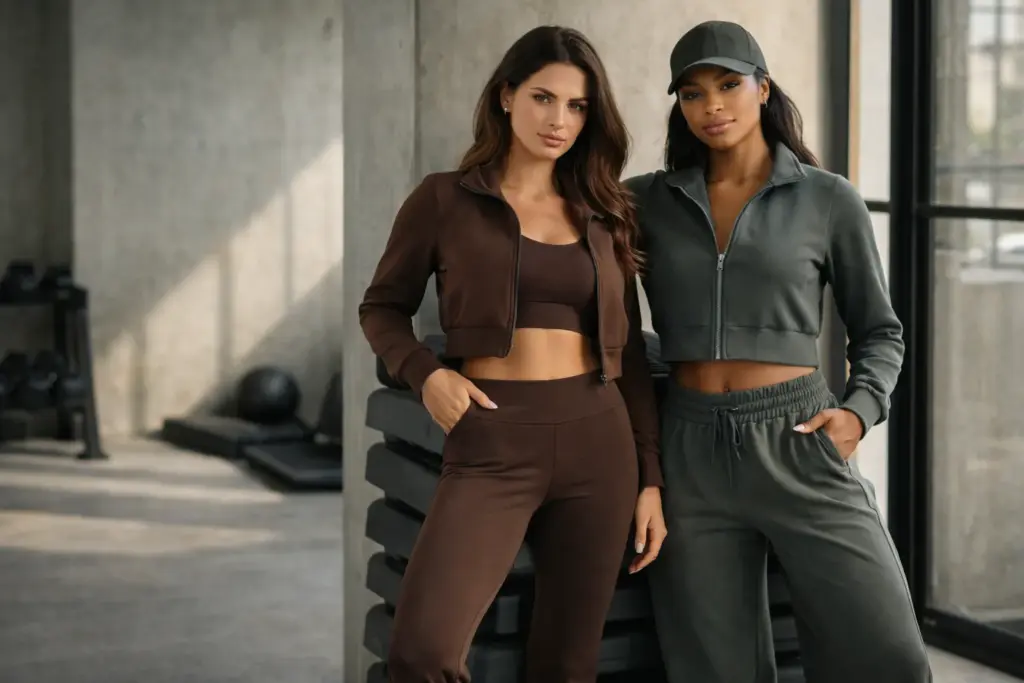
I see this set grow every year. People want sporty dressing outside the gym. So I do a cropped zip or a corset-style zip shape, and I match it with a wide-leg track pant. I also do a cleaner track jacket with a straight hem. I keep the pant leg wide but not sloppy. I keep the pocket bags strong. I offer this set in charcoal, slate, and olive because it looks modern. Then I add red piping or a red zipper pull for trend energy. This set sells because it feels like “fashion,” but the buyer still understands sizing and grading.
I learned from my own trips. I wore a soft set on a flight, and I still needed it to look tidy when I arrived. So I build travel sets with a quarter-zip top or a soft sweatshirt, plus a relaxed straight pant or a soft wide-leg. I often use a cable knit look or a textured knit, but I keep it easy to care for. I also make sure the rib does not bag out at the cuffs. Travel sets sell in wholesale because customers buy them as gifts, and they also buy them for daily life.
| Must-have set | Best-selling colors | Best fabric direction | Buyer-friendly add-ons |
|---|---|---|---|
| Bra + bootcut/capri | espresso, charcoal, buttermilk | brushed jersey, dense nylon/spandex | pocket, removable cups, clean logo |
| Zip layer + wide-leg pant | olive, slate, mocha | double-knit, tech woven | piping, contrast zipper, secure pockets |
| Quarter-zip + relaxed pant | cream, coffee, soft blue | textured knit, soft fleece | anti-pilling, stable rib, hangtag story |
My wholesale checklist for set programs
I keep my process simple because buyers hate surprises. I confirm fabric stock or lead time first. I confirm lab dips for the key colors next. I confirm grading rules and tolerances after that. I also lock the packaging plan early because sets need clear labeling. Then I align delivery dates with the selling season. I do not want a buyer to miss the window. I also prepare certification files and testing plans early, because I have seen suppliers fake documents in this industry, and I do not want that risk near my customers. When a buyer like Maria asks for competitive pricing, I protect quality by controlling the risk points, not by cutting the fabric standard. This is how I keep repeat orders healthy.
Conclusion
I see 2026 athleisure win with smarter leg shapes, warmer neutrals, and three core matching sets. I use fit control and fabric testing so trends turn into safe reorders.
Why I Write This
I am Lancy Chia from Truekung in China. I run a factory with over 200 workers, and I have 20 years of experience in foreign trade clothing production and export. I focus on B2B wholesale only, and I support OEM/ODM for brands and supermarkets worldwide.
I produce fashion women’s clothing, jackets, skirts, dresses, jeans, T-shirts, sweatshirts, down jackets, windbreakers, coats, fashion bags, sportswear, children’s clothing, and underwear. I ship to many markets, including the Netherlands, Denmark, Belgium, Norway, the UK, the USA, Germany, Australia, Thailand, Turkey, Italy, Russia, and Saudi Arabia.
If you want to develop a 2026 athleisure set program with stable quality and clear communication, you can reach me at [email protected], and you can see my business at https://truekung.com.
Views: 335