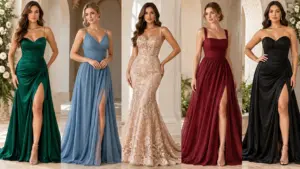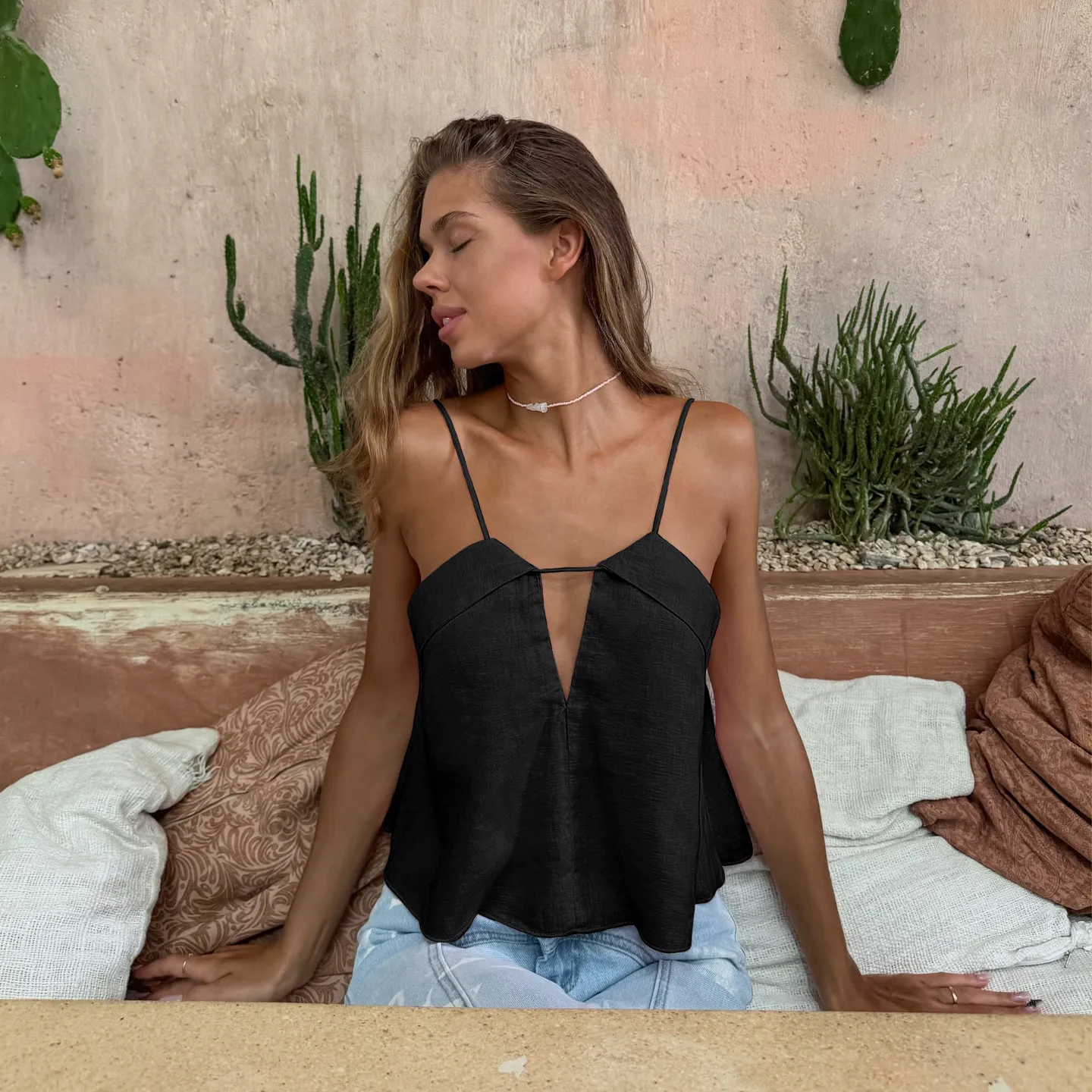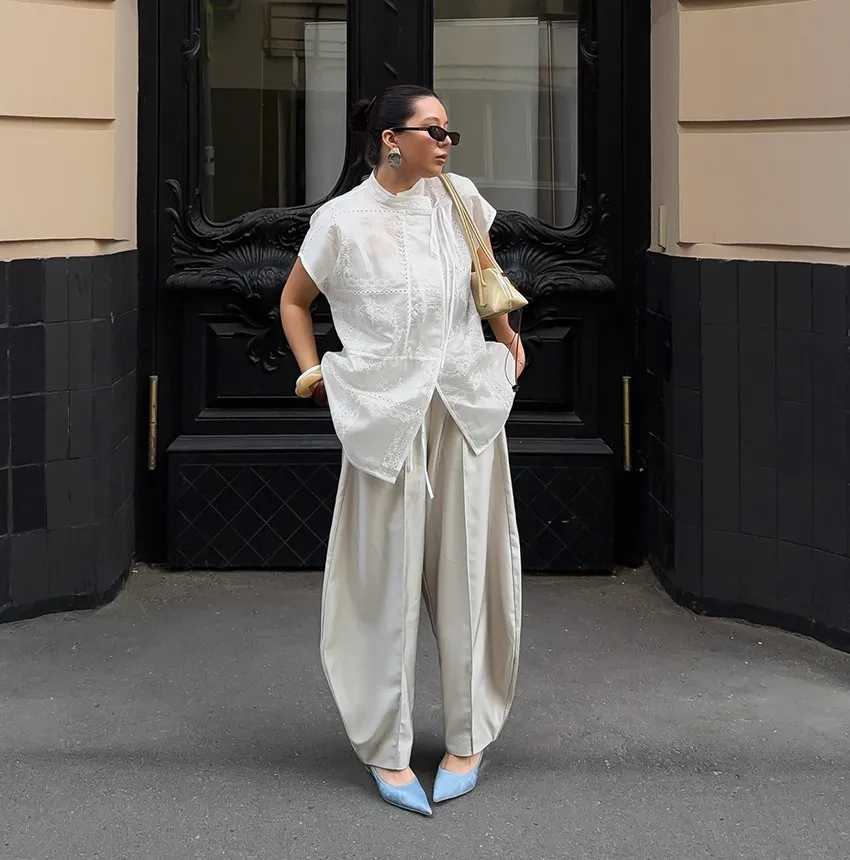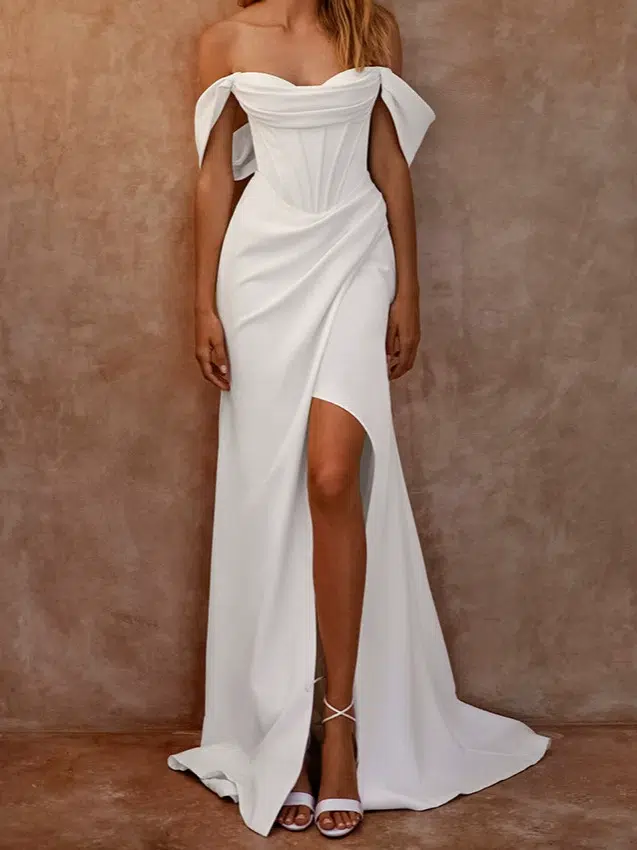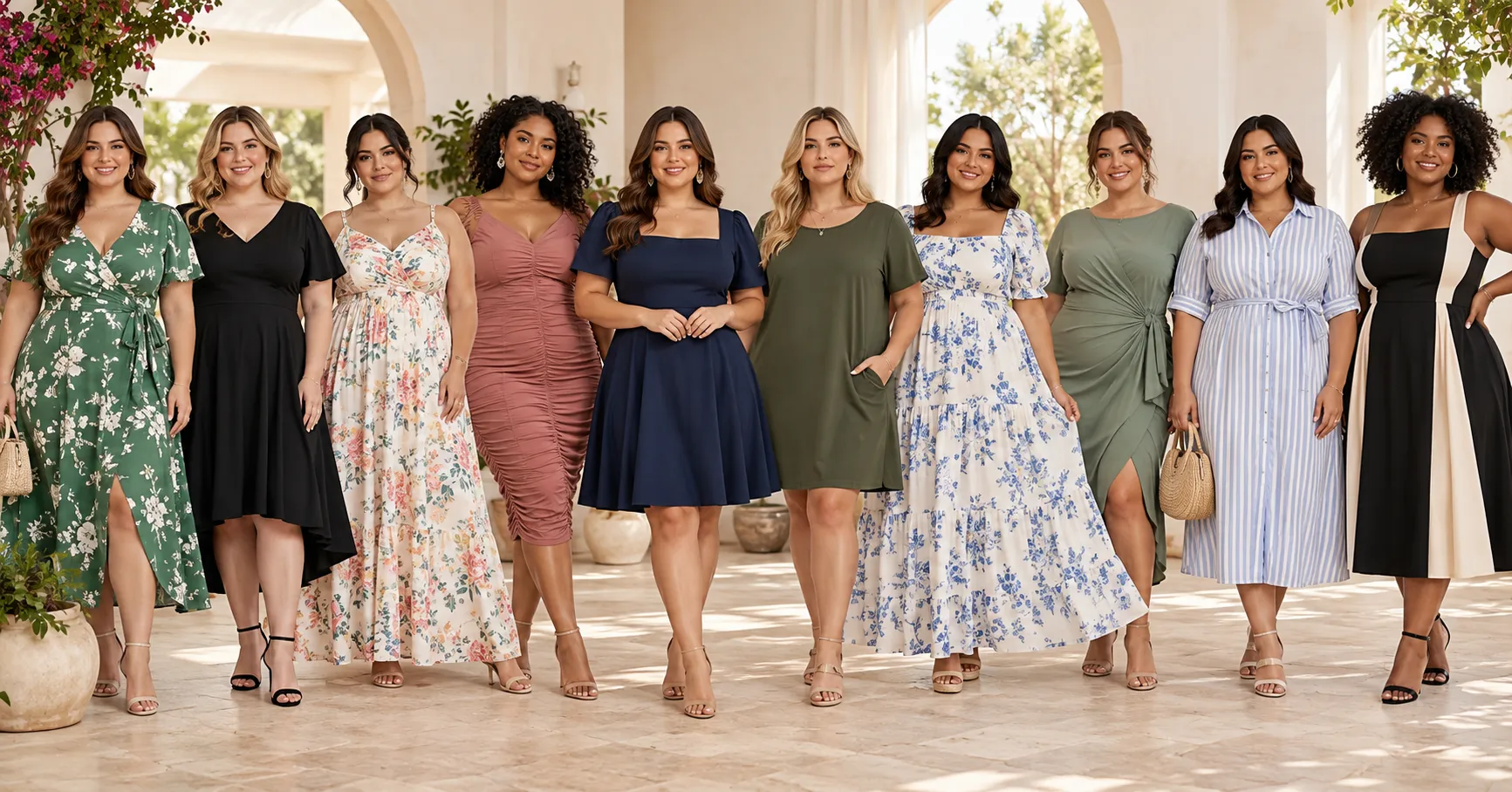

Finding a dress to disguise belly areas is not only about choosing a loose shape. Poor fabric, waist placement, and construction can make the stomach more visible. The better approach is to combine the right silhouette, fabric weight, drape, and fit.
Featured snippet: The most useful tummy-flattering dresses include wrap, A-line, empire-waist, ruched, fit-and-flare, shift, tiered, draped, shirt, and structured panel dresses. These styles can reduce visual focus on the stomach through waist placement, controlled volume, draping, vertical lines, and better fabric selection.
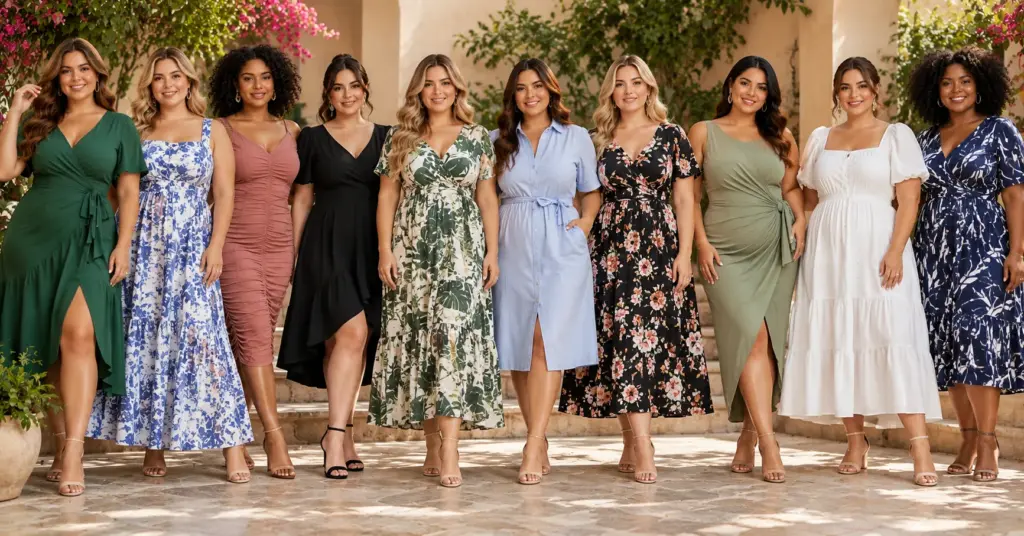
I am Lancy Chia from Truekung, a clothing factory in China with 20 years of export experience and more than 200 workers. We develop and manufacture different women’s fashion products, including dresses. From the factory side, I have learned that a flattering dress is created by more than a sketch. Pattern shape, fabric stretch, lining, seam position, gathering, and sample fitting all affect the final silhouette.
For brands developing dresses to hide tummy areas, I usually suggest looking at the whole garment instead of adding extra fabric around the stomach. Below are 10 practical dress constructions and the production points buyers should consider.
Which Dress Styles Can Help Disguise the Belly?
A common mistake is assuming that the biggest or loosest dress will hide the stomach. Too much volume can make the whole body look larger. A better dress to hide belly areas normally controls where the eye goes and where the garment sits away from the body.
Wrap, A-line, empire-waist, ruched, fit-and-flare, shift, tiered, draped, shirt, and structured panel dresses can all work well. The right choice depends on body shape, fabric, fit, occasion, and how much definition the wearer wants around the waist.
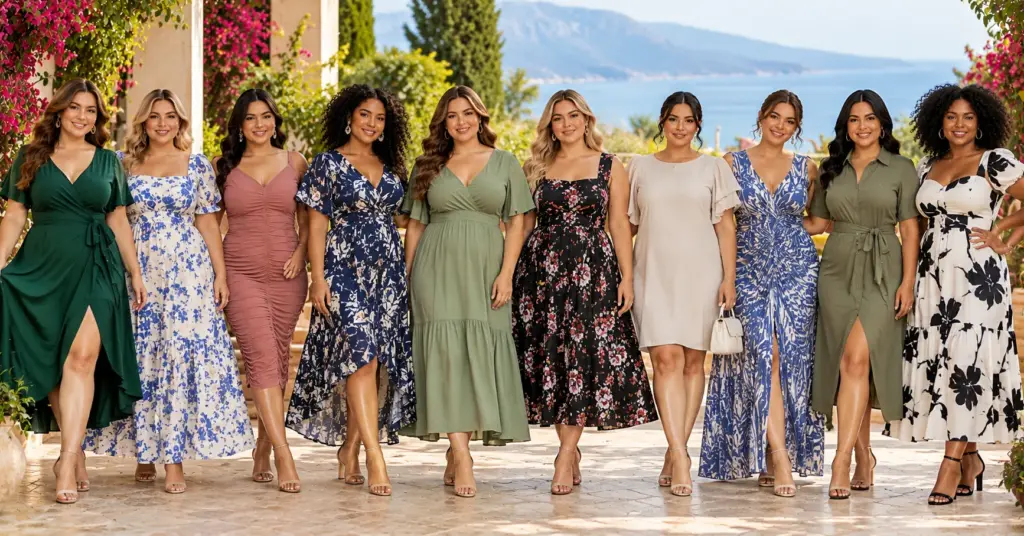
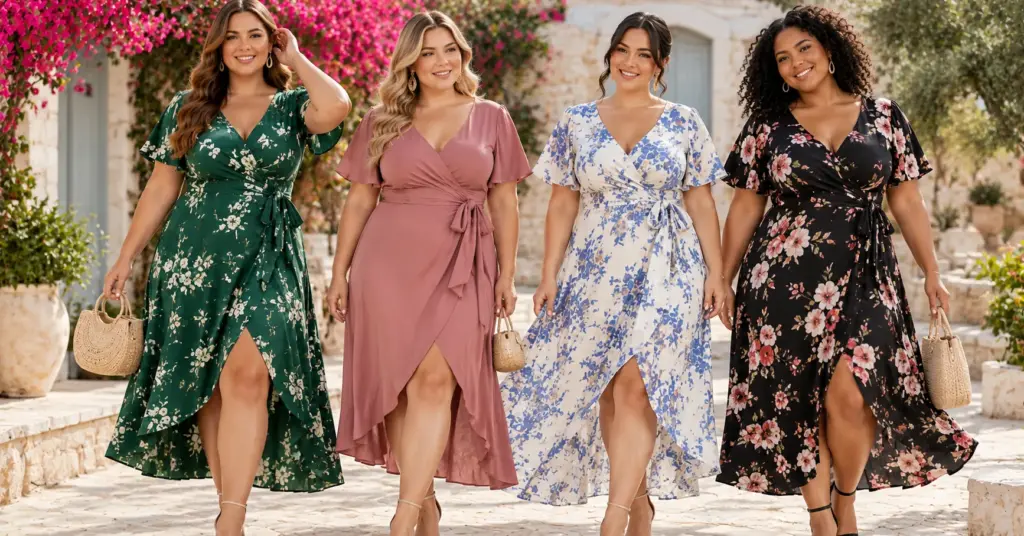
1. Wrap Dresses Create Diagonal Lines
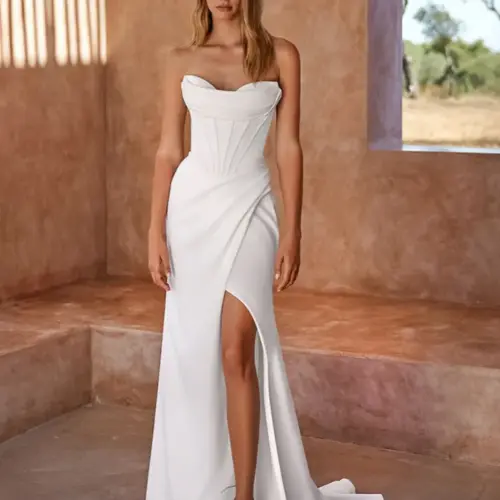
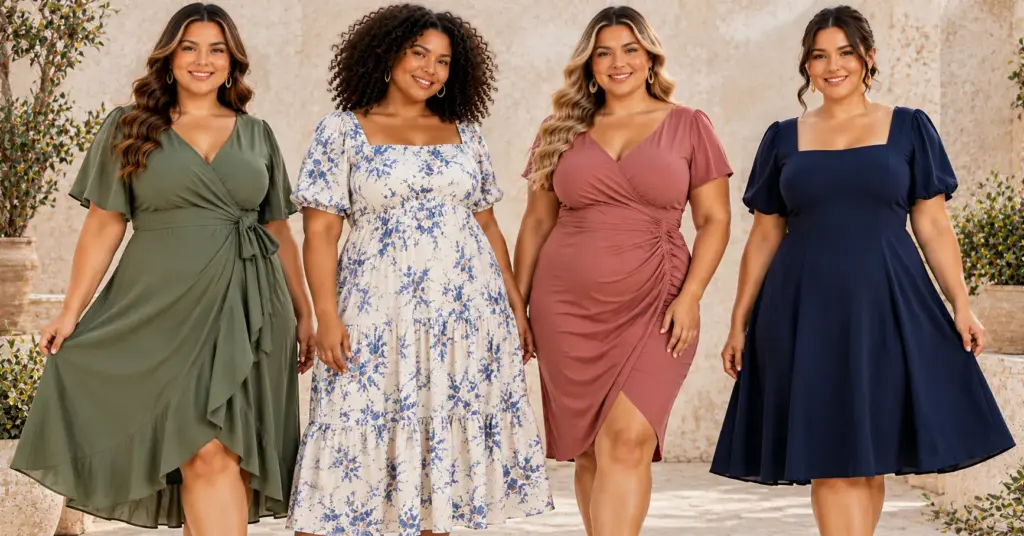
A wrap dress is one of the most familiar belly flattering dresses because its diagonal front naturally changes where the eye focuses. Instead of creating one horizontal line across the stomach, the neckline and overlapping front panels create movement from the shoulder toward the waist and hip. The waist tie also gives the wearer some adjustment.
However, construction matters. A thin jersey wrap dress can cling to the stomach even when the basic silhouette looks good on paper. A fabric with enough weight and recovery normally gives a cleaner result. The overlap must also be deep enough to provide coverage when the wearer sits or moves.
In my factory experience, the position of the tie is important. If it sits exactly on the fullest stomach area, the design may achieve the opposite of what the buyer expects. During sample development, I usually ask buyers to check the front view, side view, and seated fit rather than approving the sample only from standing photos.
2. A-Line Dresses Allow Controlled Space
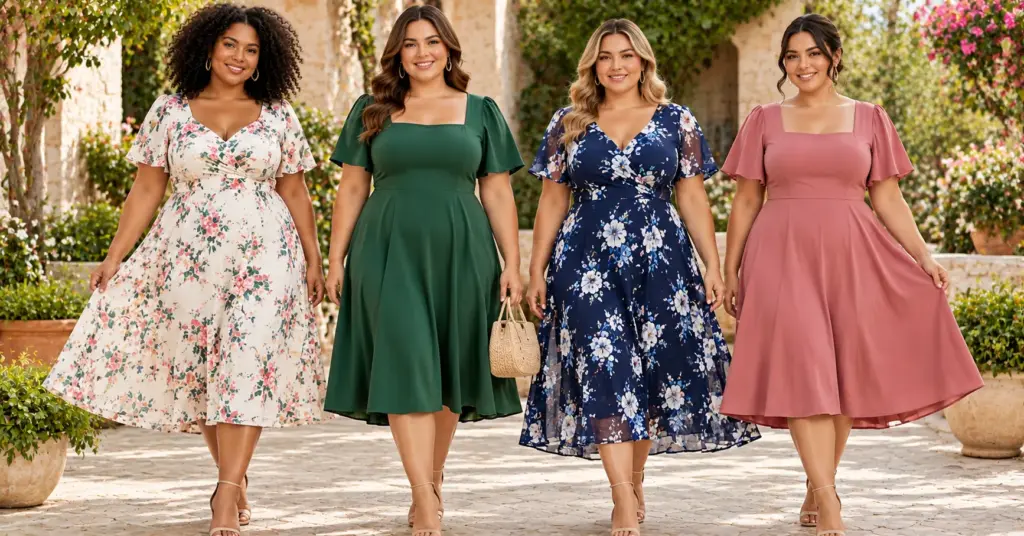
An A-line dress is narrower around the upper body and gradually becomes wider toward the hem. This construction can make it a practical dress for hiding tummy areas because the pattern does not need to follow every curve around the waist and lower stomach.
The key word is “gradually.” If the hem sweep is increased too aggressively, the garment may look oversized rather than flattering. Fabric also changes the result. A crisp woven fabric holds the A-line shape more clearly, while viscose or another fluid fabric creates a softer silhouette.
For buyers developing dresses for big stomach or general curve-friendly collections, the grading deserves attention. Simply enlarging every measurement proportionally may produce a poor fit. Bust, waist, hip, armhole, and garment length need to work together. The sample should be tested on the intended size range whenever possible.
3. Empire-Waist Dresses Move the Waistline Up
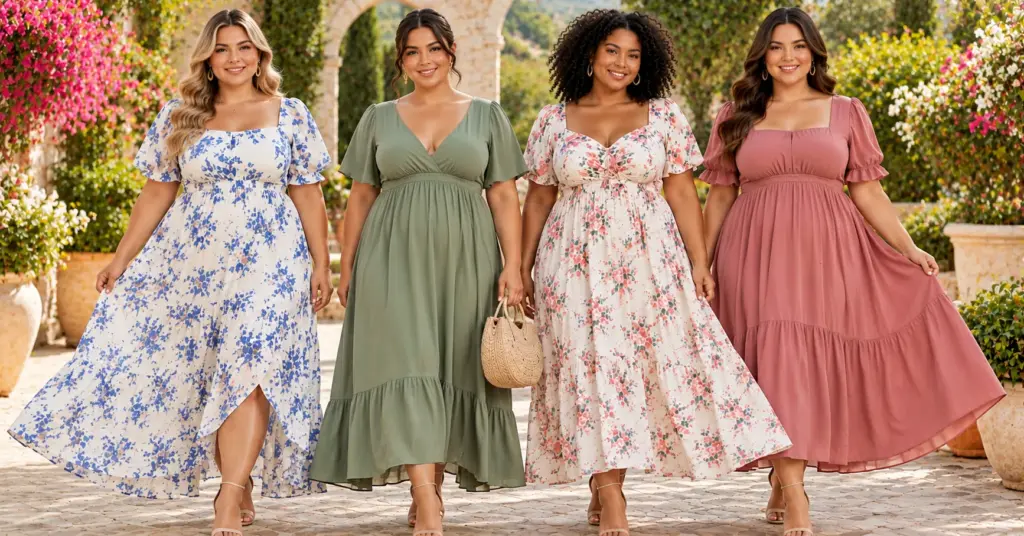
An empire-waist dress places the main seam or shaping under the bust rather than around the natural waist. The lower section then falls over the stomach. This can make it useful for customers searching for dresses that cover tummy areas without wearing a completely shapeless garment.
But the seam position needs careful development. Too high can make the bust section uncomfortable. Too low can place the seam directly across the stomach. The skirt volume also matters. Excess gathering under the bust can create unwanted bulk.
A serious clothing supplier should explain how the chosen fabric affects the gathering ratio and fall of the skirt. A lightweight woven fabric may need more fullness to create movement, while a thicker material may need less. Small pattern changes can create a noticeable difference in the finished silhouette.
4. Ruched Dresses Use Gathering Strategically
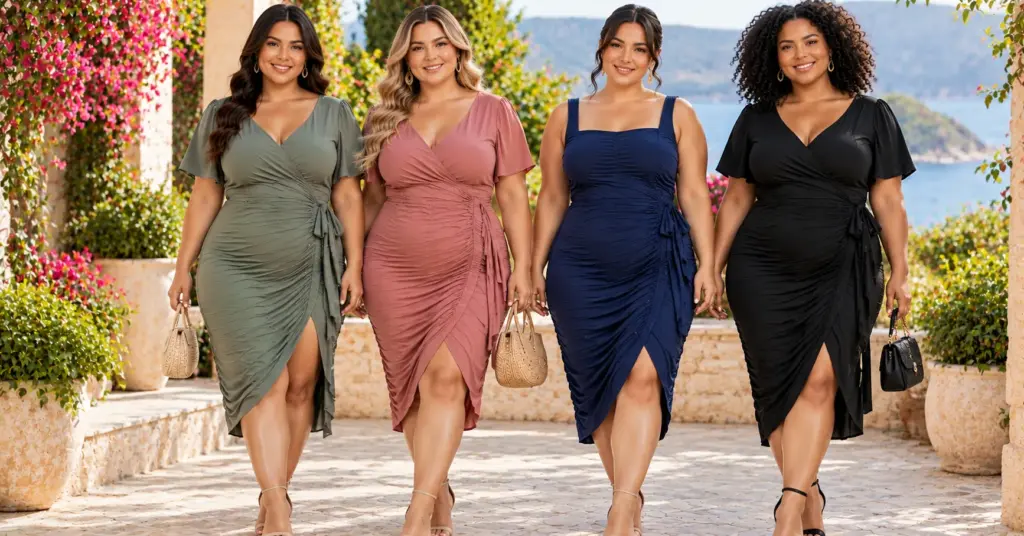
Ruching can help create dresses that hide stomach areas because controlled folds break up a flat surface. Instead of stretching fabric smoothly across the abdomen, the design intentionally creates texture and visual movement.
The location and amount of ruching are important. Side ruching is common because the gathering can be controlled through the side seam. Asymmetrical ruching can also redirect attention. However, excessive gathering may add bulk, especially in heavy fabric.
Stretch jersey is often suitable for this construction, but buyers should confirm fabric weight, stretch percentage, recovery, and opacity during development. A light-colored jersey may become more transparent when stretched. This looks small, but it can affect the customer’s impression of quality.
5. Fit-and-Flare Dresses Balance the Silhouette
A fit-and-flare dress has a more defined upper body before opening into a fuller skirt. Depending on waist placement, it can work as a dress to hide tummy areas while still creating a shaped silhouette.
Pattern balance is especially important here. If the bodice is too tight, the stomach can become more noticeable before the skirt starts to flare. If the waist seam is correctly positioned and the skirt has suitable volume, the transition looks smoother.
For private label development, I suggest confirming whether the target customer prefers a fitted, regular, or relaxed upper body. “Fit-and-flare” alone is not enough information for a factory. Measurements, reference photos, fabric information, and preferably a tech pack make the expected silhouette much clearer.
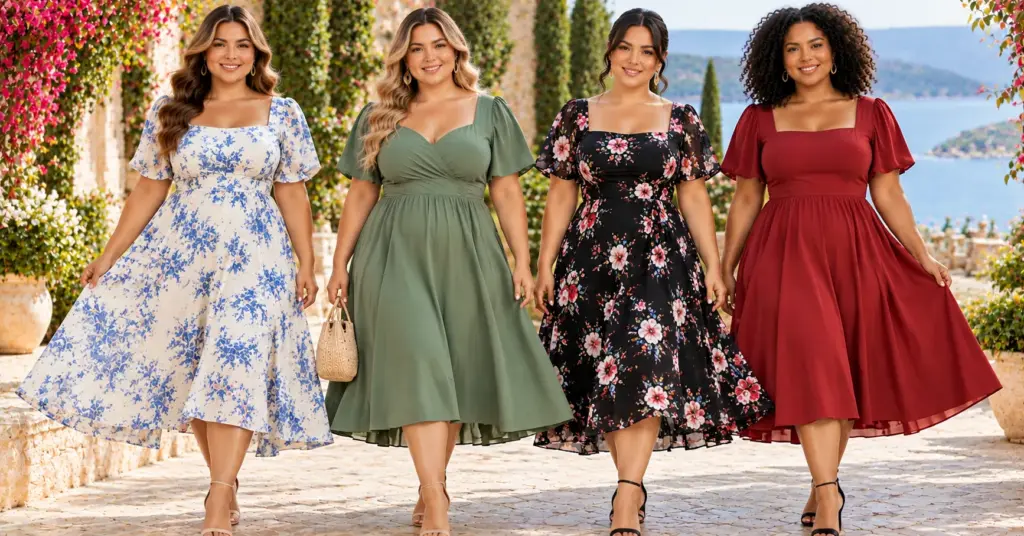
6. Shift Dresses Avoid Strong Waist Definition
A shift dress falls relatively straight from the shoulder or upper body. Because there is no strongly defined waist, it can be useful for customers who prefer tummy friendly dresses with a simple silhouette.
However, straight does not mean oversized. Shoulder width and bust fit still need to be correct. If both are too large, the dress can look like the wrong size rather than an intentional shift shape.
Length also changes the visual balance. A short shift, knee-length shift, and midi shift can look very different on the same body type. For brands selling several markets, this should be considered together with customer height and size specifications.
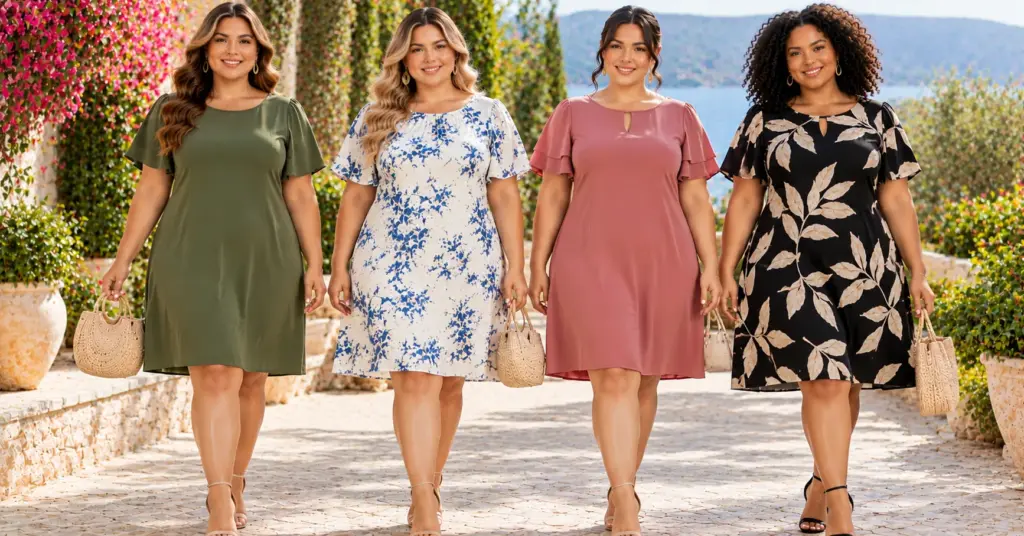
7. Tiered Dresses Add Volume Below the Body
Tiered dresses can be effective summer dresses that hide belly bulge because they normally have a relaxed body and increasing volume toward the hem. They are also suitable for lightweight cotton, rayon-type fabrics, and other materials used in warm-weather collections.
The main production risk is placing the first tier incorrectly. A gathered seam across the fullest stomach area can add unwanted volume. Moving that seam higher or lower may create a cleaner appearance.
Buyers should also consider fabric consumption. More tiers and greater gathering ratios increase material usage and sewing time. A design that looks simple can therefore cost more than a basic A-line dress.
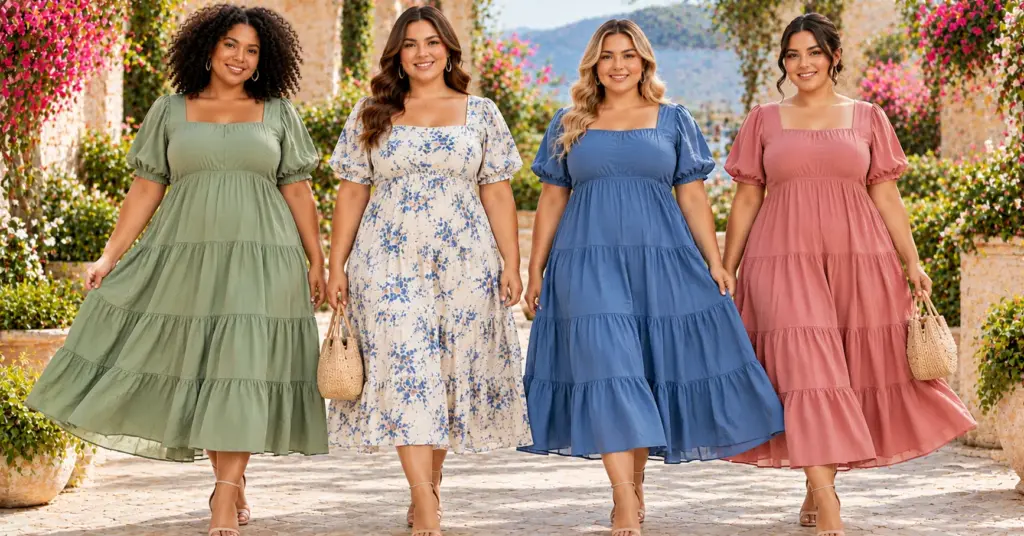
8. Draped Dresses Redirect Visual Attention
Draping can create some of the most flattering tummy dresses when the folds are controlled carefully. Front drapes, asymmetric panels, knot details, and crossover constructions can prevent the stomach area from appearing as one uninterrupted surface.
Draping is also sensitive to fabric. The same pattern can look completely different in soft jersey, satin, crepe, or a stiff woven material. Before confirming bulk production, the actual bulk fabric or a very close substitute should be tested.
I have seen buyers lose time because they approve a silhouette using one sample fabric and later change the fabric without considering how the drape will change. If draping is an important design feature, fabric approval and fit approval should be treated as connected decisions.
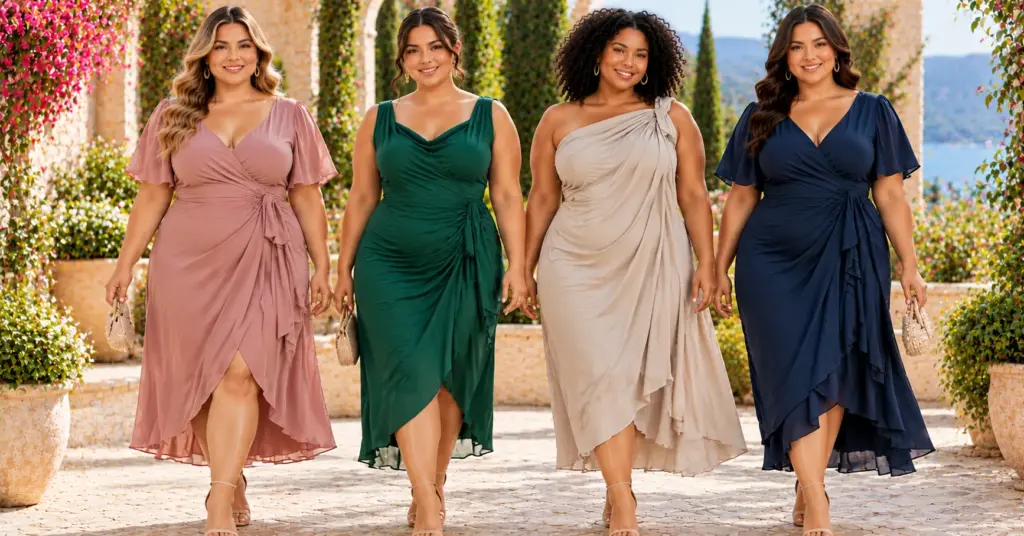
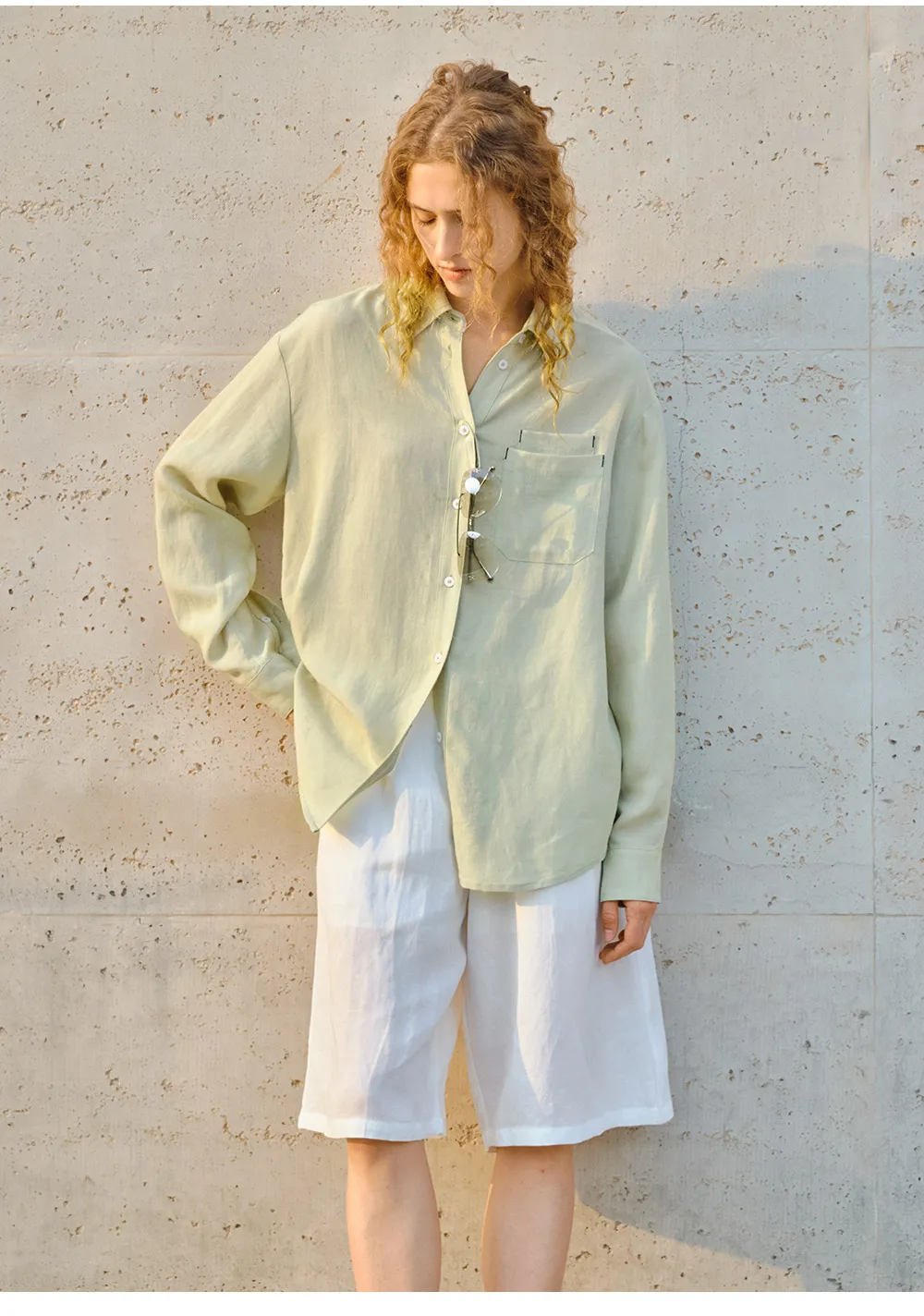
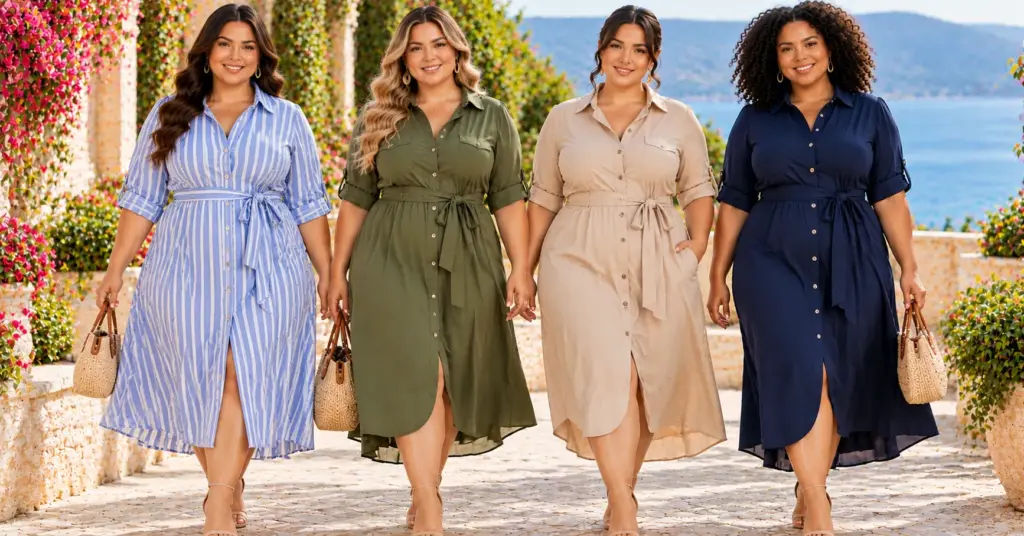
9. Shirt Dresses Use Vertical Details
A shirt dress can work well as a dress that covers belly areas because the front placket creates a strong vertical line. A relaxed waist, optional belt, curved hem, or longer length can further change the silhouette.
Button placement needs attention. If the dress is fitted through the bust or stomach, pulling between buttons can quickly make the garment look too small. This is particularly important when grading larger sizes.
Buyers can consider hidden buttons, adjusted button spacing, additional ease, or different fabric stretch depending on the design. The correct solution depends on the intended fit rather than one universal construction rule.
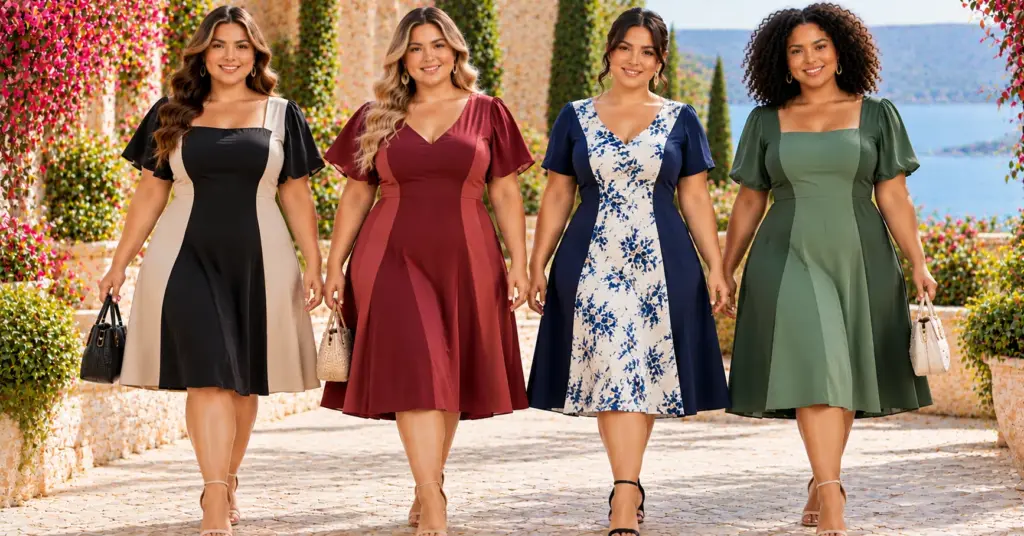
10. Panel Dresses Control Shape Through Seams
Panel dresses use seams such as princess lines or shaped side panels to control the garment without relying entirely on a tight waist. They can be useful when a brand wants slimming dresses to hide tummy areas with a more structured appearance.
Panels give pattern makers more opportunities to adjust the bust, waist, and hip shape. They can also be combined with contrasting colors or fabrics to create visual vertical lines.
The trade-off is production complexity. More panels mean more pattern pieces, cutting operations, seam matching, and sewing work. For very low target prices, a complicated panel design may not be the right solution.
What Buyers Should Check in the First Sample
| Почему это важно | Почему это важно | Моя рекомендация |
|---|---|---|
| положение талии | Changes where the eye focuses | Check it on the target body shape |
| Stomach ease | Too little causes pulling | Review front and side fit |
| Вес ткани | Light fabric may cling | Test the actual intended material |
| Восстановление ткани | Poor recovery causes distortion | Check after wearing and stretching |
| Gathering | Too much can add volume | Control the gathering ratio |
| положение шва | Can emphasize the stomach | Review on a fitted sample |
| Длина | Changes overall proportion | Confirm by size and target market |
| Оболочка | Affects drape and opacity | Примите решение на этапе разработки образца. |
Loose Fit Versus Controlled Shape
When developing dresses that hide your tummy, buyers often ask for more fabric around the waist. More ease can help, but there is a limit. If a size L dress needs 6 cm more ease at the stomach, for example, adding that amount only to the front waist can distort the side seam and make the garment hang forward. The pattern maker may need to distribute the additional space through the front panel, side seam, darts, gathering, or overall silhouette.
This is why a flattering dress cannot be developed from one waist measurement alone. Bust shape, hip measurement, back width, fabric behavior, and garment length all influence how the dress hangs.
Cost can also change. A wider A-line skirt, deeper wrap overlap, additional ruching, or fuller tier requires more fabric. Fabric consumption is often a major part of garment cost, so visual improvements need to be considered together with the target price.
My suggestion is to define the intended silhouette first and then adjust ease. A useful decision rule is simple: add volume where it improves movement and drape, not automatically everywhere around the stomach.
How Do Fabric and Construction Affect Tummy-Flattering Dresses?
A good dress style can still fail when the wrong fabric is used. Very thin, shiny, stiff, or poorly recovering fabrics may emphasize areas the design was supposed to soften. Construction choices can create the same problem.
For dresses to hide belly areas, fabric should match the silhouette. Fluid materials suit draped and wrap designs, while fabrics with more body can support A-line and structured panel dresses. Weight, stretch, opacity, recovery, surface finish, and lining should all be evaluated during sampling.
Fabric Weight Changes the Silhouette
Fabric weight affects how closely a dress follows the body. A very light knit may reveal body contours because gravity and stretch pull it against the skin. A slightly heavier material can sometimes fall more smoothly.
This does not mean heavier is always better. A thick fabric combined with gathering can add bulk. Heavy material may also be uncomfortable for summer collections.
Surface appearance matters too. High-shine materials reflect light differently from matte fabrics and can make folds more visible. Prints can break up large visual areas, although print scale and placement should be checked carefully.
For OEM/ODM development, buyers should provide either a fabric specification, physical reference, or clear performance requirement. Saying “soft polyester” is usually not enough to reproduce a particular silhouette.
Poor Construction Can Create New Bulges
Seams, elastic, zippers, pockets, lining, and labels may seem like secondary details, but they can change fit. A thick waist seam can create a visible ridge. Tight elastic can divide the body at an unwanted point. Side pockets can open if there is insufficient hip ease.
The zipper area is another point to check. A poorly installed invisible zipper can wave or create tension at the back or side seam. Lining that is smaller than the shell can also pull the outer fabric inward.
During QC, measurements should be checked against the approved specification. Workmanship should also be inspected for puckering, twisting, uneven gathering, seam tension, and symmetry where the design requires it.
Fabric Questions to Confirm Before Bulk
| Почему это важно | Почему это важно | Моя рекомендация |
|---|---|---|
| Состав ткани | Affects performance and labeling | Перед оформлением заказа подтвердите заказ. |
| Масса | Changes drape and coverage | Compare swatches or samples |
| Потягиваться | Affects fit and comfort | Specify direction and requirement |
| Восстановление | Helps garments keep shape | Test the intended fabric |
| Непрозрачность | Prevents unwanted transparency | Проверьте при обычном освещении. |
| Усадка | Can change measurements | Test before bulk cutting |
| Цвет | May affect visual appearance | Approve lab dips when applicable |
| Оболочка | Changes comfort and drape | Decide before final costing |
Better Coverage Can Increase Cost
Buyers sometimes request a low-cost dress and then add heavier fabric, full lining, double front panels, extra ruching, and more skirt volume. Every individual change sounds small, but together they can significantly change material consumption and sewing operations.
Consider a summer dress that initially uses a simple unlined A-line construction. After sampling, the buyer finds the light fabric too transparent. One solution is to change to a heavier fabric. Another is to add lining. A third is to use a double layer only in selected areas. These options do not have the same cost, hand feel, or production time.
The cheapest solution is not automatically the right one. A heavier shell may reduce transparency but make the summer dress warmer. Full lining improves coverage but adds fabric and sewing. Partial lining may balance cost and comfort but requires additional construction decisions.
I usually ask buyers to check which requirement is essential: opacity, lightweight feel, target price, or a specific drape. My buyer decision rule is to protect the feature customers will notice most, then simplify less important construction details to control cost.
How Should Brands Develop Dresses That Hide the Tummy?
Searching for the best dress to hide tummy areas can provide design inspiration, but a factory cannot manufacture a search term. The supplier needs measurements, fabric direction, construction details, quantity, labels, packaging, and a clear definition of the intended fit.
Brands should turn the desired flattering effect into measurable product requirements. Confirm silhouette, ease, waist position, length, fabric, stretch, lining, size chart, and construction during sampling. Then approve the fit and material before moving into bulk production.
Start With a Clear Reference
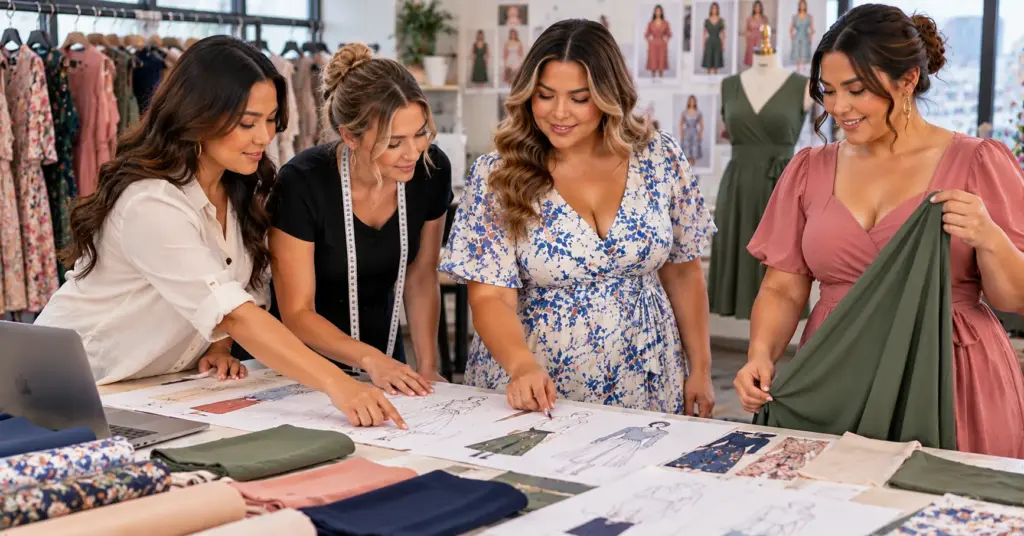
A reference image is useful because it quickly communicates the general design. However, images alone cannot show exact measurements, fabric composition, internal construction, or grading rules.
A tech pack provides clearer information. It can include garment measurements, sketches, stitching, trims, labels, colorways, artwork, and packaging requirements. If the buyer does not have a complete tech pack, reference garments, detailed photos, and a measurement chart can still help the development discussion.
For a tummy-flattering design, clearly mark important points such as under-bust seam position, natural waist position, front gathering area, wrap overlap, and skirt length. These details affect the final result directly.
Do Not Approve Fit From Photos Alone
Photos are useful for communication, especially when buyer and factory are in different countries. But a photo cannot fully show comfort, movement, fabric feel, zipper operation, transparency, or how a garment behaves when sitting.
If fit is important to the brand, a physical sample should normally be evaluated against the approved specification and intended customer.
Buyers should also distinguish design comments from workmanship problems. “Move the waist seam 2 cm higher” is a design or fit revision. “The left and right gathering is inconsistent” may be a workmanship issue. Clear comments make sample revisions faster and reduce misunderstanding before bulk production.
Что нужно утвердить перед началом производства
| Почему это важно | Почему это важно | Моя рекомендация |
|---|---|---|
| Образец для примерки | Confirms silhouette | Review on intended body/size |
| Измерения | Контроль согласованности | Approve a measurement chart |
| Ткань | Determines drape and comfort | Approve before bulk |
| Цвета | Controls visual consistency | Confirm required standard |
| Отделка | Влияние на функции и внешний вид | Approve buttons, zips, elastic |
| Этикетки | Required for private label orders | Confirm artwork and placement |
| Упаковка | Affects packing and logistics | Finalize before production |
| План доставки | Влияет на планирование производства. | Confirm realistic dates |
Customization, MOQ, and Delivery Are Connected
Customization gives brands more control, but every custom element creates another material or production requirement. Custom fabric colors, printed patterns, branded buttons, special zippers, labels, hang tags, and packaging may each have their own supplier MOQ and lead time. The garment factory therefore cannot always reduce every component to the same small quantity.
For example, a buyer may want 100 dresses divided into five colors, with custom fabric colors and branded trims. The garment quantity is 100 pieces, but each color represents only 20 pieces. Fabric and trim suppliers may not support those quantities economically. The factory may need to use available colors, increase the quantity, change materials, or accept higher unit costs where possible.
Sampling also takes time. A sample may require pattern development, material sourcing, sewing, fitting, comments, and revision before bulk production can begin. Repeated design changes naturally move the production schedule.
My suggestion is to prioritize customization. Decide which details make the product distinctive and which can use existing options. A practical decision rule is: when quantity is small, customize the details customers value most and keep hidden or low-impact components simpler.
Что подготовить перед обращением на швейную фабрику в Китае?
Clear information helps a factory provide a more accurate price, timeline, material suggestion, and production plan. Even when some details are undecided, tell the supplier what is confirmed and what still needs recommendations.
| Информация | Пример | Почему это необходимо |
|---|---|---|
| Продукт | Платье, куртка или спортивная одежда | Подтверждает пригодность для использования на заводе. |
| Фотографии/технический пакет | Изображения, замеры, конструкция | Поддерживает ценообразование и разработку. |
| Ткань | Хлопок, джинсовая ткань, полиэстер или что-то неизвестное | Влияет на стоимость, минимальный объем заказа и сроки. |
| Размеры | Размеры XS–XL или пользовательский размерный ряд | Влияет на модели поведения и потребление. |
| Количество | По стилю и цвету | Влияет на минимальный объем заказа и цену за единицу товара. |
| Рынок | ЕС, Великобритания, США или Австралия | Влияет на размеры и соответствие требованиям. |
| Уровень качества | Оптовая или премиум-сегмент | Руководства по материалам и качеству работы |
| Упаковка | полиэтиленовый пакет, коробка или штрихкод | Влияет на стоимость и сроки. |
| Этикетки | Информация о воротнике, уходе, размере и бирке. | Влияет на макет, минимальный объем заказа и стоимость. |
| Крайний срок | Дата прибытия на склад | Поддерживает планирование производства. |
| Сертификаты | Необходимые сертификаты | Подтверждает соответствие требованиям |
| Целевая цена | Цена FOB или цена с доставкой | Помогает предложить реалистичные варианты. |
I usually ask buyers to separate essential requirements from optional preferences. For example, a particular silhouette and fabric performance may be essential, while a custom zipper pull could be optional. This gives the factory more room to suggest practical solutions when MOQ, price, or delivery creates a conflict.
Когда стоит запросить расчет у Truekung?
Truekung may suit buyers who need OEM/ODM clothing production, private labels, sample development, bulk production, stable export communication, and practical factory support.
If you are developing dresses or other clothing, you can send me your product images or tech packs, required quantities, target market, quality requirements, and expected delivery date. If the fabric or construction is not finalized, tell me what result you want so we can discuss practical options before quoting.
Электронная почта: [email protected]
Веб-сайт: https://truekung.com
Заключение
The right dress to disguise belly areas depends on silhouette, fabric, pattern, and construction working together. For brands, develop the flattering effect through clear measurements and careful sampling rather than simply making the stomach area larger or looser.
Просмотров: 0