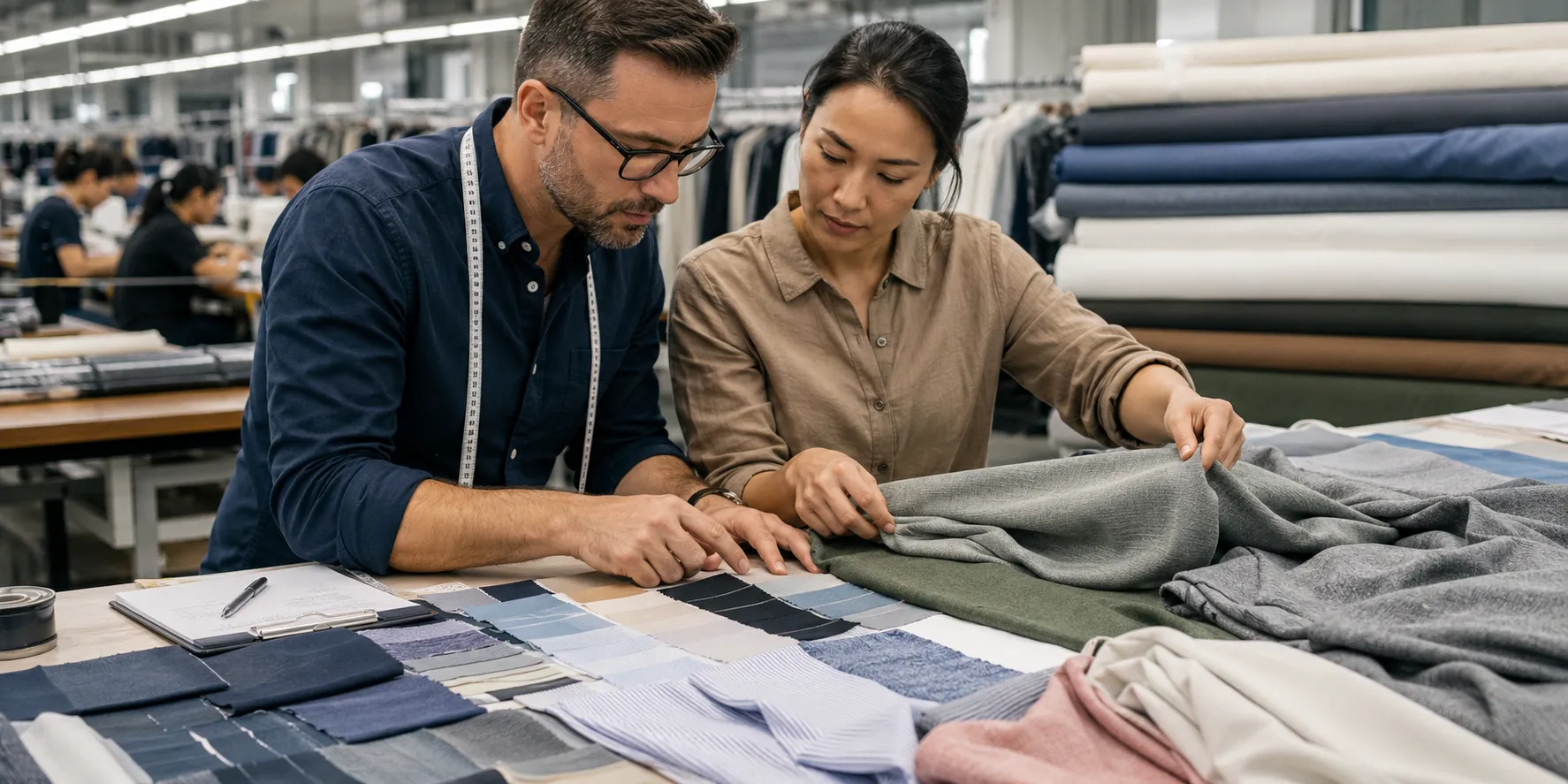

O alegere greșită a materialului poate transforma un design bun într-o producție lentă, randamente mari și profit pierdut. Am văzut această problemă de multe ori.
Pentru a alege materialul pentru producție în vrac, potriviți materialul cu scopul articolului de îmbrăcăminte, verificați GSM și conținutul de fibre, confirmați MOQ-ul fabricii și timpul de livrare, testați contracția și culoarea și verificați certificatele de conformitate înainte de a plasa comanda în vrac.
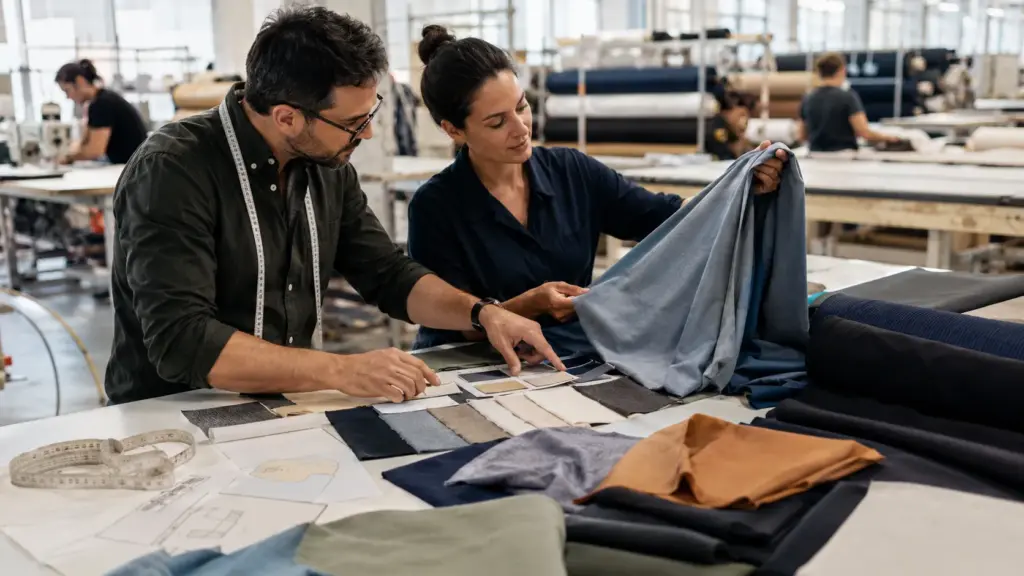
Când ajut un cumpărător să pregătească o comandă de haine în vrac, nu încep cu cel mai mic preț. Încep cu articolul de îmbrăcăminte. Un material trebuie să fie compatibil cu designul, prețul țintă, fluxul de lucru din fabrică și utilizarea finală a clientului. Am învățat că materialul nu este doar un material. Este baza întregii comenzi. Dacă baza este greșită, fiecare pas ulterior devine mai dificil.
Cum potrivesc materialul cu scopul hainei?
Mulți cumpărători se îndrăgostesc de o mostră de material textil, dar s-ar putea ca articolul de îmbrăcăminte să aibă nevoie de altceva. Un material textil frumos poate totuși să nu fie folosit.
Adaptez materialul la scopul articolului vestimentar verificând grosimea materialului (GSM), drapajul, elasticitatea, conținutul de fibre și sezonul de purtare. Materialul ușor se potrivește topurilor de vară. Materialul mediu se potrivește cămășilor și rochiilor. Materialul gros se potrivește jachetelor, paltoanelor și hainelor structurate.
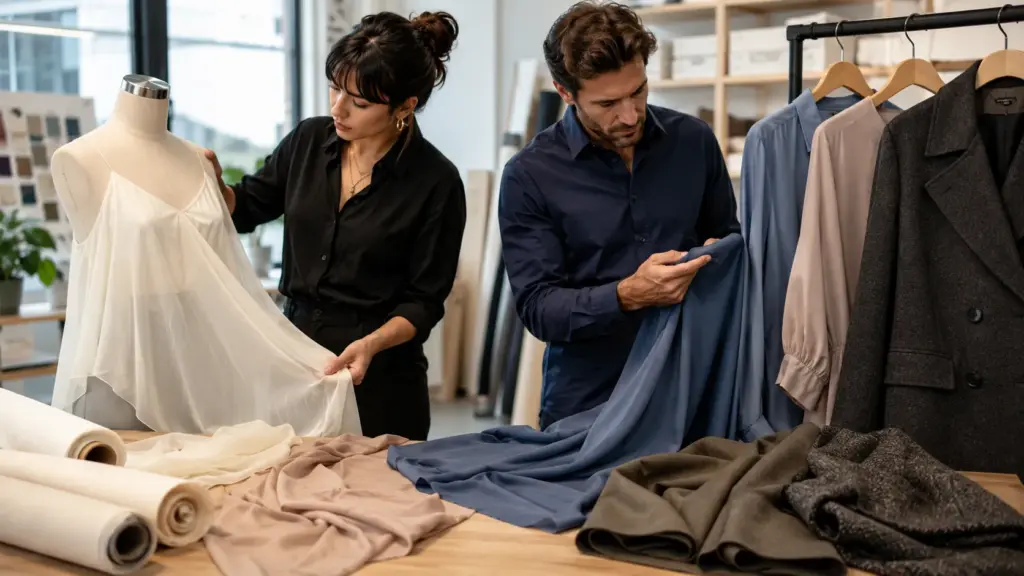
Primul lucru pe care îl verific este GSM. GSM înseamnă grame pe metru pătrat. Îmi spune greutatea materialului. Un jerseu de 120 GSM poate funcționa bine pentru un tricou de vară. Un material de 260 GSM poate funcționa mai bine pentru un hanorac. Un amestec de lână de 400 GSM poate fi potrivit pentru o haină. De asemenea, verific senzația la atingere. Unele materiale par groase, dar se simt lejere. Unele materiale par ușoare, dar au o structură fermă. Întreb ce trebuie să facă articolul de îmbrăcăminte. Trebuie să fie moale, călduroasă, respirabilă, elastică sau rezistentă la șifonare?
Direcția comună a țesăturilor în funcție de tipul de îmbrăcăminte
| Tipul de îmbrăcăminte | Interval GSM comun | Focus pe țesături | Risc dacă greșești |
|---|---|---|---|
| Tricouri | 100–200 GSM | Moliciune, respirabilitate, control al contracției | Răsucire, formă proastă, material transparent |
| Rochii | 120–250 GSM | Drapare, culoare, confort | Potrivire nepotrivită, mișcare slabă |
| Hanorace | 240–380 GSM | Căldură, periere, formă | Scămoșare, contracție, costuri mari |
| Jachete | 180–350 GSM | Structură, acoperire, rezistență | Caroserie slabă, finisaje slabe |
| Paltoane | 350+ GSM | Căldură, structură, potrivire a căptușelii | Cost mare, cusut lent |
Conținutul de fibre contează și el. Bumbacul se simte natural și respirabil, dar se poate contracta mai mult. Poliesterul este rezistent și stabil, dar se poate simți mai puțin premium. Viscoza are o căptușeală frumoasă, dar se poate contracta și șifona. Un amestec poate adesea rezolva o problemă fără a genera costuri prea mari. De exemplu, un amestec de bumbac și poliester poate menține confortul, îmbunătățind în același timp stabilitatea. În munca mea în fabrică, de obicei, întreb mai întâi cumpărătorul despre clientul final. O comandă la supermarket poate necesita durabilitate și control al prețurilor. Un brand de tip boutique poate avea nevoie de o senzație mai bună la atingere și o culoare mai bogată. Cel mai bun material nu este întotdeauna cel mai scump. Ci materialul care se potrivește cu îmbrăcămintea și cu piața.
Cum verific freza MOQ (minim valoare minimă), timpul de execuție și costul materialului?
O țesătură poate părea perfectă, dar totuși poate fi imposibil de atins pentru comanda ta. MOQ-ul, timpul de livrare și costul total al țesăturii pot bloca întregul plan.
Verific cantitatea minimă de material (MOQ) a materialului, timpul de livrare, timpul de vopsire, timpul de livrare, costul pe metru, deșeurile de tăiere și randamentul materialului înainte de producția în vrac. Acest lucru mă ajută să știu dacă materialul poate susține prețul comenzii și data livrării.
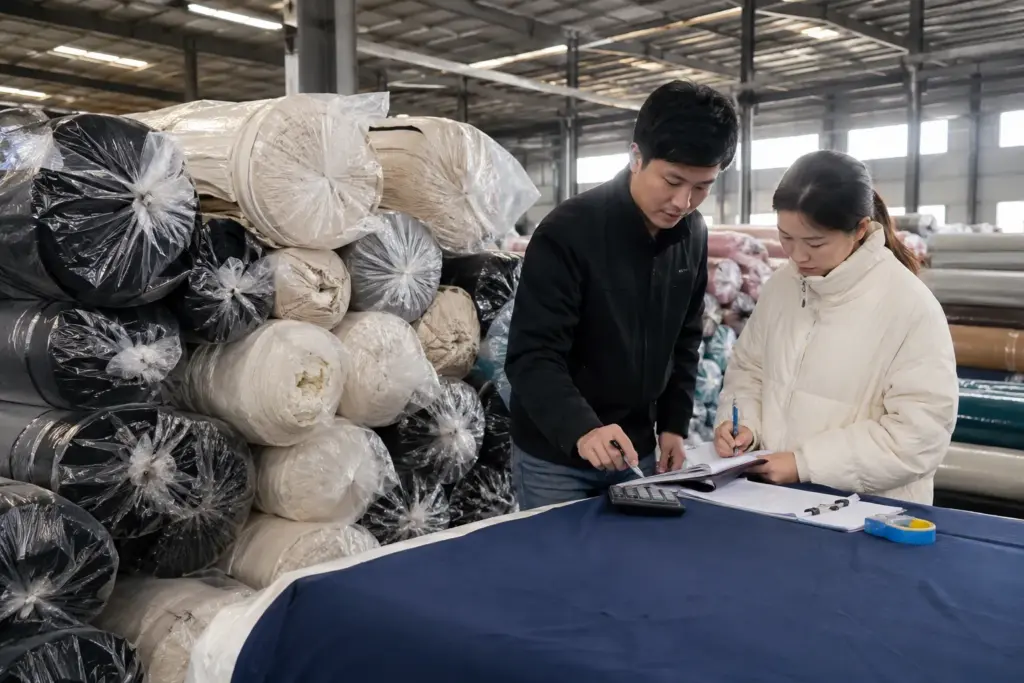
În producția în vrac, pun întotdeauna mai întâi o întrebare simplă fabricii. Puteți accepta această dimensiune a comenzii și această dată de livrare? Unele fabrici au MOQ-uri ridicate. Pot solicita 1.000 de metri, 3.000 de metri sau mai mult per culoare. Aceasta poate fi o problemă pentru comenzile de la mărci mici sau comenzile cu multe culori. Dacă cumpărătorul dorește doar 300 de bucăți per culoare, un MOQ al fabricii poate crea prea mult material rămas. În acest caz, materialul stoc sau materialul jobber ar putea fi mai bun. Poate oferi mai puțină libertate de culoare, dar poate reduce riscul.
Costul materialului este mai mare decât prețul pe metru
| Articol de cost | Ce verific | De ce contează |
|---|---|---|
| Prețul materialului textil | Cost pe metru sau yard | Afectează direct costul hainelor |
| Lățimea materialului | Lățime utilizabilă după margini | Afectează eficiența markerilor |
| Consumul de țesături | Metri utilizați per articol de îmbrăcăminte | Decide costul real al materialelor |
| Reducerea deșeurilor | Material suplimentar pentru pierderi de tăiere | Protejează producția în vrac |
| MOQ (minim valoare minimă) | Comandă minimă per culoare | Afectează fluxul de numerar și riscul acțiunilor |
| Perioada de graţie | Greige, vopsire, finisare, transport | Afectează sezonul de livrare |
De asemenea, calculez randamentul materialului. Un material ieftin, cu lățime îngustă, poate costa mai mult decât un material mai scump, cu lățime mai mare. Un material cu dungi, carouri, imprimeu textil sau cu imprimeu direcțional poate necesita mai multe risipe la tăiere. Am văzut cumpărători care compară prețul doar pe metru. Acest lucru este riscant. Adevărata întrebare este de cât material este nevoie pentru un articol de îmbrăcăminte finit. De asemenea, las loc pentru risipă. Tăierea în vrac nu este niciodată perfectă. Pot exista pierderi de margini, pierderi de nuanță, potrivire a panourilor și piese respinse. Pentru peste hotare aprovizionare, De asemenea, verific cu atenție timpul de livrare. Producția de țesături, vopsirea, finisarea, testarea și expedierea pot dura multe săptămâni. Un cost unitar scăzut nu este util dacă mărfurile ratează sezonul de reduceri. O bună planificare a țesăturilor menține profitul și calendarul sub control.
De ce ar trebui să testez materialul înainte de a comanda în vrac?
Omiterea testării materialului textil poate economisi câteva zile, dar poate distruge întreaga comandă în vrac. Problemele legate de material devin mult mai mari după tăiere.
Testez materialul înainte de a comanda în vrac, verificând mostrele, eşantion lungimea, contracția, decolorarea, scărpuirea, senzația la atingere, imersia în laborator și nuanța în vrac. Testarea verifică potrivirea, culoarea, calitate, și încrederea clienților.
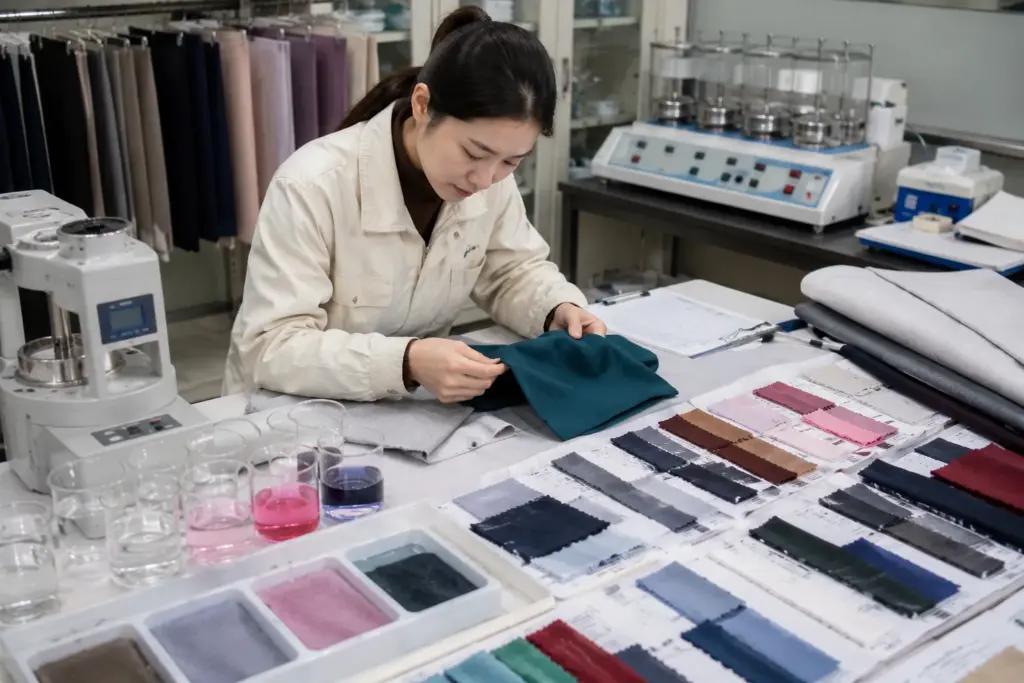
Nu sugerez niciodată să treceți direct de la o fotografie la o comandă de material textil în vrac. Fotografiile ascund multe probleme. Un material textil poate părea neted într-o imagine, dar se poate simți aspru în mână. O culoare poate părea corectă pe ecran, dar poate fi diferită în lumina naturală. Întotdeauna cer mai întâi o mostră fizică. Pentru comenzile importante, cer o mostră de lungime în metri. O mostră de lungime în metri ajută creatorul de tipare și echipa de cusut să înțeleagă comportamentul real al materialului textil.
Teste cheie ale țesăturilor înainte de producția în vrac
| Test | Ceea ce caut | Problemă comună |
|---|---|---|
| Verificarea senzației tactile | Moliciune, grosime, suprafață | Materialul pare mai ieftin decât mă așteptam |
| Test de contracție | Schimbarea dimensiunii după spălare | Haina devine prea mică |
| Testul de sângerare a culorii | Stabilitatea colorantului | Pete de culoare pe alte părți |
| Aprobare de imersie în laborator | Potrivirea culorilor înainte de vopsire în vrac | Culoare greșită a mărcii |
| Test de stropire | Suprafața după frecare | Haina se învechește prea repede |
| Recuperarea prin întindere | Materialul revine după întindere | Genunchii, coatele sau manșetele se deformează |
| Verificare a nuanței în vrac | Aceeași culoare pe toate rolele | Panourile au diferențe de culoare |
Contracția este unul dintre cele mai mari riscuri. Bumbacul, viscoza, inul și unele amestecuri se pot contracta după spălare. Dacă contracția nu este controlată, articolul finit se poate deteriora după ce este spălat de client. De asemenea, testez scurgerea culorii, în principal pentru culorile închise, culorile roșii și țesăturile asemănătoare denimului. Imersiile în laborator sunt foarte importante pentru culorile personalizate. Rog fabrica de țesături să furnizeze mostre fizice vopsite, nu doar imagini digitale color. Apoi, cumpărătorul poate compara culoarea cu standardul mărcii. De asemenea, verific rolele de material înainte de tăiere. Rolele vrac pot avea diferențe de nuanță. Dacă sala de croitorie amestecă rolele greșite, un articol de îmbrăcăminte poate avea două tonuri. Acest tip de greșeală este greu de reparat. Testarea pare lentă la început, dar face producția vrac mai rapidă și mai sigură.
Cum aleg materialul fără a pierde controlul asupra calității și conformității?
Un material textil ieftin poate deveni scump dacă nu trece un test, provoacă retururi sau folosește certificate false. Conformitatea trebuie verificată din timp.
Aleg țesături conforme solicitând certificate valide, rapoarte de testare, detalii despre fibre, dovezi de siguranță chimică și istoricul furnizorilor. Pentru comenzi sustenabile sau de export, verific standarde precum OEKO-TEX sau GOTS atunci când este necesar.
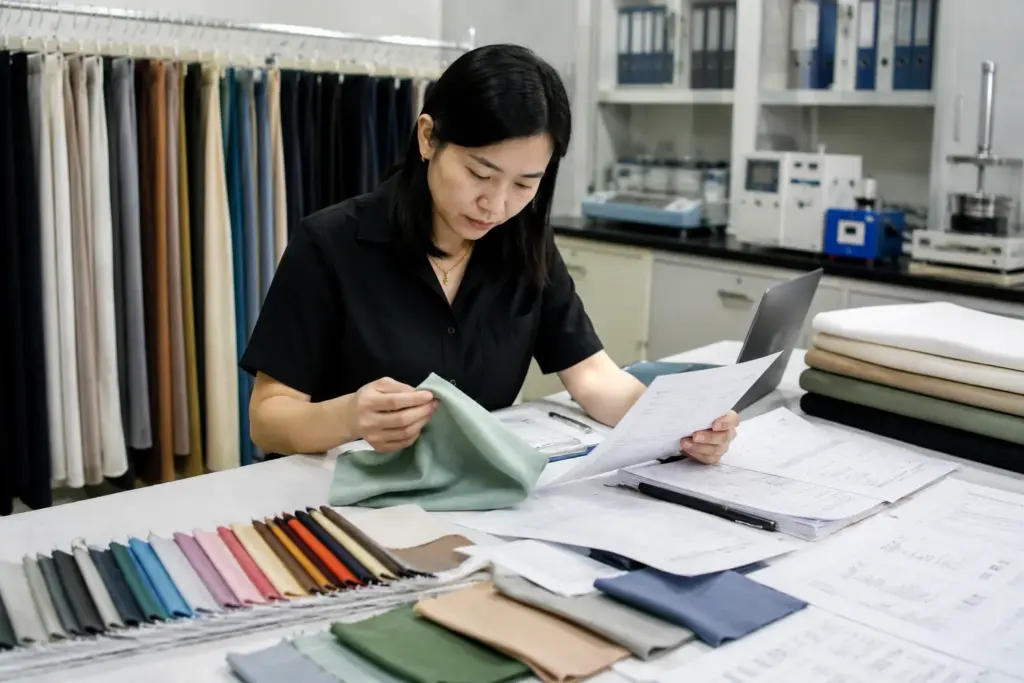
În comenzile de îmbrăcăminte pentru export, conformitatea țesăturilor nu este un detaliu de mică importanță. Mulți cumpărători vând către supermarketuri, lanțuri de magazine sau platforme online. Acești clienți pot solicita siguranță chimică, acuratețe a fibrelor și aprovizionare responsabilă. Cer furnizorilor certificate devreme, nu după producția în vrac. De asemenea, verific dacă certificatul aparține fabricii reale. Unii furnizori prezintă certificate de la o altă companie. Acest lucru creează riscuri atât pentru cumpărător, cât și pentru fabrică. Am întâlnit cumpărători care se îngrijorează de certificatele false și înțeleg această îngrijorare. Un furnizor bun ar trebui să fie dispus să împărtășească documente clare și să explice procesul de testare.
Verificări de conformitate pe care le utilizez înainte de vânzarea în bloc
| Punct de conformitate | Ceea ce cer | De ce întreb |
|---|---|---|
| Conținut de fibre | Raportul privind compoziția țesăturilor | Pentru a evita afirmațiile greșite despre etichete |
| Siguranța chimică | OEKO-TEX sau raport de testare | Pentru a reduce riscul de substanțe nocive |
| Declarație organică | Certificat GOTS, dacă este necesar | Pentru a susține marketingul organic |
| Revendicare reciclată | Dovadă de conținut reciclat | Pentru a susține afirmațiile despre sustenabilitate |
| Identitatea morii | Numele titularului certificatului | Pentru a evita documentele false |
| Nevoile pieței de export | Standardul țării cumpărătorului | Pentru a evita problemele vamale sau ale comercianților cu amănuntul |
Controlul calității include și comportamentul în producție. Unele țesături sunt greu de cusut. Unele țesături alunecă în timpul tăierii. Unele țesături necesită ace speciale, căptușeală, topire sau control al spălării. Discuți cu echipa de producție înainte de a confirma țesătura. O țesătură poate trece testul de atingere al cumpărătorului, dar totuși încetinește linia de cusut. Cusutul lent crește costul forței de muncă și presiunea de livrare. De aceea, îmi place să conectez alegerea țesăturii cu capacitatea fabricii. La Truekung, mă gândesc la țesătură ca la o parte a sistemului complet de producție. Cumpărătorul are nevoie de un produs bun. Fabrica are nevoie de material stabil. Sezonul de vânzări necesită livrare la timp. Când aceste trei aspecte se potrivesc, comanda are șanse mult mai mari de succes.
Cum iau decizia finală privind materialul pentru producția în vrac?
Prea multe opțiuni pot deruta un cumpărător. Un proces decizional simplu mă ajută să compar materialele textile cu mai puțină emoție și mai mult control.
Iau decizia finală privind materialul comparând scopul articolului de îmbrăcăminte, prețul țintă, cantitatea minimă de comandă (MOQ), timpul de livrare, rezultatele testelor, comportamentul la cusut și conformitatea. Aprob materialul vrac doar atunci când acesta corespunde designului și planului de afaceri.
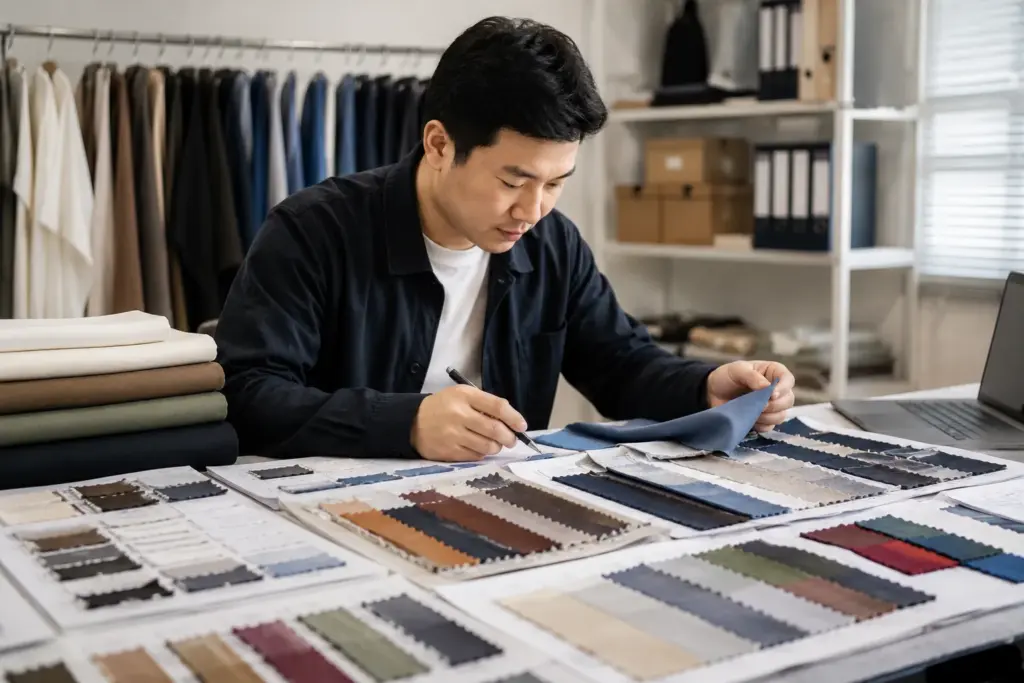
Când iau o decizie finală privind materialul, nu mă uit la un singur factor. Folosesc un scor simplu în minte. În primul rând, întreb dacă materialul se potrivește designului. În al doilea rând, întreb dacă se potrivește clientului țintă. În al treilea rând, întreb dacă se potrivește prețului. În al patrulea rând, întreb dacă fabrica poate livra la timp. În al cincilea rând, întreb dacă testarea este acceptabilă. Acest proces îl ține pe cumpărător departe de decizii emoționale. Un material poate părea foarte atractiv, dar poate fi prea scump, prea lent sau prea instabil.
Lista mea de verificare finală pentru aprobarea materialului textil
| Întrebare | Semn bun | Semn de avertizare |
|---|---|---|
| Se potrivește hainei? | Greutate, drapaj și senzație la atingere corecte | Arată frumos, dar nu se potrivește stilului |
| Se potrivește prețului? | Costul îmbrăcămintei susține marja de profit | Costul materialului nu lasă profit |
| Este MOQ-ul rezonabil? | Cantitatea comenzii corespunde cu MOQ-ul fabricii | Prea mult material rămas |
| Este timpul de livrare sigur? | Materialul ajunge înainte de planul de tăiere | Materialul textil ajunge aproape de data expedierii |
| A trecut testele? | Contracția și culoarea sunt stabile | Scurgerea culorii sau contracție ridicată |
| Poate fabrica să-l coasă? | Tăiere și cusut stabile | Alunecare, încrețire sau deteriorare a acului |
| Sunt documentele clare? | Rapoarte și certificate valabile | Certificate lipsă sau neclare |
De asemenea, sugerez să păstrați materialul de rezervă atunci când comanda este importantă. Materialul de rezervă nu ar trebui să fie aleatoriu. Ar trebui să aibă o greutate, o senzație la atingere, o direcție a culorii și un nivel de preț similare. Acest lucru este util atunci când primul material are probleme cu MOQ-ul (minimum tone of stock), teste de laborator eșuate sau timp de livrare lung. Pentru cumpărătorii care se aprovizionează din China, comunicarea este, de asemenea, foarte importantă. O fișă clară a materialului ajută foarte mult. Ar trebui să includă numele materialului, compoziția, GSM (multimetrul general), lățimea, culoarea, finisajul, MOQ-ul (minimum tone of stock), timpul de livrare, nevoile de testare și prețul țintă. Acest document reduce neînțelegerile dintre cumpărător, furnizor, fabrică și fabrică. Din experiența mea, cea mai bună alegere a materialului nu este o presupunere. Este o decizie controlată, bazată pe nevoile îmbrăcămintei, limitele afacerii și faptele testate.
Concluzie
Materialul potrivit protejează designul, costul, livrarea și încrederea. Îl aleg prin scopul propus, testare, controlul furnizorilor și o planificare clară a producției.
Dacă pregătești o comandă de haine în vrac și nu ești sigur ce material este sigur pentru designul tău, te pot ajuta să verifici direcția materialului, MOQ-ul, costul, nevoile de testare și riscul de producție înainte de a plasa comanda.
La Truekung, eu și echipa mea lucrăm cu branduri, angrosiști și supermarketuri pentru producția de îmbrăcăminte OEM/ODM. Mă puteți contacta la [email protected] sau vizitați https://truekung.com pentru a discuta despre următorul dumneavoastră proiect de îmbrăcăminte în vrac.
Vizualizări: 114