Văd cumpărătorii confuzi din cauza acetat. Își fac griji cu privire la calitate, respirabilitate și îngrijire. De asemenea, își fac griji cu privire la afirmațiile “false” și etichetele neclare.
Acetat material textil este un material textil din acetat, neted și strălucitor, fabricat din fibre de acetat de celuloză. Îl folosesc atunci când vreau o drapătură asemănătoare mătăsii la un cost mai mic, adesea pentru căptușeli și rochii, dar evit căldura puternică și uzura excesivă.

Îmi amintesc de un apel în care o cumpărătoare m-a întrebat: “Ce este acetatul?”, iar în minutul următor m-a întrebat: “Acetatul este natural sau sintetic?”. Am putut auzi îndoiala în vocea ei. Știam, de asemenea, că nu era singura. Dacă îi explic acetatul într-un mod simplu, restul discuțiilor despre aprovizionare devine ușor, iar alegerile de design devin mai sigure.
Ce este materialul acetat și din ce este fabricat acetatul?
Aud adesea “ce este materialul acetat” imediat după ce un cumpărător atinge o căptușeală strălucitoare. Le place senzația la atingere, apoi se tem că este ieftin sau fragil. Înțeleg această teamă, deoarece o alegere greșită a materialului poate strica un sezon.
Acetatul este o țesătură din acetat de celuloză, fabricată din celuloză vegetală, care este transformată într-o fabrică. Nu este pur natural, precum bumbacul, și nici pur sintetic, precum poliesterul.
Semnificația acetatului în țesături
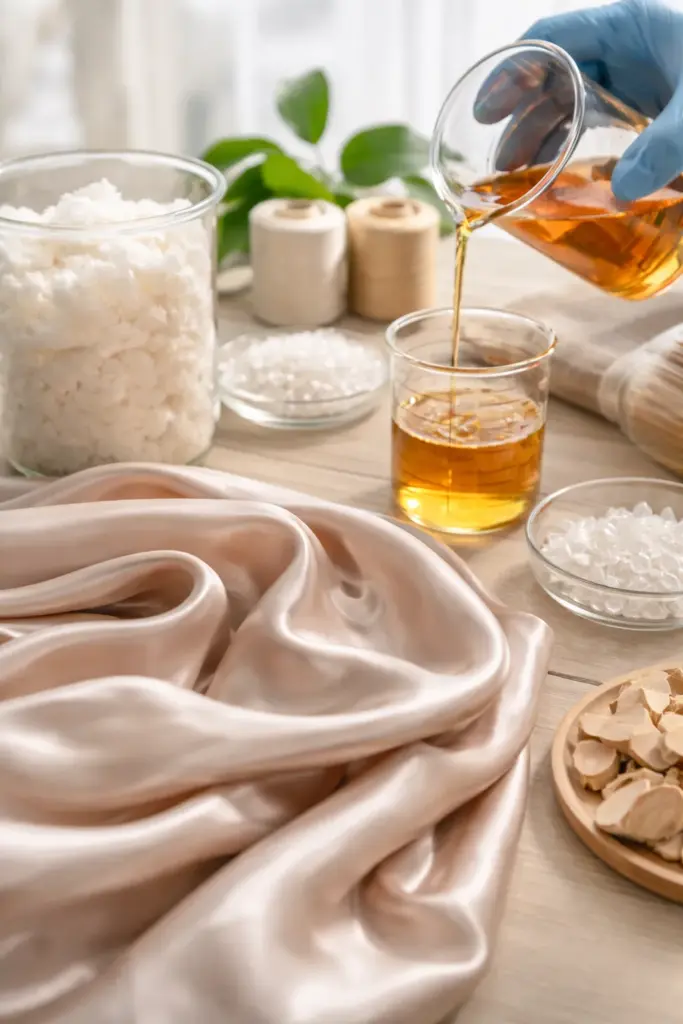
Explic semnificația acetatului în țesături astfel. Le spun cumpărătorilor că materialul acetat pornește de la celuloză, apoi devine un compus acetat în cadrul procesului și apoi se transformă în fibre de acetat filabile. Folosesc cuvântul “semisintetic” în cadrul întâlnirilor, deoarece corespunde modului în care gândesc cumpărătorii. Sursa brută este naturală. Fibra finită este artificială.
De la celuloză la fibre de acetat
Descriu din ce se face acetatul în pași simpli. O moară folosește celuloză din pulpă de lemn sau linter de bumbac. Moara o tratează cu substanțe chimice de acetilare pentru a forma acetat de celuloză. Moara o dizolvă într-o soluție de filare. Moara o împinge prin filare pentru a produce fibră de acetat. De aceea, este posibil să vedeți “fibră de acetat” sau “material acetat” pe etichete.
Raion și acetat și raion acetat
Primesc și întrebări de genul “acetat de raion” și “raion și acetat”. Le spun cumpărătorilor că atât raionul de viscoză, cât și acetatul provin din celuloză, dar utilizează chimii diferite. Uneori, oamenii numesc acetatul “acetat de raion”, în conversații informale, dar în producție și etichetare, acetatul este o categorie separată.
Termeni de căutare comuni și probleme de ortografie
Unii cumpărători îmi trimit capturi de ecran cu greșeli de scriere, cum ar fi “ce este acitatul”, “asitat”, “asatat”, “accetat”, “acetat” sau “ce este acetați”. Nu râd. Pur și simplu confirm că se referă la țesătura din acetat din îmbrăcăminte. Apoi repet literele scrise cu acetat o dată, astfel încât echipa să poată căuta corect.
| Tipul cumpărătorilor cu termeni de căutare | Ceea ce înseamnă de obicei | Ce răspund într-un singur rând |
|---|---|---|
| ce este acetatul / ce este acetatul | acetat în țesătură | Este o fibră artificială pe bază de celuloză, cu o senzație netedă la atingere. |
| ce este acitate / asitate / asatate | greșeală de ortografie a cuvântului acetat | Te referi la acetat. Se drapă ca mătasea și necesită îngrijire la temperatură scăzută. |
| acetat / acetat | acetat într-o altă limbă sau formă prescurtată | Este tot din material textil din acetat. Vă rog să distribuiți fotografia etichetei. |
| compus acetat | chimia din spatele ei | Fibra provine din acetat de celuloză, fabricat într-un proces controlat. |
Care sunt caracteristicile cheie ale țesăturii din acetat în îmbrăcăminte?
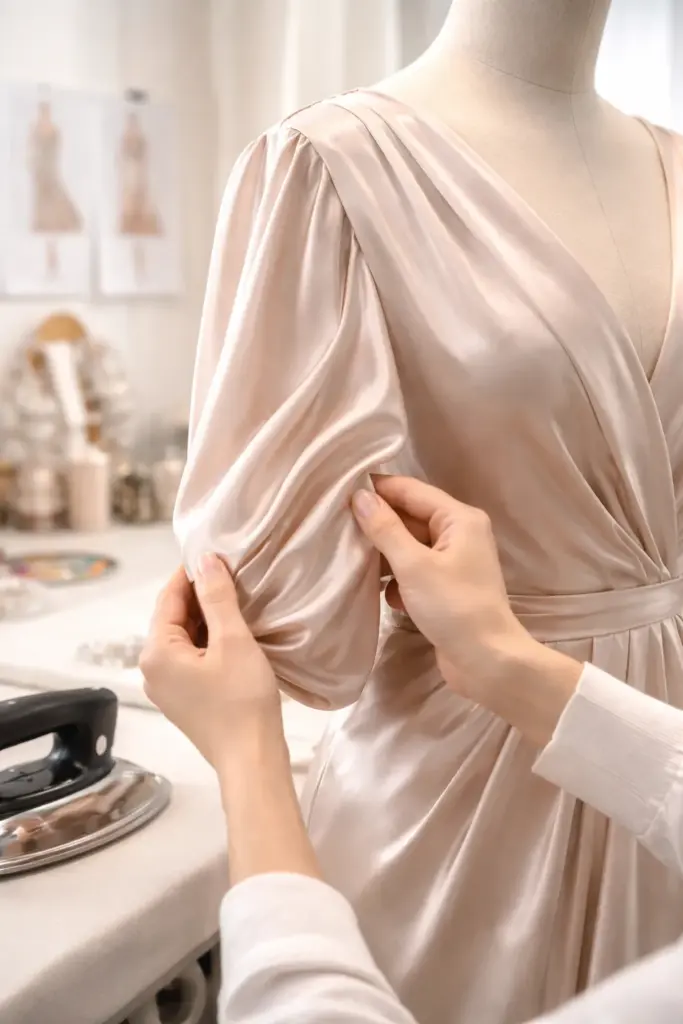
Am observat rapid caracteristicile țesăturii din acetat în camera de probă. Materialul arată elegant sub lumină. Se simte rece și neted. Materialul își arată limitele și dacă haina este expusă la frecare sau căldură.
Acetatul din haine oferă strălucire și o căptușeală moale, dar se poate topi la căldură mare și se poate agăța mai mult decât alte fibre. Îl tratez ca pe un “material de înfrumusețare”, nu ca pe un “material de lucru”.”
Cum descriu cumpărătorilor caracteristicile țesăturii din acetat
Când cumpărătorii de tipul Maria întreabă despre caracteristicile țesăturii din acetat, mă concentrez pe ceea ce vor vedea pe un umeraș și pe ceea ce vor simți clienții lor. Vorbesc mai întâi despre drapaj, luciu și atingere. Apoi vorbesc despre îngrijire și durabilitate. Această ordine menține subiectul clar.
Performanță în condiții de uzură reală
Am manipulat multe mostre de haine din acetat. Am observat că acetatul se poate șifona, dar își poate reveni și la forma inițială după ce este aburit cu grijă. Am observat că acetatul poate acumula electricitate statică pe vreme uscată. Am observat că acetatul poate fi mai puțin respirabil decât țesăturile deschise, dar totuși se simte mai ușor decât multe materiale sintetice grele. Dacă un cumpărător întreabă “acetatul este respirabil”, spun că depinde de țesătură și de designul hainei și sugerez adăugarea de orificii de ventilație sau croieli mai largi pentru stilurile de vară.
Riscuri de căldură și presare
Avertiz echipele cu privire la călcare. Acetatul poate lustrui, poate da prea multă strălucire sau chiar se poate deforma la căldură puternică. Rog fabricile să folosească o lavetă de călcat, la temperatură scăzută și contact rapid. De asemenea, recomand curățarea chimică pentru anumite stiluri, în special pentru acetatul structurat. rochie bucăți.
| Proprietate | Ce văd în haină | Unde îl folosesc | Ceea ce evit |
|---|---|---|---|
| Luciu | strălucire asemănătoare mătăsii | ținute de seară, bluze, căptușeli | aspect rustic, elemente de bază mate |
| Decora | mișcarea fluidelor | fuste, rochii, ținute cu picioare largi | croială rigidă, cu excepția cazului în care este amestecată |
| Senzație de atingere | neted, rece | atingere premium la preț mediu | articole de joacă dure pentru copii |
| Răspuns la căldură | sensibil | finisare la temperatură scăzută | presare la cald, uscător cu temperatură ridicată |
| Abraziune | se poate agăța | straturile interioare | rucsacuri care se freacă, pantaloni groși |
Cum utilizez acetatul în modele de îmbrăcăminte, cum ar fi rochii, căptușeli și panglici?
Deseori aleg acetat de material textil pentru interiorul unei haine înainte de a-l alege pentru exterior. Îmi pasă cum îmbrac și cum scot o haină. Îmi pasă cum alunecă peste alte straturi. De aceea, căptușeala cu acetat este o cerere frecventă.
Acetatul este util pentru căptușeli, combinezoane și unele rochii corp la cap atunci când modelul are nevoie de strălucire și drapaj. De asemenea, văd întrebări de genul “la ce se folosește acetatul” și “la ce se folosește în mod normal panglica de acetat”, așa că răspund la ambele.

Căptușeală din acetat și confort
Folosesc căptușeală din acetat pentru că reduce frecarea. Ajută jachetele și paltoanele să alunece peste mâneci. Ajută fustele să stea bine peste colanți. De asemenea, contribuie la finisarea curată a interiorului, ceea ce contează atunci când cumpărătorii verifică cusăturile și garniturile.
Rochie din acetat și material exterior utilizat
Folosesc material din acetat pentru rochii atunci când aspectul are nevoie de strălucire și stil, cum ar fi o rochie de petrecere sau o rochie lejeră în stil satinat. Stabilesc reguli stricte pentru rezistența cusăturii și alegerea acului. Cer o croială atentă, deoarece acetatul se poate mișca. De asemenea, cer testarea în jurul axilelor și în zonele cusăturilor laterale unde se produce frecare.
Panglică, garnituri și “acetat transparent” din acetat”
Cumpărătorii confundă uneori termenii. Panglica de acetat este de obicei o panglică decorativă care își păstrează forma și rezistă bine la vopsea. Acetatul transparent înseamnă adesea o folie de acetat transparentă, pe care oamenii o folosesc pentru ambalarea ferestrelor, pentru modele sau pentru unele efecte de decor. Acetatul transparent nu este același lucru cu textilele din acetat. Am clarificat acest lucru de la început, deoarece previne aprovizionarea greșită și testarea greșită.
| Caz de utilizare | De ce aleg acetatul | Note de construcție pe care le urmez | Riscul pe care îl gestionez |
|---|---|---|---|
| Căptușeală jachetă | alunecare lină și aspect îngrijit | țesătură stabilă, cusături rezistente, finisaj anti-uzură bun | statică și agățată |
| Căptușeală de haină | atingere premium | întăriți punctele de stres, testați frecarea | abraziune în apropierea tivurilor |
| Rochie tip slip | drapă și strălucește | controlul bias-ului, margini curate, ace corecte | încrețirea cusăturii |
| Căptușeală fustă | confort și mișcare | evitați suprafața prea subțire pentru transparență | încrețire |
| Panglică / garnituri | vopsea și strălucire | confirmarea gradului panglicii, teste de rezistență a culorii | marginile uzate |
| Folie transparentă de acetat | structură și ferestre | confirmați limitele de grosime și căldură | crăparea sau îngălbenirea |
Este acetatul natural sau sintetic și cum funcționează sustenabilitatea pentru acetatul de celuloză?
Primesc această întrebare în aproape fiecare discuție serioasă despre aprovizionare: este acetatul natural sau sintetic și este acetatul sintetic în același mod ca și poliesterul. Răspund cu o idee simplă. Acetatul provine dintr-o sursă naturală, dar o fabrică îl modifică mult, așa că îl tratez ca fiind artificial.
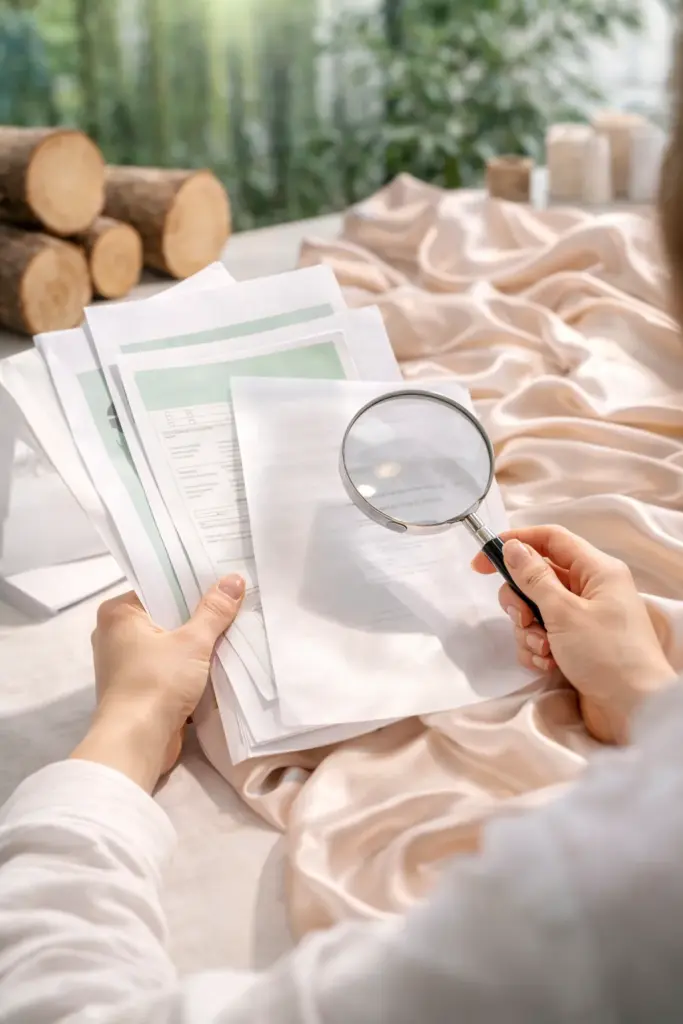
Îmbrăcămintea din acetat poate susține o poveste despre sustenabilitate, dar nu las marketingul să treacă mai departe decât dovezile. Cer documente și detalii despre procese pentru că știu că unii furnizori pot face promisiuni exagerate.
Ce spun despre afirmațiile despre “fibre naturale”
Când un cumpărător întreabă “este acetatul o fibră naturală?”, spun nu în sens strict. Bumbacul este o fibră naturală. Lâna este o fibră naturală. Acetatul este o fibră de celuloză regenerată sau modificată. Apoi explic de ce acest lucru este încă important. Materia primă poate proveni din plante, deci povestea carbonului poate fi diferită de cea a fibrelor pe bază de petrol. Procesul folosește și substanțe chimice, așa că controlul procesului contează.
Ce verific pentru aprovizionarea responsabilă
Mă concentrez pe sursa de celuloză și pe managementul fabricii. Dacă o fabrică folosește celuloză de lemn, întreb dacă aceasta provine din păduri certificate. Întreb dacă furnizorul poate prezenta documente din amonte ale lanțului. De asemenea, întreb despre sistemele de recuperare a apelor uzate și a solvenților. Fac asta pentru că sustenabilitatea nu este un singur lucru. Este un set de decizii de-a lungul lanțului.
Ce le spun cumpărătorilor despre sfârșitul ciclului de viață
Unii oameni presupun că, dacă materialul pe bază de celuloză se descompune rapid. Eu nu promit asta. Finisajele, coloranții și amestecurile schimbă rezultatul. De asemenea, le reamintesc cumpărătorilor că cel mai bun “sustenabil”Treapta” este adesea mai lungă de purtat. Dacă acetatul arată bine și se simte bine, clienții îl pot păstra mai mult timp. Acest lucru poate reduce risipa într-un mod real.”.
| Întrebarea cumpărătorului | Ceea ce cer furnizorului | Ce fac în dezvoltare |
|---|---|---|
| Este acetatul ecologic? | informații despre sursa de celuloză, controale de mediu pentru fabrici | alegeți mori de încredere, evitați afirmațiile vagi |
| Poți dovedi că este responsabil? | certificate, rapoarte de testare, documente de trasabilitate | păstrați un pachet de documente per stil |
| Se va biodegrada? | listă de finisaje, conținut amestecat, plan de etichetare a îngrijirii | evitați acoperirile grele, evitați amestecurile greu de reciclat |
| Este sigur pentru piele? | teste pentru substanțe restricționate, conformitate cu coloranții | efectuați teste de laborator pentru piețele cheie |
Ce este țesătura triacetată și cum diferă de raionul acetat?
Unii cumpărători întreabă “ce este țesătura triacetată” după ce văd o bluză care prinde bine pliurile. Alții întreabă “ce este triacetatul” pentru că își doresc o îmbunătățire față de acetatul obișnuit. Îmi place această întrebare deoarece arată că cumpărătorul își dorește o performanță mai bună, nu doar un preț mai mic.
Materialul triacetat este strâns înrudit cu acetatul, dar adesea are o rezistență mai bună la căldură și o recuperare mai bună a șifonării. Îl tratez în continuare cu grijă, dar îl pot folosi în modele mai solicitante.

Cum explic diferența în termeni simpli
Le spun cumpărătorilor că triacetatul are un nivel mai ridicat de acetilare decât acetatul. Această modificare poate îmbunătăți stabilitatea. De asemenea, poate îmbunătăți modul în care țesătura își menține forma. De aceea, mulți designeri preferă triacetatul pentru pliuri și o drapaj precis.
Unde se potrivește triacetatul în planificarea produsului
Deseori recomand triacetatul pentru bluze, rochii și modele cu croi larg care necesită linii curate. De asemenea, îl recomand pentru colecții potrivite pentru călătorii, atunci când clientul își dorește mai puține cute. Încă testez materialul în laborator și verific în continuare rezistența culorii, alunecarea cusăturilor și contracția.
Unde discuțiile despre raionul acetat pot deruta echipele
Dacă cineva spune “raion acetat”, fac o pauză și confirm ce vrea să spună. Dacă vrea raion viscoză, îi explic punctele forte și punctele slabe. Dacă vrea acetat sau triacetat, îi explic regulile de îngrijire și riscurile legate de căldură. Acest pas evită comenzile greșite în vrac.
| Caracteristică | Țesătură acetată | Țesătură triacetată | raion de viscoză |
|---|---|---|---|
| Simțiți | neted, rece, mătăsos | neted, adesea mai structurat | moale, adesea mai mat |
| Riduri | se poate șifona | adesea o recuperare mai bună | se poate încreți și relaxa |
| Căldură | mai sensibil | adesea mai stabil | variază, necesită încă îngrijire |
| Cele mai bune utilizări | căptușeli, aspect satinat | pliuri, bluze, rochii | rochii, topuri respirabile |
| Riscul principal | agățare, daune termice | limitele de cost și aprovizionare | rezistență la umiditate și control al contracției |
Concluzie
Folosesc acetat atunci când am nevoie de strălucire, drapaj și o senzație netedă la interior. Gestionez riscurile de căldură și frecare. Tratez sustenabilitatea ca o dovadă, nu ca pe un slogan.
De ce scriu asta
Sunt Lancy Chia din Truekung, China. Conduc o fabrică cu peste 200 de angajați. Furnizez haine de modă en-gros și servicii OEM/ODM către branduri și supermarketuri din întreaga lume. Îi ajut pe cumpărători precum Maria să echilibreze calitatea, prețul, livrarea și documentele. Creez specificații clare pentru acetatul din haine, de la căptușeala din acetat până la materialul triacetat. De asemenea, stabilesc etape de testare și inspecție, astfel încât cumpărătorii să aibă încredere în ceea ce primesc. Mă puteți contacta la [email protected] și puteți afla mai multe la https://truekung.com.
Vizualizări: 159