
Гулсдаг бариу леггинс, тунгалаг даавуу, эсвэл эргэлддэг бүс нь худалдаанд гарахад саад учруулж болзошгүй. Би брэндүүдийн загварын заавар нь тодорхойгүй байснаас болж давталтаа алдаж байхыг харсан.
Сайн идэвхтэй хувцас тохирох гарын авлага нь худалдан авагчдад юу хүлээж болохыг хэлж өгдөг: хэр хүчтэй вэ шахалт мэдрэхүй, бүсэлхий хаана байрладаг, биеийн хэмжээ тус бүртэй тохирч байгаа зэргийг бичдэг. Би үүнийг бичихдээ тодорхой хэмжилтийг элэгдлийн туршилтын "мэдрэхүй" тэмдэглэлтэй хослуулдаг тул үйлчлүүлэгчид анхны оролдлогоороо зөв хэмжээг сонгодог.
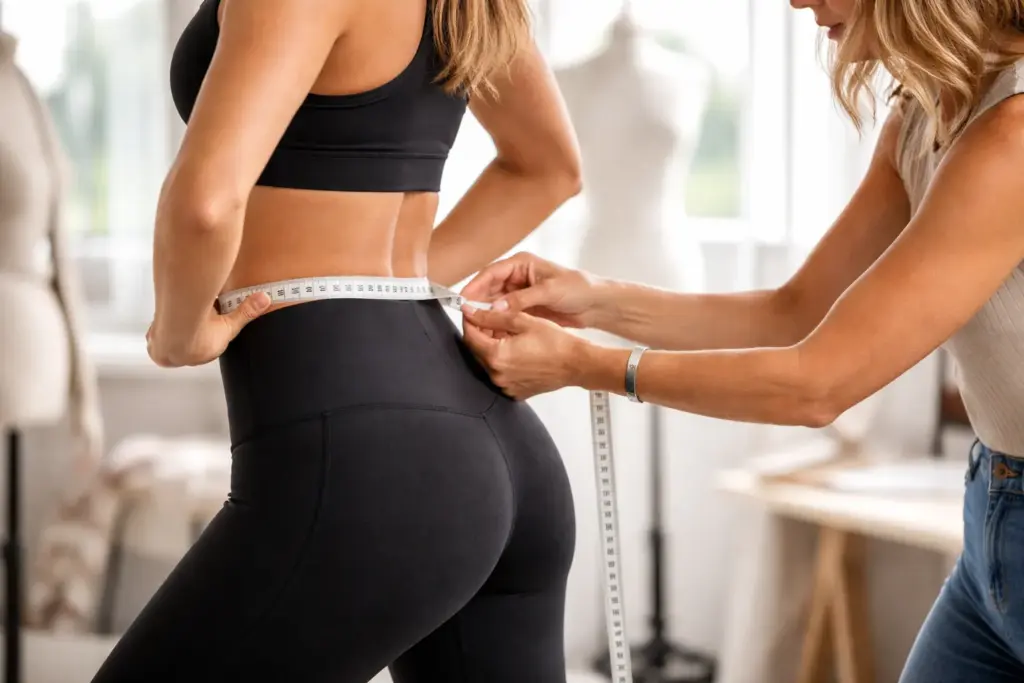
Худалдан авагч надад “Таны даавуу гайхалтай, гэхдээ таных” гэж хэлэхэд би үүнийг хэцүү аргаар ойлгосон. хэмжээ тогтоох "Таамаглал шиг уншдаг." Би үйл явцаа зассан бөгөөд давталтын хурдаа ч бас зассан. Би танд ижил алхмуудыг зааж өгөх бөгөөд үүнийг практик байдлаар хадгалах болно, учир нь тохирох байдал нь мөнгө хэмнэх эсвэл алдах газар юм.
Шахалт эсвэл тав тух: хэв маяг бүрийн тохирох түвшинг хэрхэн тодорхойлох вэ?
Худалдан авагчид надаас “Энэ leggins бариу юу эсвэл зүгээр л дэрвэгэр үү?” гэж байнга асуудаг. Хэрэв би ганцхан үгээр хариулбал ашиг өсч, итгэл буурна.
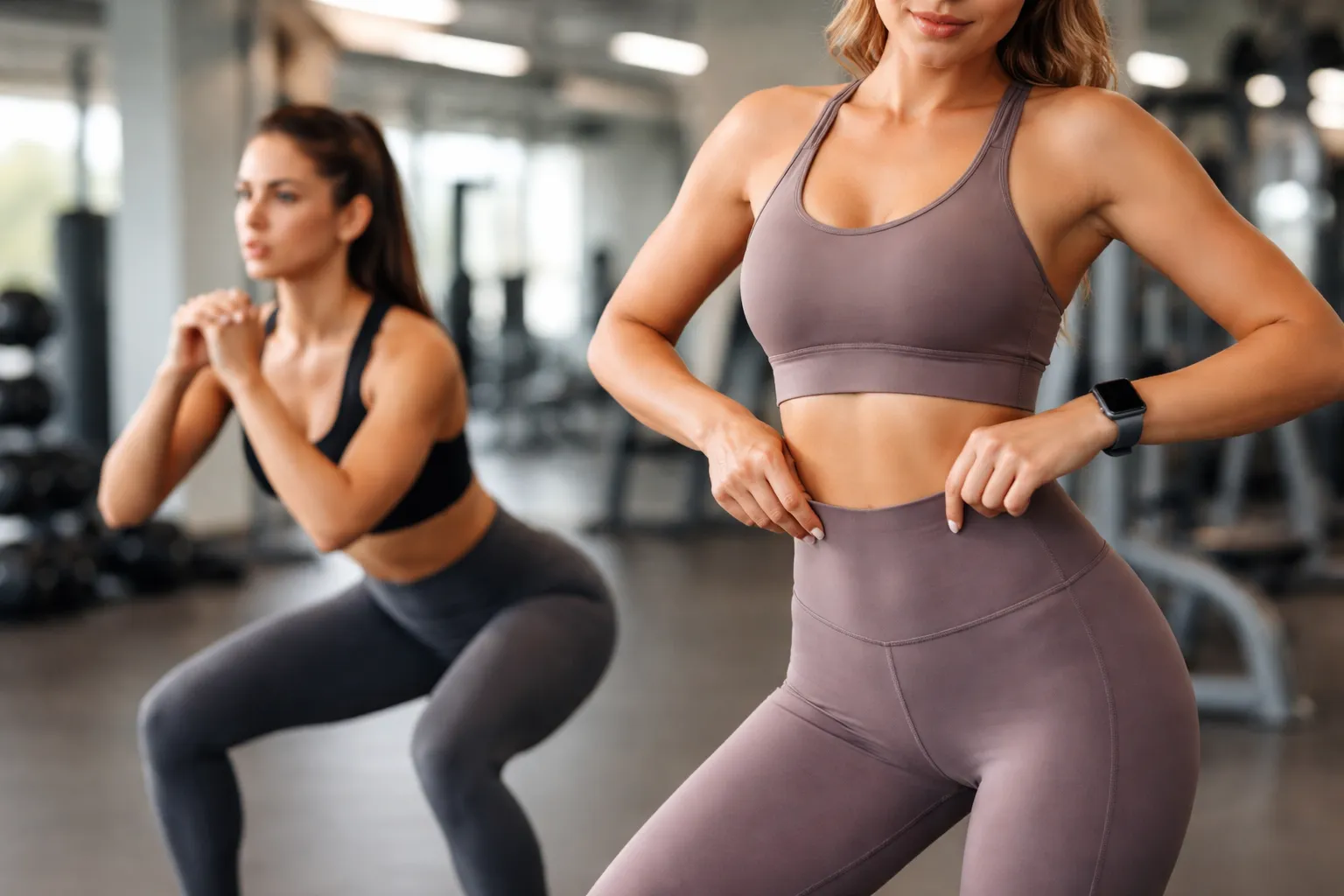
Шахалтыг мэдрэмж дээр тоо нэмсэнээр тодорхойлно уу. Би хэв маяг бүрийг хөнгөн, дунд эсвэл өндөр шахалттай гэж тэмдэглээд, дараа нь суналт болон нөхөн сэргээх өгөгдлийг, мөн хамгийн хүчтэй даралттай хэсгийг (бэлхүүс, ташаа, шилбэ) нэмнэ. Энэ нь худалдан авагчдад тав тухтай байхын тулд хэмжээгээ томруулах уу эсвэл тулгуурын хувьд үнэнч байх уу гэдгийг хэлж өгнө.
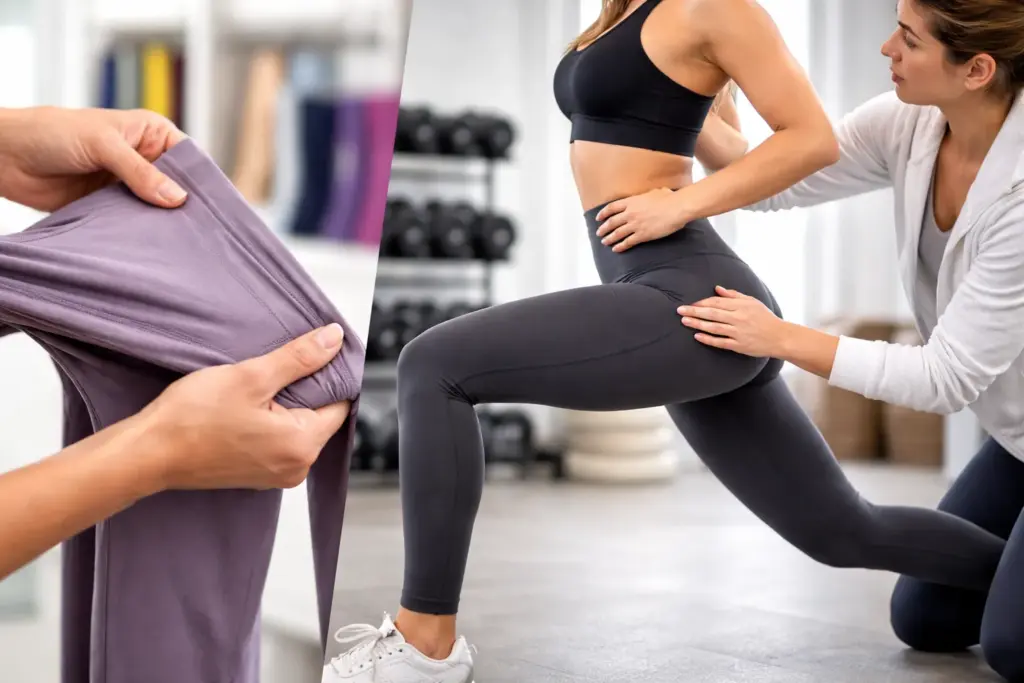
Энгийн хэлээр "шахалт" гэдэг нь юу гэсэн үг вэ
Би "шахалт" гэж хэлэхдээ булчинг дэмжиж, үрчлээг тэгшитгэдэг хяналттай шахалтыг хэлж байна. Би "амьсгалахад хэцүү" гэсэн үг биш. Би шахалтын мэдэгдлийг үргэлж нэг бүтэцтэй бичдэг: (1) түвшин, (2) хамгийн хүчтэй мэдрэгддэг газар, (3) зориулалтын хэрэглээ, (4) хэн хэмжээ авах ёстой вэ.
Үгс нь бүтээгдэхүүнтэй тохирч байхаар би юуг хэмждэг вэ
Би дээж авахдаа гурван энгийн шалгалтыг ашигладаг. Би даавууны жин, сунах чадвар, нөхөн сэргэлтийг шалгадаг. Мөн би сөрөг хөнгөн байдлыг шалгадаг бөгөөд энэ нь хувцасны гол цэгүүд дээр биеэс хэр жижиг байгааг харуулдаг. Би худалдан авагчдад лабораторийн бүх нарийн ширийн зүйлийг харуулдаггүй ч гарын авлагыг үнэн зөв байлгахын тулд үүнийг ашигладаг.
| Шахалтын түвшин | Ердийн хэрэглээний тохиолдол | Миний бичдэг даавууны мэдрэмжийн тэмдэглэлүүд | Би дотооддоо юу туршиж үздэг вэ | Худалдан авагч руу харсан хэмжээ тэмдэглэл |
|---|---|---|---|---|
| Гэрэл | йога, амралтын өрөө, өдөр бүр | “"Зөөлөн атгалт, амархан нугалах"” | өндөр суналттай, зөөлөн сэргэлттэй | “"Тав тухтай байхын тулд хэмжээ нь яг таарсан"” |
| Дунд зэрэг | сургалт, студи, аялал | “"Бэлхүүс болон ташаагаараа чанга"” | тэнцвэртэй суналт болон арын хэсэг | “"Хэмжээ хооронд байвал хэмжээг нэмэгдүүлэх"” |
| Өндөр | гүйлт, HIIT, хэлбэржүүлэлт | “"Бат бөх, хүчтэй дэмжлэг"” | доод суналт, хүчтэй сэргэлт | “"Бага шахалт хийхийн тулд хэмжээг томруулна"” |
Брэндүүд хамгийн том алдааг хаана гаргадаг вэ
Олон брэнд өрсөлдөгчөөсөө "өндөр шахалттай" шошгыг хуулбарладаг. Даавуу өөрчлөгдөж, хээ өөрчлөгдөж, шошго нь хэвээрээ байдаг. Би шошгыг тохирох тесттэй уядаг. Би дор хаяж гурван биеийн хэлбэртэй хүмүүстэй богино элэгдлийн тест хийдэг. Би тэднээс нэг шууд асуулт асуудаг: "Та дасгалаа дуусгаад өмсөхийг хүсч байна уу?" Хариулт нь "үгүй" байхад би маркетингийн шугамыг биш, харин хэмжээний зөвлөгөө эсвэл загварыг өөрчилдөг.
Биеийн хэмжилтийг зах зээл дээр хэрхэн найдвартай хэмжээс болгон хувиргах вэ?
"M" хэмжээ нь улс орнуудад гурван өөр утгатай байж болно. Худалдан авагч хоёр бүс нутагт бараа зарах үед төөрөгдөл хурдан гарч ирдэг бөгөөд энэ нь давтан захиалгад хүрдэг.
Би гарын авлагыг үсэг биш, биеийн хэмжээсээр бүтээдэг. Би бэлхүүс болон ташааны хэмжээг харуулж, хэрхэн хэмжихийг тайлбарладаг. Мөн хувцасны хэмжээ болон хүлцэх хэмжээг жагсаасан тул худалдан авагчид бөөнөөр нь үйлдвэрлэхээс юу хүлээж болохыг мэддэг.
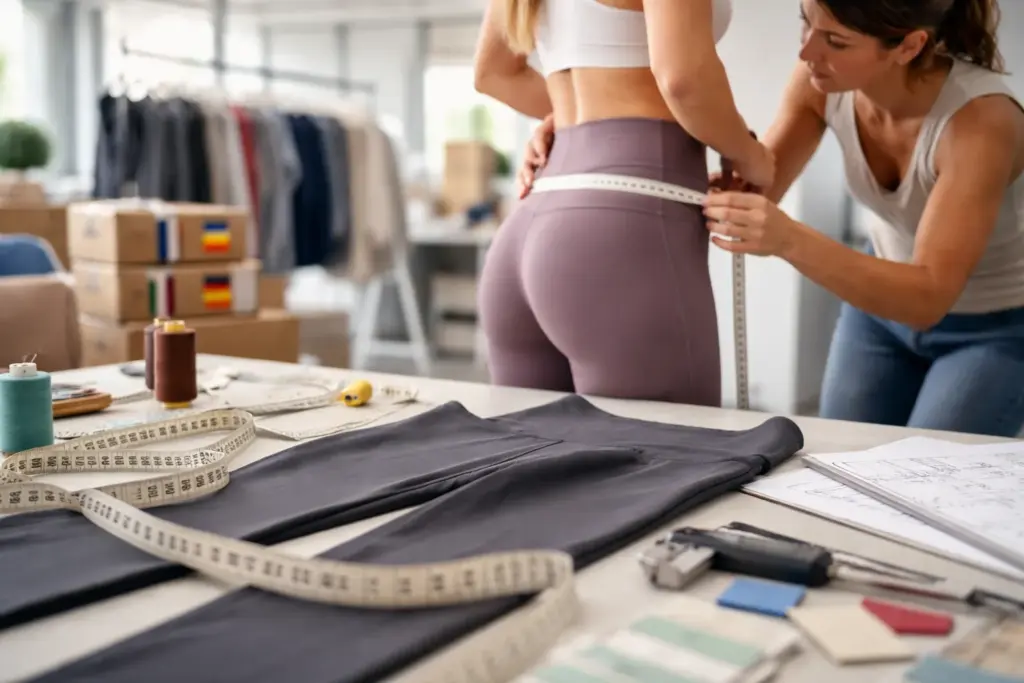
Миний үргэлж оруулдаг хоёр график
Би биеийн хэмжилтийн хүснэгт болон бэлэн хувцасны хүснэгтийг оруулсан. Биеийн хүснэгт нь худалдан авагчдад хэмжээ сонгоход тусалдаг. Хувцасны хүснэгт нь худалдан авагчдад үнэлгээг баталгаажуулж, их хэмжээгээр шалгахад тусалдаг. Мария шиг худалдан авагч чанарыг чангатгахад хувцасны хүснэгт нь тодорхой зорилт тавьдаг тул дараа нь маргааныг бууруулдаг.
Худалдан авагчид зөв хийхийн тулд би хэмжилтийн зааврыг хэрхэн бичдэг вэ
Би хэмжилтийн алхмуудыг богино байлгаж, "нийтлэг алдаа" гэж нэмдэг. Би "Туузыг чанга татаж болохгүй", "Тэгш байлга" гэж хэлдэг. Мөн худалдан авагчдад жинсэн өмдний оронд нимгэн дотуур хувцасны дээгүүр хэмжилт хийхийг хэлдэг. Эдгээр шугамууд жижиг харагдаж байгаа ч буруу хэмжээтэй сонголтуудыг багасгадаг.
| Хэмжилт | Худалдан авагчид би хэрхэн зааварчилгаа өгөх вэ | Камер хаана байрладаг вэ | Миний анхааруулж буй нийтлэг алдаа | Яагаад идэвхтэй хувцаслалт чухал вэ |
|---|---|---|---|---|
| Бүсэлхий | “"Хамгийн нарийн цэгийг хэмжинэ үү"” | хүйсний товчлуураас дээш эсвэл байгалийн бэлхүүс | арын хэсэгт доош өнцгөөр наасан тууз | бүсэлхийн тойрог таарч тохирох ба өнхрөх эрсдэл |
| Өндөр ташаа | “"Ташааны дээд хэсгийг хэмжих"” | бэлхүүснээс доош 8-10 см | хэт бага хэмжих | урд самбарын хурцадмал байдал ба тав тух |
| Бүтэн ташаа | “"Хамгийн өргөн цэгийг хэмжих"” | суудлын эргэн тойронд | соронзон хальс тэгш бус | суултанд тэсвэртэй тохирох байдал болон оёдлын стресс |
| Дотор | “"Шархнаас шагай хүртэл хэмжих"” | хөлний дотор тал | бүсэлхийнээс хэмжих | шагай нээх болон уртын сонголт |
Дээжийг бөөнөөр нь тааруулж байхаар хүлцлийг хэрхэн тохируулдаг вэ
Би гол санаануудад үргэлж хүлцэл үзүүлдэг. Суналтын эд зүйлсийн хувьд би үүнийг бодитой байлгадаг. Мөн зарим хэмжилтийг сул, заримыг нь сунгасан байдлаар авдаг болохыг тэмдэглэж байна. Хэрэв би үүнийг тодорхойлохгүй бол хоёр үйлдвэр нэг ижил технологийн багцыг уншиж, өөр өөр хэмжээтэй нийлүүлж болно.
| Хэмжих цэг | Сул эсвэл сунгалттай үед | Миний хэрэглэдэг ердийн хүлцэл | Би худалдан авагчид юу гэж хэлдэг вэ |
|---|---|---|---|
| Бүсэлхийн тойрог | тайван | ±1.0 см | “"Уян хатан болон даавуу нь багцаас хамааран өөр өөр байж болно"” |
| Ташаа (1/2) | тайван | ±1.0–1.5 см | “"24 цагийн амралт дууссаны дараа шалгана уу"” |
| Дотор | тайван | ±1.0 см | “"Ижил хэмжээтэй зүйл сунгахад илүү урт мэдрэгдэж болно"” |
| Бос | тайван | ±0.8 см | “"Жижиг өөрчлөлт бүсэлхийн тойргийн тав тухыг алдагдуулдаг"” |
Зах зээлүүд хоорондоо таарахгүй үед би юу хийдэг вэ
Зарим бүс нутаг илүү бариу тааруулалтыг илүүд үздэг. Зарим нь илүү хялбар тааруулалтыг илүүд үздэг. Би эхлээд зах зээл бүрт шинэ загвар гаргадаггүй. Би "Хэрэв та шахалтын тааруулалтыг илүүд үзвэл жинхэнэ хэмжээг сонгоорой. Хэрэв та тав тухтай байдлыг илүүд үзвэл хэмжээг томруул" гэсэн зөвлөгөөгөөр эхэлдэг. Дараа нь би худалдан авагчтай хамт борлуулалтын мэдээллийг хардаг. Хэрэв нэг зах зээл хэмжээ нь нэмэгдсээр байвал би дараагийн удаа зэрэглэлийг өөрчилдөг.
Бүсэлхийн бүсний ямар инженерийн нарийн ширийн зүйлс өнхрөх, ухах, ан цав үүсэхээс сэргийлдэг вэ?
Бүсэлхийн бүс төгс leggings-ийг буруу мэдрэмж төрүүлдэг. Бат бөх даавуу арван минутын дараа бүсэлхий нь эргэлдэж, бүхэл бүтэн хэлбэрээ алддагийг би харсан.
Би бүсэлхийн тойргийн асуудлыг систем мэтээр авч үзэн урьдчилан сэргийлдэг: өргөлт, бүсэлхийн тойргийн өндөр, уян хатан сонголт, оёдлын сонголт, урдаас хойш тэнцвэр. Би гарын авлагыг бичихдээ бүсэлхийн тойрог хаана байрладаг, ямар мэдрэмж төрүүлэх ёстойг тайлбарладаг бөгөөд ингэснээр худалдан авагчид "зөв" гэж юу болохыг мэддэг болно.
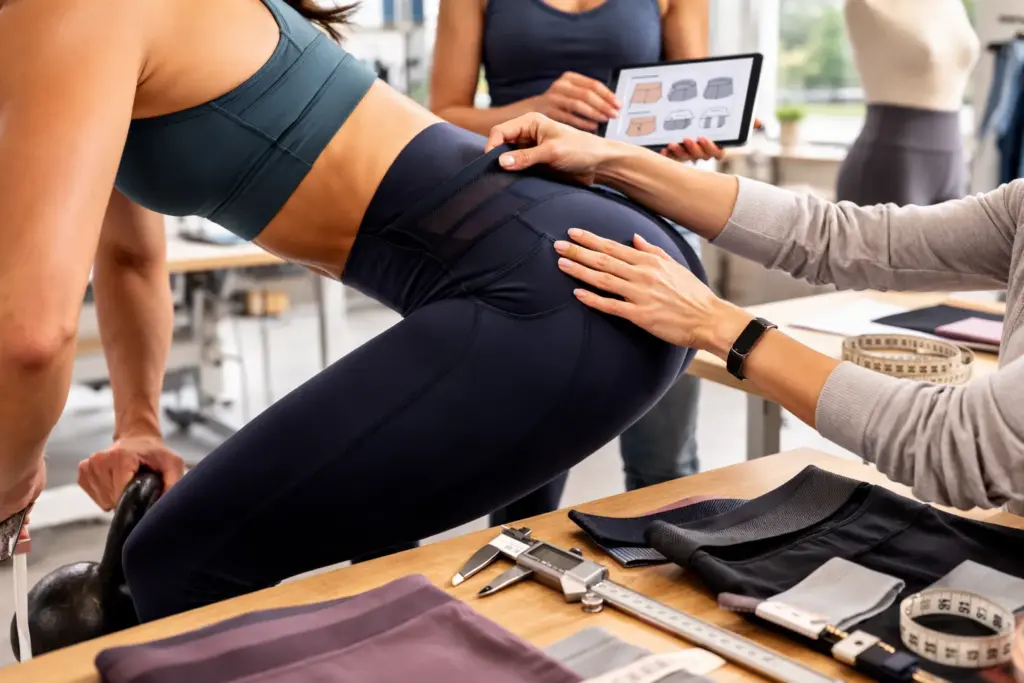
Миний ажиглаж буй гурван бүтэлгүйтлийн горим
Би өнхрөх, ухах, ангайхыг эрэлхийлдэг. Өнхрөх нь ихэвчлэн хэт зөөлөн дээд ирмэг эсвэл хэт өндөр, тулгуургүй байдлаас болдог. Ухах нь ихэвчлэн богино өргөлттэй хүчтэй уян харимхайгаас болдог. Ангайх нь ихэвчлэн бэлхүүс болон ташааны хэлбэр таарахгүй байх, эсвэл муруй бие дээрх шулуун бүсэлхий зэргээс болдог.
Худалдан авагчдад тайлбарлаж буй бүсэлхийний сонголтууд
Би худалдан авагчдад энгийн сонголтыг үзүүлдэг. Би давуу болон сул талуудыг энгийн үгээр нэрлэдэг. Мөн би сонголтыг хэрэглэгчийн төрөлтэй холбодог. Энэ нь B2B ажлын хувьд чухал юм, учир нь брэнд загварын нээлтэд зориулж нэг бүсэлхийг, гүйцэтгэлд зориулж нөгөө бүсэлхийг хүсч магадгүй юм.
| Бүсэлхийн бүсний төрөл | Үүнийг хэрхэн бүтээдэг вэ | Хамгийн тохиромжтой | Эрсдэл | Тохирох гарын авлагад би юу нэмж оруулдаг вэ |
|---|---|---|---|---|
| Өөрөө даавуун давхар давхарга | ижил даавууг нугалж эсвэл давхарлаж | зөөлөн мэдрэмж, загварлаг төрх | хэт өндөр байвал өнхрүүлж болно | “"Дунд зэргийн барьцалтай, гөлгөр дээд ирмэгтэй"” |
| Туннел руу уян хатан оруулна уу | уян хатан дотор талын бүрхүүл | тогтвортой бариул, үндсэн хэв маяг | Хэрэв уян харимхай хатуу байвал ухаж болно | “"Бэлхүүсээр чанга, мэдрэмтгий бол размер томруулна"” |
| Цахилгаан торны дотоод давхарга | бүсэлхийн дотор талын торон давхарга | өндөр дэмжлэг, хэлбэржүүлэх | дулаан мэдрэгдэж болно | “"Бат бөх атгах, бэлтгэл хийхэд хамгийн тохиромжтой"” |
| Боолттой бүсэлхий | нийлсэн давхаргууд, цэвэр ирмэг | гөлгөр, оёдолгүй мэдрэмж төрүүлдэг | сайн холболтын процесс шаардлагатай | “"Хавтгай мэдрэмжтэй, дээд ирмэг нь хазагдахгүй"” |
Тав тухыг өөрчилдөг жижиг инженерийн нарийн ширийн зүйлс
Би бүсэлхийн өндөр болон дээд ирмэгийн өнгөлгөөнд анхаарлаа хандуулдаг. Өндөр бүсэлхий нь даралтыг тараадаг боловч дээд ирмэг нь сул байвал өнхрөх боломжтой. Би ихэвчлэн дээд хэсэгтээ хөнгөн резинэн тууз эсвэл ирмэгийг нь тулж өгдөг хатуу оёдлын шугам гэх мэт далд тогтворжуулагч нэмдэг. Мөн урд болон хойд өргөлтийг тэнцвэржүүлдэг. Хэрэв арын өргөлт хэт нам байвал бүсэлхий доош гулсаж суудаг. Хэрэв урд өргөлт хэт өндөр байвал зарим үйлчлүүлэгчид гацсан мэт санагддаг.
Үйлчлүүлэгчдэд зориулсан гарын авлагад миний ашигладаг үгс
Би "гэдэс хянах" гэх мэт тодорхой бус шугамуудаас зайлсхийдэг. Би "бүсэлхийн өндөр хэсэгт сууна", "чимхэхгүйгээр барина", "өнхрөхгүй ирмэг", "суугах үед байрандаа үлдэнэ" гэсэн хэлбэртэй шугамуудыг ашигладаг. Мөн би нэг шууд тест нэмсэн: "Хэрэв бүсэлхий ердийн элэгдлийн дараа гүн ул мөр үлдээвэл хэмжээг нь томруулна уу." Энэ шугам нь маш их үр дүнг хэмнэж, брэндийн имиджийг хамгаалдаг.
Дүгнэлт
Би шахалт, хэмжилт, бүсэлхийн бүтээцийн дэлгэрэнгүй мэдээллийг бичихэд худалдан авагчид илүү хурдан сонголт хийж, хэрэглэгчид бүтээгдэхүүнийг илүү удаан хадгалдаг. Ингэж л би ашгийн хэмжээ болон давталтыг хамгаалдаг.
Яагаад би үүнийг бичиж байна вэ
Намайг Хятадын Труекунг хотын иргэн Ланси Чиа гэдэг. Би 200 гаруй ажилтантай, зөвхөн бөөний худалдааны үйлдвэр ажиллуулдаг. Би спорт хувцас болон бусад олон загварын ангилал үйлдвэрлэдэг бөгөөд брэнд, супермаркетуудад OEM/ODM-ийг дэмждэг. Би үйлдвэрлэлийн ажлын урсгалынхаа нэг хэсэг болгон тохирох загварын гарын авлага, хэмжээний хүснэгт, технологийн багцын шалгалтыг хийдэг, учир нь худалдан авагчид дахин захиалга өгөхдөө аюулгүй байгаасай гэж хүсдэг.
Хэрэв та одоогийн хэмжээний хүснэгтээ хянаж үзэхийг хүсвэл, эсвэл зорилтот зах зээлдээ тохирсон загварын загварыг авахыг хүсвэл [email protected] хаягаар надад имэйл илгээнэ үү. Мөн миний компанийг https://truekung.com хаягаар үзэж болно.
Үзэлт: 85