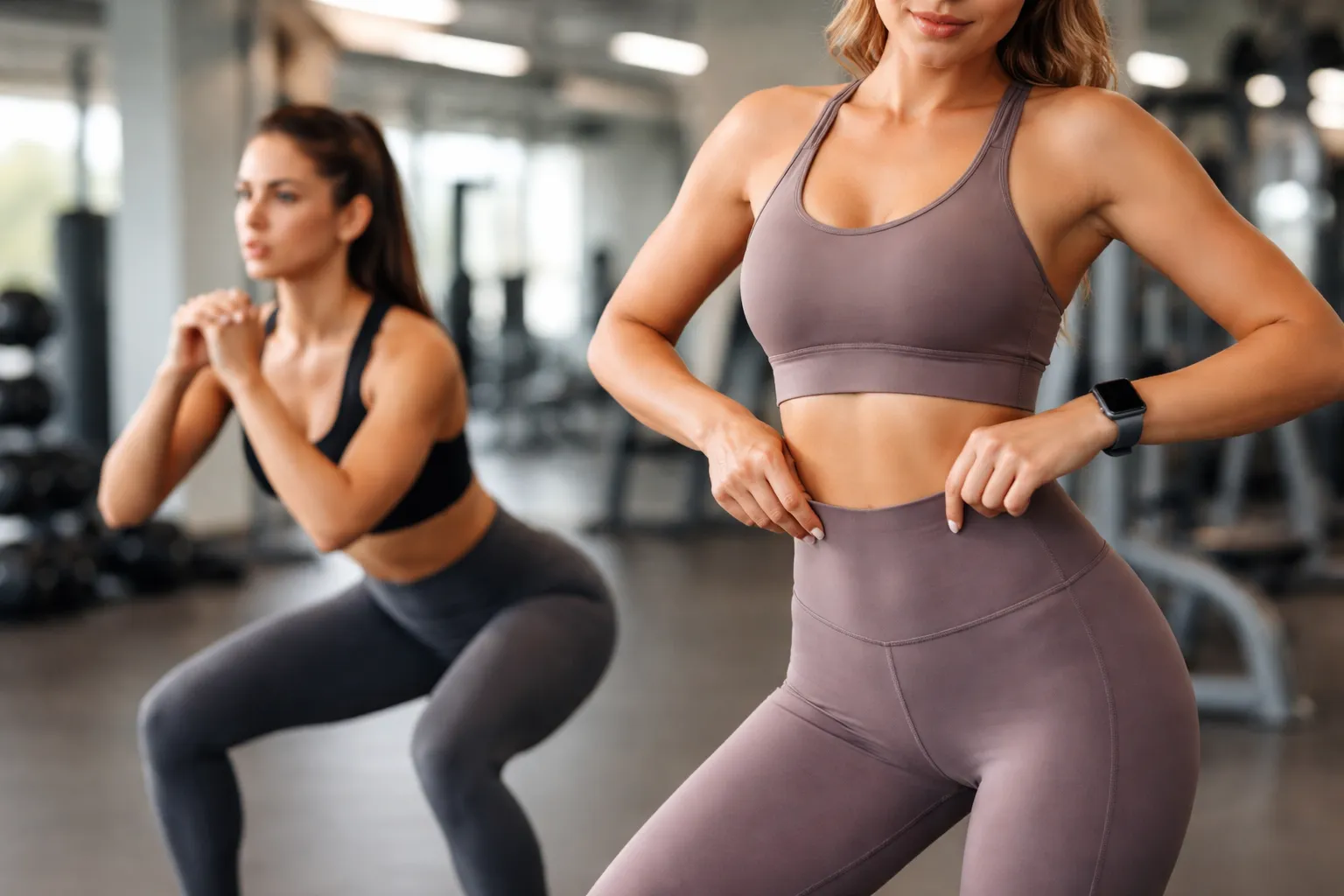

Stramme leggings, der glider og er gennemsigtige stof, eller en linning der ruller kan ødelægge en lancering. Jeg har set mærker miste gentagelser, fordi deres pasformsguide var vag.
En god sportstøj pasformsguiden fortæller købere, hvad de kan forvente: hvor stærk kompression følelser, hvor linningen sidder, og hvilke kropsmål der passer til hver størrelse. Når jeg skriver det, kombinerer jeg tydelige mål med "følelses"-notater fra brugstests, så kunderne vælger den rigtige størrelse i første forsøg.
Jeg lærte dette på den hårde måde, da en køber fortalte mig: "Dit stof er fantastisk, men dit størrelsesvalg "læser som et gæt." Jeg har rettet min proces, og jeg har også rettet min gentagelsesrate. Jeg vil guide dig gennem de samme trin, og jeg vil holde det praktisk, fordi det er ideelt, der sparer eller taber penge.
Kompression eller komfort: hvordan definerer jeg pasformniveauet for hver stil?
Købere spørger mig ofte: "Er disse leggings stramme eller bare tætsiddende?" Hvis jeg svarer med ét ord, stiger returneringerne, og tilliden falder.
Definer kompression som en følelse plus et tal. Jeg mærker hver model som let, medium eller høj kompression, derefter tilføjer jeg stræk- og restitutionsdata, og hvor trykket er stærkest (talje, hofte, læg). Dette fortæller kunderne, om de skal tage en større størrelse for komfort eller forblive tro moderigtigt for støtte.
Hvad "komprimering" betyder i almindeligt sprog
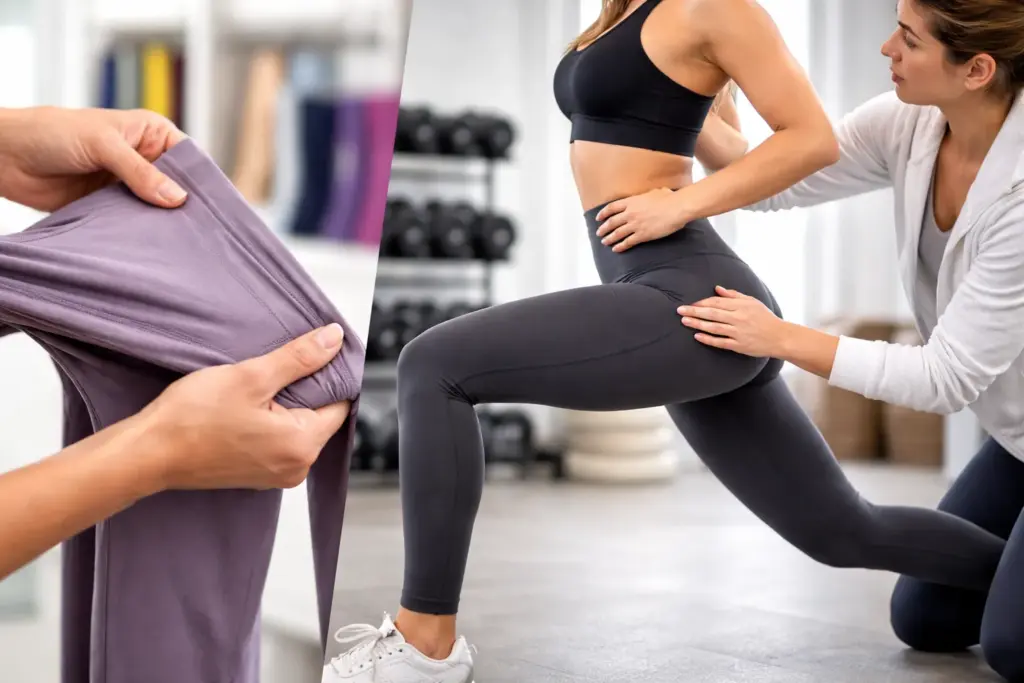
Når jeg siger "kompression", mener jeg kontrolleret klemning, der støtter musklerne og udglatter linjer. Jeg mener ikke "svært at trække vejret". Jeg skriver altid kompressionsangivelsen i samme struktur: (1) niveau, (2) hvor det føles stærkest, (3) den tilsigtede anvendelse, og (4) hvem der skal vælge en størrelse.
Hvad jeg måler, så ordene matcher produktet
Jeg bruger tre simple kontroller i prøveudtagningen. Jeg kontrollerer stoffets vægt, stræk og genvinding. Jeg kontrollerer også negativ løshed, hvilket er hvor meget mindre tøjet er end kroppen på nøglepunkter. Jeg viser ikke alle laboratoriedetaljer til kunderne, men jeg bruger det til at holde guiden ærlig.
| Kompressionsniveau | Typisk brugsscenarie | Noter om stoffølelse, jeg skriver | Hvad jeg tester internt | Størrelsesnotat til køber |
|---|---|---|---|---|
| Lys | yoga, lounge, dagligt | “"Blødt greb, let at bøje"” | høj strækbarhed, blid genopretning | “"Naturlig størrelse for komfort"” |
| Medium | træning, studie, rejse | “"Tæt ved talje og hofte"” | balanceret stretch og snapback | “"Gå op i størrelsen, hvis du er mellem størrelser"” |
| Høj | løb, HIIT, shaping | “"Fast greb, stærk støtte"” | lavere stræk, stærk genopretning | “"Gør størrelsen større for mindre klem"” |
Hvor brands begår de største fejl
Mange mærker kopierer en "høj kompression"-mærkning fra en konkurrent. Stoffet ændrer sig, mønsteret ændrer sig, og mærket forbliver. Jeg beholder mærket bundet til pasformstests. Jeg kører en kort slidtest med mindst tre kropstyper. Jeg stiller dem ét direkte spørgsmål: "Kan du afslutte en træning og stadig have lyst til at fortsætte med at have det på?" Når svaret er "nej", ændrer jeg størrelsesrådet eller mønsteret, ikke markedsføringslinjen.
Hvordan omdanner jeg kropsmål til pålidelige størrelser på tværs af markeder?
En størrelse "M" kan betyde tre forskellige ting på tværs af lande. Når en køber sælger i to regioner, opstår der hurtigt forvirring, og det rammer gentagne ordrer.
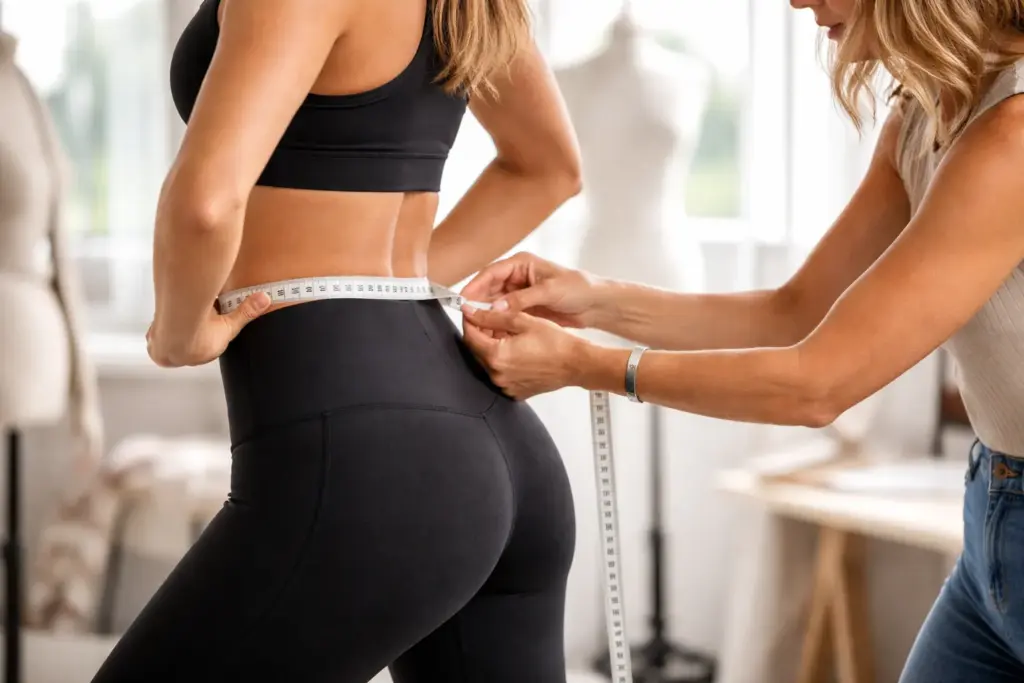
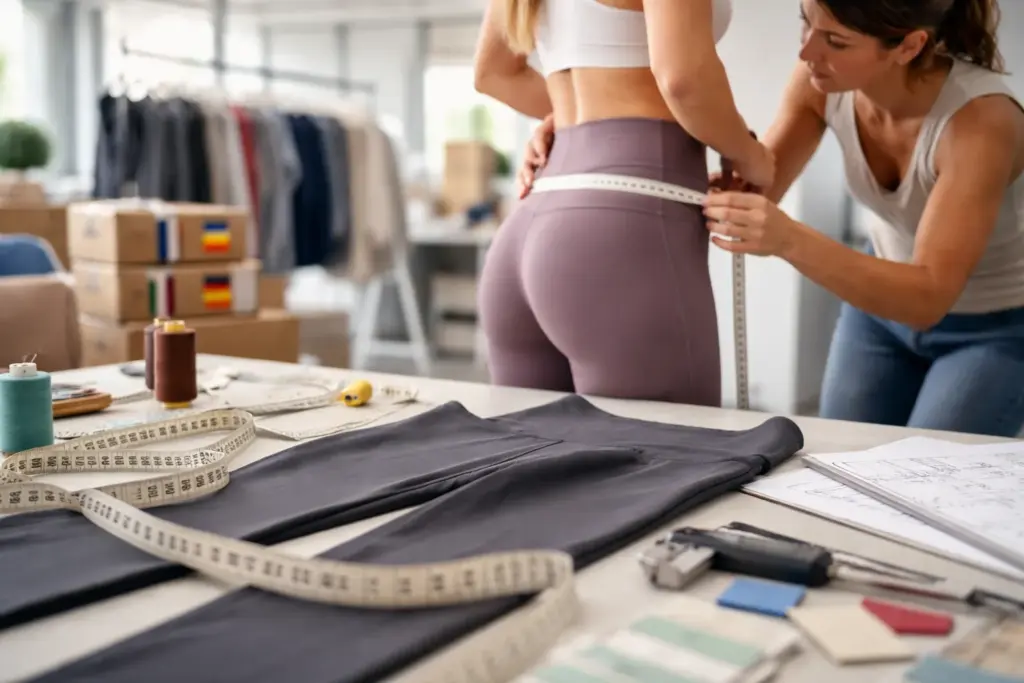
Jeg bygger guiden op omkring kropsmål, ikke bogstaver. Jeg viser talje- og hofteafstand, og jeg forklarer, hvordan man måler. Jeg angiver også tøjmål og tolerancer, så købere ved, hvad de kan forvente af bulkproduktion.
De to diagrammer jeg altid inkluderer
Jeg inkluderer et diagram over kropsmål og et diagram over det færdige beklædningsgenstand. Kropsdiagrammet hjælper køberen med at vælge en størrelse. Tøjdiagrammet hjælper køberen med at bekræfte gradering og kontrollere mængde. Når en køber som Maria lægger stor vægt på kvalitet, mindsker tøjdiagrammet også antallet af senere diskussioner, fordi det sætter et klart mål.
Hvordan jeg skriver måleanvisninger, så kunderne gør det rigtigt
Jeg holder måletrinene korte, og jeg tilføjer "almindelige fejl". Jeg siger: "Stram ikke båndet" og "Hold det i vater". Jeg fortæller også kunderne, at de skal måle over tyndt undertøj, ikke jeans. Disse linjer ser små ud, men de vælger forkerte størrelser.
| Måling | Hvordan jeg instruerer kunden | Hvor båndet sidder | Almindelig fejl jeg advarer om | Hvorfor det er vigtigt for sportstøj |
|---|---|---|---|---|
| Talje | “"Mål det smalleste punkt"” | over navlen eller naturlig talje | tape vinklet nedad bagpå | linningspasform og risiko for rullende |
| Høj hofte | “"Mål omkring øvre hofte"” | 8-10 cm under taljen | måler for lavt | frontpanelspænding og komfort |
| Fuld hofte | “"Mål det bredeste punkt"” | omkring sædet | tapen er ikke i vater | squat-sikker pasform og sømspænding |
| Indersøm | “"Mål fra skridt til ankel"” | indersiden af benet | måling fra taljen | ankelåbning og valg af længde |
Hvordan jeg indstiller tolerance, så bulk matcher prøver
Jeg offentliggør altid tolerancer for nøglepunkter. Jeg holder det realistisk for strækbare varer. Jeg bemærker også, at nogle mål tages afslappet, og andre tages strakt. Hvis jeg ikke definerer dette, kan to fabrikker aflæse den samme tekniske pakke og sende forskellige pasformer.
| Målepunkt | Tages afslappet eller strakt | Typisk tolerance jeg bruger | Hvad jeg fortæller køberen |
|---|---|---|---|
| Taljeåbning | afslappet | ±1,0 cm | “"Elastik og stof kan variere fra parti til parti"” |
| Hofte (1/2) | afslappet | ±1,0–1,5 cm | “"Tjek efter 24 timers afslapning"” |
| Indersøm | afslappet | ±1,0 cm | “"Samme størrelse kan føles længere ved strækning"” |
| Stig op | afslappet | ±0,8 cm | “"Små ændringer påvirker komforten i linningen"” |
Hvad jeg gør, når markederne ikke stemmer overens
Nogle regioner foretrækker strammere pasform. Andre foretrækker mere lethed. Jeg skaber ikke et nyt mønster for hvert marked først. Jeg starter med størrelsesråd: "Hvis du foretrækker en kompressionspasform, så vælg den normale størrelse. Hvis du foretrækker komfort, så vælg en størrelse større." Derefter ser jeg på salgsdata sammen med køberen. Hvis ét marked bliver ved med at gå op i størrelse, ændrer jeg klassificeringen i næste kørsel.
Hvilke tekniske detaljer i linningen forhindrer ruller, graver og huller i at opstå?
En linning kan få en perfekt leggings til at føles forkert. Jeg har set et stærkt stof miste hele ordenen, fordi taljen rullede sig efter ti minutter.
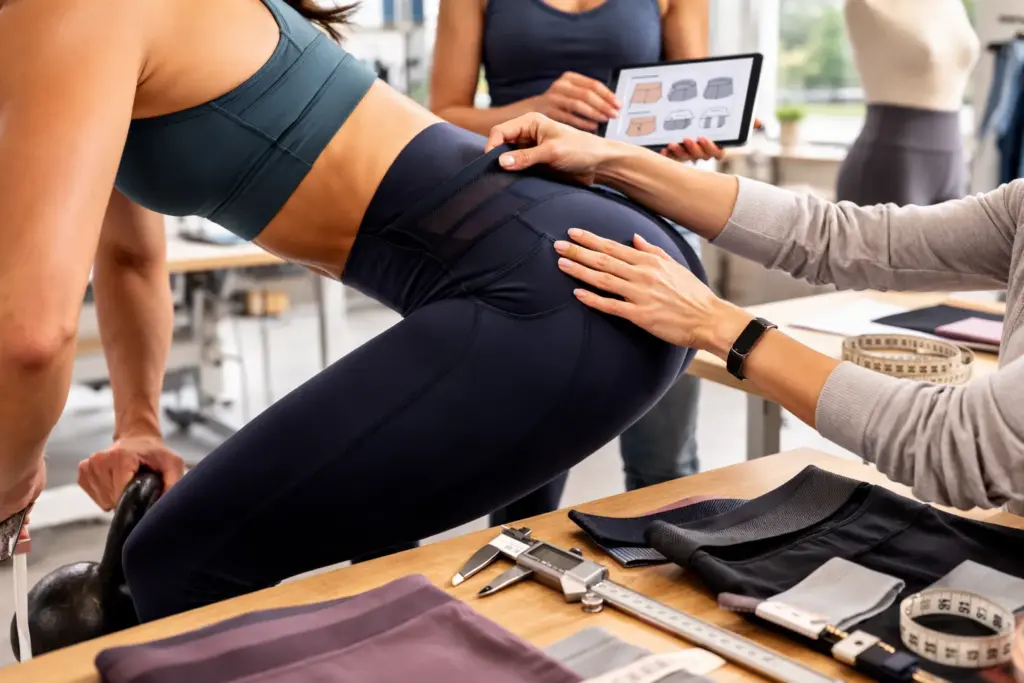
Jeg forebygger problemer med linningen ved at behandle den som et system: længde, linningshøjde, elastikvalg, stingvalg og balance mellem for- og bagside. Når jeg skriver guiden, forklarer jeg, hvor linningen sidder, og hvordan den skal føles, så kunderne ved, hvad "rigtigt" er.
De tre fejltilstande jeg holder øje med
Jeg leder efter rulning, gravning og mellemrum. Rulning kommer ofte fra en for blød overkant eller for meget højde uden støtte. Gravning kommer ofte fra stærk elastik med en kort taljehøjde. Mellemrum kommer ofte fra en uoverensstemmelse mellem talje- og hofteformning eller en lige linning på en kurvet krop.
De muligheder for linning, jeg forklarer til købere
Jeg viser købere simple valgmuligheder. Jeg nævner fordele og ulemper med klare ord. Jeg forbinder også valget med kundetypen. Dette er vigtigt for B2B-arbejde, fordi et brand måske ønsker én linning til en modelancering og en anden til performance.
| Linningstype | Hvordan det er bygget | Bedst til | Risiko | Hvad jeg tilføjer i pasformsguiden |
|---|---|---|---|---|
| Dobbelt lag af samme stof | samme stof foldet eller dobbelt | glat følelse, moderigtigt look | kan rulle hvis den er for høj | “"medium hold, glat overkant"” |
| Indsæt elastik i tunnelen | elastisk inderside af beklædning | stabilt hold, grundlæggende stilarter | kan grave, hvis elastikken er stiv | “"Fast i taljen, vælg en størrelse større, hvis du er følsom"” |
| Power mesh indre lag | mesh-lag inde i linningen | høj støtte, formgivning | kan føles varm | “"Stærkt greb, bedst til træning"” |
| Bundet linning | sammensmeltede lag, ren kant | elegant, ingen stingfølelse | kræver en god bindingsproces | “"Flad fornemmelse, intet bid i den øverste kant"” |
De små tekniske detaljer, der ændrer komforten
Jeg er opmærksom på linningens højde og den øverste kant. En højere linning spreder trykket, men den kan rulle, hvis den øverste kant er svag. Jeg tilføjer ofte en skjult stabilisator, som en let elastik øverst eller en fast stinglinje, der støtter kanten. Jeg balancerer også for- og bagtalje. Hvis bagtaljen er for lav, glider linningen ned i squats. Hvis fortaljen er for høj, føler nogle kunder sig fanget.
De ord jeg bruger i den kundevendte guide
Jeg undgår vage linjer som "mavekontrol". Jeg bruger linjer, der beskriver pasform: "sidder højt i taljen", "holder uden at klemme", "kant der ikke ruller" og "bliver på plads under squats". Jeg tilføjer også en direkte test: "Hvis linningen efterlader dybe mærker efter normal brug, så tag en størrelse op." Den linje sparer mange returneringer, og den beskytter brandets image.
Konklusion
Når jeg præciserer kompression, mål og detaljer om linningens opbygning, vælger købere hurtigere, og kunderne beholder produkterne længere. Det er sådan, jeg beskytter marginer og gentagelser.
Hvorfor jeg skriver dette
Jeg hedder Lancy Chia og bor i Truekung i Kina. Jeg driver en fabrik, der udelukkende sælger engrosvarer, med over 200 ansatte. Jeg producerer træningstøj og mange andre modekategorier, og jeg understøtter OEM/ODM for mærker og supermarkeder. Jeg udarbejder pasformsguider, størrelsesdiagrammer og tekniske pakketjek som en del af min produktionsproces, fordi jeg ønsker, at købere skal føle sig trygge, når de genbestiller.
Hvis du ønsker, at jeg gennemgår din nuværende størrelsesguide, eller hvis du ønsker en skabelon til en størrelsesguide, der matcher din målgruppe, kan du sende mig en e-mail på [email protected]. Du kan også se min virksomhed på https://truekung.com.
Visninger: 85