
A debutante ball is a special occasion, but choosing the right dress can be confusing. White gowns, formal etiquette, and different dress codes make preparation difficult. Understanding the traditions and clothing requirements helps debutantes, families, and guests prepare with confidence.
A debutante ball is a formal event that celebrates a young woman’s introduction to society. Debutantes traditionally wear white, floor-length gowns, while guests follow the event’s formal dress code. The right outfit depends on the organizer’s requirements, the wearer’s role, and the level of formality.
I’m Lancy Chia from Truekung, a clothing manufacturer in China with 20 years of export experience and more than 200 workers. We provide OEM/ODM clothing production, private label development, sampling, and bulk manufacturing for overseas brands and wholesalers.
From a clothing manufacturing perspective, formal dresses require special attention to fabric, fit, construction, and finishing. A beautiful gown must also allow the wearer to walk, sit, dance, and participate in the ceremony comfortably.
In this guide, I will explain debutante ball traditions, dress requirements, guest etiquette, and the practical details that buyers should consider when selecting or developing formal gowns.
What Is a Debutante Ball, and Who Can Become a Debutante?
A debutante ball has a long social history, but its meaning can vary between countries and organizations. Buyers and families sometimes confuse it with prom, a birthday celebration, or an ordinary formal dance.
Understanding the event helps explain why its clothing requirements are different.
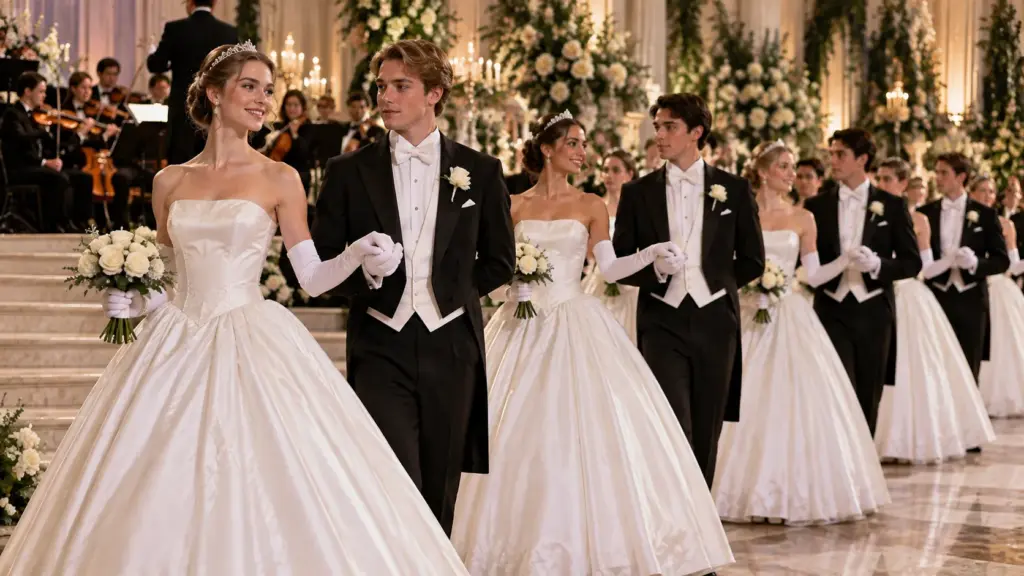
A debutante ball, also called a deb ball, is a formal ceremony where young women are presented to society. Traditional events often include a formal introduction, an escort, dancing, and a dinner or reception. Modern debutante balls may also celebrate education, community involvement, family traditions, and charitable activities.
Understanding the Meaning of Debutante
What is a debutante?
The word “debutante” comes from French and refers to a young woman making her formal social debut.
Historically, debutante balls were associated with European aristocratic families. Young women were presented at court or introduced to established social circles.
The tradition later developed in other countries, including the United States.
Today, debutante balls can have different purposes depending on the sponsoring organization.
Some emphasize family traditions and formal etiquette. Others include charitable fundraising, community service, cultural heritage, and educational activities.
A debutante ball is therefore more than an opportunity to wear an evening gown. The clothing, presentation, and ceremony are connected to the event’s traditions.
What Is the Traditional Debutante Age?
One common question is about debutante ball age requirements.
Traditionally, debutantes were often young women in their late teens, commonly around 16 to 18 years old.
However, there is no universal debutante age.
Some organizations accept college-age participants. Others organize presentations for younger teenagers or follow different cultural traditions.
For example, the International Debutante Ball in New York describes its modern participants as young women of college age.
In Brazil, a festa de debutante commonly refers to a fifteenth-birthday celebration.
These events share a coming-of-age theme, but they do not necessarily follow the same ceremony or dress code.
How Do You Become a Debutante?
If you are wondering how to become a debutante, the process depends on the organization hosting the ball.
Some events require an invitation or nomination. Others accept applications from eligible participants.
Families should contact the organizer directly to understand the requirements.
| 確認すべきこと | なぜそれが重要なのか | 私が提案すること |
|---|---|---|
| Age requirements | Eligibility differs between organizations | Confirm the accepted age range |
| Application process | Some events require nominations or invitations | Contact the organizing committee |
| Participation fees | Costs may extend beyond the dress | Request a complete expense list |
| Rehearsals | Participants may need to practice the presentation | Confirm attendance requirements |
| 服装規定 | Some organizers have strict gown rules | Obtain written clothing guidelines |
| Escort requirements | Some ceremonies include formal escorts | Ask whether an escort is required |
| Event schedule | Preparation may involve several activities | Confirm all important dates |
Why Different Debutante Traditions Affect Dress Selection
In my factory experience, the intended occasion should be clear before a buyer starts selecting fabrics or developing a formal dress. A gown designed for a traditional presentation ceremony may need a different silhouette from one intended for a modern birthday celebration. For example, a traditional debutante ball may require a white, floor-length gown with a full skirt. A Brazilian festa de debutante may involve a colorful princess-style dress or several outfit changes during the celebration. Both can be formal occasions, but the clothing requirements are not interchangeable.
This difference matters for clothing brands and wholesalers developing deb ball dresses for different markets. A supplier needs to understand the target customer, the event type, and the expected level of formality. A dress with a dramatic train may look attractive in promotional photographs, but it may be unsuitable for an event that requires a curtsy or formal procession. Similarly, a short party dress may sell well for birthdays but fail to meet the requirements of a traditional debutante presentation.
My suggestion is to identify the exact event and market before choosing a gown design. The buyer decision rule is simple: follow the organizer’s written requirements first, then select the silhouette, fabric, and decorative details.
What Should a Debutante Wear to a Formal Debutante Ball?
Choosing a debutante gown involves more than finding an attractive white dress. The gown must match the event’s traditions while providing suitable coverage, support, and freedom of movement.
A dress that looks beautiful on a mannequin may not perform well during a long formal ceremony.
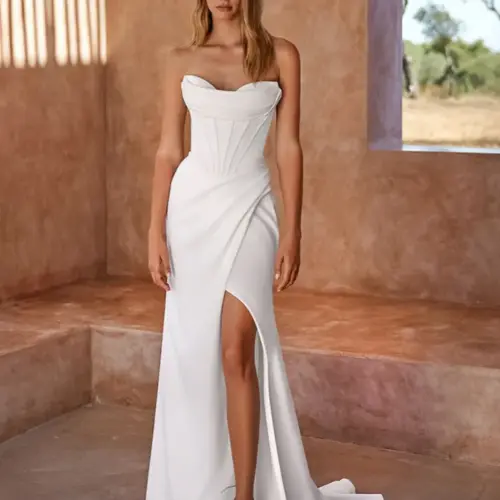
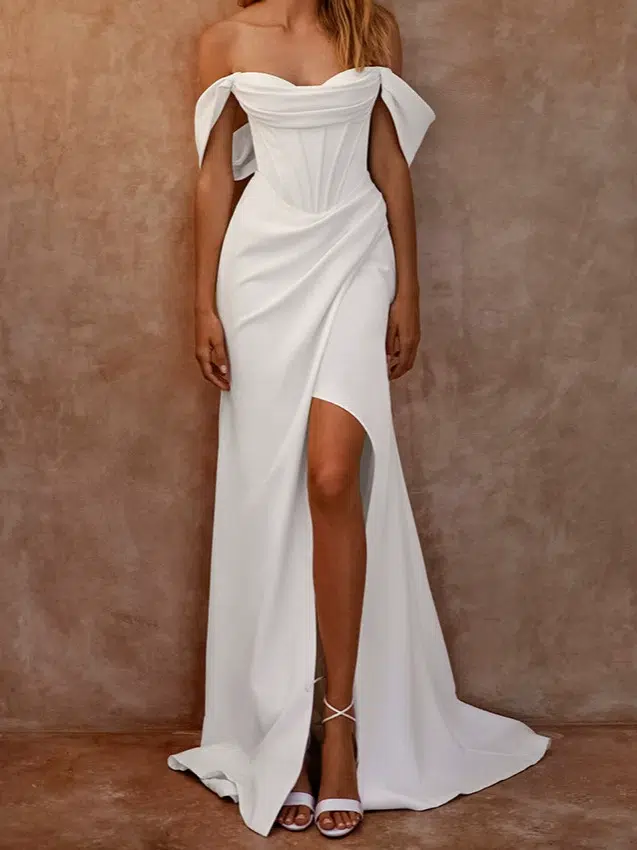
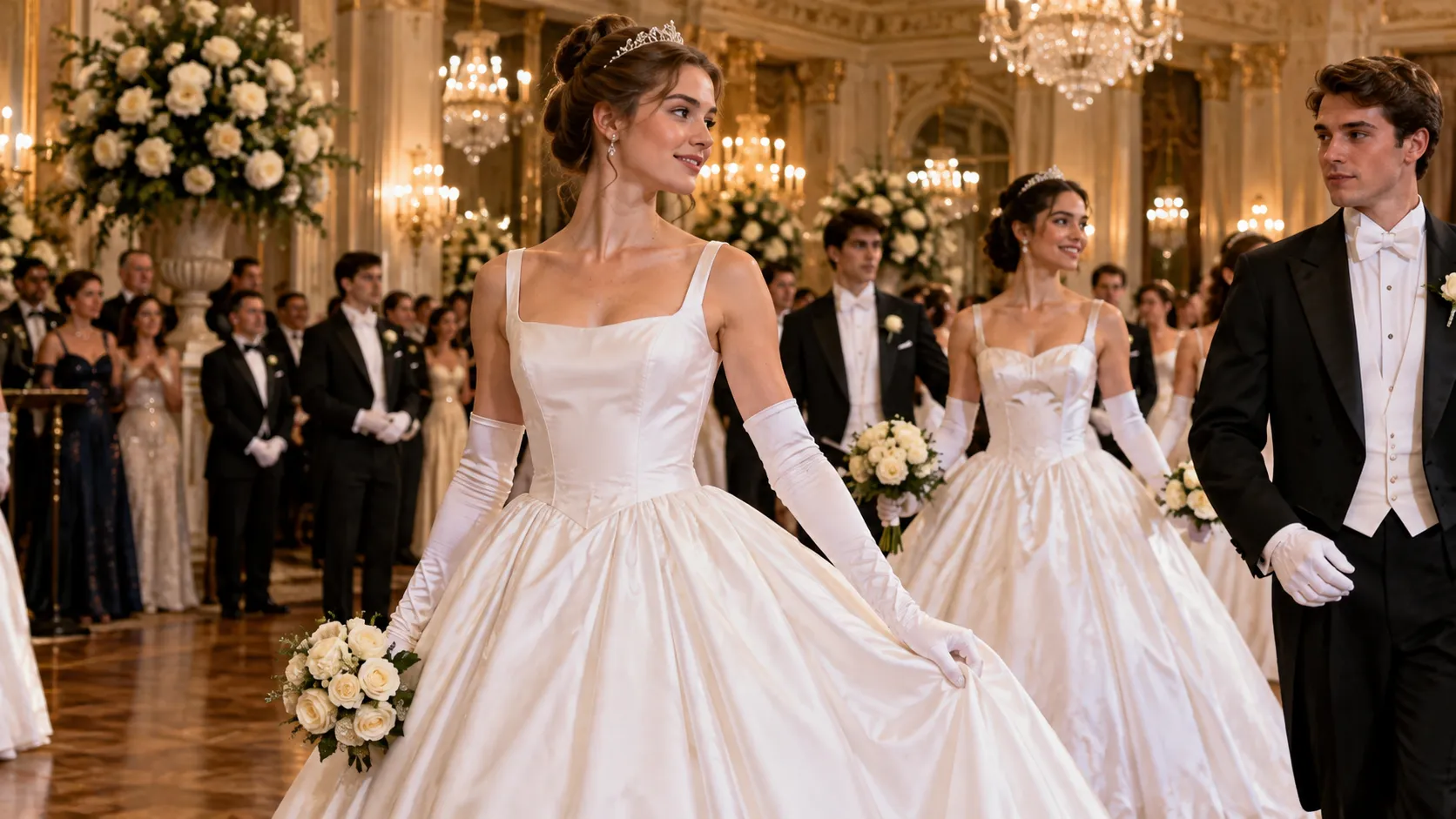
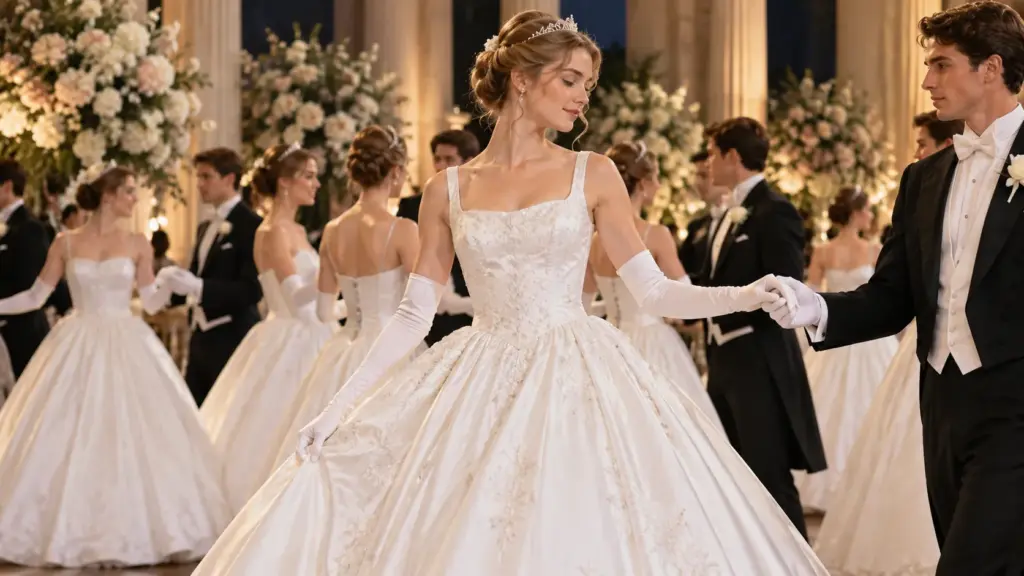
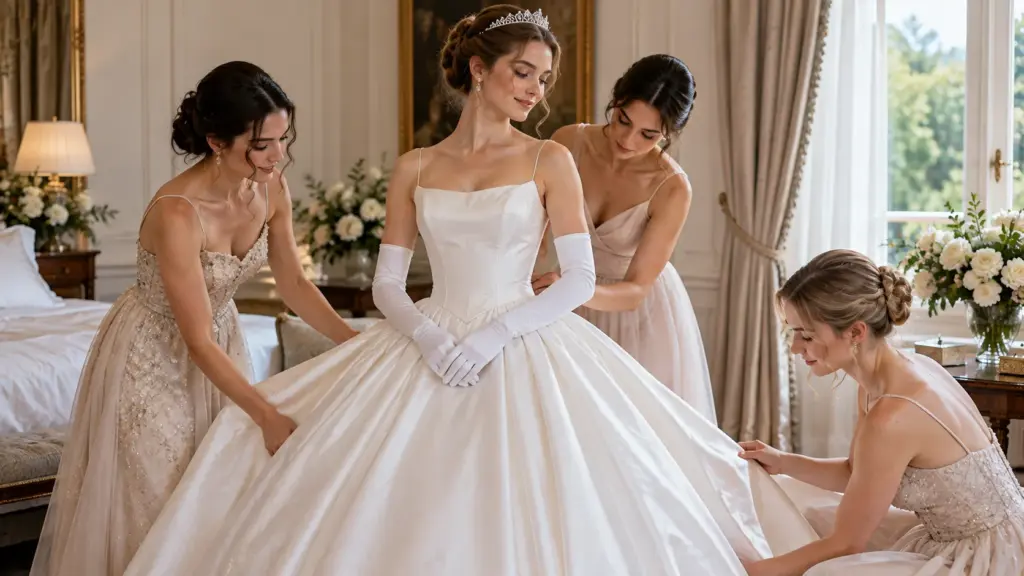
A traditional debutante usually wears a white, floor-length formal gown. A-line and ball gown silhouettes are common choices. Depending on the organizer’s requirements, the outfit may also include white gloves, formal shoes, and simple jewelry. Always confirm the approved color, neckline, skirt shape, and accessories before purchasing or producing the dress.
Why White Debutante Ball Gowns Remain Traditional
White is closely associated with traditional debutante presentations.
The color is often connected with youth, formality, and the symbolic transition into adulthood.
However, not every shade of white is automatically acceptable.
Some organizers require pure white. Others may permit ivory, eggshell, or soft cream.
For example, the International Debutante Ball specifies white, floor-length evening gowns for its participants.
From a manufacturing perspective, these color differences matter.
White satin, ivory chiffon, and cream tulle can look similar in product photographs but noticeably different under ballroom lighting.
Buyers developing white debutante ball gowns should approve physical fabric swatches whenever possible.
They should also confirm whether lace, embroidery, beads, and lining must match the main fabric.
Choosing the Right Debutante Gown Silhouette
The silhouette affects both appearance and comfort.
Several dress styles can work for formal debutante events.
| Gown Style | Main Characteristics | 私が提案すること |
|---|---|---|
| ボールガウン | Fitted bodice with a full skirt | Suitable for traditional formal presentations |
| Aラインのガウン | Fitted upper body with a gradually widening skirt | A practical option for movement and dancing |
| Princess gown | Full skirt with decorative details | Suitable when the organizer permits elaborate designs |
| Empire-waist gown | Raised waistline with a flowing skirt | Consider when a softer silhouette is acceptable |
| Mermaid gown | Fitted body with a flared lower skirt | Check whether the wearer can curtsy and dance |
| Minimalist satin gown | Clean lines with limited decoration | Suitable for events that permit simpler formal designs |
For traditional ceremonies, I usually suggest checking the skirt shape before focusing on decorative details.
A narrow skirt may restrict movement during a formal bow or curtsy.
A very heavy skirt may also become uncomfortable during a long evening.
Which Fabrics Work for Debutante Dresses?
Fabric selection affects the gown’s appearance, weight, structure, and price.
Common options include satin, tulle, organza, chiffon, and lace.
Satin provides a smooth surface and formal appearance. Tulle creates volume without requiring the entire skirt to be made from heavy fabric.
Organza can add structure, while chiffon creates a softer, flowing effect.
Lace is often used for sleeves, bodices, or decorative panels.
For buyers developing dresses for debutante ball collections, I suggest comparing fabric samples for opacity, drape, texture, and color consistency.
White fabrics deserve special attention because thin materials can become transparent under strong lighting.
The lining must provide suitable coverage without making the gown unnecessarily heavy.
How Fabric and Construction Change Gown Quality
In my factory experience, the construction beneath a formal gown is just as important as the fabric visible on the outside. Consider a white ball gown with a fitted bodice and several layers of tulle. The outer skirt may look light and elegant, but the bodice needs enough structure to support the garment during movement. If the lining is too thin, the dress may become transparent under bright lighting. If the waist seam is poorly reinforced, the weight of the skirt can pull the bodice downward. These problems may not be obvious in a flat product photograph.
For clothing brands developing a debutante ball gown, I suggest checking the sample on a person or suitable dress form before approving bulk production. The wearer should be able to walk, sit, turn, raise her arms, and perform any required ceremonial movement. Buyers should also inspect the zipper, waist seam, hem, lining, and decorative attachments. A complicated gown may require more sewing operations and additional quality checks than a simple evening dress.
There is also a cost trade-off. More fabric layers, hand-applied decorations, and structured bodices can increase production costs. My decision rule is to approve the fit and construction first, then adjust decorative details to meet the target price.
What to Wear to a Debutante Ball as a Guest?
Debutante ball guest attire is different from the clothing worn by the young women being presented.
Guests should dress formally without confusing their role with that of the debutantes.
The invitation is the most important reference.
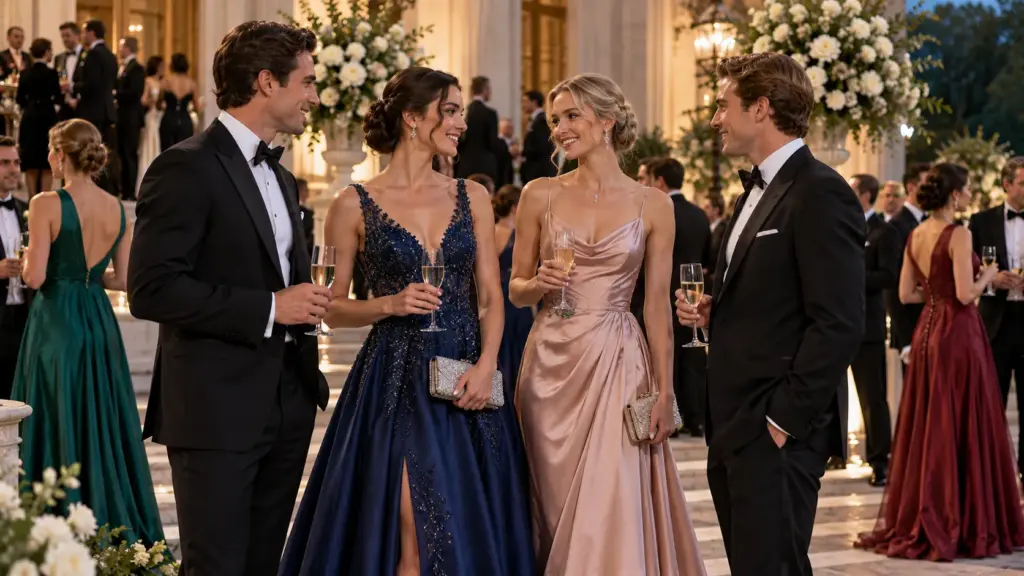
For a traditional debutante ball, female guests generally wear elegant formal evening dresses, while male guests follow the specified black-tie or white-tie requirements. Floor-length gowns are a reliable choice for highly formal events. Guests should normally avoid wearing a traditional white debutante-style gown unless the organizer specifically requests it.
Understanding Black Tie and White Tie
A formal debutante ball may specify black tie, white tie, or another dress code.
These terms are not interchangeable.
White tie is the more formal standard.
For men, it traditionally includes a black tailcoat, white waistcoat, white bow tie, and formal trousers.
Women generally wear full-length evening gowns.
Black tie usually requires a tuxedo for men.
For women, a formal floor-length evening dress is a suitable choice. Some black-tie events also permit sophisticated shorter evening dresses, depending on the organizer’s expectations.
If the invitation does not clearly explain the dress code, I suggest asking the host rather than making assumptions.
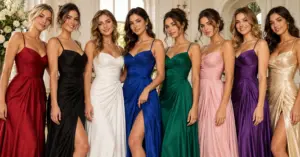
Choosing Debutante Guest Dresses by Color
Color is an important part of debutante ball etiquette.
Because the debutantes traditionally wear white, guests often select other colors.
一般的なオプションは以下の通り:
- Navy blue
- ブルゴーニュ
- エメラルドグリーン
- ダスティローズ
- Champagne, when permitted
- Dark purple
- 黒
- Muted metallic shades
The goal is to look appropriately formal without creating confusion during the presentation.
A full white ball gown is generally better reserved for the debutante.
For retailers developing debutante guest dresses, a coordinated collection of formal colors may serve a wider customer group than a collection focused only on white gowns.
What Should Guests Avoid Wearing?
| Clothing Choice | Possible Problem | 私が提案すること |
|---|---|---|
| White princess-style gown | May resemble the debutante’s outfit | Choose another color unless requested |
| Very short dress | May not meet the formal dress code | Check the required dress length |
| Casual sundress | Usually too informal | Select an evening dress |
| Excessively long train | Can make movement difficult | Choose a manageable hem |
| Very high heels | May become uncomfortable during dancing | Test shoes before the event |
| Heavy accessories | Can overwhelm the overall outfit | Keep the styling balanced |
| Unlined sheer fabric | May provide insufficient coverage | Check opacity under strong lighting |
Why Guest Dresses Need Different Design Priorities
When developing formal dresses for different customer groups, I suggest separating debutante gowns from guest dresses at the design stage. A traditional debutante gown often has specific requirements for color, skirt shape, and ceremonial appearance. Guest dresses usually allow more flexibility in color, neckline, silhouette, and decoration. This gives brands an opportunity to create different products for the same event without making every dress look similar.
For example, a retailer may want to develop a formalwear collection that includes a white debutante gown, a navy A-line guest dress, and a burgundy evening dress for family members. Although these garments may share similar fabrics, their construction and styling requirements can differ. The white gown may need additional lining and a fuller skirt. The guest dresses may use lighter construction or different decorative details. Combining all three designs into one production plan without considering these differences can create inaccurate cost estimates.
There is also a commercial trade-off between variety and order quantity. More colors and styles can attract different customers, but smaller quantities per design may affect fabric purchasing and unit prices. My suggestion is to confirm the target customer for each style before expanding the collection.
中国の衣料品工場に連絡する前に、どのような準備をしておくべきですか?
For fashion brands and wholesalers interested in developing debutante dresses, clear product information makes communication with the manufacturer more efficient.
A factory needs to understand the design, materials, target market, and expected order quantity before providing a meaningful quotation.
| 情報 | 例 | なぜそれが必要なのか |
|---|---|---|
| 製品 | Debutante gown or formal guest dress | 工場適合性を確認する |
| 写真/技術資料 | 画像、寸法、構造 | 価格設定と開発をサポート |
| ファブリック | Satin, tulle, chiffon, or unknown | コスト、最小発注数量、および納期に影響します |
| サイズ | XS~XLサイズまたはカスタムサイズ表 | パターンと消費に影響を与える |
| 量 | スタイルと色ごとに | 最小注文数量と単価に影響します |
| 市場 | EU、英国、米国、またはオーストラリア | サイズとコンプライアンスに影響します |
| 品質レベル | 卸売またはプレミアム | ガイドの素材と仕上がり |
| パッケージ | ポリ袋、箱、またはバーコード | コストとタイミングに影響する |
| ラベル | 首周り、お手入れ方法、サイズ、タグ | アートワーク、最小発注数量、およびコストに影響します |
| 締め切り | 倉庫到着日 | 生産計画をサポートする |
| 証明書 | 必要な証明書 | 準拠を確認する |
| 目標株価 | FOB価格または配送価格 | 現実的な選択肢を提案するのに役立ちます |
明確な情報があれば、工場はより正確な価格、納期、材料の提案、生産計画を提示できる。.
I also suggest separating essential requirements from optional preferences.
For example, the white color, approved dress length, and required neckline may be essential for a traditional debutante gown.
Additional embroidery, decorative buttons, or special packaging may be optional.
This distinction helps the factory identify possible cost adjustments without changing the most important features of the dress.
トゥルーカンに見積もりを依頼するタイミングは?
If you are a clothing brand, wholesaler, or sourcing manager planning a formalwear collection, you can contact Truekung when you have a design concept, reference images, or a tech pack.
We provide OEM/ODM clothing manufacturing, private label production, sample development, bulk production, quality control, and export support.
For debutante gowns and other formal dresses, I suggest discussing fabric availability, construction details, sizing, order quantities, and delivery expectations before confirming production.
You can send me:
- Product images or technical drawings
- Expected order quantities
- ターゲット市場
- Fabric and quality requirements
- サイズ範囲
- Custom label and packaging requirements
- Expected delivery date
I can review your requirements and discuss suitable manufacturing options with you.
メールアドレス: [email protected]
Webサイト: https://truekung.com
結論
Choosing the right debutante ball dress starts with understanding the event’s traditions and dress code. Whether you are selecting a gown or developing a formalwear collection, prioritize suitable fabrics, comfortable construction, accurate sizing, and clear requirements before making your final decision.
ビュー0