Scegliere la fabbrica sbagliata può costare più del semplice denaro. Può ritardare una stagione, danneggiare la fiducia e lasciare gli acquirenti con merce invendibile.
Un produttore di abbigliamento OEM realizza capi in base ai vostri design, etichette, tessuti e requisiti tecnici. Il partner ideale dovrebbe comprendere la qualità, il quantitativo minimo d'ordine (MOQ), la comunicazione, i tempi di consegna e gli standard di esportazione prima dell'inizio della produzione.

Ho visto molti acquirenti entusiasmarsi dopo aver trovato una fabbrica con un prezzo basso. Capisco quella sensazione. Il prezzo è importante nell'abbigliamento all'ingrosso. Ma so anche che il prezzo da solo non può proteggere un acquirente. Se stai ancora confrontando le opzioni dei fornitori, la mia guida su come trovare un produttore di abbigliamento Può aiutarti a creare una lista di candidati più sicura. Un produttore di abbigliamento OEM affidabile dovrebbe aiutarti a trasformare il tuo progetto in una produzione di massa stabile. Dovrebbe anche aiutarti a ridurre gli errori prima che diventino costosi.
Quando parlo con gli acquirenti, di solito chiedo prima informazioni sul prodotto. Voglio sapere lo stile, il tessuto, la gamma di taglie, il piano di etichettatura, la quantità dell'ordine e il mercato di consegna. Questi dettagli mi dicono se l'ordine è pronto per la produzione OEM. Mi mostrano anche dove potrebbero presentarsi i rischi. Una buona fabbrica non si limita a dire di sì. Una buona fabbrica pone domande chiare prima di dire di sì.
Che cosa fa concretamente un produttore di abbigliamento OEM?
Molti acquirenti pensano che OEM significhi semplice cucitura. Questa idea è troppo riduttiva e può portare a una comunicazione carente e a aspettative errate.
Un produttore di abbigliamento OEM realizza capi di abbigliamento secondo il design, le specifiche tecniche, il marchio e gli standard di qualità forniti dall'acquirente. L'acquirente controlla l'idea del prodotto, mentre la fabbrica si occupa di campionatura, approvvigionamento, produzione, controllo qualità, imballaggio ed esportazione.
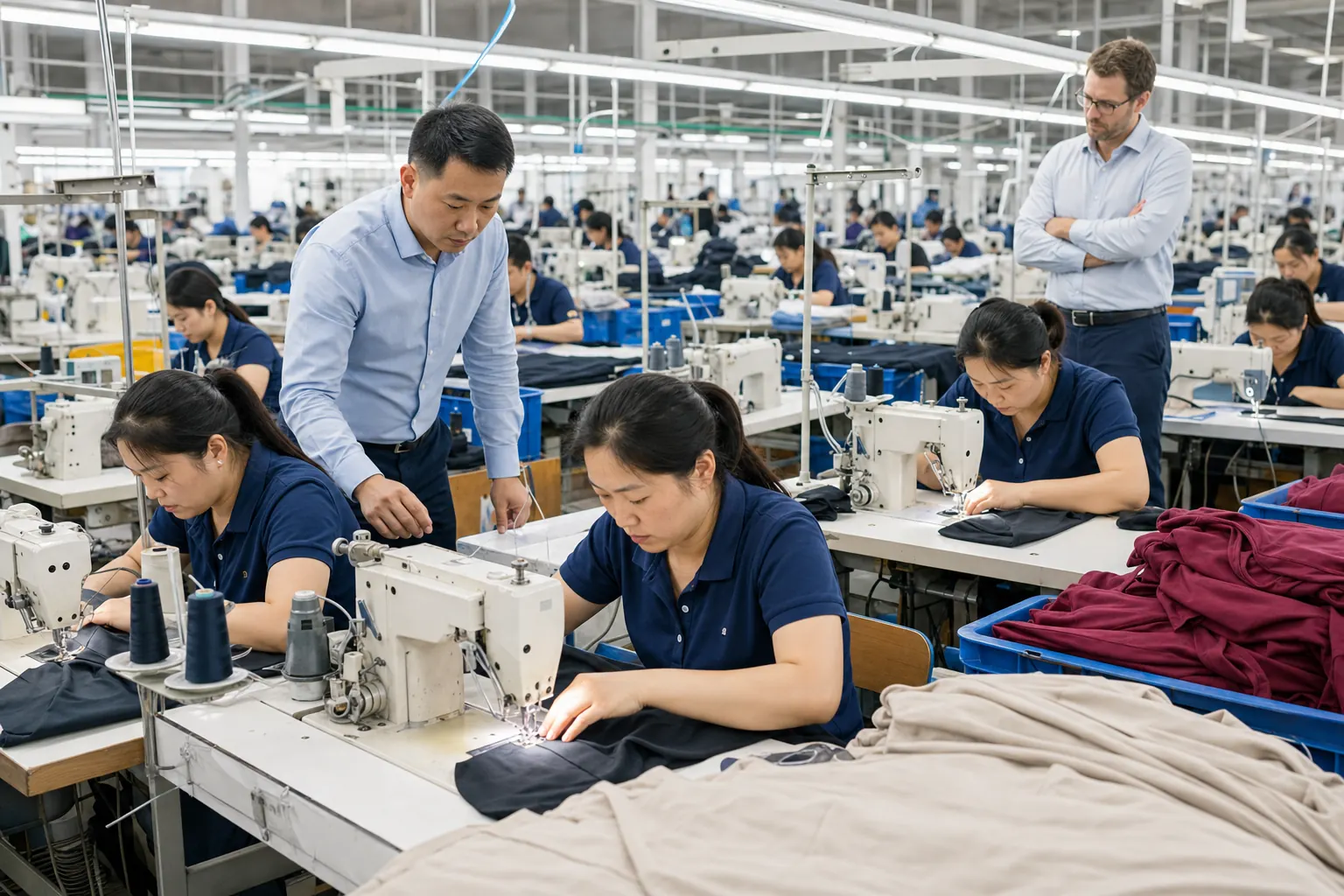
OEM si occupa di produzione controllata
Nel mio lavoro quotidiano vedo OEM Si tratta di una partnership produttiva. L'acquirente propone una direzione stilistica, mentre la fabbrica trasforma tale direzione in un capo d'abbigliamento reale. Sembra semplice, ma ogni minimo dettaglio conta.
Ad esempio, un acquirente potrebbe inviare la foto di un abito e richiedere un modello simile. Questo non è sufficiente per una produzione OEM accurata. La fabbrica ha bisogno anche del peso del tessuto, dei dettagli della fodera, del tipo di cerniera, della tabella delle misure, della finitura delle cuciture, dello standard di colore, della grafica dell'etichetta, del metodo di imballaggio e della quantità dell'ordine. Se mancano questi dettagli, il campione potrebbe sembrare accettabile, ma la produzione in serie potrebbe non corrispondere alle esigenze del mercato dell'acquirente.
Ecco un modo semplice per comprendere la differenza:
| Modello | L'acquirente fornisce | La fabbrica fornisce | Ideale per |
| OEM | Design, specifiche, etichette del marchio | Produzione, approvvigionamento, controllo qualità, confezionamento | Acquirenti con idee di prodotto ben definite |
| ODM | Direzione generale o esigenza di mercato | Opzioni di progettazione e produzione | Acquirenti che necessitano di uno sviluppo più rapido |
| Etichetta privata | Scelta del prodotto esistente | Marchio e fornitura | Acquirenti che desiderano un rapido ingresso nel mercato |
L'OEM offre all'acquirente un maggiore controllo. Ma richiede anche una maggiore preparazione. Se desideri una vestibilità, un tessuto, una finitura o un'etichetta speciali, l'OEM è solitamente la scelta migliore. Se hai bisogno di velocità e non disponi di un team di progettazione completo, ODM potrebbe essere più facile. Spesso aiuto gli acquirenti a confrontare entrambi i percorsi prima che scelgano e spiego il compromesso in modo più dettagliato nel mio articolo su ODM o OEM per un marchio di abbigliamento emergente.
Come posso verificare se un produttore di abbigliamento OEM è affidabile?
Un sito web ben fatto può nascondere una produzione scadente. Allo stesso modo, un preventivo basso può nascondere una mancanza di controllo qualità o una pianificazione delle consegne inadeguata.
Prima di effettuare un ordine all'ingrosso, gli acquirenti dovrebbero valutare un produttore di abbigliamento OEM in base all'esperienza produttiva, alla pertinenza del prodotto per categoria, alla qualità dei campioni, alla velocità di comunicazione, alle certificazioni, ai precedenti di esportazione e al processo di controllo qualità.
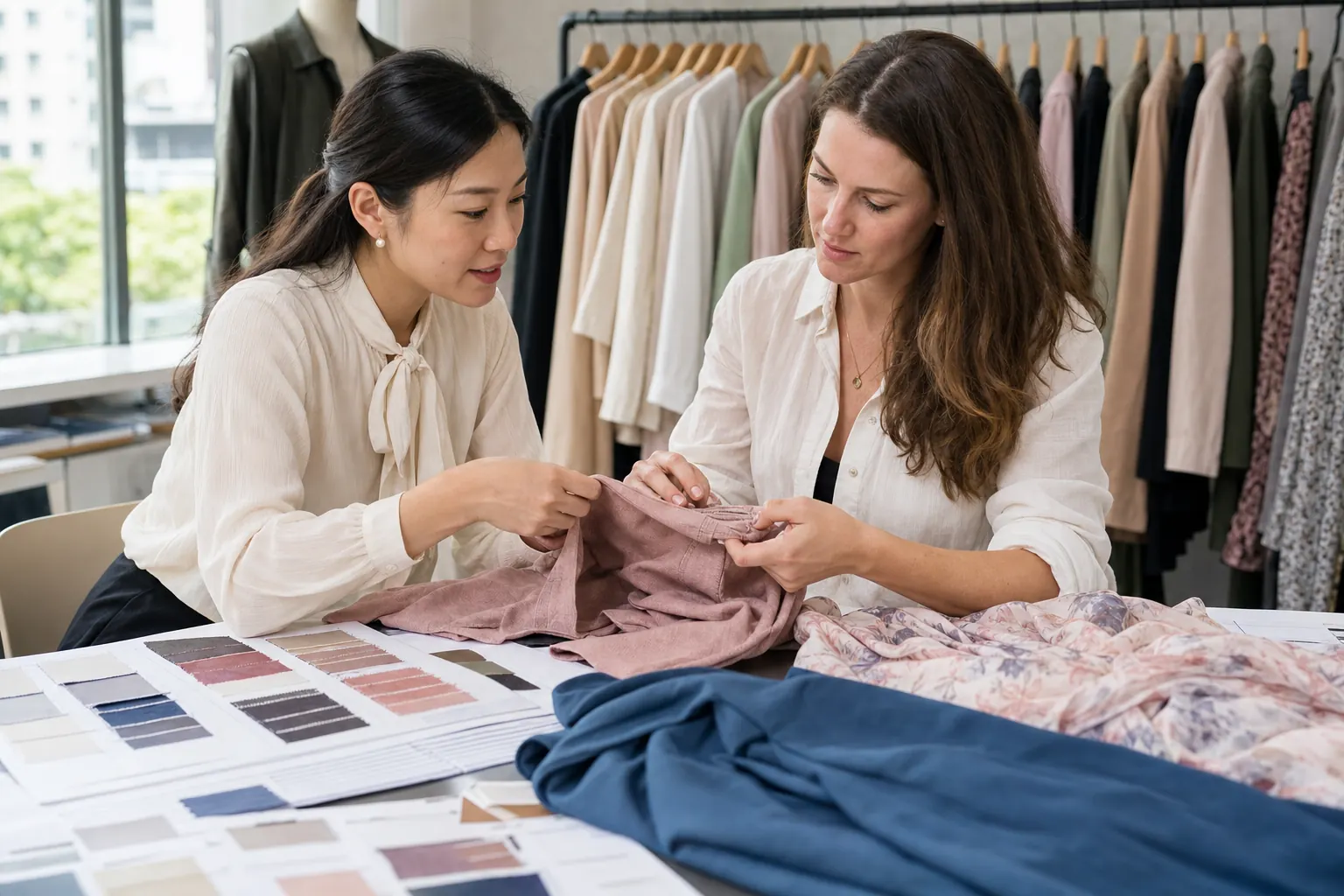
L'affidabilità è dimostrata prima del deposito
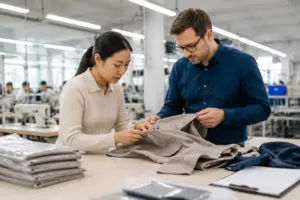
Credo che una fabbrica affidabile debba far sentire l'acquirente chiaro, non confuso. Il venditore dovrebbe rispondere a domande dirette. Il reparto campioni dovrebbe essere in grado di apportare correzioni. Il team di produzione dovrebbe conoscere gli standard prima di tagliare il tessuto. Il team di controllo qualità dovrebbe effettuare ispezioni durante la produzione, non solo alla fine.
Gli acquirenti possono iniziare con semplici verifiche. Chiedete quali categorie di prodotti la fabbrica produce più frequentemente. Una fabbrica specializzata in piumini potrebbe non essere la scelta migliore per abiti di seta. Una fabbrica che produce t-shirt tutti i giorni potrebbe non essere in grado di gestire al meglio la produzione di cappotti complessi. La coerenza tra le categorie di prodotti è una delle verifiche più pratiche.
Verificate quindi la comunicazione. Se una fabbrica non è in grado di spiegare chiaramente il quantitativo minimo d'ordine (MOQ), i tempi di campionatura, i tempi di consegna per gli ordini all'ingrosso, la disponibilità dei tessuti e le condizioni di pagamento, il rischio è già evidente. Una comunicazione inadeguata prima dell'ordine spesso peggiora ulteriormente dopo il versamento dell'acconto.
Anche gli acquirenti dovrebbero richiedere delle prove, ma devono fare attenzione. Certificati, rapporti di audit e precedenti mercati di esportazione sono utili, ma non sono sufficienti. Alcuni acquirenti temono che i fornitori possano presentare documenti incompleti o falsi. Capisco questa preoccupazione. Un approccio migliore consiste nell'integrare la documentazione con videochiamate in diretta, campionature, foto di produzione, rapporti di ispezione e termini di acquisto chiari.
| Posto di controllo | Cosa chiedere | Perché è importante |
| Esperienza del prodotto | Quali capi di abbigliamento realizzi più spesso? | Dimostra la reale forza della categoria |
| Processo di campionamento | Quanti giorni per il primo campione? | Mostra il controllo dello sviluppo |
| processo di controllo qualità | Ispezionate i tessuti, i prodotti in linea e i prodotti finiti? | Riduce il rischio di sfuso |
| Capacità di esportazione | In quali mercati effettuate le spedizioni? | Dimostra esperienza nella gestione dei documenti e della logistica. |
| Comunicazione | Chi si occupa dell'ordine dopo il deposito? | Evita di perdere dettagli |
Cosa devo preparare prima di contattare un produttore di abbigliamento OEM?
Molti acquirenti contattano le fabbriche troppo presto. Di conseguenza, entrambe le parti perdono tempo perché l'idea del prodotto non è ancora pronta.
Prima di contattare un produttore di abbigliamento OEM, gli acquirenti dovrebbero preparare foto del prodotto, schede tecniche, tabelle delle misure, requisiti del tessuto, quantità dell'ordine, prezzo obiettivo, dettagli dell'etichetta, esigenze di imballaggio e tempistiche di consegna.

Un input chiaro crea un output chiaro
Apprezzo gli acquirenti che si presentano con informazioni chiare. Non devono essere perfette, ma devono fornire alla fabbrica indicazioni sufficienti. Un brief chiaro mi aiuta a valutare più rapidamente costi, tessuti, tempi di campionatura e rischi di produzione.
Un pacchetto tecnico è molto utile. Indica alla fabbrica cosa produrre. Può includere schizzi piatti, misure, composizione del tessuto, GSM, finiture, dettagli di cucitura, posizione dell'etichetta, codici colore e metodo di imballaggio. Se l'acquirente non dispone di un pacchetto tecnico completo, suggerisco comunque di prepararne una versione semplice. Anche un documento di base è meglio di messaggi sparsi. Anche le informazioni sul tessuto sono importanti, quindi gli acquirenti possono utilizzare la mia guida su come scegliere il tessuto per la produzione in serie prima che confermino i materiali.
Anche il mercato di destinazione è importante. Un acquirente di supermercati in Europa potrebbe aver bisogno di test diversi, etichettatura, dettagli relativi all'imballaggio e alla conformità, rispetto a un acquirente di una boutique in un altro paese. Se l'acquirente mi comunica in anticipo il paese di esportazione, posso pensare ai marchi sui cartoni, alle etichette di manutenzione, agli standard di ispezione e ai documenti di spedizione prima della produzione.
Suggerisco inoltre di stabilire un prezzo obiettivo realistico. Alcuni acquirenti sono restii a comunicare il prezzo, lo capisco. Tuttavia, senza un intervallo di prezzo, la fabbrica potrebbe proporre un prodotto troppo costoso per il mercato. Un prezzo obiettivo non significa che la fabbrica ridurrà la qualità indiscriminatamente. Aiuta entrambe le parti ad adattare tessuti, lavorazione e dettagli in modo pratico.
La preparazione migliore è la più semplice:
| Articolo | Versione sufficientemente buona | Versione migliore |
| Progetto | Foto di riferimento | Pacchetto tecnico completo |
| Tessuto | Tipo di tessuto | Composizione, GSM, sensazione al tatto |
| Misurare | Gamma di taglie principali | Tabella completa delle misurazioni |
| Branding | file del logo | Etichetta, cartellino, grafica per sacchetto di plastica |
| Quantità | Ordine stimato | Quantità per colore e taglia |
| Cronologia | Mese necessario | Date di campionatura, approvazione e spedizione. |
In che modo prezzo, quantità minima d'ordine (MOQ) e tempi di consegna influiscono su un ordine OEM?
Un prezzo basso può sembrare allettante. Tuttavia, potrebbe creare problemi se il quantitativo minimo d'ordine (MOQ), l'approvvigionamento dei tessuti e i tempi di consegna non sono realistici.
Nella produzione di abbigliamento OEM, prezzo, quantità minima d'ordine (MOQ) e tempi di consegna sono elementi interconnessi. Gli acquirenti dovrebbero valutarli congiuntamente, poiché la quantità di tessuto, la complessità della lavorazione, le finiture, l'approvazione dei campioni e i tempi di spedizione influiscono tutti sull'ordine finale.
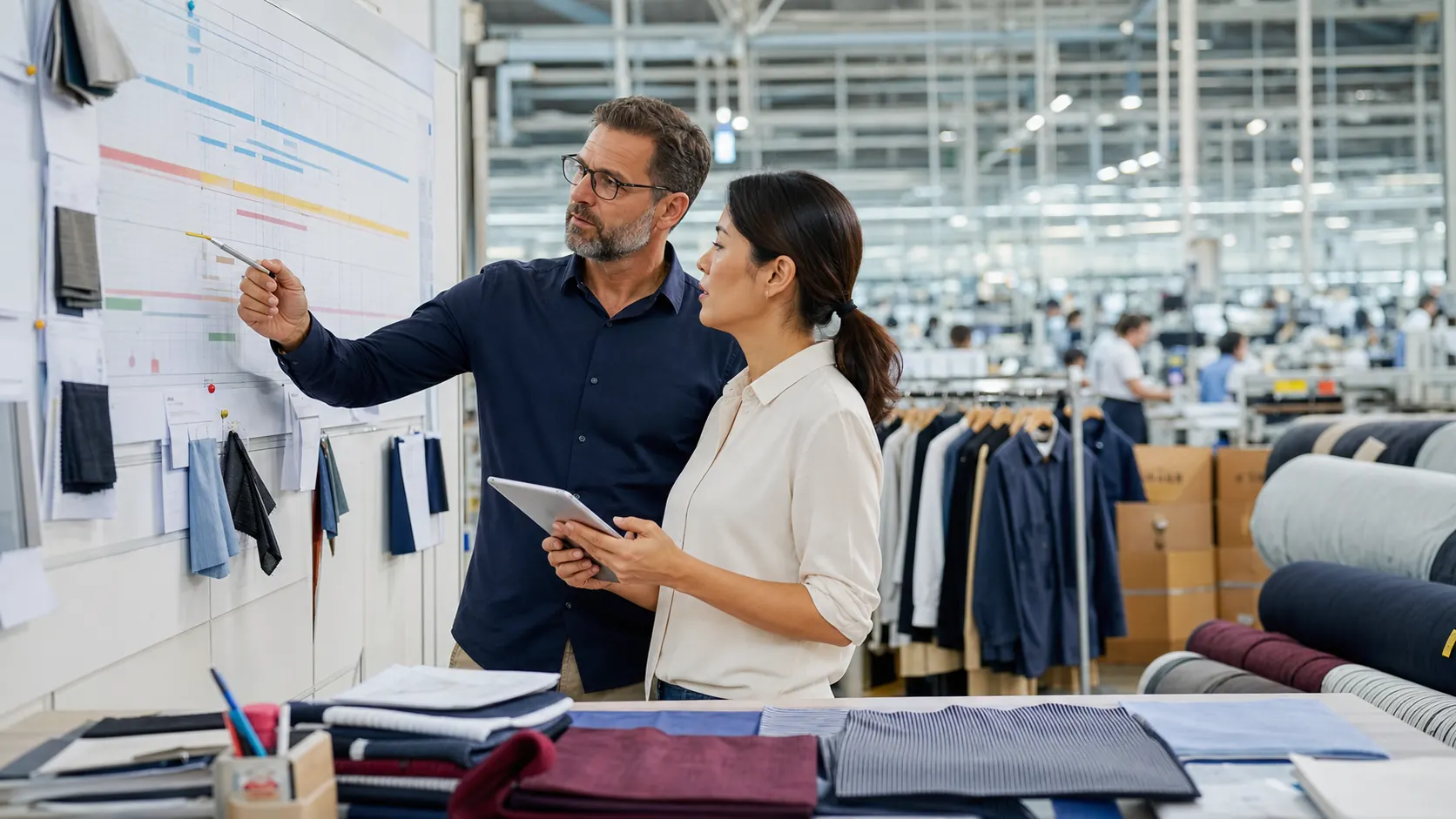
Il preventivo più basso non è sempre quello con il costo più basso.
Quando gli acquirenti mi chiedono un preventivo, ho bisogno di conoscere l'ordine completo. Una giacca con molte tasche, fodera, cerniere speciali e ricami non può essere prezzata come una semplice t-shirt. Anche un abito realizzato con un tessuto personalizzato ha un quantitativo minimo d'ordine (MOQ) diverso rispetto a un abito realizzato con un tessuto standard.
MOQ è spesso legato al tessuto. Molti acquirenti pensano che la linea di cucito decida il MOQ. A volte è così. Ma in molti casi, i produttori di tessuti, le tintorie, le tipografie e i fornitori di passamanerie stabiliscono il limite reale. Se l'acquirente desidera un colore personalizzato o un tessuto speciale, il MOQ del tessuto potrebbe essere superiore al MOQ della cucitura. Se il tuo primo ordine è piccolo, questa guida su Produzione di abbigliamento con basso ordine minimo in Cina potrebbe aiutarti a pianificare un inizio più realistico.
Anche i tempi di consegna richiedono una pianificazione accurata. Un campione veloce non significa necessariamente una consegna rapida della produzione in serie. La produzione in serie comprende l'ordinazione dei tessuti, le prove di colore in laboratorio, le correzioni dei campioni, la definizione delle taglie, il taglio, la cucitura, la finitura, il controllo qualità, l'imballaggio e la spedizione. Se anche solo una fase subisce un ritardo, l'intera pianificazione può slittare.
Suggerisco agli acquirenti di confrontare i preventivi con una struttura semplice. Consiglio anche di leggere su Perché i preventivi delle fabbriche di abbigliamento variano? prima di confrontare i fornitori solo in base al prezzo unitario:
| Fattore | Domanda a basso rischio | Segnale di avvertimento |
| Prezzo | Cosa è incluso nel preventivo? | Il preventivo non include finiture o imballaggi importanti. |
| MOQ | Il quantitativo minimo d'ordine (MOQ) si basa su stile, colore o tessuto? | La fabbrica fornisce un quantitativo minimo d'ordine vago |
| Tempo di campionamento | Quanti giorni dopo la conferma dei dettagli? | La fabbrica promette tempi troppo rapidi senza controllare il tessuto. |
| Tempi di consegna per grandi quantitativi | Quando inizia il conto alla rovescia? | Conteggi di fabbrica prima dell'approvazione del campione |
| Pagamento | Quali sono le fasi di pagamento? | I termini non sono chiari o cambiano spesso |
Un buon produttore di abbigliamento OEM dovrebbe spiegare i compromessi. Se l'acquirente desidera un MOQ inferiore, il prezzo unitario potrebbe aumentare. Se l'acquirente desidera un prezzo inferiore, potrebbe essere necessario cambiare la scelta del tessuto. Se l'acquirente desidera una consegna più rapida, alcuni dettagli personalizzati potrebbero non essere realizzabili. Questo è normale. L'importante è prendere la decisione prima dell'inizio della produzione.
Perché il controllo qualità prima della spedizione è importante?
I problemi di qualità riscontrati dopo la consegna sono un grosso problema. Sono più difficili da risolvere e possono danneggiare la stagione di vendita dell'acquirente.
Il controllo qualità è fondamentale perché la produzione di abbigliamento OEM si articola in numerose fasi. Gli acquirenti devono verificare il tessuto, le misure, la lavorazione, il colore, l'etichettatura, l'imballaggio e l'ispezione finale prima che la spedizione lasci la fabbrica.
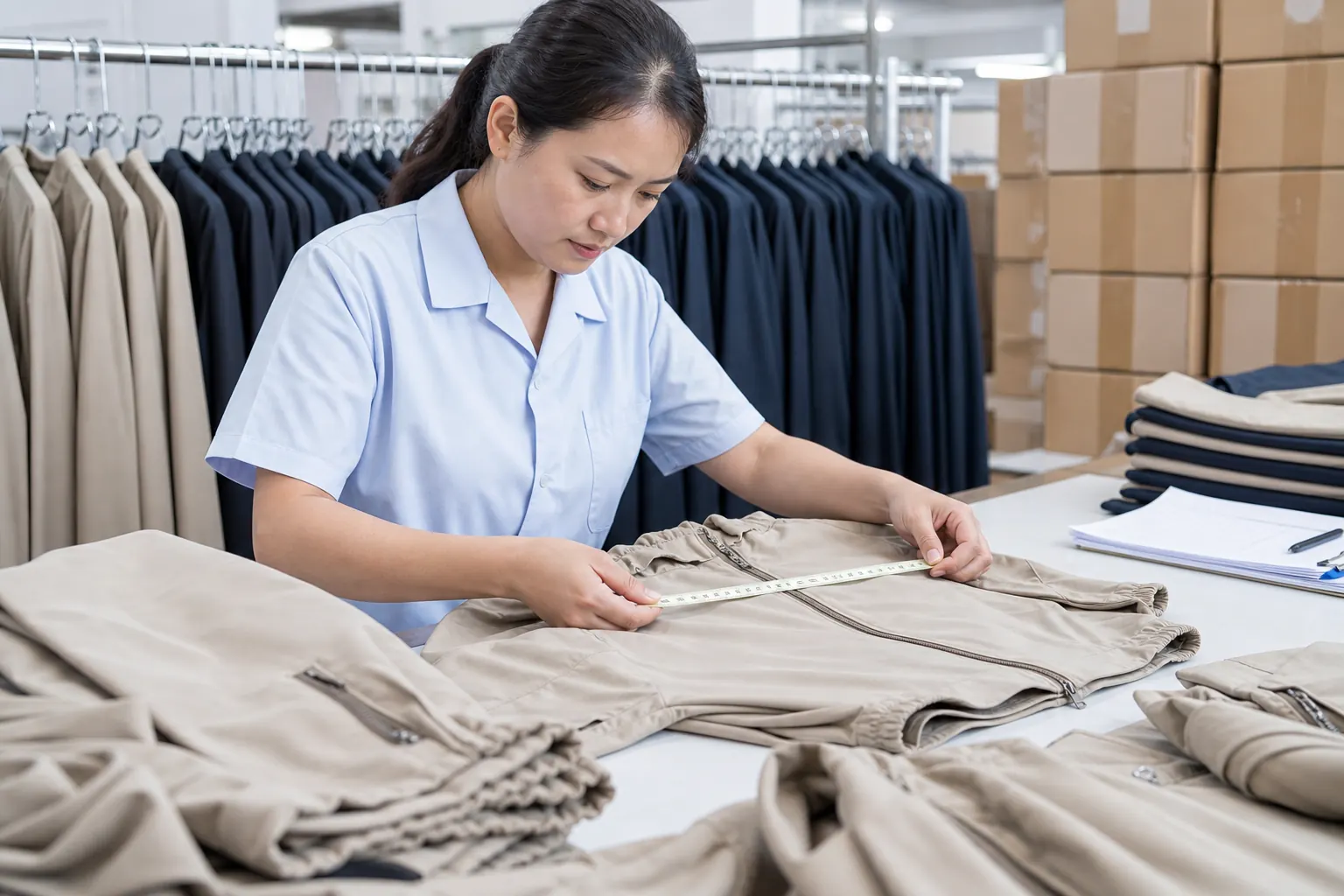
Il controllo qualità dovrebbe avvenire durante l'ordine
Non mi piace considerare il controllo qualità solo come fase finale. L'ispezione finale è importante, ma non può risolvere tutti i problemi. Se il colore del tessuto non è corretto, se il restringimento è eccessivo o se le misure non corrispondono alla prima fase di cucitura, la fabbrica dovrebbe accorgersene tempestivamente.
Un efficace processo di controllo qualità inizia con l'ispezione del materiale in entrata. Il tessuto deve essere controllato per colore, consistenza, larghezza, presenza di difetti e rischio di restringimento. Le finiture devono essere confrontate con il campione approvato. Le etichette devono corrispondere alla grafica. Questi controlli tutelano l'ordine prima del taglio.
Segue poi il controllo in linea. In questa fase, la fabbrica verifica la qualità delle cuciture durante la produzione. Se la tensione della cucitura, le misure, la posizione della tasca, l'impostazione della cerniera o il metodo di stiratura non sono corretti, il team può correggerli prima che l'intero lotto sia terminato.
L'ispezione finale avviene prima della spedizione. L'acquirente o un ispettore di terze parti può controllare quantità, dimensioni, aspetto, lavorazione, imballaggio, marchi del cartone e campioni casuali. Molte ispezioni utilizzano un Metodo di campionamento AQL per decidere se un lotto è accettabile. Questo passaggio aiuta a prevenire reclami evitabili dopo la consegna.
| Fase di controllo qualità | Cosa controlla | Perché aiuta |
| Ispezione del tessuto | Colore, difetti, restringimento, GSM | Previene problemi materiali |
| Campione di pre-produzione | Vestibilità, costruzione, finiture, etichette | Conferma lo standard di produzione |
| Ispezione in linea | Cucito, misure, lavorazione | Individua i problemi in fase iniziale |
| Ispezione finale | Prodotti finiti e imballaggio | Protegge la qualità della spedizione |
| Controllo dei documenti | Fattura, lista di imballaggio, etichette | Supporta la dogana e la consegna |
Per acquirenti come Maria, la qualità non riguarda solo il capo d'abbigliamento. Riguarda anche la fiducia. Se la merce arriva in ritardo o presenta difetti, la stagione delle vendite potrebbe essere compromessa. L'acquirente potrebbe perdere clienti. Ecco perché preferisco sempre standard chiari, conferme scritte e verbali di controllo qualità.
Conclusione
Il giusto produttore di abbigliamento OEM dovrebbe tutelare il design, i costi, la qualità e la consegna. Un processo chiaro rende l'intero ordine più sicuro.
Hai bisogno di aiuto con il tuo ordine di abbigliamento OEM?
Se stai pianificando un nuovo stile, un ordine con etichetta privata o un ordine all'ingrosso ripetuto, puoi contattare Lancy Chia a [email protected]. TrueKung può aiutarti a valutare tessuti, quantità minima d'ordine (MOQ), campioni, controllo qualità e tempi di produzione prima di effettuare l'ordine.
Visualizzazioni: 158