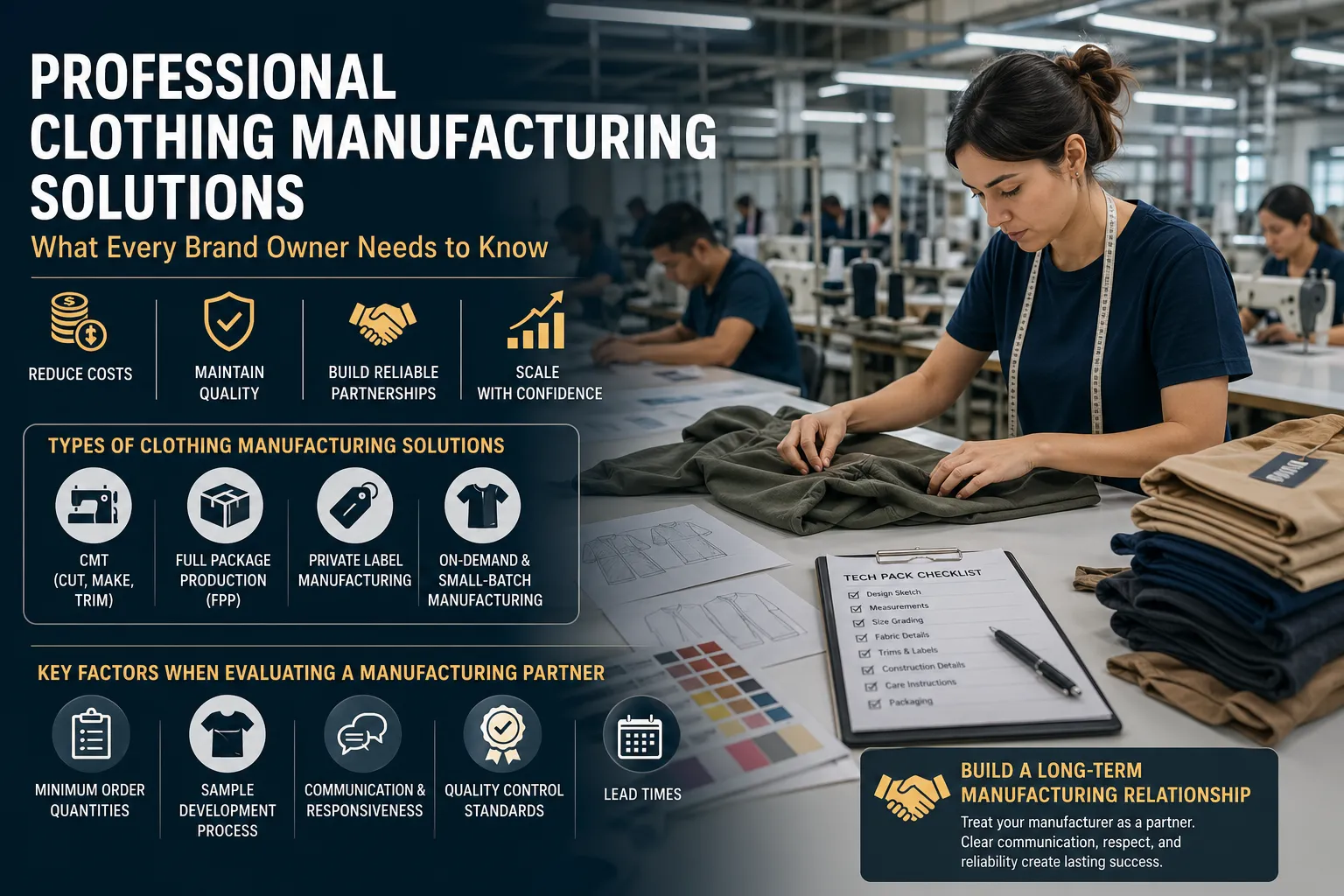

Avviare o far crescere un marchio di abbigliamento è entusiasmante, ma il divario tra un ottimo design e un capo finito e pronto per il mercato è più ampio di quanto la maggior parte delle persone si aspetti. Scegliere il giusto produzione La scelta del partner è una delle decisioni più importanti che un proprietario di un marchio possa prendere. Che tu stia producendo la tua prima serie di 200 unità o scalando a decine di migliaia, le soluzioni professionali per la produzione di abbigliamento influenzano tutto, dai margini di profitto alla reputazione del tuo marchio. Se sei nelle prime fasi di costruzione del tuo marchio, strumenti come un sottotitolo generator può effettivamente aiutarti a creare descrizioni di prodotto chiare ed etichette di categoria prima ancora di contattare un produttore, un piccolo dettaglio che rende la comunicazione molto più chiara. Questo articolo spiega in dettaglio cosa comporta effettivamente la produzione di abbigliamento professionale, cosa cercare in un partner e come impostare il tuo marchio per una crescita coerente e scalabile. produzione.
Cosa significa realmente la produzione "professionale"
La parola “professionale” viene usata in modo approssimativo nell’industria dell’abbigliamento. Ogni fabbrica promette qualità. Non tutte le fabbriche la garantiscono.
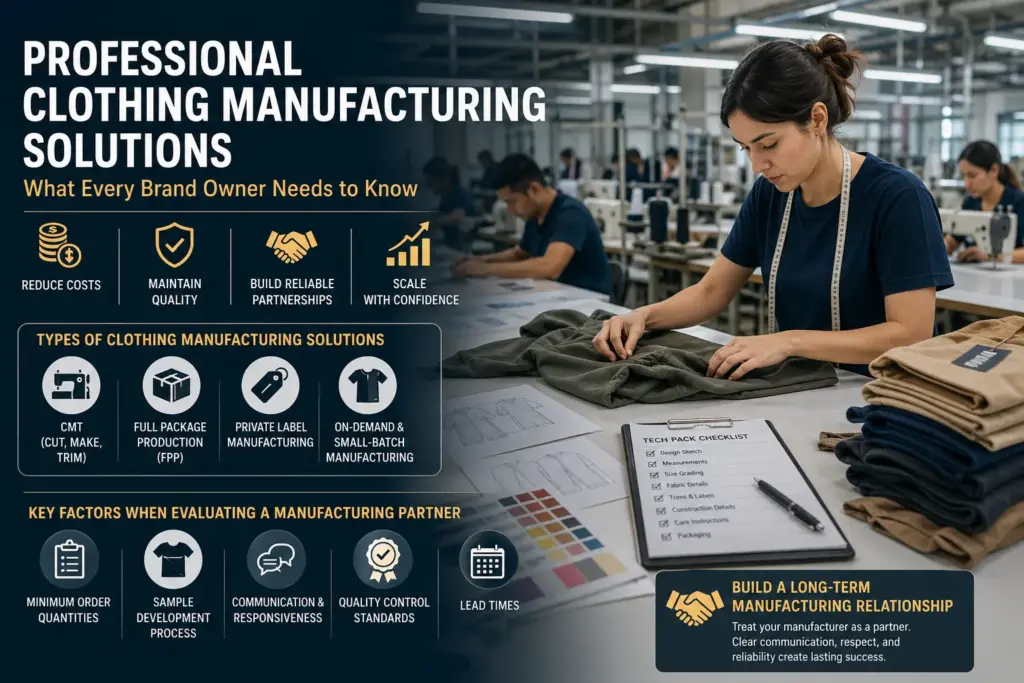
La produzione di abbigliamento professionale va ben oltre il semplice possesso di macchine da cucire e di un reparto di produzione. Significa processi di controllo qualità documentati, comunicazione costante, prezzi trasparenti e la capacità di riprodurre i risultati su più cicli di produzione. Un produttore professionale può fornirti una checklist tecnica, richiedere l'approvazione dei campioni di pre-produzione e segnalare potenziali problemi prima del taglio del tessuto, non dopo.
Per i proprietari dei marchi, questo è importante perché l'incoerenza è costosa. Quando le misure variano tra i diversi lotti, i clienti restituiscono gli articoli. Quando si verificano sostituzioni di tessuti senza preavviso, l'identità del marchio ne risente. La produzione professionale si basa essenzialmente sulla prevedibilità, sulla certezza che il lotto 10 avrà lo stesso aspetto e la stessa consistenza del lotto 1.
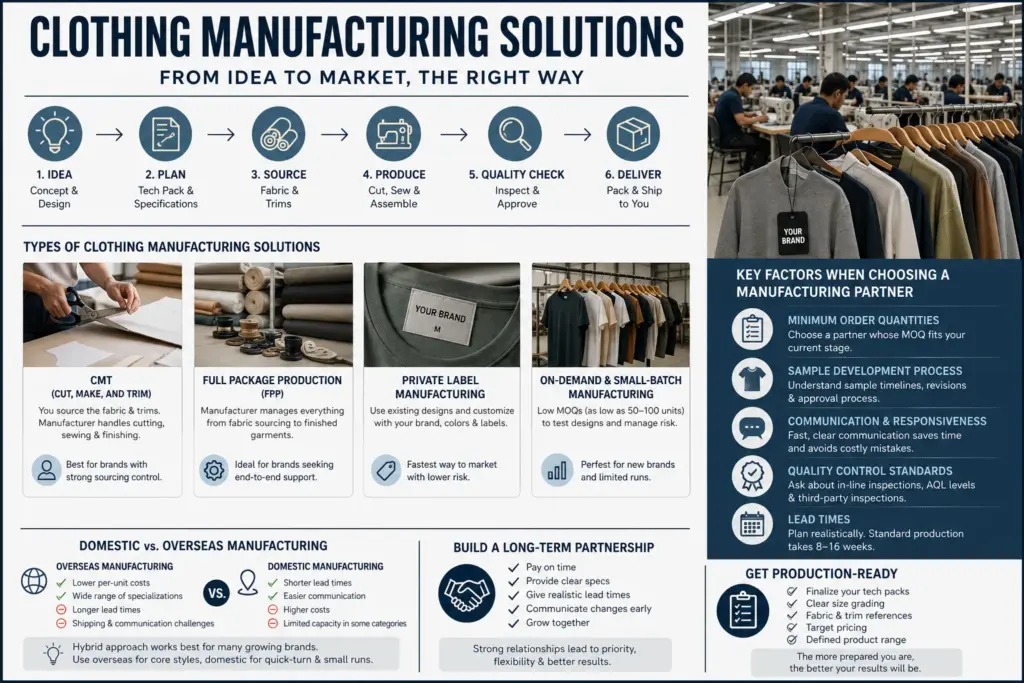
Tipologie di fornitori di servizi di produzione di abbigliamento
Non tutti i marchi necessitano dello stesso tipo di rapporto di produzione. Comprendere le opzioni disponibili aiuta a scegliere quella più adatta alla propria fase di crescita.
Tagliare, confezionare e rifinire (CMT)
I produttori CMT ricevono i vostri tessuti, modelli e passamanerie e si occupano del taglio, della cucitura e della finitura. Voi mantenete il controllo sull'approvvigionamento dei materiali. Questo modello funziona bene per i marchi che hanno solide relazioni con i fornitori e desiderano un maggiore controllo sulla qualità dei tessuti. Il compromesso è che dovrete gestire un maggior numero di variabili.
Produzione completa del pacchetto (FPP)
Con la produzione a pacchetto completo, il produttore si occupa di tutto: approvvigionamento dei tessuti, finiture, taglio, cucitura, confezionamento e, a volte, anche dell'imballaggio. Tu fornisci il design e le specifiche; loro consegnano i capi finiti. Questa è una scelta popolare per i marchi emergenti o per quelli in rapida espansione, perché riduce significativamente l'onere operativo.
Produzione a marchio privato
Alcuni produttori offrono capi base pre-progettati che i marchi possono personalizzare con le proprie etichette, colori e piccole modifiche di design. Questa è la via più rapida per immettere il prodotto sul mercato e funziona bene per i marchi che testano una categoria di prodotti prima di impegnarsi nello sviluppo di capi personalizzati.
Produzione su richiesta e in piccoli lotti
Un numero crescente di produttori ora si rivolge a quantità minime d'ordine (MOQ) basse, a volte anche solo 50 o 100 unità per modello. Questo è adatto ai marchi emergenti che hanno bisogno di testare i design senza dover gestire grandi scorte. Il prezzo unitario costo è più alto, ma il rischio è considerevolmente più basso. Per presentare efficacemente i tuoi prodotti in piccoli lotti, utilizzando un editor video online può aiutarti a creare contenuti promozionali di alta qualità senza un budget elevato.
Fattori chiave da considerare nella valutazione di un partner di produzione
Una volta comprese le tipologie di produzione disponibili, il passo successivo è imparare a valutare i singoli fornitori. Ecco cosa distingue un produttore affidabile da uno deludente.
Quantità minime d'ordine
I quantitativi minimi d'ordine (MOQ) rappresentano un vero e proprio vincolo, soprattutto per i marchi emergenti. Alcune fabbriche non accettano ordini inferiori a 500 o 1.000 unità per modello. Siate chiari sui volumi previsti e trovate un produttore il cui MOQ sia in linea con la vostra situazione attuale, non con quella che sperate di raggiungere tra due anni.
Processo di sviluppo del campione
Prima di avviare la produzione su vasta scala, un produttore professionale realizzerà dei campioni per la vostra approvazione. Chiedete quanti cicli di revisione sono inclusi, quanto tempo richiede lo sviluppo dei campioni e cosa succede se un campione non soddisfa le specifiche. Un'azienda che affretta questa fase creerà problemi in seguito.
Comunicazione e reattività
Questo aspetto è sottovalutato. Durante il ciclo di produzione, avrete domande, modifiche e richieste urgenti. Un produttore che impiega cinque giorni per rispondere a una semplice email vi farà perdere tempo e denaro. Valutate la comunicazione prima di firmare qualsiasi contratto, ponete domande dettagliate fin da subito e verificate la loro capacità di reazione.
Standard di controllo qualità
Informatevi sul loro processo interno di controllo qualità. Eseguono ispezioni durante la produzione o solo alla fine? Qual è la percentuale di difetti accettabile? Offrono ispezioni da parte di terzi? Un produttore sicuro della qualità dei propri prodotti non esiterà a rispondere a queste domande in modo chiaro.
Tempi di consegna
I tempi di consegna standard per la produzione di abbigliamento variano in genere dalle otto alle sedici settimane, a seconda della complessità e della capacità produttiva dello stabilimento. È fondamentale conoscere le proprie tempistiche, comunicarle chiaramente e ottenere una conferma scritta delle finestre di consegna. Un margine di tempo è prezioso. I ritardi nella produzione sono frequenti e prevedere una certa flessibilità nella pianificazione previene situazioni di esaurimento scorte.
Produzione nazionale contro produzione all'estero
Questa domanda si pone di continuo tra i proprietari di marchi, e la risposta onesta è che nessuna delle due opzioni è universalmente migliore. La produzione all'estero, in particolare in paesi come Bangladesh, Vietnam, India, Portogallo e Turchia, offre generalmente costi unitari inferiori e un'ampia gamma di specializzazioni. Gli svantaggi includono tempi di spedizione più lunghi, potenziali barriere linguistiche, ordini minimi più elevati presso alcune fabbriche e la complessità di gestire un rapporto che attraversa diversi fusi orari.
La produzione nazionale comporta in genere costi più elevati, ma tempi di consegna più brevi, una comunicazione più agevole e la possibilità di commercializzare il proprio prodotto come "made in locale", un aspetto che riveste un reale valore aggiunto per determinati segmenti di clientela. Riduce inoltre il rischio legato a ritardi nelle spedizioni internazionali e complicazioni doganali.
Molti marchi utilizzano un approccio ibrido: producono stili principali ad alto volume all'estero dove l'efficienza dei costi è importante e utilizzano produttori nazionali o nearshore per serie limitate, rifornimenti rapidi o articoli stagionali dove la velocità di immissione sul mercato è la priorità utilizzando un editor video online.
Costruire una relazione di produzione a lungo termine
I marchi che crescono in modo sostenibile trattano i loro produttori come partner, non solo come fornitori. Ciò significa pagare puntualmente, fornire specifiche dettagliate fin dall'inizio, garantire tempi di consegna ragionevoli e comunicare chiaramente eventuali modifiche, anziché aspettarsi adattamenti dell'ultimo minuto.
La fedeltà tende a essere reciproca. Un'azienda che sa che sei un cliente affidabile e senza problemi darà priorità ai tuoi ordini durante i periodi di maggiore attività e sarà più disponibile a venire incontro alle tue esigenze in caso di imprevisti. Costruire questo tipo di rapporto richiede tempo, ma si trasforma in un autentico vantaggio competitivo.
Preparazione del tuo marchio per la produzione
Prima di contattare qualsiasi produttore, assicuratevi di avere tutta la documentazione in ordine. Ciò significa avere schede tecniche definitive per ogni modello, specifiche chiare sulle taglie, riferimenti a tessuti e finiture e prezzi obiettivo realistici. I produttori ricevono decine di richieste ogni settimana; chi si presenta preparato con informazioni complete viene preso più seriamente e tende a ricevere preventivi più rapidi e precisi.
Se il tuo marchio è ancora in fase di sviluppo iniziale, investi tempo per definire correttamente i fondamenti prima di avviare la produzione. Una chiara direzione del marchio, un cliente ben definito e una gamma di prodotti circoscritta renderanno ogni discussione con il produttore più mirata e produttiva.
Visualizzazioni: 64