
Empezar o hacer crecer una marca de ropa es emocionante, pero la brecha entre un gran diseño y una prenda terminada y lista para el mercado es mayor de lo que la mayoría de la gente espera. Elegir el diseño adecuado fabricación Elegir un socio es una de las decisiones más importantes que tomará el propietario de una marca. Ya sea que esté produciendo su primera tirada de 200 unidades o escalando a decenas de miles, las soluciones profesionales de fabricación de ropa dan forma a todo, desde sus márgenes de beneficio hasta la reputación de su marca. Si se encuentra en las primeras etapas de la construcción de su marca, herramientas como subtítulo generador En realidad, puede ayudarte a crear descripciones de productos y etiquetas de categorías claras incluso antes de contactar a un fabricante, un pequeño detalle que hace que la comunicación sea mucho más clara. Este artículo desglosa lo que implica la fabricación profesional de ropa, qué buscar en un socio y cómo configurar tu marca para una producción consistente y escalable. producción.
Qué significa realmente la fabricación “profesional”
La palabra “profesional” se usa de forma imprecisa en la industria de la confección. Cada fábrica Prometen calidad. No todas las fábricas la ofrecen.
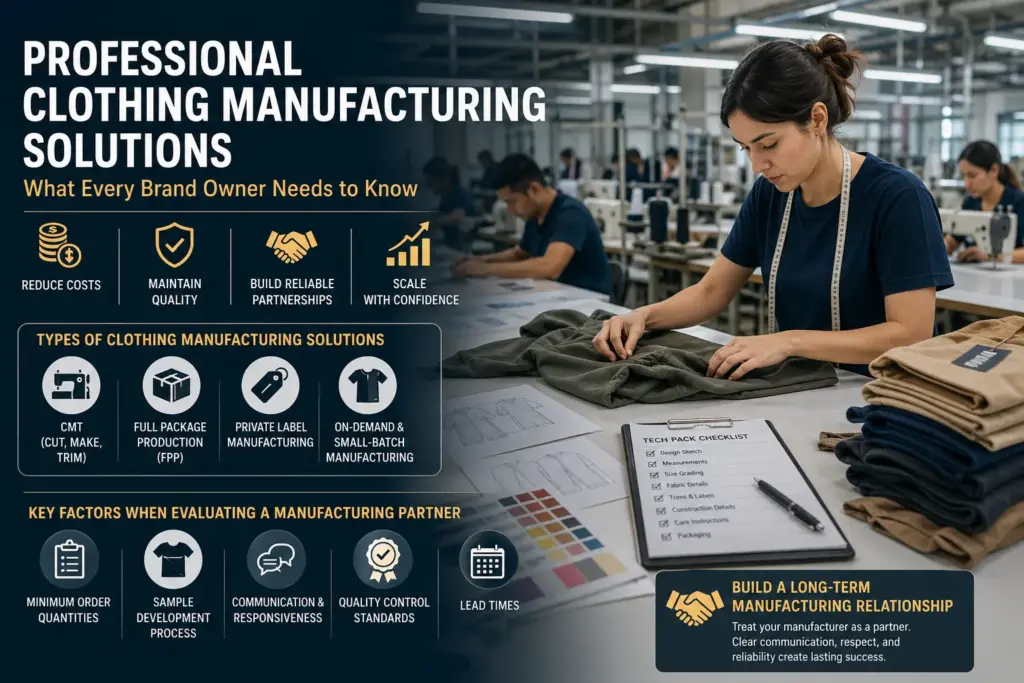
La fabricación profesional de prendas de vestir va más allá de tener máquinas de coser y una planta de producción. Implica procesos de control de calidad documentados, comunicación constante, precios transparentes y la capacidad de reproducir resultados en múltiples ciclos de producción. Un fabricante profesional puede proporcionarle una lista de verificación técnica, someter las muestras de preproducción a aprobación e identificar posibles problemas antes de cortar la tela, no después.
Para los propietarios de marcas, esto es importante porque la inconsistencia resulta costosa. Cuando las medidas varían entre lotes, los clientes devuelven los artículos. Cuando se producen sustituciones de tela sin previo aviso, la imagen de marca se ve perjudicada. La fabricación profesional se basa en la previsibilidad, en saber que el lote 10 tendrá el mismo aspecto y tacto que el lote 1.
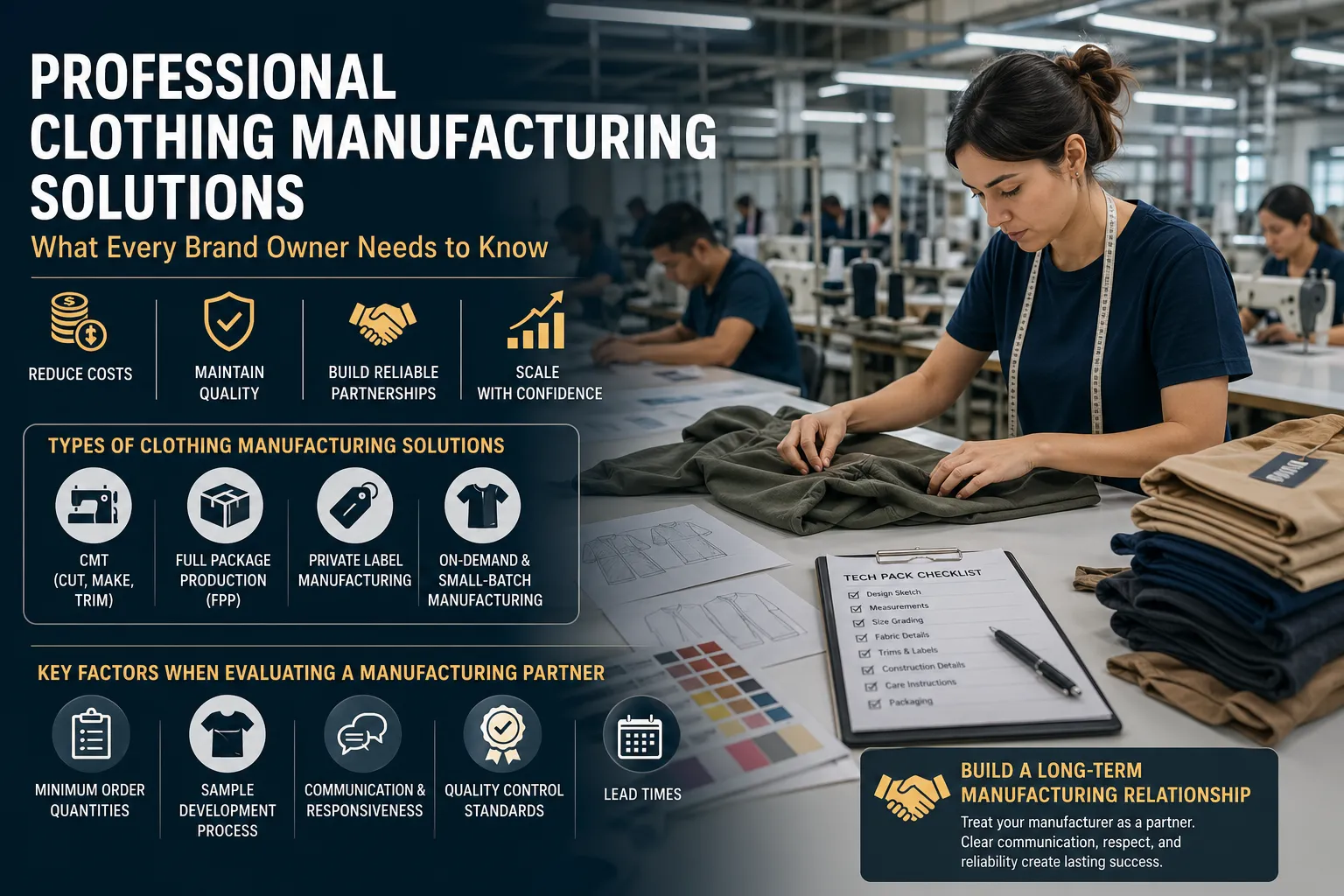
Tipos de soluciones para la fabricación de prendas de vestir
No todas las marcas necesitan el mismo tipo de relación con el fabricante. Comprender las opciones te ayuda a elegir la que mejor se adapte a tu etapa de crecimiento.
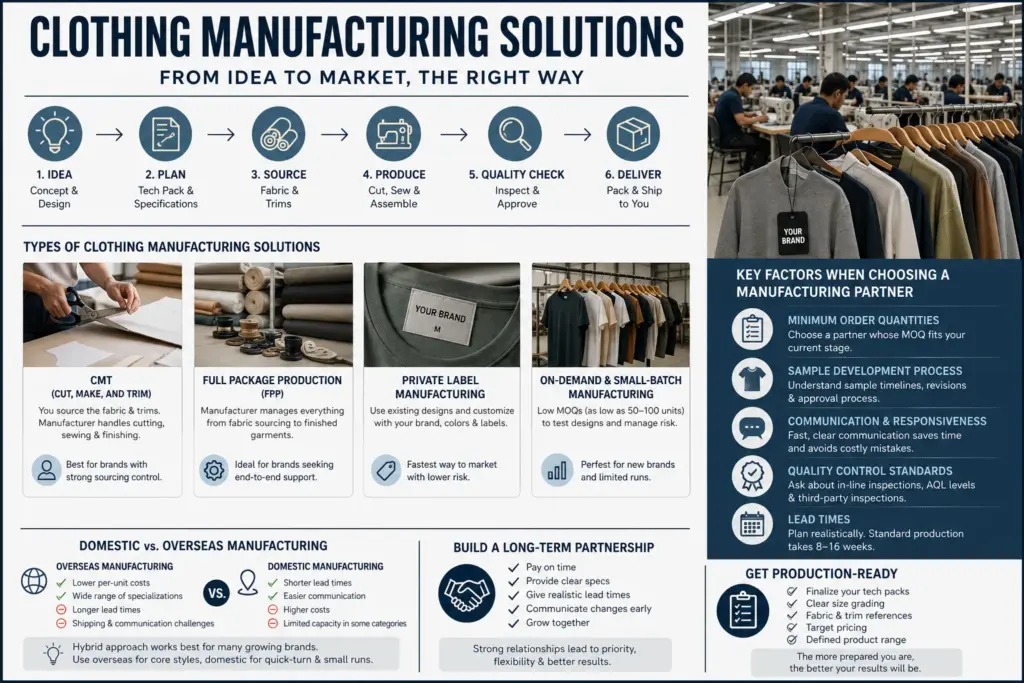
Cortar, fabricar y recortar (CMT)
Los fabricantes de confección reciben su tela, patrones y adornos, y se encargan del corte, la costura y el acabado. Usted controla el abastecimiento de materiales. Este modelo funciona bien para marcas con sólidas relaciones con proveedores y que desean un mayor control sobre la calidad de la tela. La desventaja es que usted gestiona más elementos.
Producción de paquete completo (FPP)
Con la producción integral, el fabricante se encarga de todo: selección de telas, adornos, corte, costura, acabado y, en ocasiones, empaquetado. Usted proporciona el diseño y las especificaciones; ellos entregan las prendas terminadas. Esta es una opción popular para marcas nuevas o aquellas que crecen rápidamente, ya que reduce significativamente la carga operativa.
Fabricación de marca privada
Algunos fabricantes ofrecen prendas base prediseñadas que las marcas pueden personalizar con sus propias etiquetas, colores y pequeños cambios de diseño. Esta es la vía más rápida para llegar al mercado y funciona bien para las marcas que prueban una categoría de producto antes de comprometerse con un desarrollo personalizado.
Fabricación bajo demanda y en lotes pequeños
Un número creciente de fabricantes ahora se adapta a cantidades mínimas de pedido (MOQ) bajas, a veces tan bajas como 50 o 100 unidades por estilo. Esto es ideal para marcas en etapa inicial que necesitan probar diseños sin mantener un gran inventario. El precio por unidad costo es más alto, pero el riesgo es considerablemente menor. Para presentar sus productos de lotes pequeños de manera efectiva, utilice un editor de vídeo en línea puede ayudarte a crear contenido promocional de alta calidad sin necesidad de un gran presupuesto.
Factores clave a la hora de evaluar a un socio de fabricación
Una vez que comprenda los tipos de fabricación disponibles, el siguiente paso es saber cómo evaluar a cada proveedor. A continuación, le mostramos qué es lo que realmente distingue a un fabricante confiable de uno que genera frustración.
Cantidades mínimas de pedido
Los MOQ (cantidades mínimas de pedido) son una limitación importante, sobre todo para las marcas nuevas. Algunas fábricas no aceptan pedidos inferiores a 500 o 1000 unidades por modelo. Sea claro con respecto a sus volúmenes previstos y busque un fabricante cuyo MOQ se ajuste a su situación actual, no a la que espera alcanzar en dos años.
Proceso de desarrollo de muestras
Antes de comprometerse con la producción en serie, un fabricante profesional elaborará muestras para su aprobación. Pregunte cuántas rondas de revisión se incluyen, cuánto tiempo lleva el desarrollo de las muestras y qué sucede si una muestra no cumple con las especificaciones. Una fábrica que acelere esta etapa generará problemas posteriormente.
Comunicación y capacidad de respuesta
Este aspecto se subestima. A lo largo del ciclo de producción, surgirán preguntas, cambios y solicitudes urgentes. Un fabricante que tarda cinco días en responder a un simple correo electrónico le costará tiempo y dinero. Evalúe la comunicación antes de firmar cualquier documento, formule preguntas detalladas con anticipación y observe cómo responden.
Normas de control de calidad
Pregunte sobre su proceso interno de control de calidad. ¿Realizan inspecciones durante la producción o solo al final? ¿Cuál es su tasa de defectos aceptable? ¿Ofrecen inspecciones por parte de terceros? Un fabricante que confía en su calidad no dudará en responder estas preguntas con claridad.
Plazos de entrega
Los plazos de entrega estándar para la producción de ropa suelen oscilar entre ocho y dieciséis semanas, dependiendo de la complejidad y la capacidad de la fábrica. Conozca sus plazos, comuníquelos con claridad y obtenga confirmación por escrito de las fechas de entrega. Un margen de tiempo es fundamental. Los retrasos en la fabricación son frecuentes, y la flexibilidad en la planificación evita situaciones de falta de existencias.
Fabricación nacional frente a fabricación en el extranjero
Esta pregunta surge constantemente entre los propietarios de marcas, y la respuesta honesta es que ninguna opción es universalmente mejor. La fabricación en el extranjero, particularmente en países como Bangladesh, Vietnam, India, Portugal y Turquía, generalmente ofrece menores costos unitarios y una amplia gama de especializaciones. Las desventajas incluyen tiempos de envío más largos, posibles barreras lingüísticas, pedidos mínimos más altos en algunas fábricas y la complejidad de gestionar una relación comercial en diferentes zonas horarias.
La fabricación nacional suele implicar mayores costos, pero plazos de entrega más cortos, una comunicación más fluida y la posibilidad de comercializar el producto como de fabricación local, lo cual tiene un valor real para ciertos segmentos de clientes. Además, reduce el riesgo asociado a los retrasos en los envíos internacionales y las complicaciones aduaneras.
Muchas marcas utilizan un enfoque híbrido: producen estilos básicos de alto volumen en el extranjero donde la eficiencia de costos importa, y utilizan fabricantes nacionales o cercanos para tiradas limitadas, reposiciones rápidas o artículos de temporada donde la rapidez de comercialización es la prioridad. editor de vídeo en línea.
Construyendo una relación de fabricación a largo plazo
Las marcas que crecen de forma sostenible tratan a sus fabricantes como socios, no solo como proveedores. Esto implica pagar a tiempo, proporcionar especificaciones detalladas por adelantado, establecer plazos de entrega razonables y comunicar los cambios con claridad, en lugar de esperar adaptaciones de última hora.
La lealtad suele ser recíproca. Una fábrica que sabe que usted es un cliente habitual y que facilita las cosas dará prioridad a sus pedidos durante las temporadas altas y estará más dispuesta a atender sus necesidades cuando surja algún imprevisto. Construir ese tipo de relación lleva tiempo, pero se convierte en una verdadera ventaja competitiva.
Preparando tu marca para la producción
Antes de contactar con cualquier fabricante, asegúrese de tener toda la documentación en orden. Esto significa fichas técnicas definitivas para cada modelo, especificaciones claras de tallaje, referencias de tejidos y adornos, y precios objetivo realistas. Los fabricantes reciben decenas de consultas cada semana; quienes se presentan preparados con información completa son tomados más en serio y suelen obtener presupuestos más rápidos y precisos.
Si tu marca aún está en fase inicial de desarrollo, invierte tiempo en consolidar los fundamentos antes de comenzar la producción. Una dirección de marca clara, un cliente bien definido y una gama de productos precisa harán que cada conversación sobre fabricación sea más productiva y esté mejor enfocada.
Visitas: 64