A kihagyott szezonok rossz mintákkal kezdődnek. Amikor a te... technikai csomag ha még nem áll készen, akkor is heteket veszíthetsz a várakozással. Gyakran látom, és fáj.
Igen, egy gyár fejlesztheted a sajátodat minta teljes technikai csomag nélkül, de csak akkor, ha megadod a világos minimális bemeneteket – referenciafotókat, méreteket, anyagcélokat és illeszkedési szándékot. Az első mintát felfedező sprintként kezelem, majd a specifikációkat egy egyszerű technikai csomagba zárom a tömeges gyártás előtt.
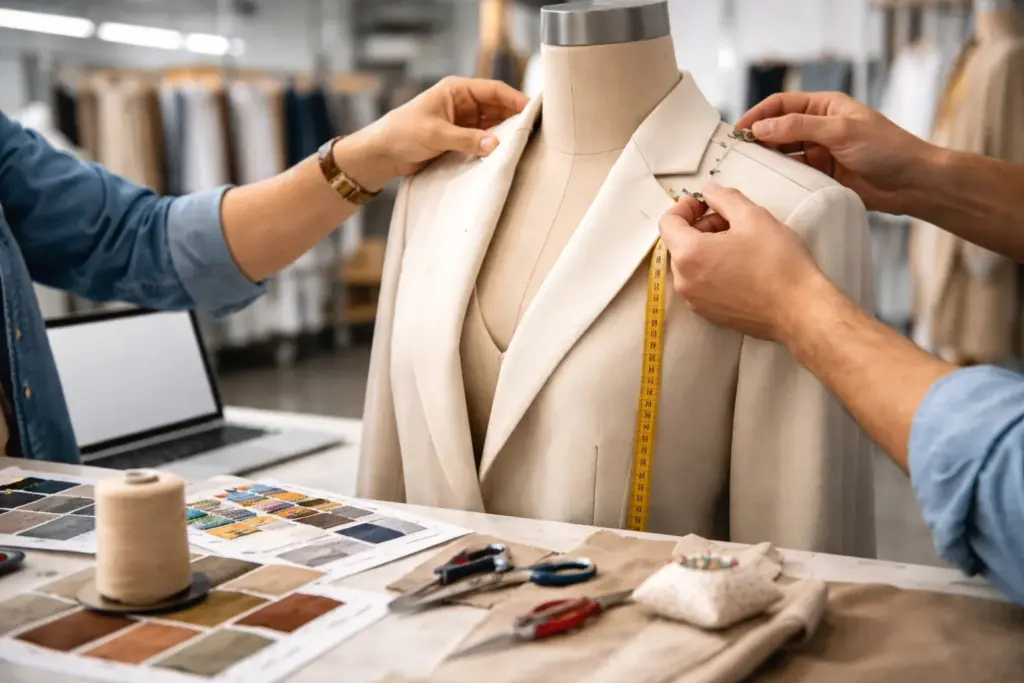
Azt akarom, hogy gyorsan haladj, de azt is szeretném, hogy jól aludj éjszaka. Részleges információkkal is elkezdhetem a ruhaminta-fejlesztést, és ezt gyakran meg is teszem, de a korai döntések fogják meghatározni a költségeket és a minőséget, ezért olvass tovább.
Mit küldhetek egy teljes technikai csomag helyett a ruhaminta-fejlesztés megkezdéséhez?
Egy üres technikai csomag megállíthat egy projektet. Egy zavaros WhatsApp-csevegés is megállíthat egy projektet. Szükségem van egy rövid tényhalmazra, különben találgatok, és a találgatás pénzbe kerül.
Technikai csomag nélkül is elkezdheted a ruhadarabok mintavételét, ha küldesz egy szűk “kezdőcsomagot” világos fotókkal, méretekkel, anyagjegyzetekkel és szabási utasításokkal. Ezt a kezdőcsomagot használom az első minta elkészítéséhez, majd átalakítom egy alapvető technikai csomaggá egy ruhagyártó számára a javítások előtt.
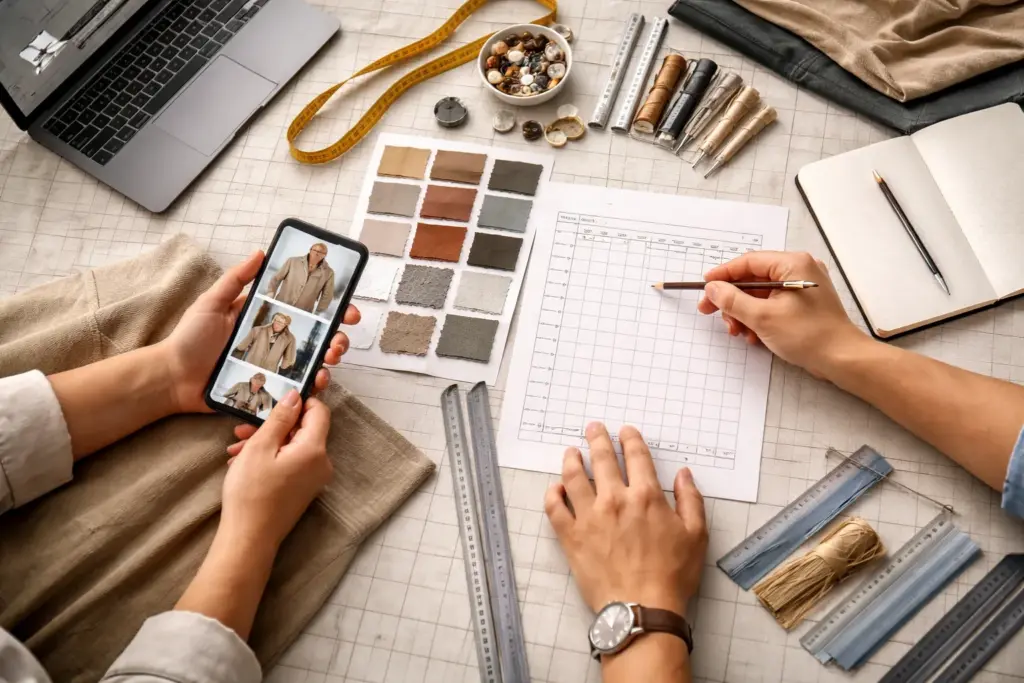
A minimális kezdőcsomag, amit kérek
Amikor egy vevő megkérdezi tőlem, hogy “tudok ruhákat készíteni technikai csomag nélkül”, azt mondom, hogy igen, de azt is hozzáteszem: elegendő információra van szükségem a holtterek csökkentéséhez. Egyszer dolgoztam egy vevővel, aki csak egy elülső fotót küldött. Tudtam egy mintát készíteni, de nem tudtam a márkájához illőt illeszteni. Vesztettünk egy kört. Ezután egy egyszerű ellenőrzőlistát használtam, és a következő minta majdnem sikerült. Ma is ugyanezt az ellenőrzőlistát használom, még az olyan tapasztalt vevőknél is, mint Maria, akik gyorsan reagálnak és vezetik a beszélgetést.
Amit kérek, hogy küldd el, mielőtt kivágom az anyagot:
| Tétel | Amire szükségem van tőled | Miért fontos a mintavételezés során |
|---|---|---|
| Referenciaképek | Elölről, hátulról, belülről, közeli felvételek | Látom a varrásokat, a szegélyeket, a zseb formáját és a bélést. |
| Célközönség + illeszkedés | “Laza”, “karcsú”, “túlméretezett”, testalkattal | Az illeszkedés a minta és a könnyedség jegyében történik, nem csak a méretcímkékre |
| Főbb mérések | Mellkas, hossz, váll, ujj, szegély, derékbőség | Találgatás nélkül felvázolhatom az első mintát |
| Szövet célpont | Rost, súly, rugalmasság, kézérzet | Az anyag változik a drapériával, zsugorodással és öltésekkel |
| Vágáslista | Cipzár típusa, gomb mérete, címke, akasztócímke | A kivágások befolyásolják a szállítási időt és a minőségi kockázatot |
| Építési megjegyzések | Varrás típusa, varrásszélesség, bélés, közbélés | A varrás lépései határozzák meg a költségeket és a megjelenést |
| Színirány | Pantone vagy egy fizikai színminta | A színegyeztetés sikertelen, ha szavak helyettesítik a számokat |
| Minta célja | “Csak illeszkedés”, “fotóminta”, “értékesítői minta” | A kidolgozás szintje idővel és árral változik |
Hogyan alakítom át a kezdőcsomagodat első mintává
Az első mintát úgy kezelem, mint a ruhaprototípus fejlesztését. Valamit építek, amit meg lehet fogni, meg lehet mérni és kritizálni. Egy szabásmintával kezdek, amely a legfontosabb méreteid és szabásszavaid alapján készült. Ha a pontos anyagod még nem áll készen, a raktáron lévő legközelebbi anyagot választom ki. Minden feltételezésemet megjelölöm. Átlátható listát küldök a feltételezésekről fotókkal. Ezt azért teszem, mert a vásárlók utálják a meglepetéseket. Azért is teszem ezt, mert a következő lépés a feltételezések egyenkénti eltávolítása, amíg el nem érünk egy stabil specifikációt, amely kibírja a tömeges gyártást.
Ha gyorsaságot szeretnél, kérlek, rangsorold a legfontosabbakat. Vannak vevők, akik a pontos kinézetet akarják. Vannak, akik a pontos illeszkedést. Vannak, akik a pontos anyagot akarják. Erőteljesen tudok rászánni egyet vagy kettőt, de nem tudok mindhármat első körben plusz költségek és idő nélkül megcsinálni. Amikor elmondod a prioritásodat, úgy tudom megtervezni a mintadarabot, hogy az megvédje az árrését.
Hogyan működik a ruházati minta fejlesztési folyamata, ha hiányoznak a részletek?
A hiányzó részletek meghosszabbítják a mintavételi ciklust. Egy hosszú ciklus felemészti az idényt. Láttam már olyan vásárlókat, akik egy teljes bevezetési időszakot veszítettek el, mert a csapat túl későn hajtott végre apró változtatásokat.
A ruházati mintadarabok fejlesztési folyamata továbbra is működik teljes technikai csomag nélkül, de szigorúbb ellenőrzőpontokkal futtatom: dokumentálom a feltételezéseket, korábban befagyasztom az illeszkedést, és az első vagy második mintadarab után egy egyszerű technikai csomagba zárom a specifikációkat.
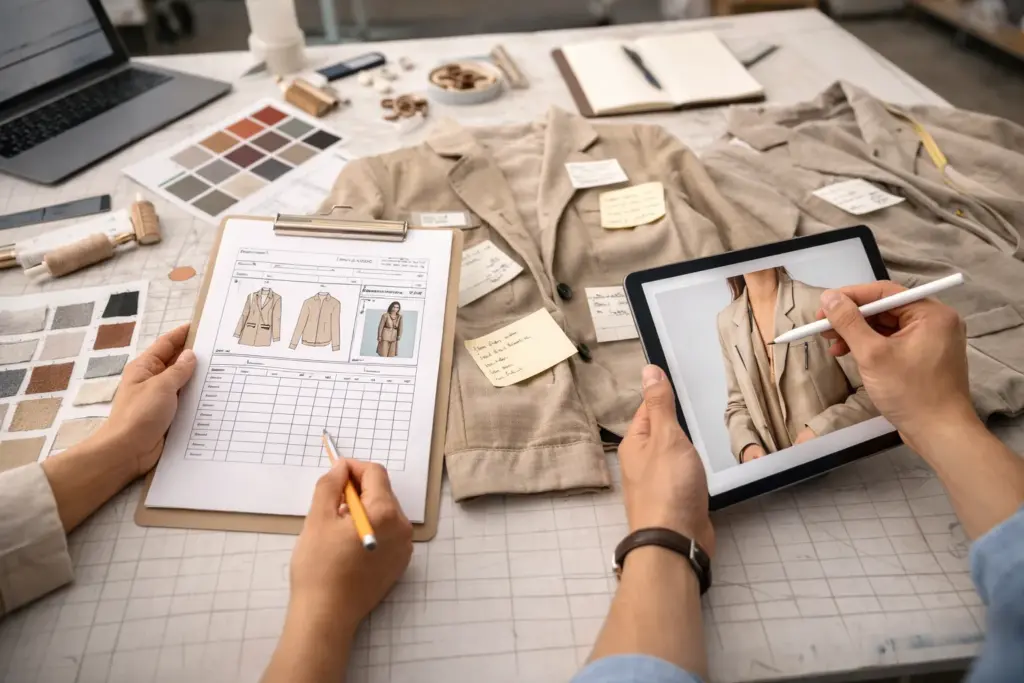
A mintafolyamat, amit akkor használok, amikor a technikai csomagom hiányos
Lépésről lépésre haladó utat használok, hogy lásd, hová telik az idő. Azért is használom, hogy a csapatom ne rejtse el a problémákat. Ezt a folyamatot a Truekungnál futtatom, mert nagykereskedelmi vásárlókat szolgálunk ki, és a vásárlóknak megismételhető minőségre van szükségük.
1) Egyetértek a minta céljával. Megkérdezem, hogy ez a minta illesztési, fotózási, költségkalkulációs vagy vevői jóváhagyási célokat szolgál-e.
2) Én tervezem a szabásmintát. Használom az alapméreteidet, a referenciádat és a szabásminta-könyvtáramat.
3) Szükség esetén beszerzek meghatalmazotti anyagokat. Elmondom, mi a meghatalmazás, és mi a végleges.
4) Elkészítem az első mintát. Alapvető kidolgozást végzek, és egyértelműen felcímkézem.
5) Megmérem és rögzítem az eredményeket. Küldök egy mérési táblázatot a tényleges mintáról.
6) Összegyűjtöm a hozzászólásaitokat. Kérlek, jelöljétek meg a “változtatni kell” és a “jó, ha változtatok” szavakat.”
7) Átdolgozok és frissítek egy specifikációs lapot. Ez a ruhagyártók által használt tech csomag alapja.
Ahol a hiányzó részletek okozzák a legnagyobb késéseket
A technikai csomag nélküli ruhadarab-mintavételeknél a legnagyobb késedelmek általában az írásba foglalandó döntésekből adódnak. Ezekkel a pontokkal újra és újra találkozom:
| Hiányzó részlet | Mi történik? | Mit teszek a megelőzés érdekében |
|---|---|---|
| Az illesztési szándék homályos | A minta “jól néz ki”, de rossz érzést kelt | Hasonló márkájú stílust és méretet kérek |
| A szövet súlya ismeretlen | Drapériaváltozások és méretbeli eltolódások | GSM-et és %-t vagy egy színmintát kérek. |
| Az öltések és varrások hiányoznak | A díszítőöltés olcsónak vagy egyenetlennek tűnik | Két lehetőséget javaslok fotókkal és költséggel |
| A tolerancia nincs meghatározva | A tömeg túl sokat változik | Beállítottam az alapértelmezett tűréshatárt, és megkérlek, hogy szerkeszd |
| A címkézési és megfelelési követelmények nem egyértelműek | Átdolgozás a végén | A piacokról és a kötelező címkézésről kérdezek |
Hogyan őrizhetem meg a bizalmat, amikor a vásárlók a minőség és a tanúsítványok miatt aggódnak?
Néhány vevő azt mondja, hogy félnek a hamisított tanúsítványoktól. Megértem ezt a félelmet. Találkoztam már olyan vevőkkel, akik megégették magukat. Én ezt folyamatorientáltan kezelem, nem ígéretekkel. Megosztom, amink van, és azt is, amink nincs. Azt is megosztom, hogyan ellenőrizzük. Ha egy vevőnek szövettesztre van szüksége, harmadik fél általi tesztelést javaslok. Ha egy vevőnek gyári auditokra van szüksége, akkor ezt dokumentumokkal és helyszíni látogatásokkal támasztom alá, amikor csak lehetséges. Nem akarom, hogy egy projekt azért hiúsuljon meg, mert a bizalom későn megrendül. Egy részleges technikai csomag már eleve kockázatot jelent, ezért más területeken csökkentem a kockázatot. A kommunikációt is tisztán tartom. Minden minta után küldök egy összefoglaló üzenetet, világos fotókkal, mérésekkel és nyitott kérdésekkel. Ezt azért teszem, mert a rossz kommunikáció az egyik leggyorsabb módja annak, hogy elveszítsünk egy szezont.
Mikor kell abbahagynom a mintavételezést tech pack nélkül, és mikor kell összeállítanom egyet?
A gyors mintavétel izgalmasnak tűnhet. A gyors mintavétel problémákat is elrejthet. Ha folyamatosan változtatod az ötleteidet, a tömeges megrendelésed később megbüntet.
A mintadarabok gyártását technikai hátizsák nélkül abba kell hagynod, amint a méret és a sziluett közel áll egymáshoz, mert a következő kockázat a tömeges inkonzisztencia. Én egy egyszerű technikai hátizsákot készítek közvetlenül a korai jóváhagyások után, így a mintadarab és a tömeges gyártás közötti különbség kicsi marad.
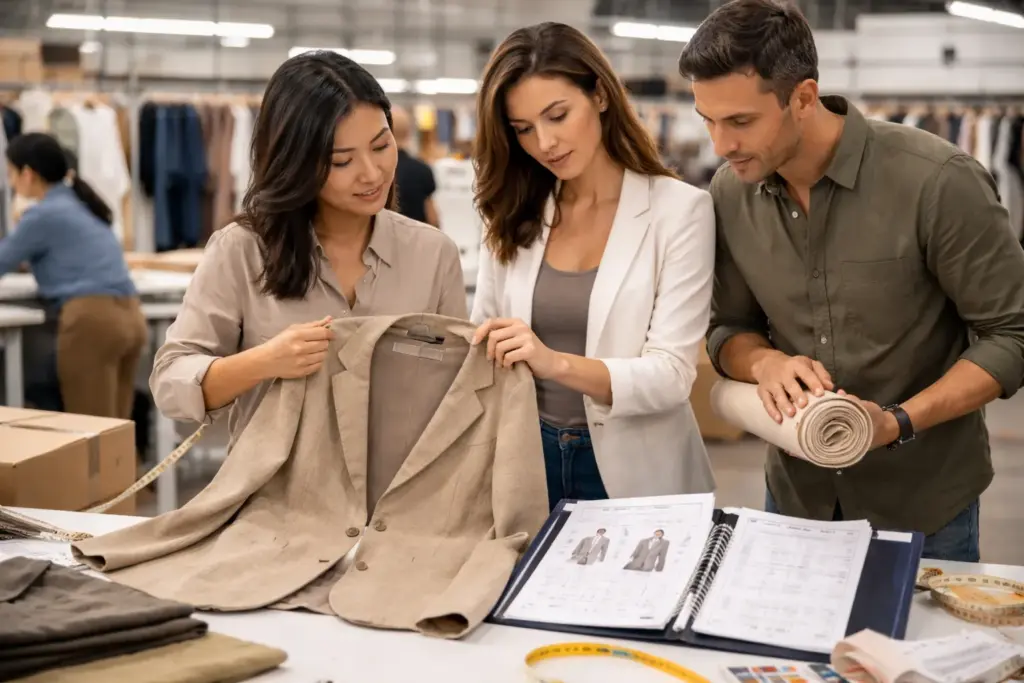
Abban a pillanatban, amikor ragaszkodom egy technikai csomaghoz, még egy egyszerűhez is
Nem kell egy flancos dokumentum. Egyetlen igazságforrásra van szükségem. Láttam már tömeges vitákat, amelyek egyetlen hiányzó sorból kezdődtek. Az egyik vevő azt mondta a csevegésben, hogy “szűk mandzsetta”. A csapatom úgy értelmezte, hogy “keskeny mandzsettanyílás”. A vevő “erős rugalmas feszültségre” gondolt. A minta rendben lévőnek tűnt. A tömeges tartalom rossznak érződött. Ekkor tanultam meg a szándékot is rögzíteni, nem csak a számokat.
Így fogalmazok: miután jóváhagytad az illeszkedési mintát és a fő anyagirányt, abbahagyjuk a “találgatásos módot”. Ezután átlépünk a “kontroll módba”. A kontroll módhoz technikai hátizsákra van szükség, még akkor is, ha az rövid.
Hogyan készítek praktikus technikai csomagot olyan vásárlóknak, akik vázlatokból indulnak ki
Néhány vásárló megkérdezi tőlem, hogy “hogyan készítsek technikai csomagot”, amikor csak vázlatuk van. Én egyszerűen csinálom. Rétegekben építem fel. Nem próbálok tankönyvet írni. Azt írom, amire a varrónőnek szüksége van.
| Technikai csomag részleg | Amit belefoglalok | Ki használja |
|---|---|---|
| Stílus áttekintés | Lapos vázlat, fotók, főbb feliratok | Szabásminta, varrás, minőségellenőrzés |
| BOM (anyagjegyzék) | Szövet, bélés, szegélyek, címkék, cérna | Beszerzés, költségcsapat |
| Mérési specifikáció | POM lista, osztályozott méretek, tűréshatárok | Minta, minőségellenőrzés |
| Építés | Öltés típusa, varrás típusa, SPI, felső öltés | Varrásvezető |
| Grafika és címkék | Elhelyezés, méret, fájlformátum | Nyomtatás, csomagolás |
| Csomagolás | Poliészter zacskó, karton, hajtogatási módszer | Raktár |
Hozzáadok egy “ne változtass” listát is. 3-5 olyan elemet sorolok fel, amelyek meghatározzák a stílusodat. Egy zakó esetében ez lehet a vállfazon, a gallér felhajtása és a cipzár típusa. Egy ruha esetében lehet a nyakkivágás íve, a derék helyzete és az szegély szélessége. Ez a lista segít, ha késésben vagy, és apró változtatások kezdenek becsúszni.
Hogyan védi egy technikai csomag a tömeges termelést?
A nagykereskedelemben a valódi pénz a tömeges gyártásban rejlik. A mintavétel eszköz, nem cél. Amikor a specifikációk rögzítve vannak, valós számokkal tudom betanítani a minőségellenőrzést. Beállíthatok egy beépített ellenőrzési tervet. Szabályozhatom a zsugorodási és mosási hatásokat. Pontosabban is tudok árazni. Sok vevő versenyképes árakat szeretne, de stabil minőséget is. Egy technikai csomag mindkettőt támogatja. Csökkenti az utómunkálatokat. Csökkenti a selejtet. Csökkenti a vitákat. Segít a gyárak korrekt összehasonlításában is, mivel ugyanazt a fájlt elküldheted két beszállítónak, és összehasonlíthatod a valós költségeket.
Továbbra is tisztelem a gyorsaságot. Nem lassítalak le papírmunkával az első mintadarabhoz. Csak akkor adok hozzá papírmunkát, ha az szezont és haszonkulcsot takarít meg. Ez az a pont, ahol a “ruházattervezéstől a gyártásig” valódi gyártássá válik, nem csak ötletekké.
Következtetés
Teljes technikai csomag nélkül is elkezdhetem a mintavételt, de szükségem van egy erős kezdőcsomagra, egyértelmű ellenőrzőpontokra és egy egyszerű technikai csomagra a nagy tételben történő mintavétel előtt, hogy a minőség stabil maradjon.
Miért írom ezt
Lancy Chia vagyok a kínai Truekungból. Egy több mint 200 dolgozót foglalkoztató gyárat vezetek. Kizárólag B2B nagykereskedelmet támogatok, és OEM/ODM szolgáltatásokat nyújtok márkáknak és szupermarketeknek. 20 éves export tapasztalattal rendelkezem a divatruházat területén. Női ruházatot, kabátokat, szoknyákat, ruhákat, farmereket, pólókat, pulóvereket, pehelykabátokat, széldzsekiket, kabátokat, táskákat, sportruházatot, gyermekruházatot és alsóneműt gyártok. Hollandiába, Dániába, Belgiumba, Norvégiába, az Egyesült Királyságba, az USA-ba, Németországba, Ausztráliába, Thaiföldre, Törökországba, Olaszországba, Oroszországba, Szaúd-Arábiába és más országokba szállítok. Ha világos tervvel szeretnéd elkezdeni a ruhaminta kidolgozását, írj nekem e-mailt a [email protected] címre, vagy látogass el a https://truekung.com weboldalra.
Nézetek: 76