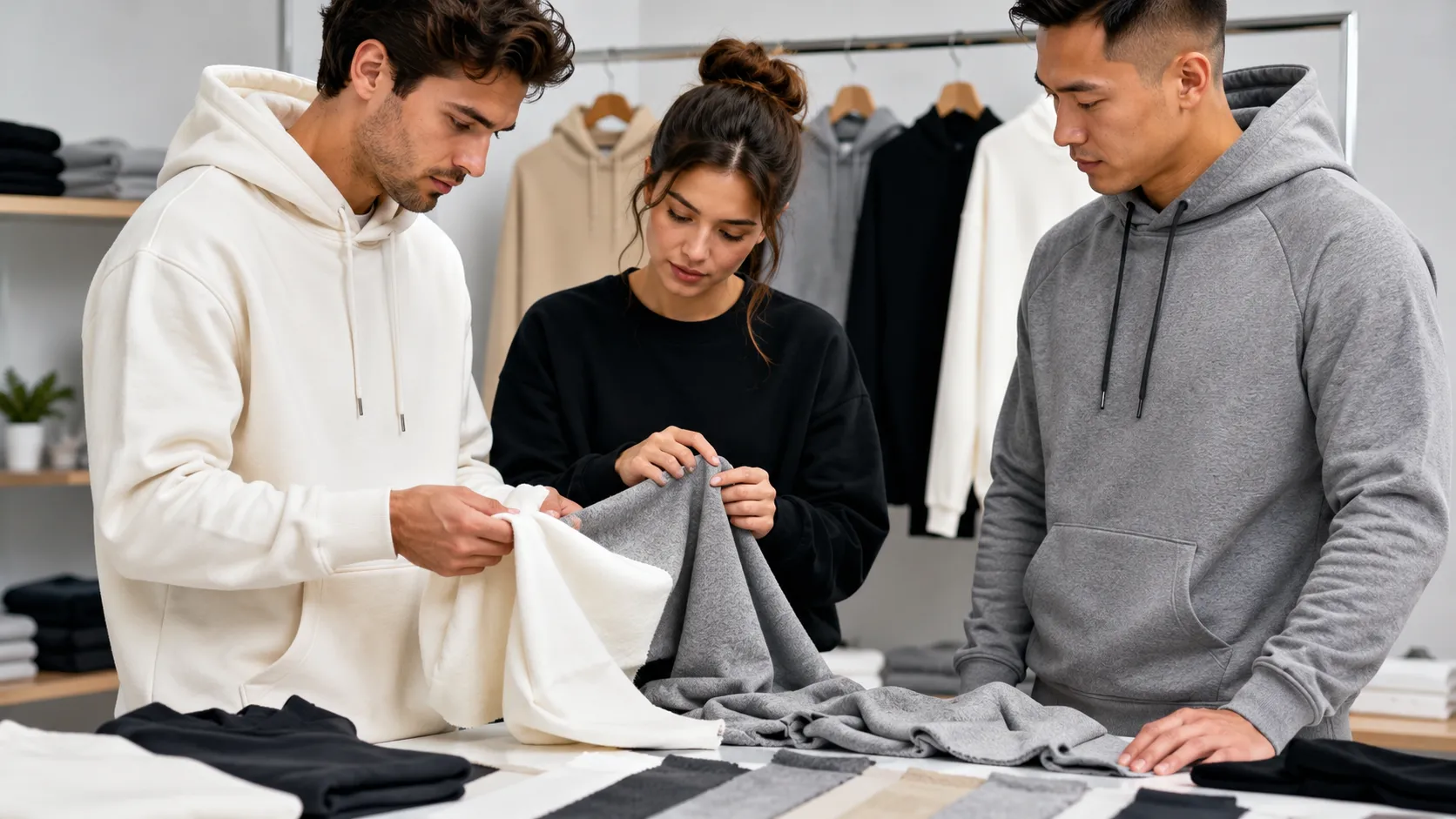

Näen monien ostajien valitsevan puuvilla liian nopeasti. Huppari tuntuu pehmeältä, mutta myöhempi kutistuminen, kustannukset ja viivästyneet alennusmyynnit luovat todellista painetta.
Hupparien ei tarvitse olla 100%-puuvillaa. Valitsen yleensä puuvillaa, polyesteriä tai puuvilla-polyesterifleeceä mukavuuden, kutistumiseneston, hinnan, lämmön ja myyntimarkkinoiden perusteella. 100%-puuvillahuppari sopii hyvin pehmeään vapaa-ajan käyttöön, mutta sekoitekangas on usein parempi vaihtoehto irtotilauksiin.
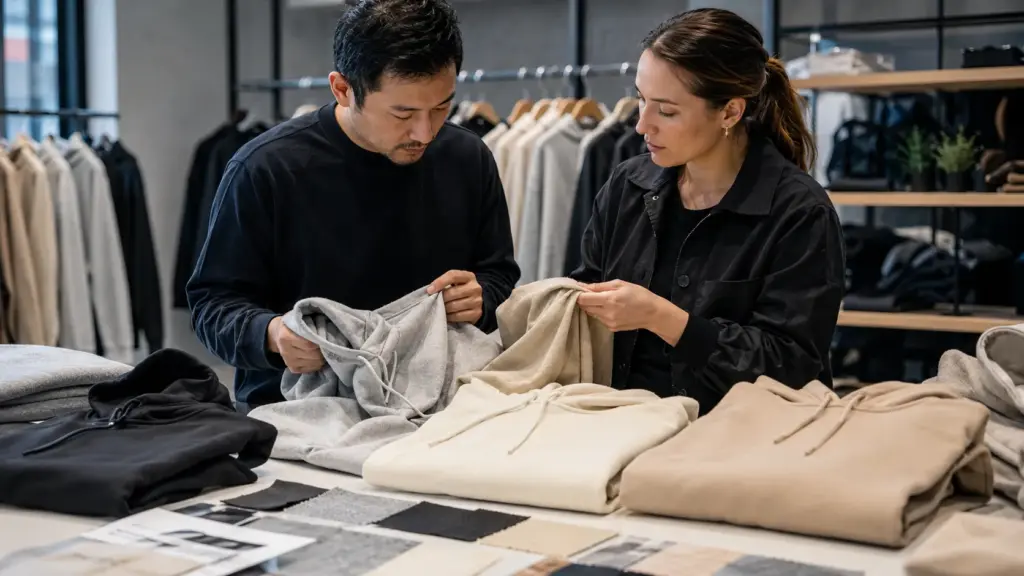
Olen nähnyt ostajien menettävän voittoa, koska he pyysivät vain "hyvää puuvillahupparimateriaalia" tarkistamatta todellisuutta kangas rakenne. Olen myös nähnyt tuotemerkkien parantavan toistuvia tilauksia vaihdettuaan puhtaasta puuvillasta parempaan sekoitteeseen. Joten en koskaan kysy vain yhtä kysymystä, kuten "Onko puuvilla parempaa?". Kysyn, mitä hupparin on tehtävä, kuka sitä käyttää ja kuinka monta pesukertaa sen on kestettävä.
Mistä kankaasta hupparit on tehty oikeassa tuotannossa?
Monet ostajat kysyvät tämän kysymyksen myöhään. Sitten he huomaavat, että kaksi samanpainoista hupparia voivat tuntua hyvin erilaisilta pesun jälkeen.
Hupparit valmistetaan yleensä puuvillafleecestä, polyesterifleecestä, ranskalaisesta froteesta, puuvilla-polyeteenisekoituksesta tai suorituskykyisestä neuloksesta. Valitsen kankaan pehmeyden, lämmön, painatustarpeiden, kutistumisen ja tavoitehinnan perusteella.
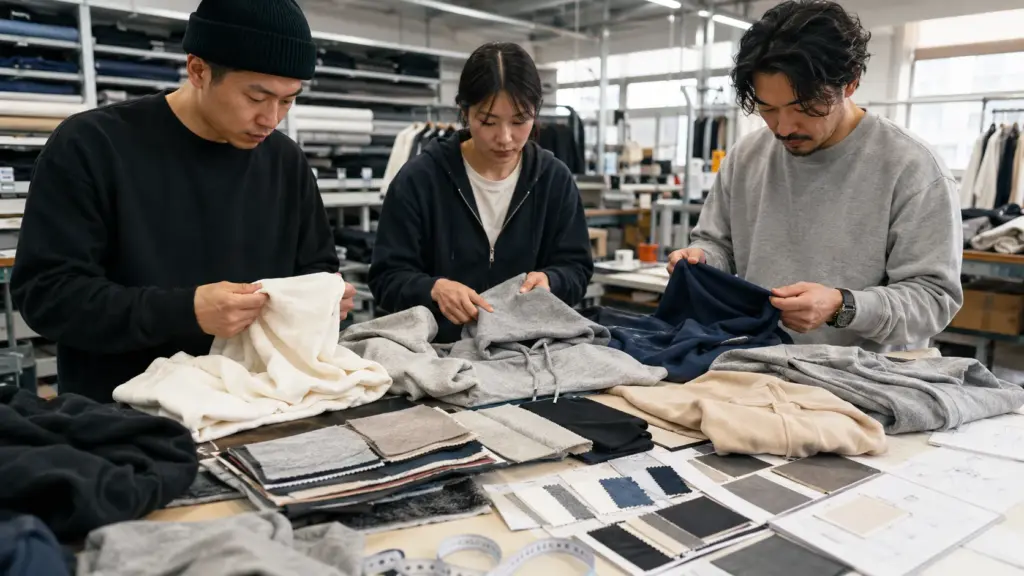
Yleisiä käyttämäni hupparikangasvaihtoehtoja
En käsittele hupparikangasta yhtenä ainoana kankaana. Näen sen kangasperheenä. Peruspuuvillahuppari voi käyttää ranskalaista froteeta, kun ostaja haluaa kevyemmän ja hengittävämmän tuntuman. Talvihuppari voi käyttää harjattua fleeceä, kun ostaja haluaa lämpöä ja mukavan sisäpinnan. Katumuotihuppari käyttää usein korkeaa...GSM- puuvillafleeceä, koska vartalo tarvitsee rakennetta. Urheiluhuppari voi käyttää enemmän polyesteriä, koska ostaja tarvitsee nopeamman kuivumisen ja paremman muodonpitävyyden.
| Kangastyyppi | Päätunne | Paras käyttötarkoitus |
|---|---|---|
| 100% puuvillafleeceä | Pehmeä, luonnollinen, hengittävä | Ensiluokkaiset rennot hupparit |
| Puuvilla-polyfleece | Pehmeä, vakaa, kustannusystävällinen | Useimmat tukkumyyntihupparitilaukset |
| Ranskalainen frotee | Kevyt, sisäpuolelta lenkitetty, hengittävä | Kevät- ja syyshupparit |
| Polyesterifleece | Kevyt, lämmin, nopeasti kuivuva | Urheiluvaatteet ja ulkoiluhupparit |
| Paksu puuvillainen hupparimateriaali | Paksu, strukturoitu, ensiluokkainen | Katumuoti ja ylisuuret tyylit |
Pyydän aina ostajaa varmistamaan markkinatilanteen ensin. Vapaa-ajan merkin puuvillahuppari saattaa vaatia tukevan tuntuman miehille. Koulu- tai supermarkettilaus saattaa vaatia vakaan puuvilla-polyeteenisekoitteen. Sama kangas ei sovi kaikille ostajille.
Onko puuvilla- vai polyesterihupparin valinta todellakin vain mukavuuskysymys?
Monet ostajat luulevat puuvillan tarkoittavan laatua ja polyesterin halpaa. Tämä yksinkertainen ajatus voi johtaa väärään tuotteeseen ja väärään hintaan.
Puuvilla- vs. polyesterihupparin valinnassa on otettava huomioon mukavuus, kestävyys, kutistumisnopeus, kuivumisnopeus, painatusmenetelmä ja hinta. Puuvilla tuntuu pehmeämmältä ja luonnollisemmalta. Polyesteri auttaa hupparia pitämään muotonsa ja kuivumaan nopeammin.

Miten vertailen puuvillaa ja polyesteriä tehdastyössä
Vertailen puuvilla- ja polyesterihupparivalintoja todellisen käytön, en tunteen, perusteella. Puuvilla on hyvä valinta, kun ostaja haluaa luonnollisen tuntuman, hyvän hengittävyyden ja ensiluokkaisen rennon ilmeen. Se sopii myös asiakkaille, jotka välittävät ihon mukavuudesta. Mutta puuvilla voi kutistua enemmän. Se voi pitää vettä. Se voi myös menettää muotoaan, jos kangasta ja ompelua ei hallita hyvin.
Polyesteri antaa hupparille lisää kestävyyttä. Se auttaa vähentämään kutistumista. Se voi tehdä hinnasta kilpailukykyisemmän. Siitä on myös apua, jos tyyli on urheilu-, työ-, matka- tai aktiiviseen arkikäyttöön. Mutta liika polyesteri voi tuntua vähemmän luonnolliselta. Se voi myös luoda kiiltävän tai synteettisen ilmeen, jos lankaa ja viimeistelyä ei ole valittu hyvin.
| Vertailukohta | Puuvillainen huppari | Polyesterihuppari |
|---|---|---|
| Ihon tuntuma | Pehmeämpi ja luonnollisempi | Tasaisempi mutta vähemmän luonnollinen |
| Kutistumisriski | Korkeampi | Alentaa |
| Kuivumisnopeus | Hitaampi | Nopeampi |
| Muodon säilyvyys | Keskikokoinen | Paremmin |
| Hintahallinta | Korkeammat kustannukset | Parempi kustannusten hallinta |
| Paras ostajan tarve | Ensiluokkaista mukavuutta | Kestävyys ja arvo |
Kun ostajat kysyvät puuvilla- vs. polyestericollegepaidoista, annan saman vastauksen. Paras valinta ei ole yksi kuitu. Paras valinta on oikea tasapaino.
Mitä on puuvillafleece ja sopiiko se huppareihin?
Jotkut ostajat kuulevat sanan “fleece” ja luulevat sen olevan polyesteriä. Tämä ei aina pidä paikkaansa, ja tämä virhe muuttaa hankintapäätöstä.
Puuvillafleece on neulos, jossa on pehmeä tai harjattu sisäpuoli. Se voi olla 100%-puuvillaa tai puuvilla-polyeteenisekoitetta. Se sopii hyvin huppareihin, kun ostaja haluaa lämpöä, mukavuutta ja ensiluokkaisen rennon ilmeen.
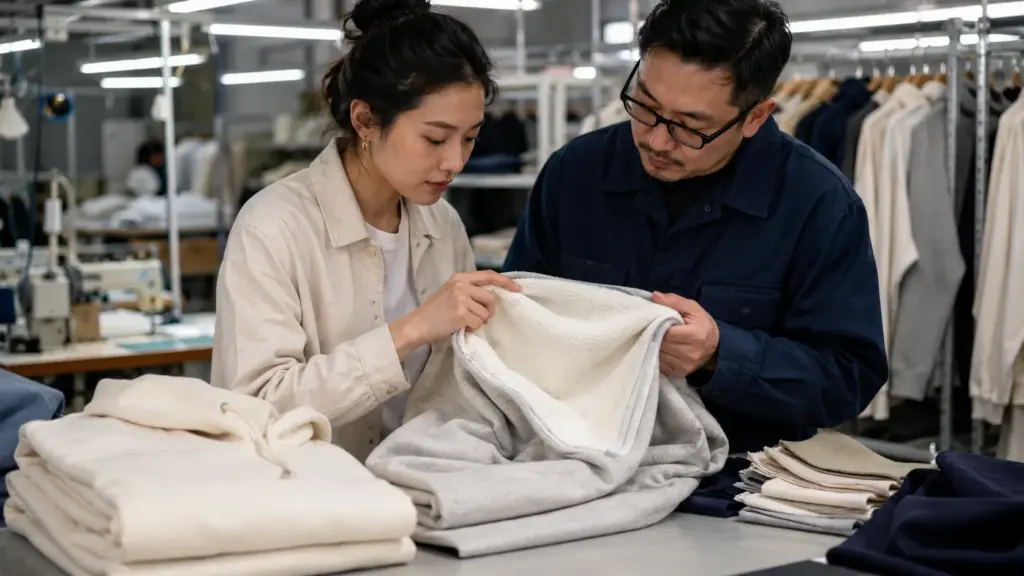
Miksi puuvillafleece tuntuu erilaiselta
Kun selitän, mitä puuvillafleece on, näytän yleensä ensin kankaan sisäpuolen. Ulkopinta voi näyttää sileältä. Sisäpuoli voidaan harjata pehmeän ja lämpimän tuntuman aikaansaamiseksi. Siksi monet ostajat valitsevat fleecehupparin puuvillaisen t-paidan sijaan, kun he haluavat talveksi valmiimman tuotteen.
Kysymys “onko puuvillafleece hyvää” riippuu loppukäytöstä. Pidän puuvillafleecestä premium-neulepuseroissa, ylisuurissa huppareissa ja rennosti pukeutumisessa. Se antaa hupparille täyteläisemmän vartalon. Se tukee myös hyvin brodeerausta ja monia painatusmenetelmiä. Mutta en valitse puhdasta puuvillafleeceä jokaiseen tilaukseen. Jos ostaja tarvitsee vahvan pesun kestävyyden, pienemmän kutistumisen ja paremman hinnanhallinnan, suosittelen usein puuvilla-polyfleeceä.
| Fleece-vaihtoehto | Mitä huomaan | Tavallinen ehdotukseni |
|---|---|---|
| 100% puuvillafleeceä | Luonnollinen, pehmeä, hengittävä | Sopii premium-tason rentoihin huppareihin |
| Puuvilla-polyfleece | Vakaa, pehmeä ja helpommin hallittava | Sopii tukku- ja merkkitilauksiin |
| Polyesterifleece | Kevyt, lämmin, nopeasti kuivuva | Hyvä urheilu- ja ulkokäyttöön |
Fleece- ja puuvillahupparien vertailu voi olla hämmentävää, koska fleece on kangasrakenne ja puuvilla on kuitu. Fleece- ja puuvillahupparia koskeva kysymys pitäisi muuttaa muotoon: tarvitsenko harjattua lämpöä, luonnonkuitupitoisuutta vai parempaa vakautta?
Pitäisikö minun valita valkoinen hupparikangas eri tavalla kuin tummat värit?
Valkoiset hupparit näyttävät valokuvissa yksinkertaisilta. Mutta irtotuotannossa valkoisessa kankaassa voi olla enemmän ongelmia kuin tummassa kankaassa.
Käsittelen valkoista hupparikangasta huolellisemmin, koska tahrat, läpinäkyvyys, kellastuminen ja epätasaiset värjäytymät näkyvät helpommin. Tarkistan yleensä kankaan painon, langan laadun, vuorin värin ja pakkaustavan ennen tuotantoa.
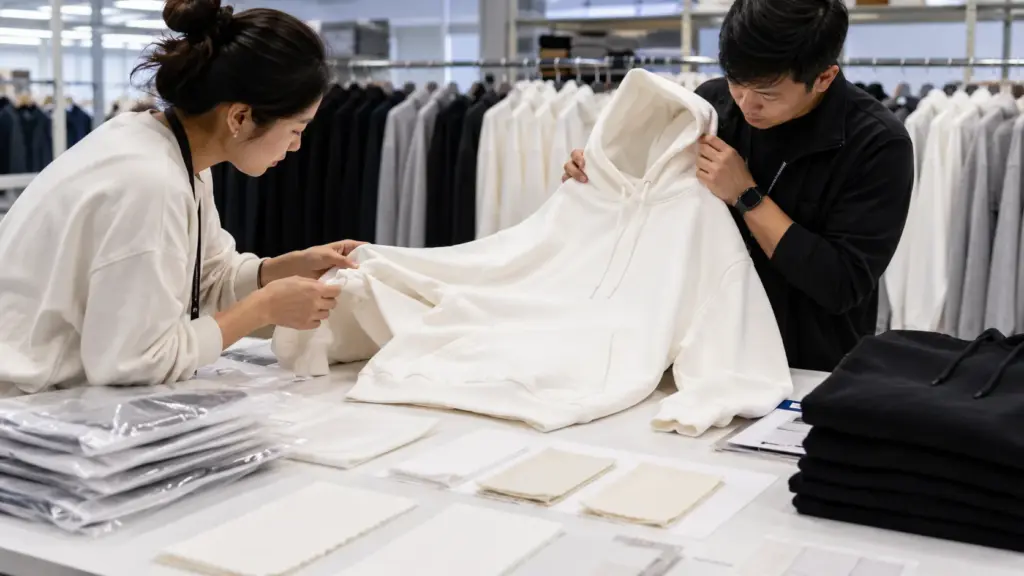
Mitä tarkistan ennen valkoisten hupparien tekemistä
Käsittelen valkoista hupparikangasta tarkemmin, koska sen virheet ovat näkyvissä. Pieni öljytahra taskun lähellä voi olla reklamaatio. Ohut kangas voi näyttää halvalta, vaikka ostaja odotti premium-luokan puuvillahupparia. Huonosti yhteensopiva reunus voi saada hihansuun näyttämään luonnonvalkoiselta vartalon kankaan vieressä. Nämä ongelmat eivät välttämättä näy selvästi mustissa tai tummansinisissä huppareissa, mutta valkoinen näyttää kaiken.
Valkoisiin huppareihin suosittelen riittävästi langanjohtavuutta ja puhdasta lankapintaa. Tarkistan myös, tarvitseeko ostaja kirkkaanvalkoista, maidonvalkoista vai lämpimän luonnonvalkoista. Nämä eivät ole samaa väriä. Olen nähnyt ostajien hyväksyvän laboratoriokaston liian nopeasti, mutta sitten hylänneen irtokankaan, koska valkoinen oli liian kylmää myymälän valossa.
| Valkoisen hupparin riski | Mitä teen |
|---|---|
| Kangas näyttää läpinäkyvältä | Suosittelen paksumpaa GSM-materiaalia tai tiheämpää neulosta |
| Väri näyttää keltaiselta | Vahvistan valkoisen sävyn ennen massavärjäystä |
| Tahroja ompelun aikana | Pyydän ompelulinjaa parantamaan käsittelyä |
| Kylkiluiden ja rungon väriero | Yhdistän kylkiluun ennen leikkaamista |
| Pakkausmerkit | Testasin taittoa ja muovipussin painetta |
Valkoinen näyttää puhtaalta vain, jos tuotantoprosessi on puhdas. Joten en koskaan kohtele sitä helppona värinä.
Mistä Niken hupparit on tehty, ja ovatko Essentials-hupparit 100-puuvillaa?
Monet ostajat käyttävät tunnettuja tuotemerkkejä referenssinä. Se auttaa, mutta tuotemerkin kopioiminen tietämättä syytä voi olla riskialtista.
Nike- ja Essentials-hupparit eivät aina ole 100%-puuvillaa. Monissa malleissa käytetään puuvilla-polyeteenisekoitetta tai muita sekoituksia. Käytän näitä merkkejä referensseinä, mutta rakennan kankaan silti ostajan kohdemarkkinoiden mukaan.
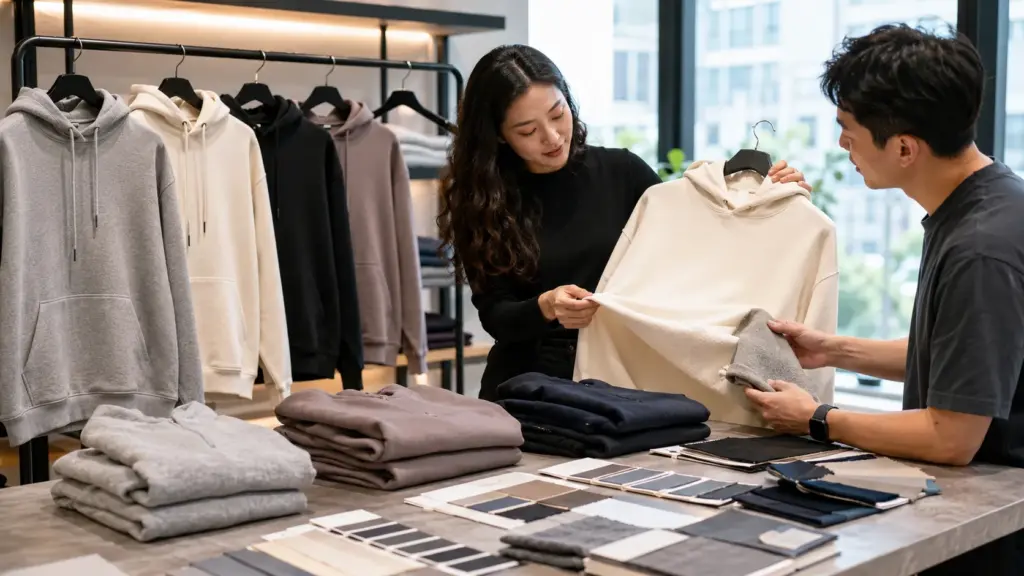
Kuinka käytän brändiesimerkkejä kopioimatta sokeasti
Kun ostajat kysyvät, mistä Niken hupparit on tehty, kerron heille, että suuret tuotemerkit käyttävät erilaisia kangasreseptejä eri tuotelinjoille. Jotkut Niken fleecehupparit on valmistettu puuvillapitoisista sekoituksista. Joissakin urheiluvaatteissa on enemmän polyesteriä. Tämä on järkevää, koska kuntosalihuppari, lifestyle-huppari ja tekninen fleecehuppari eivät käytä samaa materiaalia.
Kun ostajat kysyvät, ovatko Essential-hupparit 100-puuvillaa tai “ovatko Essentials-hupparit 100-puuvillaa”, suosittelen heitä myös tarkistamaan tarkalleen mallin. Monissa markkinoilla olevissa Essentials-tyylisissä premium-huppareissa käytetään puuvilla-polyfleece-sekoitusta, koska seos voi antaa rakennetta, pehmeyttä ja parempaa vakautta. Pointti ei ole pelkästään kuitupitoisuus. Pointti on kankaan paino, pesuteho, väri, muoto ja brändin asema.
| Tuotemerkkiviittauskysymys | Käytännönläheinen vastaukseni |
|---|---|
| Mistä Niken hupparit on tehty? | Monissa tyyleissä käytetään puuvilla-polyeteeni- tai suorituskykysekoitteita |
| Ovatko Essential-hupparit 100-puuvillaa? | Monissa vastaavissa premium-tyyleissä käytetään puuvilla-polyfleeceä |
| Pitäisikö minun kopioida sama kangas? | Vertailen ensin hintaa, GSM-määrää, kutistumista ja sopivuutta |
| Mikä on tärkeintä? | Kankaan on vastattava myyntilupausta |
Pidän brändiviittauksista, koska ne auttavat kommunikoinnissa. En kuitenkaan anna viittausten korvata testausta. Tarvitsen silti laboratoriotestejä, kokonäytteitä, pesutestejä ja irtomateriaalien hyväksyntää.
Milloin minun pitäisi hankkia miesten huppari 100% puuvillaa vai 100% puuvillaa naisille?
Jotkut ostajat haluavat puhdasta puuvillaa, koska se kuulostaa premium-laatuiselta. Ymmärrän sen, mutta tarkistan silti ensin liiketoimintamallin.
Valitsen miesten hupparin 100% puuvillasta tai naisten hupparin 100% puuvillasta, kun merkki myy mukavuutta, luonnollista tuntumaa ja ensiluokkaista arkikäyttöä. Valitsen sekoitekangasmateriaalia, kun ostaja haluaa paremman hinnan, vähemmän kutistuvaa materiaalia ja paremman jokapäiväisen käyttökokemuksen.
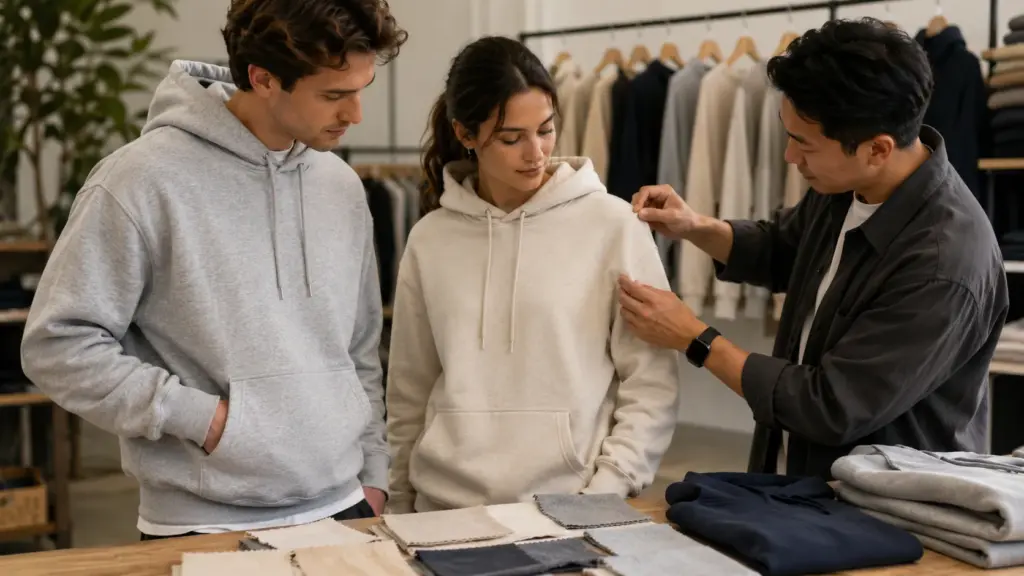
Miten valitsen miesten ja naisten hupparit
Tarkastelen asiakasta, myyntikanavaa ja odotettua palautusprosenttia. Näen usein, että miesten puuvillahupparitilauksissa ostajat pyytävät paksua ja strukturoitua kangasta. He haluavat hupparin tuntuvan raskaalta kädessä. Heille on tärkeää myös olkapään muoto, hupun muoto ja resorin palautuvuus. Jos he myyvät katumuotia, saatan ehdottaa 380 GSM:n tai paksumpaa puuvillafleeceä, mutta varoitan heitä kutistumisen hallinnasta.
Sadan puuvillahupparin kohdalla tarkistan ensin siluetin. Lyhyt huppari, rento huppari tai istuva huppari voivat käyttäytyä eri tavalla pesun jälkeen. Puhdas puuvilla voi tuntua hyvältä, mutta se voi myös muuttaa muotoaan, jos kuvio ja kangas eivät ole tasapainossa. Naisten muodin kohdalla tarkistan myös värin, pehmeyden ja pinnan sileyden, koska asiakas usein huomaa käden tuntuman hyvin nopeasti.
| Ostajan hakutermi | Mitä yleensä tarkistan |
|---|---|
| huppari puuvillaa miehille | GSM, olkapään muoto, hupun rakenne |
| miesten huppari 100 puuvillaa | Kutistuminen, paino, kylkiluiden laatu |
| 100 puuvillahupparia naisille | Istuvuus, pehmeys, väri, pesun vaihto |
| puuvillainen huppari | Markkinataso, hinta, tulostusmenetelmä |
| polyesteri vs. puuvilla huppari | Käyttötapaus ja tuottoriski |
Pidän 100%-puuvillasta, kun ostaja voi hyväksyä korkeammat kustannukset ja tiukemman hoidon. Pidän puuvilla-polyeteenisekoituksista, kun ostaja tarvitsee vakaata irtotuotantoa ja vahvemman hinta-aseman.
Johtopäätös
En valitse hupparikangasta pelkästään kuidun nimen perusteella. Valitsen sen mukavuuden, hinnan, kutistumisen, vuodenajan, tuotemerkin ja todellisen ostajan käytön perusteella.
Toimintakehotus
Jos etsit puuvillahuppareita, fleecehuppareita tai räätälöityjä hupparityylejä brändillesi, voin auttaa sinua vertailemaan kangasvaihtoehtoja ennen irtotuotantoa.
Truekungilla valmistamme muotivaatteita ja OEM/ODM-huppareita tuotemerkeille, tukkukauppiaille ja supermarketeille. Tiimini voi auttaa sinua tarkistamaan kankaan painon, puuvillapitoisuuden, kutistumisen, värin, näytteen laadun, pakkauksen ja toimitusaikataulun.
Voit ottaa minuun yhteyttä täällä:
Lancy Chia
Truekung
Sähköposti: [email protected]
Verkkosivusto: https://truekung.com
Näkymät: 133