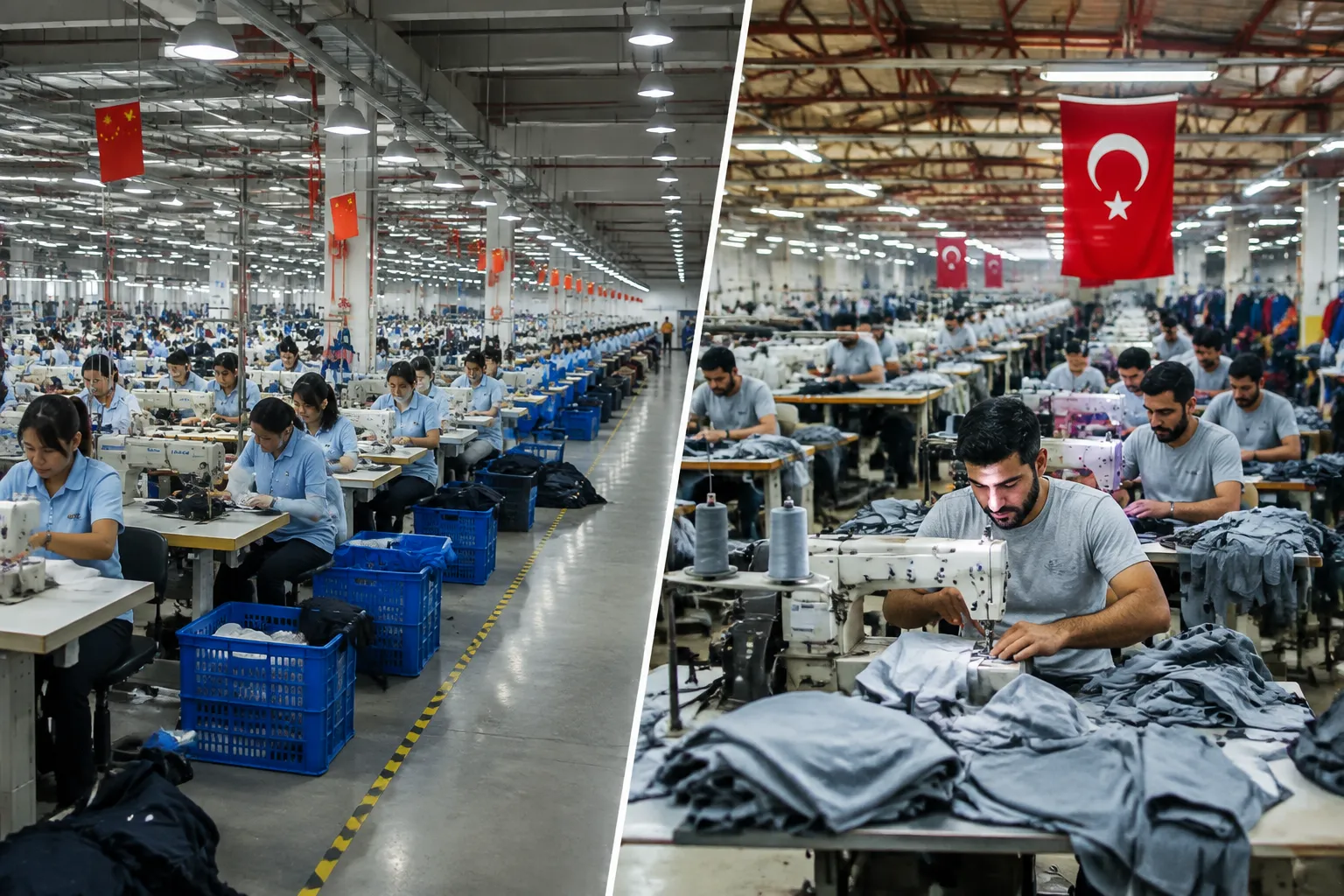


Muchos compradores comparan la fabricación de ropa en China y Turquía, ya que elegir un socio de producción inadecuado puede aumentar los costos, retrasar los lanzamientos de productos y generar problemas de calidad. La elección del proveedor correcto depende del tipo de producto, la cantidad del pedido, el mercado objetivo y las necesidades de entrega.
La elección entre la fabricación de ropa en China y en Turquía depende de los objetivos de su negocio. China suele ser más fuerte en producción a gran escala, con una gama de productos más amplia y una cadena de suministro más eficiente. Turquía puede ser una buena opción para compradores que necesitan un acceso más rápido a los mercados europeos y rutas logísticas más cortas.

Soy Lancy Chia, de Truekung, una fábrica de ropa china con muchos años de experiencia en exportación. Nuestra fábrica ofrece producción de ropa OEM/ODM, marcas privadas, desarrollo de muestras, producción en masa, control de calidad y asistencia para la exportación. He trabajado con compradores internacionales que comparan diferentes países proveedores antes de realizar sus pedidos.
Según mi experiencia en fábrica, a los compradores no solo les importa el precio de la prenda. Les importa si el proveedor controla la calidad, se comunica con claridad, cumple con los plazos de entrega y apoya el desarrollo del producto. Un precio bajo con una mala gestión de la producción puede generar mayores costos operativos a largo plazo.
En este artículo, compararé la fabricación de ropa en China y Turquía desde la perspectiva de una fábrica. Explicaré la capacidad de producción, los factores de costo, el pedido mínimo, el plazo de entrega, el control de calidad y los aspectos clave para la selección de proveedores que los compradores de ropa serios deben considerar.
¿Qué país, China o Turquía, es mejor para la fabricación de ropa?
Muchas marcas de moda tienen dificultades para elegir entre China y Turquía, ya que ambos países cuentan con una sólida industria textil. Una elección incorrecta puede afectar la calidad del producto, la rapidez de la entrega y el margen de beneficio.
China suele ser la mejor opción para las marcas que necesitan una gran capacidad de producción, una amplia variedad de categorías de ropa y costes de fabricación competitivos. Turquía puede ser una buena alternativa para los compradores que requieren rutas de envío más cortas a Europa y una producción flexible para determinados mercados.
Cómo las fábricas de ropa manejan esto
Desde el punto de vista de la fabricación, China cuenta con una cadena de suministro de ropa muy completa.
Un pedido de prendas no se limita solo a la costura. Implica la selección de telas, adornos, patronaje, desarrollo de muestras, corte, confección, inspección, empaquetado y preparación para el envío.
En China, muchas fábricas de ropa colaboran estrechamente con proveedores de telas, cremalleras, imprentas, talleres de bordado y empresas de embalaje. Esta colaboración permite a las fábricas gestionar diferentes categorías de productos, como camisetas, vestidos, chaquetas, vaqueros, ropa deportiva, ropa infantil y chaquetas de plumas.
En Truekung, a menudo apoyamos a los compradores desde la fase de muestras. Revisamos los diseños, recomendamos telas adecuadas, ajustamos las muestras y preparamos planes de producción en masa.
Turquía también cuenta con una sólida tradición textil. Muchos compradores europeos tienen en cuenta a Turquía debido a su ubicación geográfica y a la menor distancia de transporte a Europa.
De qué deben tener cuidado los compradores
Muchos compradores comparan países únicamente por el precio unitario.
Esto puede generar problemas, ya que el proveedor más barato no siempre es la opción de menor coste.
Un comprador también debería considerar:
- Estabilidad de la producción
- Velocidad de comunicación
- Precisión de la muestra
- proceso de inspección de calidad
- Costo de envío
- Fiabilidad de la entrega
Un proveedor que no pueda explicar claramente los pasos de producción puede generar problemas durante los pedidos al por mayor.
Puntos clave que los compradores deben verificar
| Por qué importa | Por qué es importante | Mi recomendación |
|---|---|---|
| Experiencia en la categoría de producto | Las distintas fábricas tienen diferentes puntos fuertes. | Solicitar una experiencia de producto similar |
| Soporte de la cadena de suministro | Afecta a la eficiencia de la producción | Comprobar la capacidad de abastecimiento de materiales |
| Requisito de MOQ | Influye en el nivel de inversión | Confirme la cantidad mínima de pedido antes de realizar el muestreo. |
| Calendario de producción | Afecta al lanzamiento al mercado | Solicita un horario realista |
| Experiencia en exportación | Reduce los problemas de envío | Pregunte sobre el proceso de exportación. |
Lo que he aprendido de la producción
En mi experiencia en la fábrica, la mayor diferencia entre China y Turquía no es simplemente el precio.
La verdadera diferencia radica en el entorno de producción.
China ha desarrollado una extensa red de fabricación. Esto permite a las fábricas gestionar diferentes categorías de prendas y requisitos de producción. Por ejemplo, un comprador que fabrica chaquetas puede necesitar tela impermeable, materiales para forros, cremalleras, botones, etiquetas y embalaje. Una cadena de suministro completa ayuda a reducir los problemas de coordinación.
Sin embargo, Turquía también tiene ventajas. Los compradores que venden principalmente en Europa pueden tener en cuenta el tiempo de transporte y la rapidez de respuesta del mercado. Las rutas de envío más cortas a veces permiten a las marcas reaccionar con mayor rapidez.
He visto compradores perder tiempo por seleccionar proveedores basándose únicamente en la reputación del país. Creían que un país ofrecería automáticamente precios más bajos o mejor calidad. En realidad, el sistema de gestión de la fábrica es mucho más importante.
Mi sugerencia es comparar proveedores utilizando los mismos requisitos de producto. Envíe el mismo paquete técnico, especificaciones de tejido, cantidad y fecha de entrega a diferentes fábricas.
Un proveedor de ropa serio debe explicar claramente los detalles de producción. Debe indicar cómo gestiona el muestreo, la aprobación de las telas, el control de calidad y la preparación para la entrega.
La mejor opción no siempre es el país más barato. Se trata del socio de fabricación que se ajusta a tu modelo de negocio.
¿China o Turquía ofrecen un mejor control de calidad en la ropa?
Muchos compradores se preocupan por la calidad al comparar la fabricación de ropa en China y Turquía. Un país no puede garantizar la calidad. El sistema de producción, la experiencia y el proceso de comunicación de la fábrica determinan el resultado final.
Tanto China como Turquía pueden producir ropa de calidad. Los compradores deben evaluar a los proveedores mediante muestras, control de producción, métodos de inspección y capacidad de comunicación.
Cómo controlamos la calidad durante la producción
El control de calidad comienza antes de la producción en masa.
En Truekung, nos centramos en varios puntos de producción:
- Comprobación de la tela
- Aprobación del patrón
- Confirmación de la muestra
- Calidad de costura
- Control de medición
- Inspección final
- Verificación del embalaje
Una buena muestra es importante, pero el control de la producción a granel es aún más importante.
Por ejemplo, un comprador puede aprobar una muestra de sudadera con capucha. Durante la producción en masa, la fábrica debe asegurarse de que cada sudadera tenga el mismo gramaje, color, talla, calidad de costura y acabados.
Problemas de calidad comunes que los compradores deben evitar
Algunos compradores solo revisan fotos o muestras y dan por sentado que el producto final será igual.
Pueden surgir problemas durante la producción en masa:
- Diferentes tonalidades de tela
- Mediciones incorrectas
- Costuras sueltas
- Etiquetas incorrectas
- Errores de empaquetado
Puede parecer un detalle menor, pero puede afectar a las quejas de los clientes y a la reputación de la marca.
Puntos de control de calidad que los compradores deben confirmar
| Por qué importa | Por qué es importante | Mi recomendación |
|---|---|---|
| Proceso de aprobación de muestras | Demuestra comprensión de la fábrica | Confirme todos los detalles antes de realizar el envío masivo. |
| Puntos de control de calidad | Evita errores de producción | Pregunte cuándo se realizan las inspecciones. |
| Tolerancia de medición | Controla la consistencia | Aprobar los estándares de tamaño |
| Actualizaciones de producción | Mejora la comunicación | Solicitar información sobre el progreso |
| Manejo de defectos | Demuestra responsabilidad | Método de respuesta de la solicitud al proveedor |
Lo que he aprendido de la producción
Normalmente pido a los compradores que comprueben cómo gestiona la fábrica los problemas.
Todos los proveedores pueden afirmar que ofrecen buena calidad. La cuestión importante es cómo controlan los riesgos.
Por ejemplo, la diferencia de color en la tela es un problema común en la producción de ropa. Una fábrica profesional debe revisar los rollos de tela antes de cortarlos. Si hay algún problema, la fábrica debe comunicarse con el comprador antes de continuar con la producción.
Un proveedor poco fiable puede continuar la producción y explicar el problema después del envío.
He visto compradores gastar más dinero solucionando problemas de calidad que el que habrían gastado eligiendo un mejor proveedor desde el principio.
Al comparar China y Turquía, los compradores no deberían preguntarse únicamente: "¿Qué país tiene mejor calidad?".“
La pregunta más pertinente es:
“¿Qué fábrica puede comprender mis requisitos y controlar mis riesgos de producción?”
Mi regla de decisión es simple: elegir un proveedor que ofrezca respuestas claras sobre la tela, el muestreo, el control de calidad, el cronograma de producción y el envío.
Una buena comunicación forma parte de la calidad.
¿Qué país tiene mejores costes y plazos de entrega en la fabricación de ropa?
El costo y el tiempo de entrega son factores clave a la hora de que las marcas comparen la fabricación de ropa en China y Turquía. Los compradores deberían calcular el costo total de la producción en lugar de comparar únicamente los precios de fábrica.
China suele ofrecer ventajas de costes para pedidos grandes debido a su escala de producción. Turquía puede ofrecer ventajas a los compradores que valoran las rutas de entrega más cortas y un acceso más rápido a los mercados europeos.
Cómo calculan las fábricas los costes de producción de ropa
El coste de producción depende de muchos factores:
- elección de tela
- Complejidad del producto
- Cantidad del pedido
- Requisitos de mano de obra
- Detalles del embalaje
- Método de envío
Una camiseta sencilla y una chaqueta de invierno elaborada no pueden tener el mismo coste de producción.
Por ejemplo, las chaquetas de plumas requieren más pasos de producción, incluyendo el control del relleno, el acolchado, las pruebas de la tela y una inspección detallada.
Una fábrica necesita información precisa antes de poder ofrecer un presupuesto fiable.
Costos ocultos que los compradores deben considerar
Muchos compradores eligen a los proveedores basándose en el primer presupuesto que reciben.
Esto puede generar problemas ocultos:
- Costes adicionales de material
- Producción retrasada
- Cambios inesperados en las muestras
- Mayores gastos de envío
El precio más bajo no siempre es la mejor decisión empresarial.
Factores de costo y plazo de entrega que los compradores deben comparar
| Por qué importa | Por qué es importante | Mi recomendación |
|---|---|---|
| Costo total de producción | Muestra una inversión real | Comparar presupuestos completos |
| MOQ | Afecta al riesgo de inventario | Confirme la cantidad mínima de pedido. |
| plazo de entrega | Afecta al lanzamiento del producto | Solicitar una entrega realista |
| Condiciones de pago | Afecta al flujo de caja | Confirma antes de realizar el pedido. |
| Método de envío | Cambios en el costo final | Comparar opciones logísticas |
Por qué el costo total importa más que el precio unitario.
En mi experiencia en la fábrica, los compradores deberían pensar en el valor total en lugar de solo en el precio de la prenda.
Una marca de moda puede perder dinero debido a los retrasos en las entregas, incluso cuando el coste del producto es bajo.
Por ejemplo, un comprador puede pedir vestidos de verano. Si la producción se retrasa y el envío llega después de la temporada de ventas, el comprador podría necesitar descuentos para liquidar el inventario.
Por eso es importante la planificación de la producción.
China puede ofrecer ventajas a los compradores que necesitan grandes cantidades y sistemas de producción estables. Turquía puede resultar atractiva para los compradores que requieren un acceso más directo a los clientes europeos.
Mi sugerencia es calcular:
- Costo del producto
- Costo de la muestra
- Costo de envío
- Costo de inspección
- Posible riesgo de retraso
Un buen proveedor debería ayudarte a comprender el cronograma de producción antes de realizar el pedido.
He comprobado que una comunicación clara desde el principio puede prevenir muchos problemas posteriores. Los compradores deben proporcionar información completa sobre el producto y solicitar a las fábricas sugerencias realistas.
¿Qué preparar antes de contactar con una fábrica de ropa en China?
Una consulta clara ayuda a la fábrica a dar un precio, plazo y sugerencia de producción más precisos.
| Información a preparar | Ejemplo | Por qué la fábrica lo necesita |
|---|---|---|
| Categoría de producto | Chaqueta, vestido, sudadera con capucha, vaqueros | Comprender los requisitos de producción |
| Fotos de referencia o ficha técnica | Planos de diseño, medidas | Cree muestras precisas |
| Tejido | Algodón, poliéster, nailon | Calcular el costo del material |
| Rango de tallas | Tallas XS a XXL | Preparar la calificación |
| Cantidad por estilo/color | 1.000 unidades por color | Estimar la eficiencia de producción |
| Mercado objetivo | EE. UU., Europa, Australia | Comprender los requisitos |
| Nivel de calidad | Básico, premium | Recomendar materiales adecuados |
| Embalaje | Bolsa de polietileno, caja de cartón, etiquetas | Calcular el costo final |
| Etiquetado | Etiqueta de marca, etiqueta de cuidado | Preparar los detalles de producción |
| Fecha límite de entrega | Fecha de lanzamiento | Planificar el cronograma de producción |
| Certificados | Documentos de prueba requeridos | Confirmar el cumplimiento |
| Precio objetivo | Rango de presupuesto | Sugiera opciones adecuadas |
¿Cuándo pedir presupuesto a Truekung?
Si necesita producción de ropa OEM/ODM, productos de moda de marca propia, comunicación de exportación estable y soporte práctico de fábrica, Truekung puede ser un socio adecuado.
Le sugiero que se ponga en contacto con nosotros cuando tenga ideas de productos, muestras de referencia, fichas técnicas o requisitos de abastecimiento claros. Mi equipo puede ayudarle a revisar su proyecto, desarrollar muestras y analizar soluciones de producción realistas.
Email: [email protected]
Sitio web: https://truekung.com
Conclusión
La elección entre la fabricación de ropa en China y en Turquía depende de su producto, mercado, cantidad y necesidades de la cadena de suministro. Un socio de fábrica confiable le ayuda a controlar la calidad, el costo y la entrega.
Visitas: 131


