
Business casual sounds simple until you need to define it. Too formal can feel outdated. Too casual can look unprofessional. For fashion buyers, the challenge is bigger: the product must also match the customer, workplace, price point, and market.
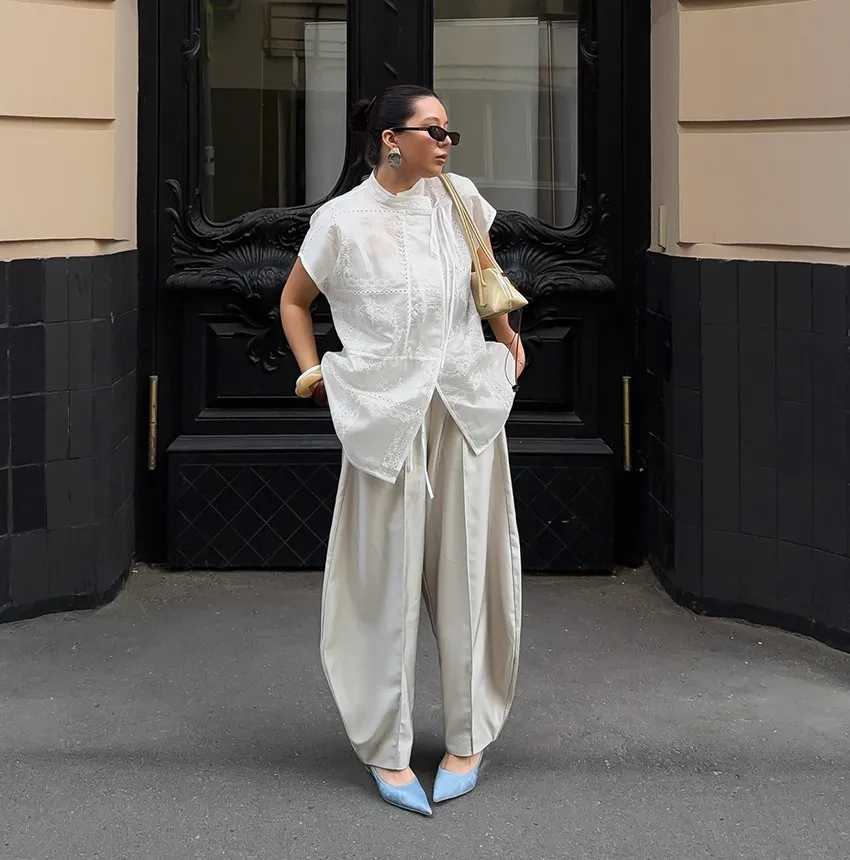
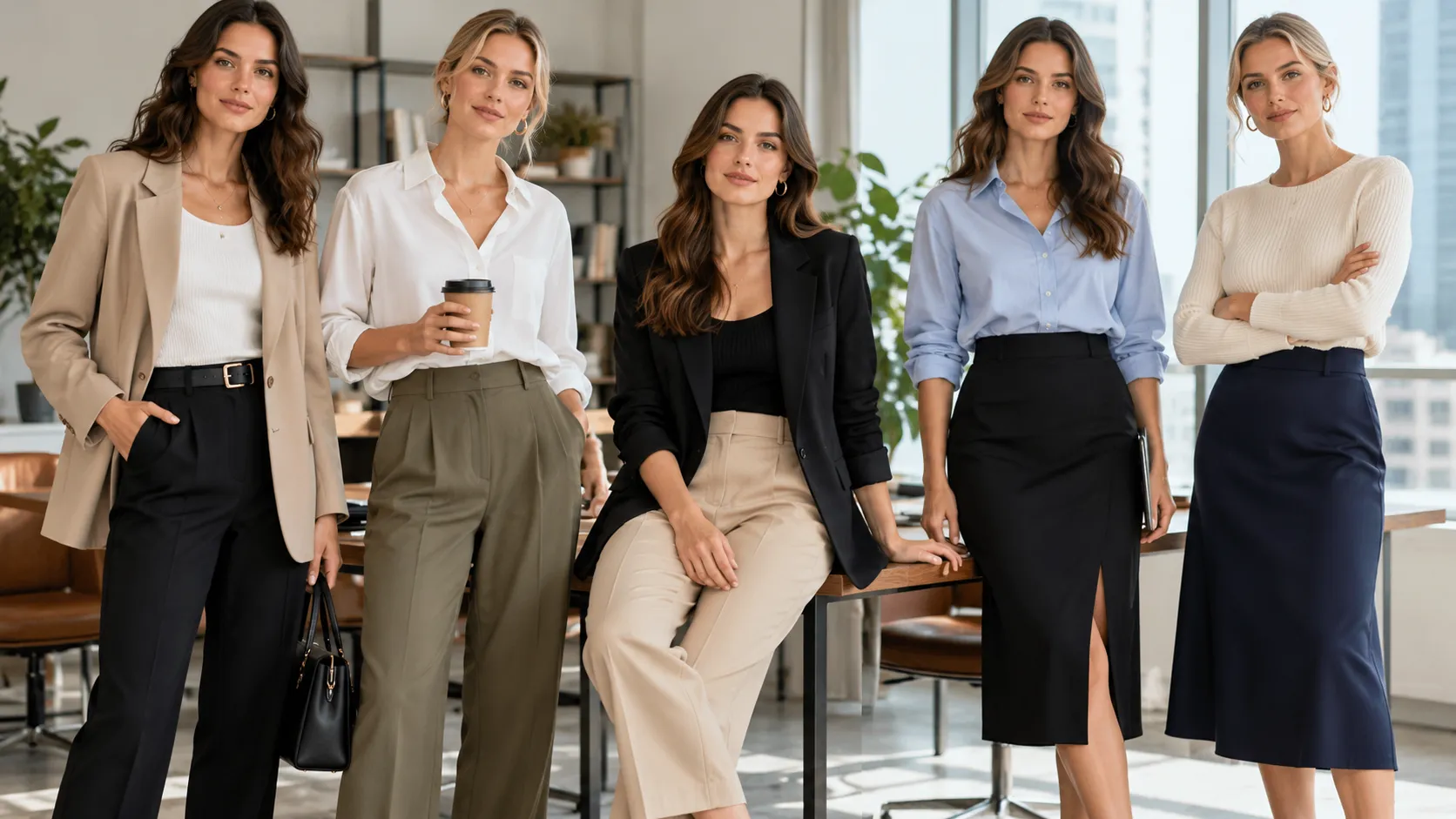
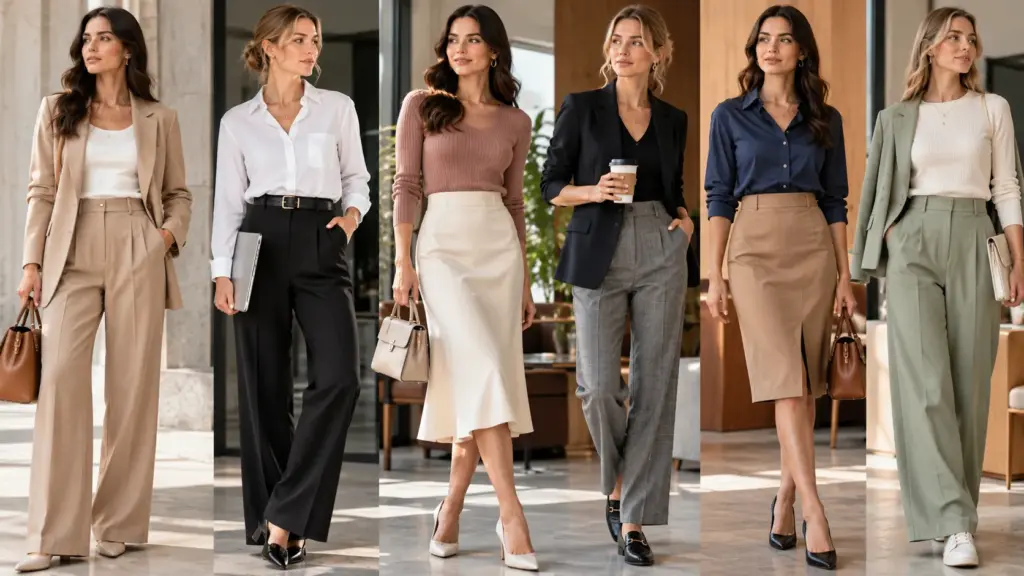
Business casual is a dress code between formal business attire and everyday casual clothing. For women, it usually includes tailored trousers, blouses, skirts, dresses, blazers, knitwear, and selected clean casual pieces. The exact level depends on the workplace, industry, market, and company culture.
I am Lancy Chia from Truekung. I have worked with clothing production and export for many years. From the factory side, I see women’s business casual as more than a styling category. It is also a product-development category where fabric, fit, construction, color, finishing, and price must work together.
For brands and wholesalers, understanding what is business casual helps with collection planning. It tells you which products belong together, where you can simplify construction, and where quality details matter most.
Below, I will explain what is considered business casual for women, which garments usually fit the category, and what buyers should check when developing a business casual collection.
Was bedeutet Business Casual für Frauen?
The confusing part of business casual is that there is no single uniform. A blazer may be necessary in one office and optional in another. Jeans may work for a technology company but not for a conservative financial office. This creates challenges for both consumers and apparel buyers.
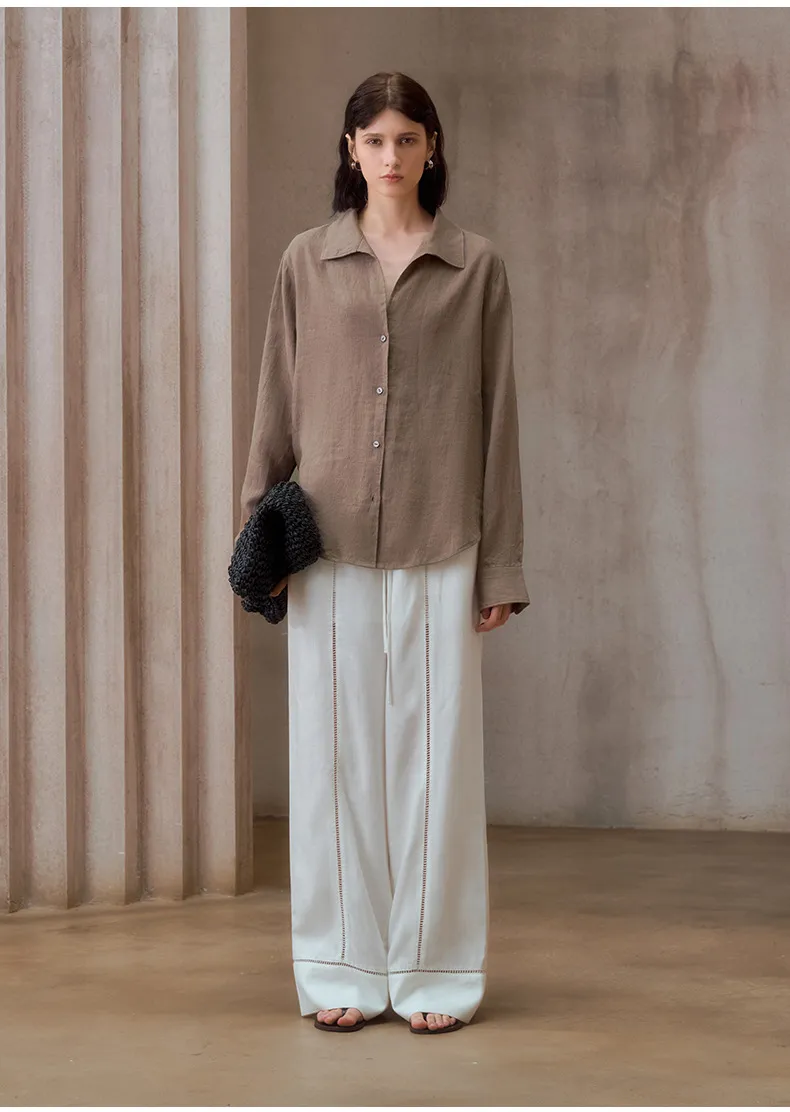
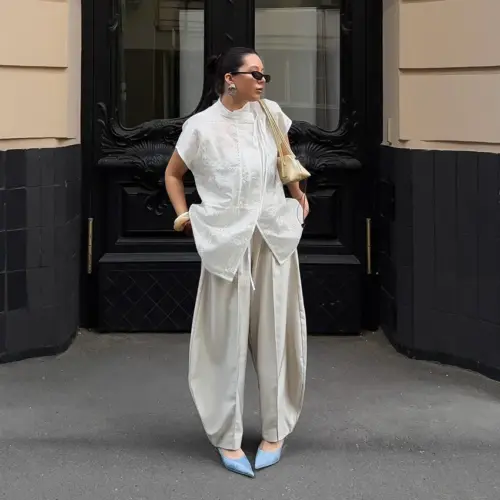
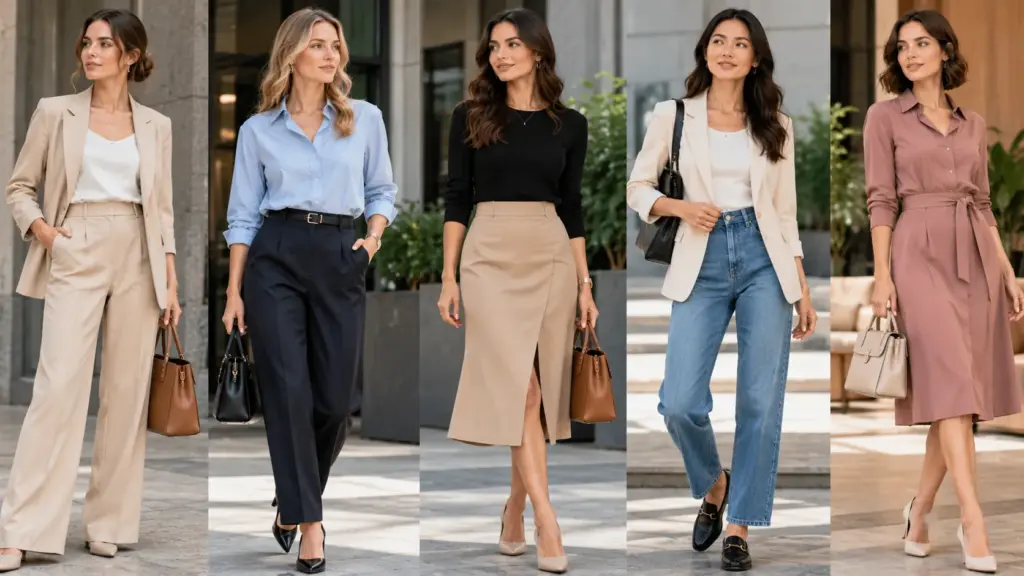
Business casual for women normally means polished clothing that is less formal than traditional corporate attire. Common business casual examples include tailored trousers with a blouse, a midi skirt with knitwear, a simple office dress, or clean jeans combined with a structured blazer where denim is accepted.
How Business Casual Balances Structure and Comfort
When I look at a business casual garment from the factory side, I usually look for a balance between structure and comfort.
Traditional business attire may use structured jackets, matching suits, formal shirts, and more rigid tailoring. Casual clothing moves in the opposite direction. It can include relaxed T-shirts, sweatshirts, leggings, distressed denim, and loose leisurewear.
Business casual sits between these two areas.
For example, a women’s blazer can have a softer shoulder instead of heavy padding. Trousers can use a fabric with some stretch instead of a rigid suiting material. A blouse can have a relaxed silhouette while still using clean seams and controlled finishing.
This balance is important when developing a commercial collection.
A garment can look correct in a flat product photo but feel completely wrong when worn. A jacket may be too stiff. Trousers may restrict sitting and walking. A blouse may be too transparent under office lighting.
In my factory experience, fabric and pattern are often just as important as the design sketch. The sketch tells us the appearance. Fabric weight, stretch, drape, pattern measurements, and construction determine how the final garment actually behaves.
Why One Dress Code Creates Different Products
One mistake is treating business casual attire as one fixed aesthetic.
The customer matters.
A young creative agency employee may wear wide-leg trousers, a fitted T-shirt, an oversized blazer, and clean sneakers. A corporate employee may prefer a blouse, tailored pants, loafers, and a more structured jacket. A retail manager may need something polished but comfortable enough for standing throughout the day.
Climate also changes the product.
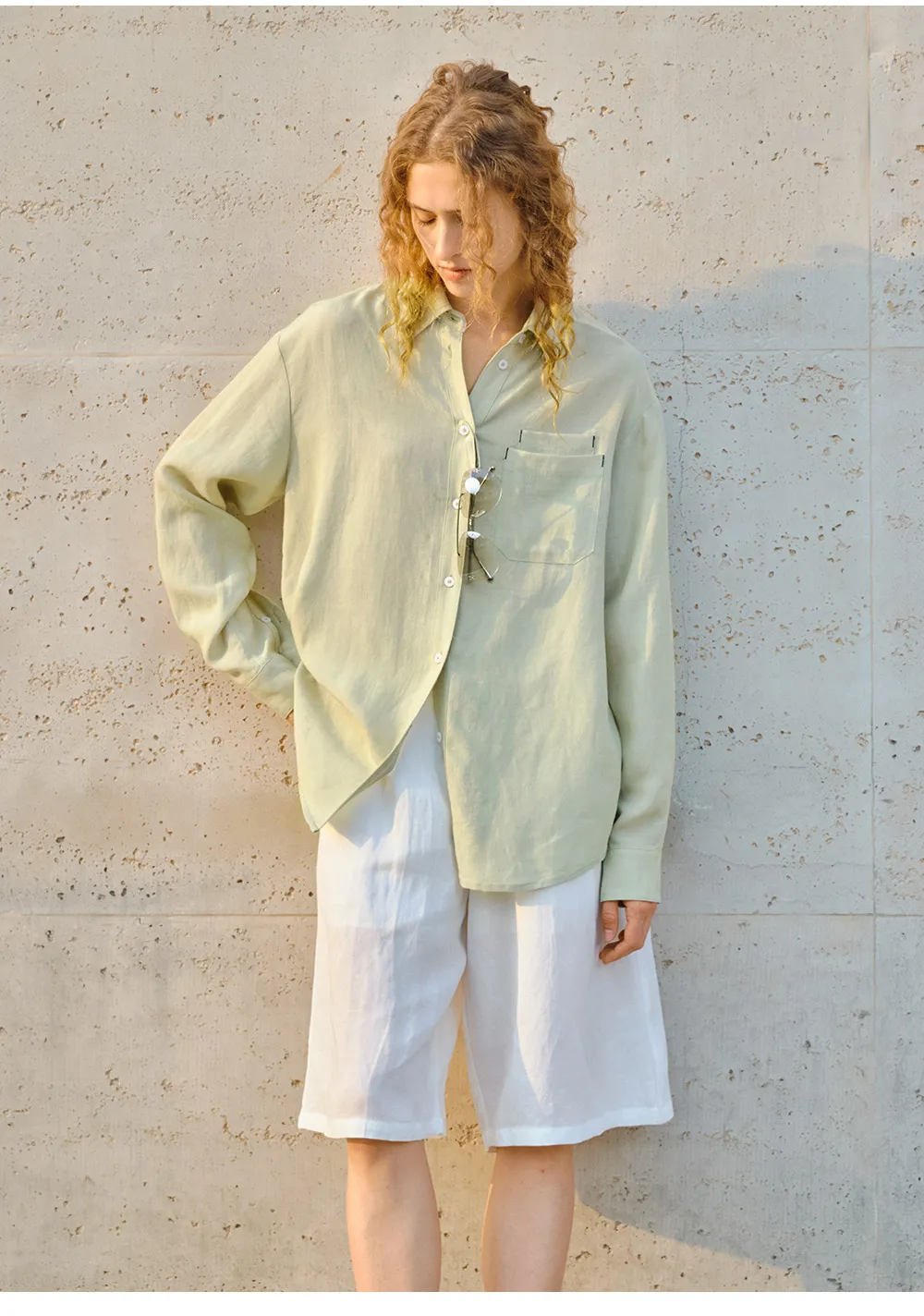
A summer collection may require lighter blouses, breathable dresses, skirts, and unlined jackets. A winter collection can include knitwear, heavier trousers, coats, and layered pieces.
The target retail price changes development again. A lower-priced collection may need simpler construction and readily available fabrics. A higher-priced product may justify better lining, more complex tailoring, special fabric development, or additional finishing.
This is why I usually ask buyers to define the target customer before discussing individual styles. “Business casual” gives us a direction, but it does not give us a complete specification.
What Buyers Should Define First
| Warum es wichtig ist | Warum es wichtig ist | Meine Empfehlung |
|---|---|---|
| Zielkunde | Determines style and fit | Define age, occupation, and price level |
| Workplace type | Changes the level of formality | Separate corporate and relaxed office markets |
| Klima | Affects fabric and construction | Plan different weights by season |
| Retail price | Controls material and workmanship options | Set the target before sampling |
| Fit | Strongly affects the professional appearance | Provide a size chart or approved reference |
| Stoffleistung | Beeinträchtigt Komfort und Aussehen | Check drape, stretch, opacity, and hand feel |
| Farbspektrum | Affects collection coordination | Start with commercial core colors |
| Pflegeanforderungen | Important for workwear customers | Confirm washing and care expectations early |
When Comfort Starts to Change the Product
There is always a trade-off between a sharply tailored appearance and everyday comfort.
Consider trousers. A buyer may send us a reference showing a very clean, structured silhouette. However, the target customer wants to sit at a desk for eight hours and commute in the same trousers. If we select a rigid fabric only because it creates the sharpest shape, the final product may photograph well but feel uncomfortable.
Changing to a fabric with appropriate stretch can improve movement. But changing fabric can also change drape, shrinkage behavior, pattern requirements, sewing performance, and cost. We cannot simply replace one material and assume everything else stays the same.
I see a similar issue with blazers. Buyers sometimes want a very structured appearance while also requesting a lightweight, soft, inexpensive jacket. Those requirements can conflict. Structure may come from the shell fabric, interfacing, lining, shoulder construction, pressing, and pattern. Removing too many of these elements can change the intended silhouette.
My suggestion is to decide which performance requirement is essential before sampling.
A useful buyer rule is: if customers will wear the garment for a full working day, evaluate the sample while sitting, walking, reaching, and layering—not only while standing in front of a mirror.
What Clothes Are Considered Women’s Business Casual?
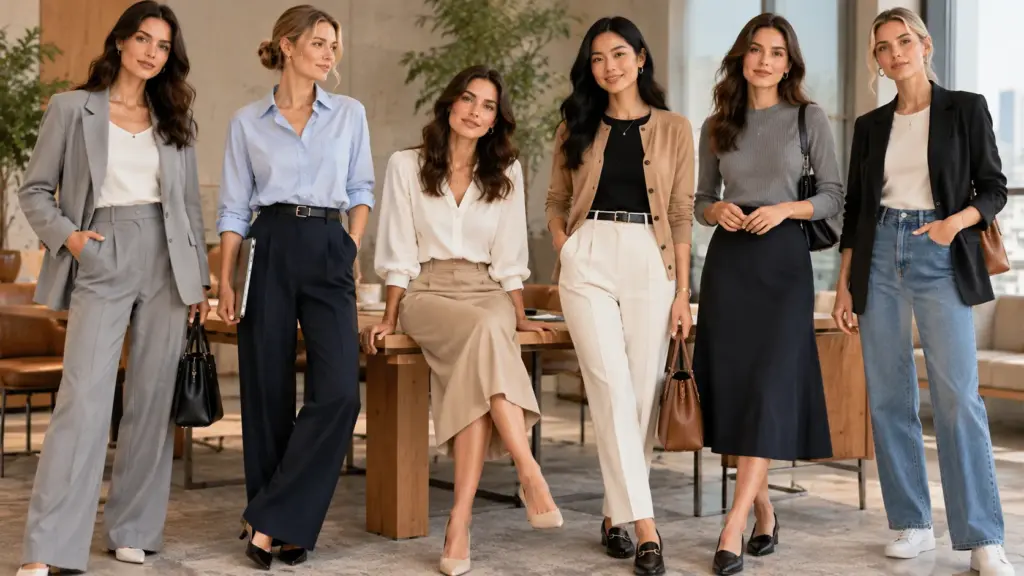
Brands sometimes build this category by collecting random office-looking garments. The result can lack consistency. A better approach is to think in outfit systems: tops, bottoms, dresses, layers, and selected casual pieces should work together.
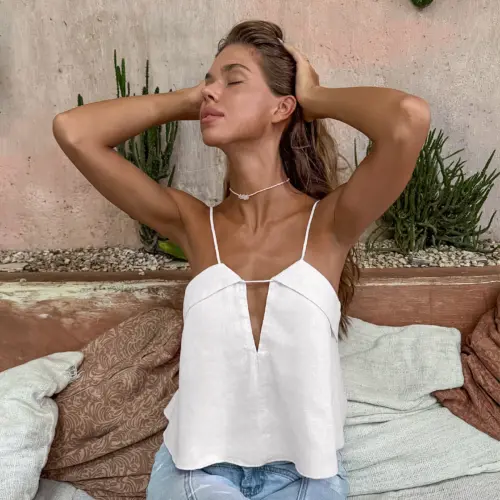
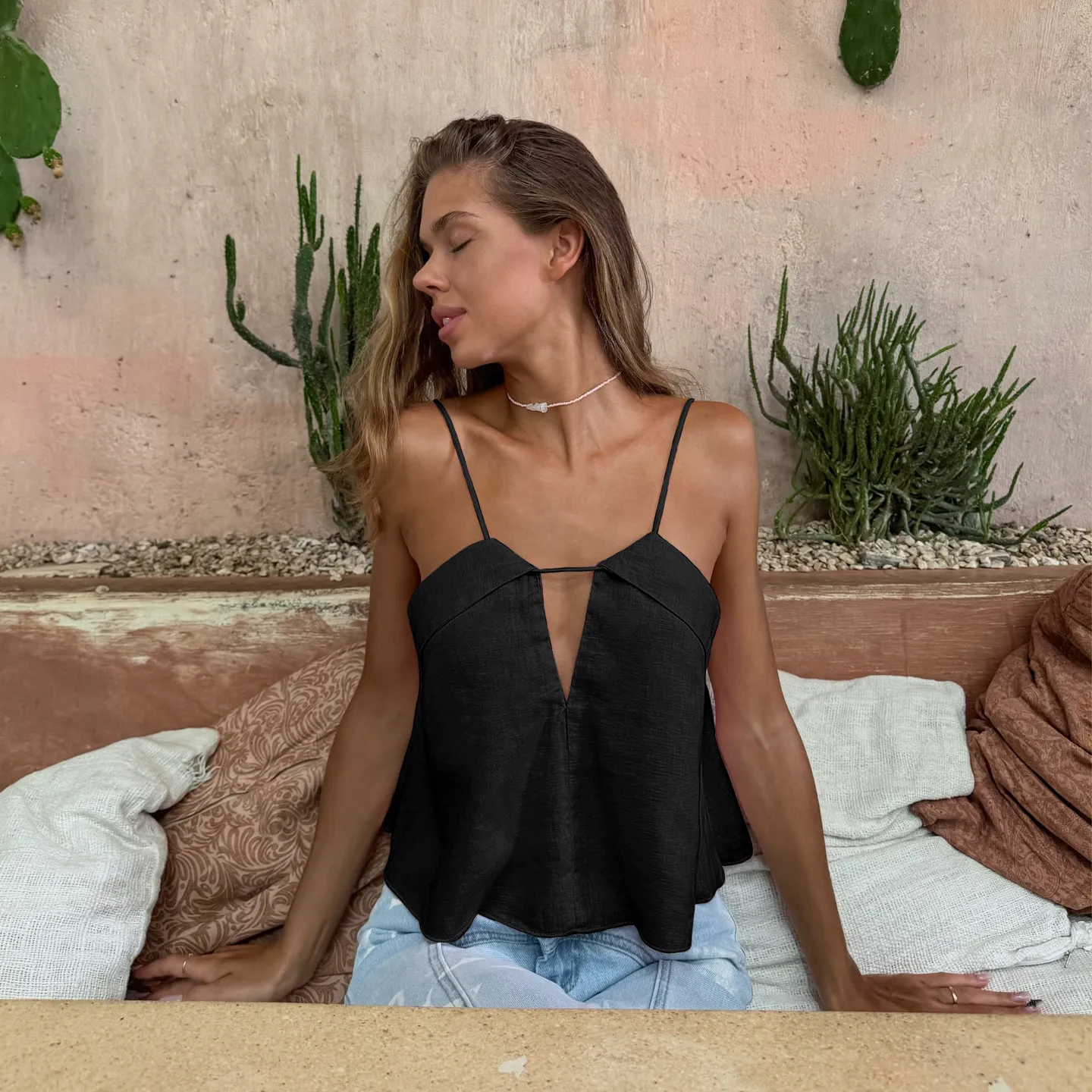
Typical women’s business casual clothes include blouses, shirts, tailored trousers, midi skirts, simple dresses, blazers, cardigans, lightweight sweaters, and polished outerwear. Depending on the workplace, clean T-shirts, dark jeans, or minimalist sneakers may also work when balanced with more structured garments.
Building a Commercial Officewear Collection
For buyers, I suggest thinking about the collection as combinations rather than isolated SKUs.
A blouse should work with several trousers and skirts. A blazer should layer over the blouse, dress, knit top, or simple T-shirt. Colors should connect across styles.
This improves merchandising and can also simplify sourcing.
Common business casual dress options include shirt dresses, wrap-inspired dresses, straight dresses, and other clean silhouettes suitable for work. For skirts, midi and knee-area lengths are common starting points, although the correct length depends on the market and design.
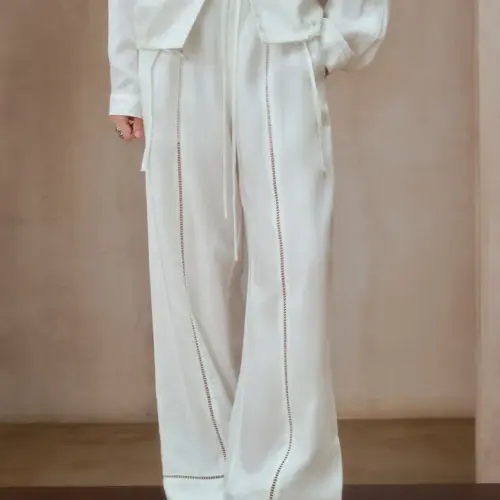
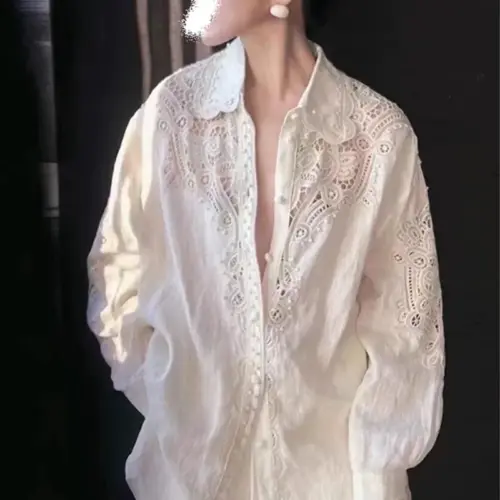
Trousers can include straight-leg, tapered, wide-leg, and other tailored silhouettes. Blouses may use woven polyester, viscose-based fabrics, cotton blends, or other materials depending on the desired hand feel, performance, price, and care requirements.
The exact fabric cannot be selected from the product name alone.
A buyer saying “I need a polyester blouse” still leaves many questions. We need to understand weight, construction, surface, opacity, drape, color, stretch requirement, finishing, and target price.
A serious clothing supplier should explain these variables before bulk production.
Why Office Clothing Can Still Fail
Fit inconsistency is one of the biggest risks in a business casual dress code Sammlung.
Imagine a customer buying trousers, a blouse, and a blazer from the same brand. If each style has been developed independently without a consistent fit concept, the outfit may not work together.
Layering is another issue.
A blazer that fits perfectly over a thin camisole may become too tight over a blouse or lightweight sweater. Sleeve width, armhole shape, chest ease, and shoulder measurements all influence layering.
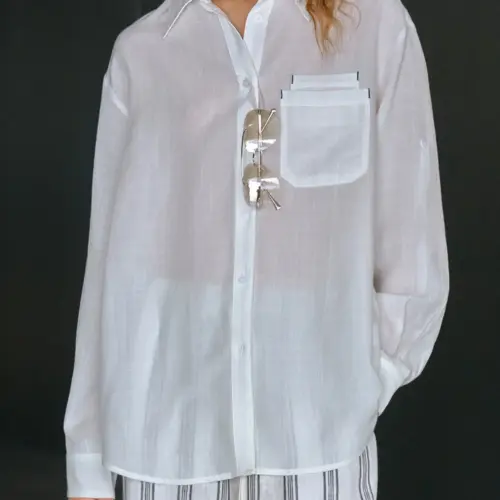
Fabric transparency is another common problem, especially with light-colored blouses and dresses. Buyers should not judge this only from fabric swatches. The material should be evaluated in the finished garment because seams, pockets, lining, and garment tension can change the visual result.
Shrinkage and pressing also matter.
If fabric behavior is not controlled, trouser measurements or garment appearance can change after production or washing.
This looks small, but it can affect delivery. When these issues are found late, the factory may need additional correction, inspection, pressing, or rework.
Was vor der Massenproduktion zu prüfen ist
| Warum es wichtig ist | Warum es wichtig ist | Meine Empfehlung |
|---|---|---|
| Stoffgewicht | Controls drape and season | Approve the actual bulk-quality fabric |
| Blickdichte | Important for light colors | Check garments under normal lighting |
| Strecken | Affects comfort and measurements | Confirm stretch direction and recovery |
| Größentabelle | Controls fit consistency | Approve measurements before grading |
| Layering room | Important for blazers and coats | Fit-test with intended inner garments |
| Nähte | Affect appearance and durability | Inspect the approved sample carefully |
| Drücken | Important for tailored styles | Define the required finished appearance |
| Farbe | Supports collection coordination | Approve colors under consistent conditions |
| Labels | Required for private label programs | Confirm artwork and placement early |
| Verpackung | Affects presentation and logistics | Finalize before bulk packing |
Are Jeans Business Casual or Too Casual?
“Are jeans business casual?” is one of the most common questions because there is no universal yes or no.
For some workplaces, dark, clean denim combined with a blouse, blazer, or structured knit can fit the business casual dress code. In more conservative environments, jeans may still fall outside acceptable workplace attire.
For a fashion buyer, this creates a positioning decision.
Suppose you are developing a corporate casual women’s collection for department-store customers. You could include dark straight-leg jeans without heavy distressing, dramatic washing, holes, or excessive decoration. The silhouette and wash make the product easier to coordinate with blazers and shirts.
But if your target customers work in conservative legal, financial, hospitality, or other formal environments, tailored trousers may have broader relevance than denim.
Production details matter as well. Denim development involves fabric weight, washing, shrinkage, color variation, hardware, stitching, and finishing. A simple-looking pair of jeans can therefore have very different production requirements from woven office trousers.
I have seen buyers lose time because they chose a style first and discussed the customer later.
Meine Kaufentscheidungsregel lautet: do not ask whether jeans are business casual in general. Ask whether your specific customer can wear them in her actual workplace. That answer should guide the assortment.
How Should Brands Develop Business Casual Clothing for Women?
A good design can still become a poor commercial product when development decisions are unclear. Fabric substitutions, vague measurements, too many colors, complicated trims, and unrealistic deadlines can increase cost or delay production.
For business casual for women, brands should define the customer, target price, fabric performance, fit, size range, colors, quantity, and delivery date before bulk production. Develop and approve samples first, then control fabric, measurements, workmanship, labels, packaging, and final quality against agreed requirements.

Start With Fabric and Fit
From a factory perspective, business casual products often look simple, but simple designs expose mistakes.
On a clean pair of trousers, customers notice the waistband, pocket position, leg shape, seam quality, zipper area, and pressing. On a plain blouse, they notice puckering, collar shape, transparency, sleeve proportion, and button placement.
There is nowhere for poor workmanship to hide.
Fit should therefore be confirmed through sampling rather than assumptions.
For OEM/ODM development, useful information includes a tech pack, measurement chart, construction details, reference photos, fabric requirement, trims, colors, labels, and packaging instructions.
If some details are unknown, that is not necessarily a problem. Buyers can tell the factory what is fixed and what is flexible.
For example, you might say:
The silhouette and color are essential. The exact fabric composition is flexible, but it needs a soft drape, low transparency, easy care, and must stay within the target cost.
That information is much more useful than simply requesting “high-quality fabric.”
The factory can then source or suggest materials against measurable commercial requirements.
Why Too Many Options Increase Sourcing Risk
New collections often become complicated because buyers want to test many possibilities at once.
For example, one trouser style may be requested in six colors and a very small total quantity. Each color may require its own fabric minimum, dyeing condition, trim matching, thread matching, labels, cutting arrangement, and production control.
The garment MOQ and fabric MOQ are not always the same.
Das ist wichtig.
A factory might be able to sew a small quantity, but the required fabric mill may have a higher minimum for a custom color. Special zippers, buttons, elastic, printed fabrics, embroidery, or branded packaging can introduce additional minimums.
Price also depends on more than garment type.
Fabric consumption, material price, lining, interfacing, sewing complexity, washing, printing, embroidery, trims, order quantity, color breakdown, packaging, testing requirements, and delivery terms can all influence the quotation.
I usually ask buyers to check these details before comparing supplier prices. Two quotations are difficult to compare if they are based on different fabrics or construction standards.
Was vor der Produktion genehmigt werden muss
| Warum es wichtig ist | Warum es wichtig ist | Meine Empfehlung |
|---|---|---|
| Genehmigtes Muster | Defines the physical standard | Keep one clear final version |
| Messungen | Bedienelemente passen | Approve tolerances and size chart |
| Stoff in großen Mengen | Can differ from early sampling | Confirm quality and color |
| Zierleisten | Affect function and appearance | Approve buttons, zippers, and accessories |
| Labels | Essential for private label orders | Confirm content and placement |
| Color breakdown | Influences material planning | Finalize quantities early |
| Verpackung | Can require separate sourcing | Approve artwork before production |
| QC points | Prevents subjective inspection | Define critical requirements |
| Liefertermin | Controls production planning | Arbeiten Sie rückwärts von der Ankunft im Lager. |
| Versandart | Changes cost and timing | Discuss before goods are completed |
How MOQ, Quality, and Price Interact
MOQ, customization, quality, and price are connected. Buyers usually cannot change one without affecting another.
Imagine a buyer developing a five-style women’s business casual capsule. She wants trousers, a blouse, a skirt, a dress, and a blazer. She also wants several colors for each style but only a small quantity per color.
From the marketing side, this creates variety. From the production side, it creates fragmented material purchasing and more setup work.
One solution may be to use the same fabric across compatible styles. For example, the trousers and skirt might share one material and color group. This can create a more coordinated collection while simplifying sourcing. However, this only works if the fabric performs correctly for both garments.
Another option is reducing initial colors rather than reducing the quantity of every color to an impractical level.
At Truekung, MOQ requirements depend on the product, fabric, design, and development situation. I prefer to evaluate the actual project instead of assuming that one quantity works for every garment.
Meine Kaufentscheidungsregel lautet: when the first order is limited, reduce unnecessary variation before reducing essential quality.
A smaller, coordinated collection with approved fabric and controlled fit is usually easier to evaluate than many styles built with compromises simply to reach a target price.
Was sollten Sie vorbereiten, bevor Sie eine Bekleidungsfabrik in China kontaktieren?
Before requesting a quotation for women’s business casual clothing, prepare as much product information as possible.
| Information | Beispiel | Warum es benötigt wird |
|---|---|---|
| Produkt | Kleid, Jacke oder Sportbekleidung | Bestätigt die Werkseignung |
| Fotos/Technikpaket | Bilder, Maße, Konstruktion | Unterstützt Preisgestaltung und Entwicklung |
| Stoff | Baumwolle, Denim, Polyester oder unbekannt | Beeinflusst Kosten, Mindestbestellmenge und Lieferzeit. |
| Größen | XS–XL oder individuelle Größentabelle | Beeinflusst Konsummuster und -verhalten |
| Menge | Nach Stil und Farbe | Beeinflusst die Mindestbestellmenge und den Stückpreis |
| Markt | EU, Großbritannien, USA oder Australien | Beeinflusst Dimensionierung und Konformität |
| Qualitätsniveau | Großhandel oder Premium | Materialien und Verarbeitung |
| Verpackung | Polybeutel, Karton oder Barcode | Beeinflusst Kosten und Zeitaufwand |
| Labels | Hals-, Pflege-, Größen- und Anhängeretikett | Beeinflusst Artwork, Mindestbestellmenge und Kosten |
| Frist | Ankunftsdatum im Lager | Unterstützt die Produktionsplanung |
| Zertifikate | Erforderliche Zertifikate | Bestätigt die Einhaltung |
| Zielpreis | FOB- oder Lieferpreis | Hilft dabei, realistische Optionen vorzuschlagen |
Klare Informationen helfen dem Werk, einen genaueren Preis, einen präziseren Zeitplan, Materialvorschläge und einen genaueren Produktionsplan zu erstellen.
Ich schlage außerdem vor, zu trennen Wesentliche Anforderungen aus optionalen Präferenzen.
For example, your fit, target retail market, color, and delivery deadline may be fixed. Fabric composition, button material, or packaging method may have some flexibility.
Tell the supplier which is which.
This prevents the factory from making a cheaper suggestion that accidentally changes an important part of your product.
Wann sollten Sie bei Truekung ein Angebot anfragen?
You can contact Truekung when you have a business casual clothing idea and need help moving it toward sampling or production.
We work with buyers who need OEM/ODM production, private label clothing, sample development, bulk manufacturing, quality control, and export communication.
You do not need every technical detail finalized before the first discussion. Product images or a tech pack are a useful starting point. Please also send your expected quantities, target market, quality requirements, size range, fabric preferences if known, and delivery expectations.
With this information, I can better understand whether the project fits our production capabilities and what questions need to be resolved before quotation or sampling.
E-Mail: [email protected]
Webseite: https://truekung.com
Fazit
Understanding what is business casual helps buyers build better women’s collections. Start with the customer and workplace, then control fabric, fit, samples, MOQ, construction, and QC. Good women’s business casual products should balance professional appearance, comfort, commercial price, and reliable production.
Ansichten: 0