
Mnoho kupujících se ptá, jak si vyrobit tričko na míru, ale často se zaměřují pouze na design. Špatný výběr látky, nejasný požadavek na vzorek nebo špatná komunikace s výrobcem mohou zvýšit náklady a zpozdit dodání. Řešením je pochopení celého výrobního procesu před zadáním objednávky.
Pro výrobu trička na míru je třeba připravit návrh, vybrat látku a výrobní metody, vytvořit vzorek, ověřit si kvalitu a spolupracovat se spolehlivou oděvní továrnou pro hromadnou výrobu.
Jsem Lancy Chia z Truekungu. Během mých zkušeností s továrnou jsem pracovala se zahraničními odběrateli, kteří potřebovali výrobu oděvů OEM/ODM, módní produkty privátních značek a velkoobchodní podporu s oblečením. Tričko na míru vypadá jednoduše, ale výroba zahrnuje mnoho rozhodnutí o látce, potisku, velikostech, kontrole kvality, balení a dopravě.
V této příručce vám vysvětlím, jak si vyrobit tričko na míru z pohledu továrny. Proberu přípravu návrhu, výrobní kroky, nákladové faktory, výběr dodavatele a běžné chyby, kterým by se kupující měli vyhnout.
Jak navrhnete tričko na míru před výrobou?
Mnoho nových značek začíná s nápadem, ale neví, jak ho proměnit v produkt připravený k výrobě. Jednoduchý konstrukční problém může způsobit zpoždění vzorkování a dodatečné náklady. Jasný vývojový proces pomáhá vyhnout se chybám.
Před výrobou byste si měli připravit koncept trička, grafické návrhy, preferovanou látku, požadavky na velikost, způsob potisku a očekávání ohledně kvality. Továrna tyto informace použije k vytvoření přesného vzorku a cenové nabídky.
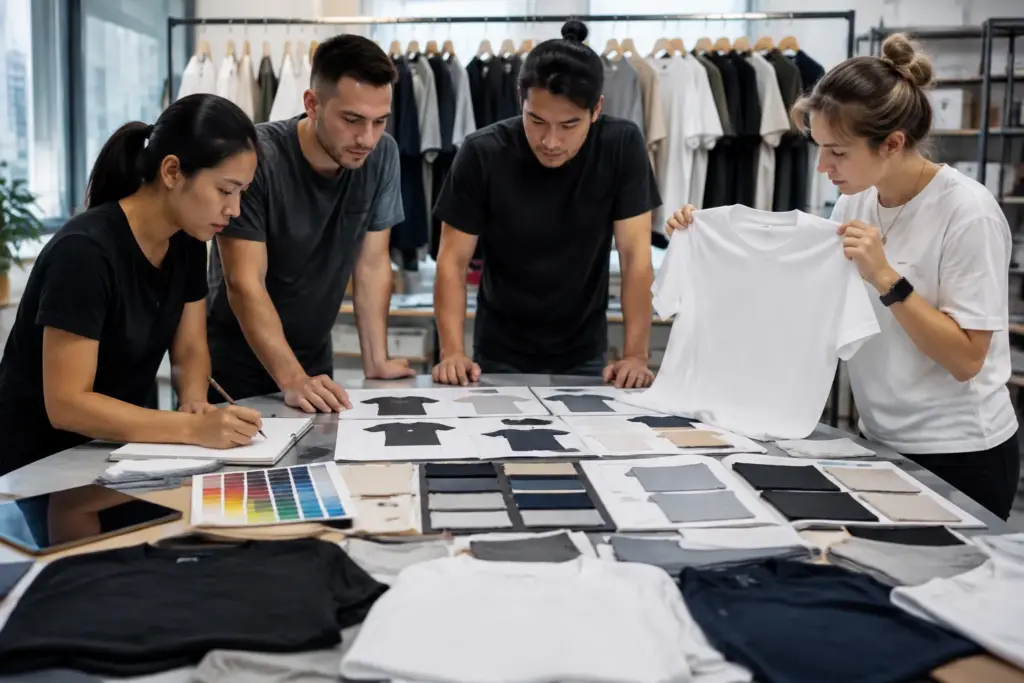
Pohled z továrny
Když se kupující zeptá, jak si vyrobit tričko na míru, obvykle vysvětlím, že výroba začíná před stříháním látky. Prvním krokem je plánování produktu.
Továrna musí rozumět:
- Styl trička a cílová skupina
- Složení a gramáž látky
- Předvolba přizpůsobení
- Požadavky na barvu
- Detaily potisku nebo výšivky
- Potřeby pro etikety a balení
- Objednané množství
Například značka streetwear může potřebovat nadměrné bavlněné tričko s pevným povrchem. Zákazník v supermarketu může potřebovat základní reklamní tričko s nižší cílovou cenou. Tyto dva produkty se liší výběrem látek, metodami zpracování a cenou.
Výběr látky je jedním z prvních důležitých rozhodnutí. Mezi běžné možnosti patří bavlna, polyester, směsi bavlny a recyklované látky. Gramáž látky, měkkost, kontrola srážlivosti a barevné vlastnosti ovlivňují konečný produkt.
U triček privátních značek by si kupující měli připravit také podrobnosti o brandingu, jako jsou štítky na krku, visačky, štítky s pokyny k údržbě a požadavky na balení.
Riziko kupujícího
Mnoho kupujících posílá pouze logo a žádá o cenu. To vytváří problémy, protože továrna nezná standard konečného produktu.
Viděl jsem kupující, kteří ztráceli čas, protože vysvětlovali pouze designovou myšlenku, ale neposkytovali podrobnosti o:
- Očekávaný pocit z látky
- Cílová prodejní cena
- Pozice na trhu
- Požadovaný termín dodání
Továrna může vyrobit vzorek, který vypadá přijatelně, ale neodpovídá očekávání kupujícího.
Praktická kontrola
| Co zkontrolovat | Proč na tom záleží | Co navrhuji |
|---|---|---|
| Referenční fotografie triček | Pomáhá vysvětlit stylistický směr | Zašlete nám podobné produkty, které se vám líbí |
| Požadavek na látku | Ovlivňuje cenu a kvalitu | Potvrďte složení a hmotnost |
| Soubor s grafikou | Ovlivňuje kvalitu tisku | Pokud je to možné, poskytněte přehledné vektorové soubory |
| Tabulka velikostí | Zabraňuje problémům s montáží | Před odběrem vzorku ověřte měření. |
| Cílový trh | Ovlivňuje výběr produktu | Sdělte továrně svou zákaznickou skupinu |
Ponořte se hlouběji
Navrhování trička na míru je rovnováhou mezi kreativitou a realitou výroby. Mnoho nových oděvních značek se zaměřuje nejprve na umělecké dílo, ale továrny se zaměřují na celou strukturu produktu.
Z mých zkušeností s výrobou vím, že dobrý design trička musí zohledňovat vlastnosti látky, způsob šití, omezení tisku a výrobní náklady. Například velký tištěný obrázek může vypadat atraktivně, ale způsob tisku může výrazně ovlivnit náklady. Sítotisk funguje dobře pro větší množství, zatímco digitální tisk může být vhodnější pro menší zakázky nebo složitější umělecká díla.
Stejný design může mít různé ceny v závislosti na výběru látky. Bavlněné tričko 100% s prémiovou úpravou bude stát více než základní tričko ze směsi bavlny a polyesteru. Kupující se musí rozhodnout, zda budou soutěžit cenou, kvalitou nebo designem.
Doporučuji si před kontaktováním továrny připravit jasné popisy produktu. Čím více informací kupující poskytne, tím snáze bude pro továrnu navrhnout správnou látku, výrobní metodu a cenovou hladinu. Seriózní dodavatel oděvů by měl tyto možnosti vysvětlit, a ne pouze uvádět nízkou cenu.
Jak oděvní továrna vyrábí trička na zakázku?
Mnoho kupujících rozumí fázi návrhu, ale neví, co se děje uvnitř továrny. Bez pochopení výroby je obtížné posoudit schopnosti dodavatelů a dodací sliby.
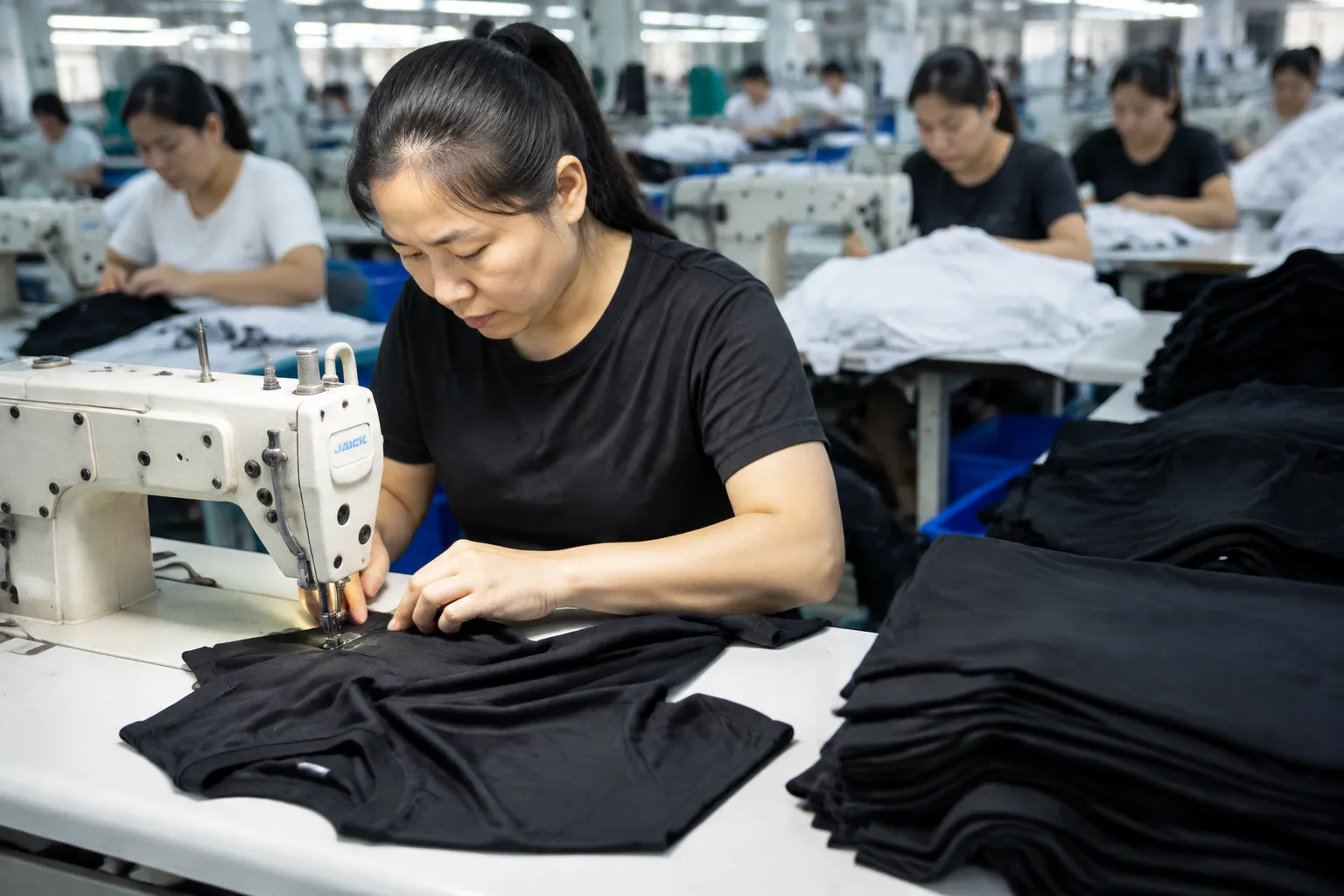
Oděvní továrna vyrábí trička na zakázku v několika krocích: získávání látek, výroba střihů, vývoj vzorků, stříhání, šití, potisk nebo vyšívání, kontrola kvality, balení a příprava k exportu.
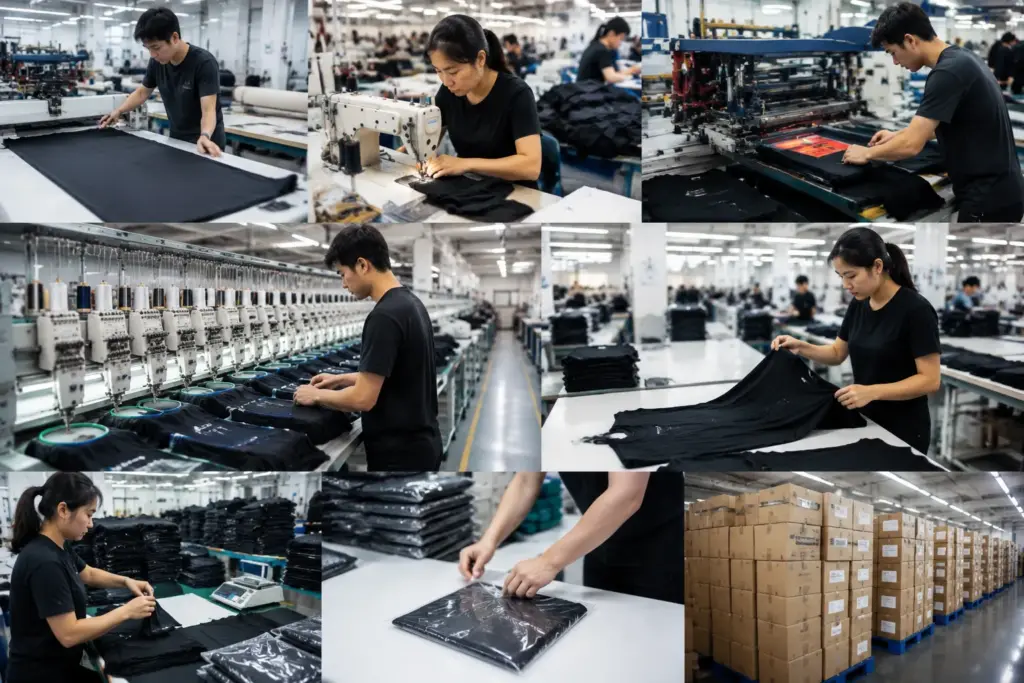
Pohled z továrny
Výroba zakázkových triček obvykle začíná po fázi schválení vzorku.
Tovární proces obvykle zahrnuje:
- Potvrzení látky
- Vývoj vzorů
- Výroba vzorků
- Schválení kupujícího
- Příprava objemové látky
- Řezání
- Šití
- Proces dekorace
- Kontrola kvality
- Balení a přeprava
Ve společnosti Truekung věnujeme pozornost komunikaci v každé fázi, protože i malé chyby se mohou při hromadné výrobě prodražit.
Například před řezáním sypkých látek by měla továrna potvrdit:
- Schválený vzorek
- Tabulka konečných velikostí
- Barevný standard
- Umístění štítku
- Tisková pozice
Vypadá to malé, ale může to ovlivnit doručení.
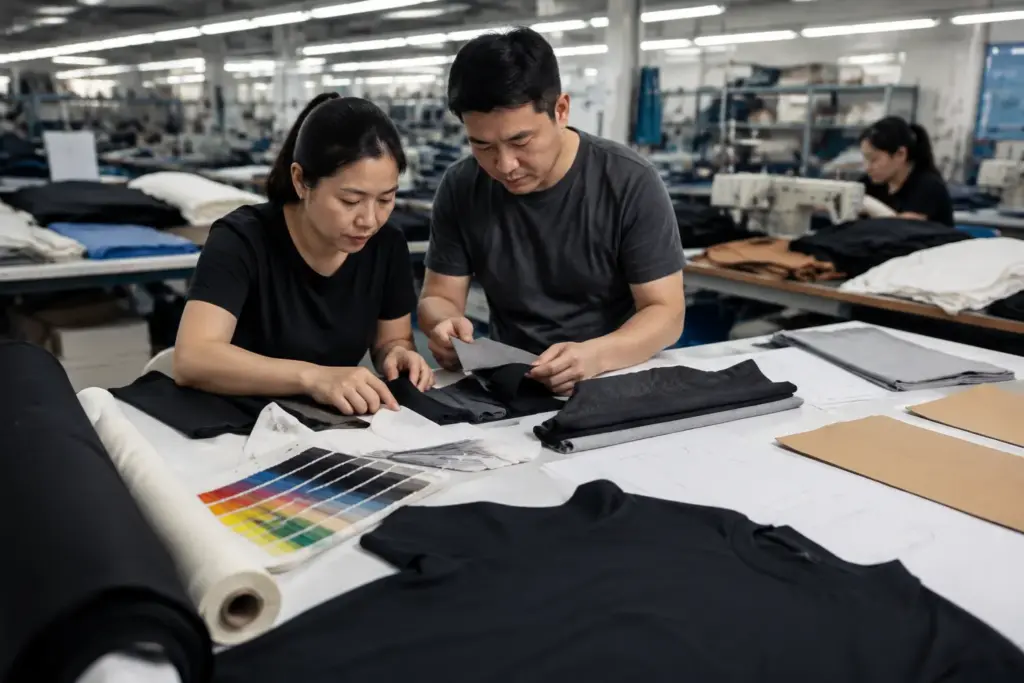
Pro zakázkovou výrobu oděvů je klíčovým krokem odběr vzorků. Vzorek umožňuje kupujícímu a továrně zkontrolovat střih, konstrukci, vzhled a zpracování před zahájením velké výroby.
Riziko kupujícího
Největším rizikem je výběr dodavatele, který slibuje rychlou výrobu, aniž by vysvětlil postup.
Někteří dodavatelé mohou vynechat podrobnou kontrolu vzorku nebo během hromadné výroby použít odlišné materiály. To může způsobit problémy s kvalitou.
Mezi běžné problémy patří:
- Odlišný pocit z látky než u vzorku
- Špatná pozice tisku
- Nerovnoměrné šití
- Nesprávná měření
- Barevné rozdíly
Nízká cenová nabídka není vždy výhodná, pokud kupující potřebuje strávit více času řešením problémů.
Praktická kontrola
| Co zkontrolovat | Proč na tom záleží | Co navrhuji |
|---|---|---|
| Proces schvalování vzorku | Potvrzuje výrobní standard | Před hromadnou objednávkou schválejte všechny podrobnosti |
| Časová osa výroby | Řídí riziko dodání | Požádejte o realistickou dodací lhůtu |
| Postup kontroly kvality | Chrání kvalitu produktu | Potvrďte kontrolní body |
| Rychlost komunikace | Snižuje počet chyb | Vyberte si responzivního dodavatele |
Ponořte se hlouběji
Rozdíl mezi obchodní společností a skutečnou továrnou se často projeví během komunikace o výrobě. Továrna chápe, jak látka, šití a konečná úprava ovlivňují konečný produkt.
Obvykle žádám kupující, aby si ověřili, jak dodavatel vysvětluje problémy s výrobou. Profesionální dodavatel by vám měl sdělit, proč k problému dochází a jak ho vyřeší.
Například pokud si kupující vyžádá velmi měkké nadměrné tričko za nízkou cenu, musí mu továrna vysvětlit kompromis. Těžší látka, speciální prací proces nebo prémiová bavlna mohou zvýšit náklady a zkrátit dobu výroby.
Dobré rozhodovací pravidlo je jednoduché: pokud dodavatel hovoří pouze o ceně, ale nedokáže vysvětlit podrobnosti o látce, vzorku, kontrole kvality a dodávce, měl by být kupující opatrný.
Výroba triček na zakázku není jen o výrobě produktu. Jde o vytvoření opakovatelného produktu, který lze znovu vyrobit se stabilní kvalitou.
Kolik stojí výroba triček na zakázku a výběr dodavatele?
Cena je jednou z prvních otázek, které si kupující kladou, ale nejlevnější dodavatel není vždy tou nejvhodnější volbou. Skutečná cena závisí na mnoha výrobních faktorech.
Cena za výrobu triček na míru závisí na látce, množství, složitosti designu, způsobu potisku, úrovni přizpůsobení, balení a požadavcích na dopravu.
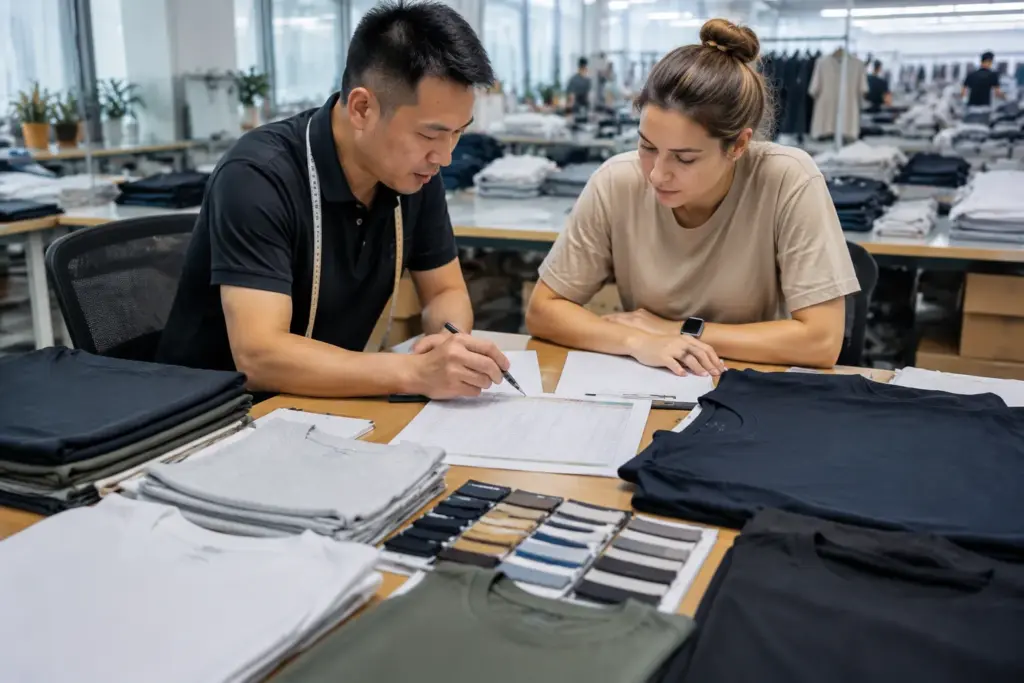
Pohled z továrny
Když si kupující vyžádají cenovou nabídku, dívám se na víc než jen na design trička.
Mezi důležité faktory nákladů patří:
- Typ látky
- Hmotnost látky
- Objednané množství
- Počet barev
- Způsob tisku
- Detaily šití
- Etikety a obaly
- Požadavky na kvalitu
Minimální objednávkové množství (MOQ) také ovlivňuje ceny. Větší objednávky obvykle umožňují továrnám lépe kontrolovat nákup materiálu a efektivitu výroby. Malé objednávky mohou mít vyšší jednotkové náklady, protože náklady na přípravu jsou rozloženy na menší počet kusů.
U triček s privátní značkou by kupující měli zvážit také náklady na vývoj, jako jsou vzorky, vlastní etikety a speciální balení.
Riziko kupujícího
Mnoho kupujících porovnává pouze jednotkovou cenu. To může později způsobit problémy.
Velmi nízká cena může znamenat:
- Nižší kvalita látky
- Omezené přizpůsobení
- Slabá kontrola kvality
- Delší doba korekce
- Špatná komunikace
Viděl jsem kupující, kteří si vybírali dodavatele pouze na základě ceny a později utratili více peněz, protože produkty nesplňovaly jejich očekávání na trhu.
Praktická kontrola
| Co zkontrolovat | Proč na tom záleží | Co navrhuji |
|---|---|---|
| Kompletní cenová nabídka | Vyhněte se skrytým nákladům | Požádejte o podrobnou cenu |
| Požadavek na minimální objednávku | Ovlivňuje investice | Přizpůsobení množství fázi podnikání |
| Vzorové náklady | Zobrazuje proces vývoje | Před zahájením ověřte |
| Přepravní podmínky | Ovlivňuje konečnou cenu | Proberte logistiku včas |
Ponořte se hlouběji
Výběr dodavatele triček na zakázku je obchodní rozhodnutí, nejen rozhodnutí o koupi. Kupující by měli zvážit, zda dodavatel dokáže zajistit budoucí růst.
Malá značka může začít s jedním stylem triček, ale později bude potřebovat více barev, nové designy, bundy, mikiny s kapucí nebo jiné kategorie oblečení. Továrna, která rozumí vývoji a výrobě, se může stát dlouhodobým partnerem.
Navrhuji porovnávat dodavatele na základě kvality komunikace, znalostí výroby a kontroly kvality, nejen ceny.
Seriózní dodavatel oblečení by měl vysvětlit důvod cenové nabídky. Pokud je cena vyšší, měl by dodavatel vysvětlit, zda je způsobena lepší látkou, pevnější konstrukcí, detailnější kontrolou kvality nebo větší mírou přizpůsobení.
Co byste si měli připravit, než kontaktujete čínskou oděvní továrnu?
Jasná poptávka pomáhá továrně poskytnout přesnější cenu, časový harmonogram a návrh výroby.
| Informace k přípravě | Příklad | Proč to továrna potřebuje |
|---|---|---|
| Kategorie produktu | Tričko na míru | Pochopte požadavky na produkci |
| Referenční fotografie nebo technický balíček | Podobné styly nebo kresby | Potvrdit směr návrhu |
| Tkanina | 100% bavlna, 240 g/m² | Vypočítat náklady na materiál |
| Rozsah velikostí | S-XXL | Příprava vzoru a klasifikace |
| Množství na styl/barvu | 500 ks na barvu | Odhad výrobního plánu |
| Cílový trh | USA, Evropa, Austrálie | Navrhněte vhodné standardy |
| Úroveň kvality | Základní nebo prémiové | Metoda výroby zápalek |
| Obal | Polyetylénový sáček, karton, visačky | Vypočítat konečnou cenu |
| Označování | Značkové štítky a štítky péče | Příprava přizpůsobení |
| Dodací lhůta | Požadované datum odeslání | Plánovací harmonogram výroby |
| Certifikáty | Požadované tržní dokumenty | Zkontrolujte proveditelnost |
| Cílová cena | Očekávané rozpětí nákladů | Navrhněte vhodné možnosti |
Jasná poptávka pomáhá továrně poskytnout přesnější cenu, časový harmonogram a návrh výroby.
Kdy byste měli požádat Truekung o cenovou nabídku?
Pokud již máte nápad na produkt, referenční vzorky, požadavky na značku nebo velkoobchodní plán, je vhodná doba kontaktovat Truekung.
Truekung podporuje kupující, kteří potřebují výrobu oděvů OEM/ODM, módní produkty privátních značek, stabilní exportní komunikaci a praktickou podporu továrny.
Můžete mě kontaktovat na adrese:
Závěr
Naučit se, jak si vyrobit tričko na míru, pomáhá kupujícím kontrolovat kvalitu, náklady a dodání. Díky jasné přípravě a komunikaci s výrobcem se váš nápad na tričko může stát spolehlivým produktem pro váš trh.
Zobrazení: 132