
Du har färdiga designer, men varje fabrik begär enorma volymer. Du känner dig fastlåst och riskerar att missa ditt startfönster. Jag har upplevt det här problemet.
En låg MOQ kläder tillverkare hittas vanligtvis genom att matcha din faktiska orderstorlek med rätt produktionsuppsättning och sedan bevisa att du har låg risk med tydliga teknikpaket, enkla tyger och snabba beslut. Du kan börja smått, testa efterfrågan och fortfarande få stabil kvalitet.
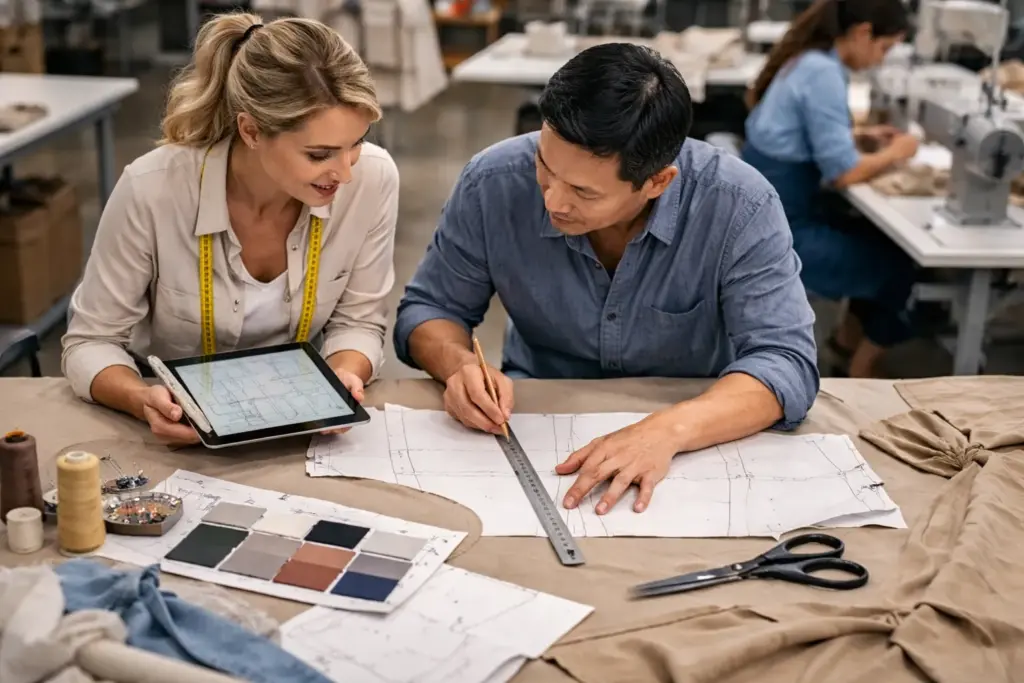
Om du bygger ett framväxande varumärke behöver du inte en "perfekt" fabrik först. Du behöver en fabrik som passar din nuvarande fas, och du behöver en process som gör att små beställningar känns trygga för dem, så att du kan växa steg för steg och fortsätta framåt.
Hur ser egentligen betydelsen av kläder med minsta orderkvantitet ut?
MOQ ser enkelt ut i en offert, men det slår dig i verkligheten. Du vill ha 80 stycken, och fabriken vill ha 800. Du förlorar tid och du förlorar pengar.
Minsta orderkvantitet för kläder är den minsta sats en fabrik accepterar för en specifik produkt, tyg, färg och storlek. Det är inte ett enda nummer. Det ändras baserat på vad som orsakar uppställningsarbete, vad som orsakar materialöverskott och vad som saktar ner produktionslinjen.
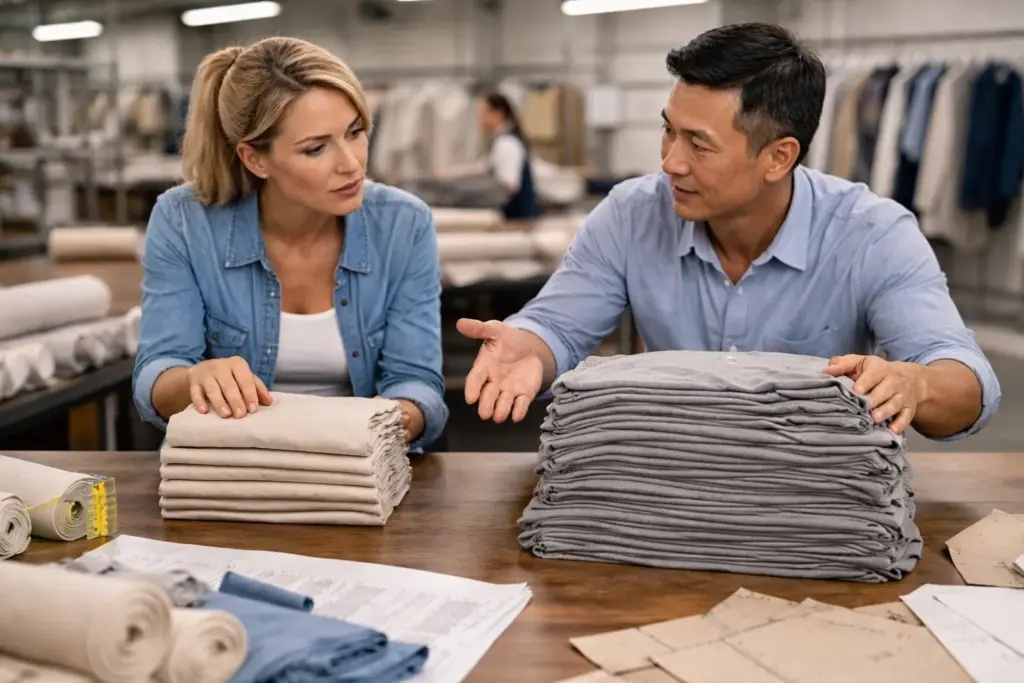
Varför MOQ ändras mer än du förväntar dig
När jag pratar med startups hör jag ofta: “De sa att MOQ är 100.” Sedan frågar jag: “Är det 100 totalt, eller 100 per färg, eller 100 per modell?” Många förstagångsköpare frågar inte den sista delen. En klädtillverkare med låg minsta orderkvantitet kan acceptera 100 totalt för en enkel t-shirt, men de kan kräva 300 per färg för en jacka om färgpartier och kanter blir riskabla.
Varifrån den "riktiga MOQ" kommer
En fabrik säljer inte bara sömnadstid. De hanterar även tygbeställning, skärmarkörer, provtagning, mönsterkontroller och linjebyten. Om din beställning är liten förblir det fasta arbetet detsamma, så enheten kosta går upp. Vissa fabriker skyddar sig genom att höja MOQ. Andra fabriker accepterar små beställningar på klädesplagg men tar ut uppläggningsavgifter.
| MOQ-förare | Vad det betyder för dig | Hur jag hanterar det |
|---|---|---|
| Minimikrav för tyg | Kvarnar kan kräva stora yardlängder | Använd originaltyg eller vanliga färger |
| Färgförändringar | Varje färg ökar risken och tiden | Börja med 1–2 färger, inte 6 |
| Trim sourcing | Dragkedjor, knappar, etiketter har minimikrav | Välj vanliga lister eller acceptera byten |
| Mönsterkomplexitet | Fler operationer gör linjen långsammare | Förenkla detaljer i första droppen |
| Storleksintervall | Många storlekar minskar skäreffektiviteten | Börja med en snäv storlekskurva |
En snabb regel jag använder med nya varumärken
Om du vill ha en liten kvantitet från en tillverkare av specialtillverkade kläder, fokusera på "färre variabler". Ett tyg, en tvätt, en tryckmetod och ett passformsblock kan sänka MOQ snabbare än någon förhandlingslinje. Det här är den del som de flesta hoppar över eftersom de bara pressar på priset.
Hur hittar jag en liten klädtillverkare för startups utan att bli upprörd?
Du kan hitta fabriker online på en dag. Du kan också förlora sex månader med fel fabrik. Det är den smärtsamma delen. Jag har sett det hända.
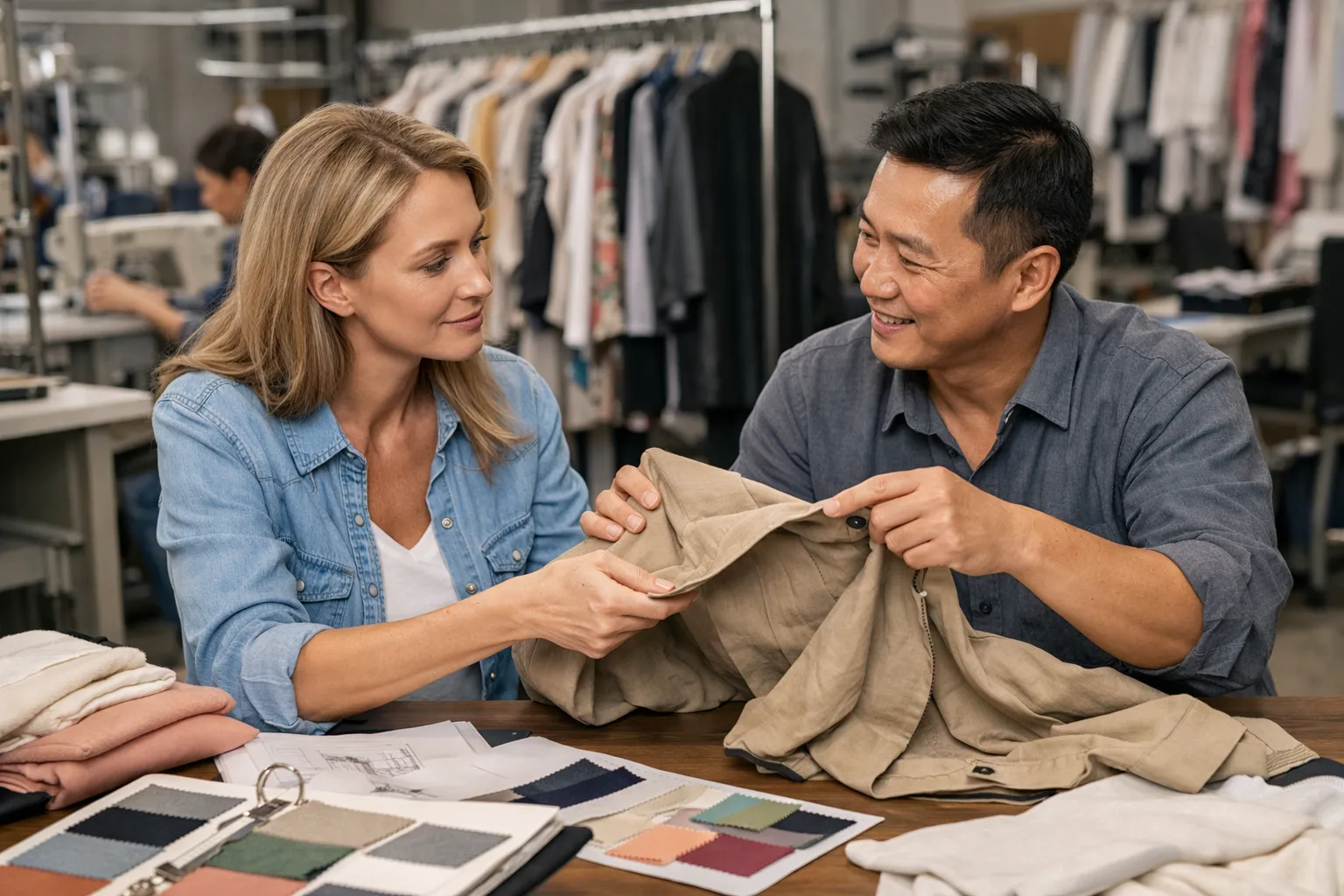
En klädtillverkare i liten sats för startups är vanligtvis en fabrik med flexibla linjer, stabila underleverantörspartners eller ett provtagningsteam som också producerar. Det säkraste tecknet är inte deras ord. Det är hur de kör kontroller, tidslinjer och kommunikation på små beställningar.
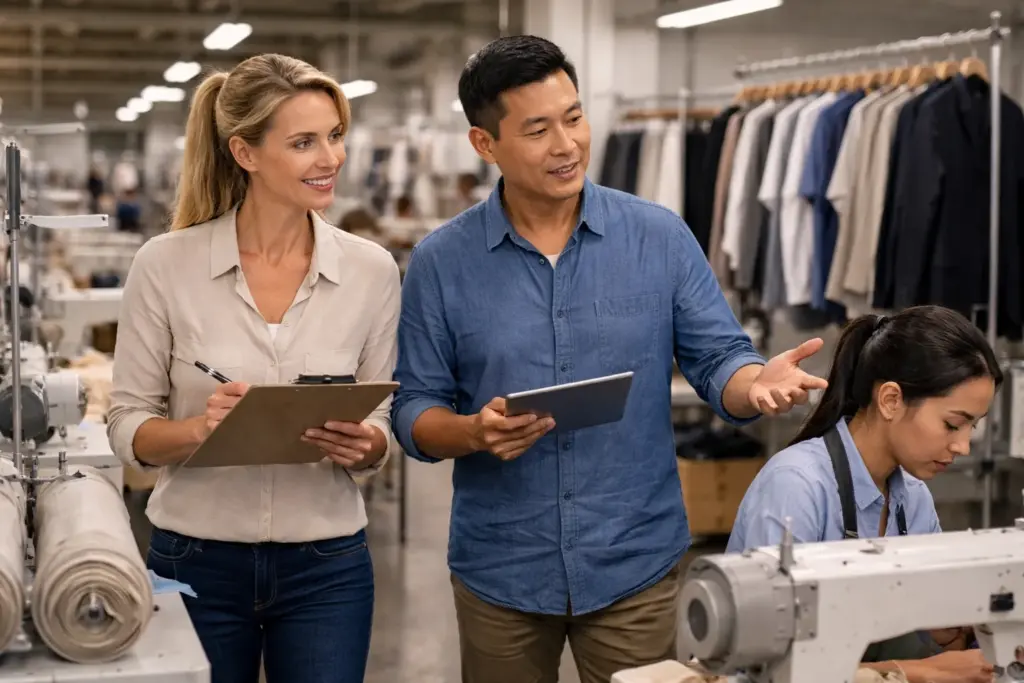
Det första filtret jag använder: bevis på process, inte bevis på varumärken
Vissa leverantörer visar stora varumärkeslogotyper, och de missar fortfarande deadlines. Jag föredrar att be om processbevis:
- Ett exempel på ett verkligt produktionsschema (med datum)
- Foton på inbyggd QC-checklista (inte bara slutinspektion)
- Exempel på förpackning och märkning
- Ett exempel på en riktig tyginspektionsrapport
Om de inte kan visa upp dessa, betraktar jag det som en risk. För en nystartad klädtillverkare med låg moq är processen produkten, eftersom små serier inte har utrymme för omarbetning.
Kommunikationstester som sparar mig veckor
Jag kör enkla tester innan jag betalar något:
- Svarar de på tekniska frågor, eller säger de bara “ja, inga problem”?
- Upprepar de mina specifikationer med sina egna ord?
- Berättar de för mig vad som saknas i mitt teknikpaket?
Om de inte protesterar blir jag orolig. Bra fabriker skyddar båda sidor. Jag minns fortfarande ett första samtal med en ny varumärkesägare som hela tiden sa: "Gör det bara som på bilden." Jag frågade efter mått, tygets GSM och sömtyp. Det ögonblicket visade mig hur projektet skulle gå. Tydliga specifikationer minskar misstag, så fabriker accepterar mindre beställningar med mindre rädsla.
USA vs utomlands: vad "klädtillverkare i USA med låg MOQ" ofta betyder
Många söker efter "låg moq klädtillverkare USA" eftersom de vill ha snabb leverans och enkla samtal. Det kan fungera bra, men kostnaden per styck är ofta högre och kapaciteten kan vara begränsad. Alternativ utomlands kan erbjuda fler materialval och bättre priser, men du måste hantera tidszoner, leverans och kvalitetskontroller.
| Alternativ | Bäst för | Huvudsaklig avvägning | Mitt praktiska tips |
|---|---|---|---|
| Klädtillverkare med låg MOQ i USA | Hastighet, lokal varumärkesbyggande, enklare besök | Högre enhetskostnad | Håll stilarna enkla och repeterbara |
| Utländsk fabrik med låg MOQ | Bättre pris, tygvariation, skalbar tillväxt | Längre ledtid | Bygg bufferttid och använd kontroller före leverans |
| Hybrid (prov lokalt, bulk utomlands) | Passformsnoggrannhet plus kostnadskontroll | Mer samordning | Lås mätningar före bulk |
Om du är liten är din största fara inte kostnaden. Det är förseningar. Att missa en säsong kan döda ditt kassaflöde snabbare än en högre enhetskostnad.
Hur kan jag minska MOQ i klädtillverkning och fortfarande skydda kvalitet och marginal?
Fabriker hatar inte låga MOQ-priser. De hatar överraskningar. Om man tar bort överraskningar kan man sänka MOQ-priserna utan att behöva tigga. Jag använder den här metoden hela tiden.
Du minskar MOQ (Mox Requirements Manufacturing) inom klädtillverkning genom att minska fabriksrisken och genom att göra beställningen enklare att hantera. Du gör det med standardmaterial, delade komponenter, smart provtagning och tydliga betalnings- och leveransvillkor.
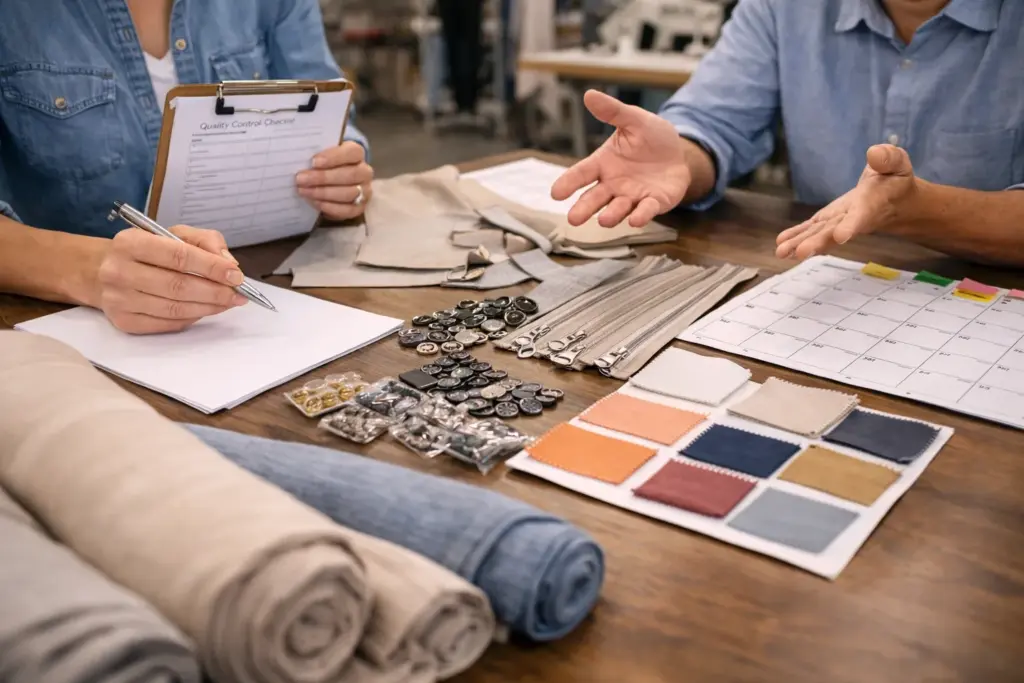
Hävstångspunkterna som faktiskt fungerar
Jag ser att köpare fokuserar på en spak: “Kan du göra 50 st?” Jag fokuserar på fem spakar som förändrar svaret:
| Spak | Vad du erbjuder | Vad fabriken kan minska |
|---|---|---|
| Lagermaterial | Använd egna tygalternativ | Tyg MOQ och ledtid |
| Delade trimningar | Samma dragkedja, samma knapp i alla stilar | Trimminimum och sourcingtid |
| Begränsade färgställningar | 1–2 färger i första omgången | Färgrisk och bytestid för tråd |
| Genomskinligt teknikpaket | Mått, konstruktion, toleranser | Omarbetningsrisk och provtagningsslingor |
| Uppläggningsavgift | Betala en liten avgift för att täcka fast arbete | MOQ-krav |
När en fabrik ser att du förstår deras kostnader, behandlar de dig som en seriös partner. Det är så affärer med kläder med låg MOQ för privata märken går till i verkligheten.
En strategi för små kvantiteter som jag rekommenderar för nya varumärken
Om du behöver en liten kvantitet av anpassade kläder från en tillverkare, gillar jag en tvåstegsbeställning:
1) En liten men strikt specifikationsbaserad “pilotomgång” (för foton, passform och tidig försäljning)
2) En "upprepad körning" som använder samma tyg och kanter (så att fabriken kan tillverka det i batcher)
Detta gör din andra beställning enklare och billigare. Det låter dig också samla in feedback snabbt. Jag hjälpte en gång ett nytt varumärke att först tillverka 120 stycken, sedan 480 stycken under samma säsong eftersom den första omgången bevisade storleksreglering och returfrekvens. Fabriken blev mer flexibel efter att de sett ett rent utförande.
Hur jag håller kvaliteten stabil när MOQ är låg
Små omgångar kan dölja defekter eftersom man inte har stora statistiska stickprov. Så jag skärper kontrollpunkterna:
- Godkännande av storleksuppsättning före bulk
- Förproduktionsprov med riktigt tyg och detaljer
- Inlinefoton vid viktiga funktioner (krage, dragkedja, fåll)
- Slutinspektion med AQL-liknande tänkande, även om det är informellt
För startups är kvalitet inte något "bra att ha". En enda dålig leverans kan översvämma din supportinkorg och det kan förstöra din nästa lansering. Jag skulle hellre skjuta upp en vecka än att leverera problem som följer dig i ett år.
Slutsats
Låg MOQ fungerar när jag matchar min beställning med rätt fabriksinställningar, minskar riskerna med tydliga specifikationer och växer genom upprepade körningar, inte engångskaos.
Varför jag skriver detta
Jag heter Lancy Chia och kommer från Truekung. Jag driver en klädfabrik i Kina med fler än 200 anställda. Jag fokuserar enbart på B2B-grossistförsäljning, plus OEM/ODM för varumärken och stormarknader över hela världen.
Jag producerar moderiktiga damkläder, jackor, kjolar, klänningar, jeans, t-shirts, sweatshirts, dunjackor, vindjackor, kappor, modeväskor, sportkläder, barnkläder och underkläder.
Om du vill diskutera produktionsplanering med låg MOQ, kvalitetskontroll, certifieringar, logistik och betalningsvillkor kan du nå mig på [email protected], och du kan också besöka https://truekung.com.
Visningar: 96