
Tot văd cumpărători care spun că totul este “închis cu fermoar” hanorac cu gluga,””, și apoi primesc mostre care se potrivesc perfect cu o haină sau se potrivesc perfect cu o cutie. Această greșeală consumă bani.
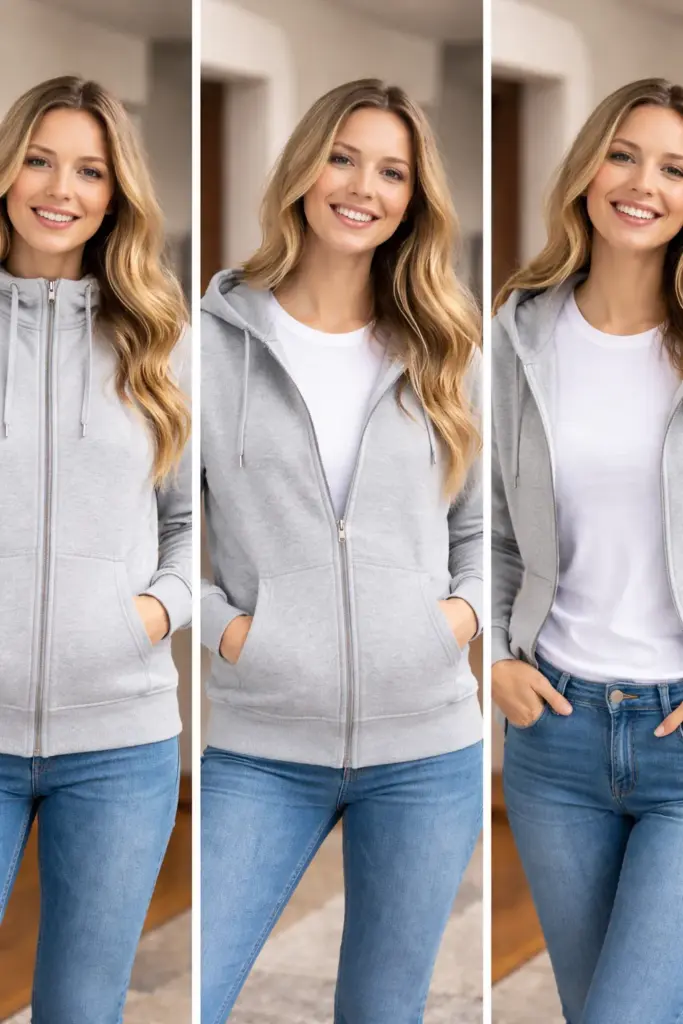
Definesc un hanorac cu fermoar ca fiind un hanorac cu glugă și o parte din față pe toată lungimea. fermoar care împarte partea din față în două panouri, așa că o pot purta închisă, pe jumătate deschisă sau deschisă ca un strat subțire.
Am învățat repede că “casual” nu este un cuvânt de stil. Îl tratez ca pe un sistem cu reguli, iar fermoarul se află în centrul sistemului. Vreau să vezi regulile în același mod, astfel încât să poți cumpăra și vinde cu mai puține presupuneri și să poți identifica problemele înainte de expediere.
Este un hanorac cu fermoar cu adevărat diferit de o jachetă cu fermoar?
Când aud “geacă cu fermoar”, primesc adesea o mostră cu material țesut și căptușeală și mi se pare rigidă. Pierd timpul corectând categoria.
Îi spun hanorac cu fermoar atunci când încep cu un corp de hanorac și glugă, și adaug un fermoar frontal complet care împarte partea din față în două. Când piesa se comportă ca un tricotaj casual, nu o numesc jachetă.
Linia de categorie pe care o folosesc
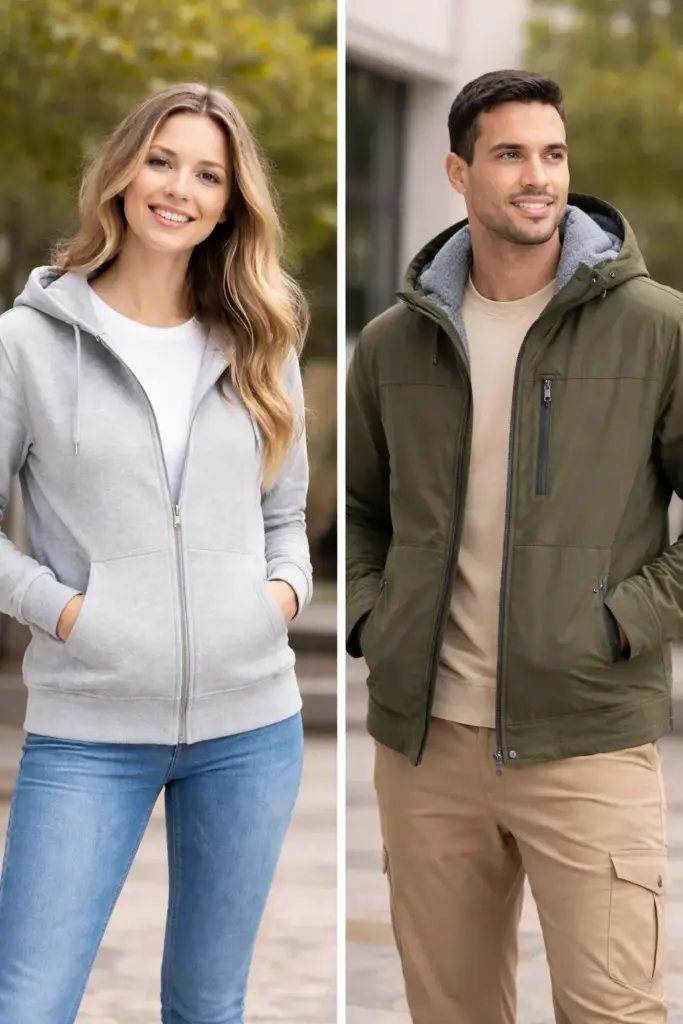
Folosesc o singură idee simplă: tratez un hanorac cu fermoar ca pe un hanorac în primul rând, iar fermoarul ca pe elementul care schimbă modul în care îl port. Așa că mă aștept în continuare la senzația moale a tricotului, la manșetele cu nervuri și la aspectul relaxat al hanoracului. Fermoarul adaugă control, așa că pot să-l aerisesc, să-l îmbrac în straturi și să-l scot fără să-l trag peste cap. Pare puțin, dar schimbă mult utilizarea zilnică.
De asemenea, văd multe denumiri pentru același lucru. Unii cumpărători scriu “hanorac cu fermoar”. Alții scriu “hanorac cu fermoar” sau “hanorac cu fermoar”. Unii scriu chiar “hanorac cu fermoar”. Nu mă cert cu privire la denumire. Întreb despre structură și material. Dacă partea din față se deschide complet de la tiv la gât, o tratez ca pe o hanorac cu fermoar. Dacă fermoarul se oprește la piept, o tratez ca pe un produs diferit.
Când Maria, o cumpărătoare din Rusia, mi-a cerut un pachet “hanorac cu fermoar pentru bărbați”, nu am început cu culorile. Am început cu o întrebare: “Vrei senzația de hanorac sau de jachetă?” Ea a spus că își dorește senzația de hanorac, dar că își dorește o față mai curată, ca a hainelor de exterior. Răspunsul mi-a spus să rămân la materialele hanoracelor, dar să strâng modelul și finisajul fermoarului.
| Ce văd în interogări | Ce cred că ar trebui să însemne | Ceea ce cer pentru confirmare |
|---|---|---|
| Văd “hanorac cu fermoar” sau “hanorace cu fermoar” | Mă aștept la un body cu hanorac și fermoar complet. | Cer tipul de tricotaj, grosimea și lungimea fermoarului. |
| Văd “jachetă cu fermoar” | Mă aștept la o gamă mai largă, așa că verific dacă este țesut | Întreb dacă vor căptușeală, material exterior sau tricotaj de bluză. |
| Văd “hanorac cu fermoar” | Aștept material de hanorac cu fermoar frontal | Întreb dacă mai vor glugă și buzunar tip cangur. |
| Văd “hanorac bărbătesc cu fermoar complet” | Mă aștept la gradarea bărbaților și la ajustări mai grele. | Cer informații despre mărimea pieptului, lungimea mânecii și intervalul de mărimi țintă. |
| Văd “hanorac negru cu fermoar complet” | Mă aștept la o vopsea curată, o contracție stabilă și fermoare netede. | Cer informații despre testul de spălare și cerințele privind rezistența culorii. |
| Văd “pulover cu gemenii mn” | Mă aștept la o tragere la sorți și la posibile limite de licențiere. | Întreb dacă dețin drepturile și dacă vor un pulover, nu un fermoar. |
De ce contează sistemul de fermoare mai mult decât sigla?
Pot ierta un logo simplu, dar nu pot ierta un fermoar care se ondulează, se lipește sau se rupe. Un fermoar defect strică tot hanoracul.
Judec o bluză cu fermoar după cum se mișcă și se așază fermoarul: trebuie să alunece ușor, să stea plat și să mențină partea din față stabilă. Dacă nu o pot deschide și închide rapid cu o singură mână, nu o aprob.
Anatomia fermoarului pe care o verific
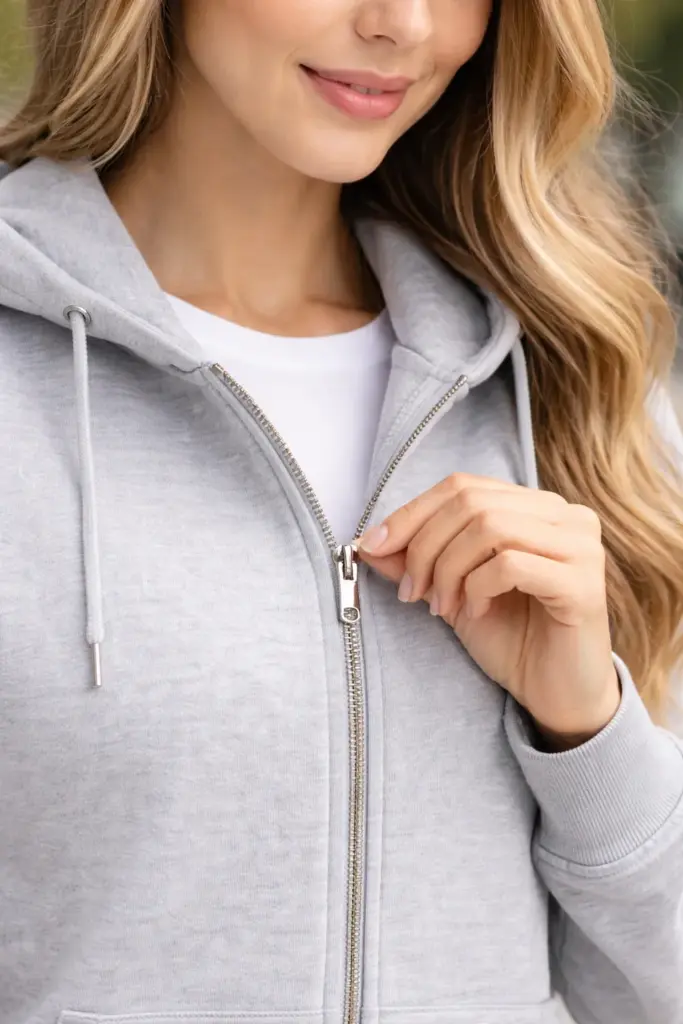
Despart fermoarul în bucăți pentru că fiecare piesă se defectează diferit. Mă uit mai întâi la tipul dinților, la bandă și la cursor. Dacă cursorul se simte slăbit, poate clănțăni și poate roade dinții. Dacă banda se simte subțire, se poate întinde și poate face ca partea din față să se onduleze. Dacă opritorul inferior se simte slab, poate să se spargă după câteva trageri puternice. Nu am nevoie de un fermoar de lux pentru fiecare... preţ nivel, dar am nevoie de unul stabil pentru fiecare nivel.
Cusutul și finisajele pe care le urmăresc
Mă uit mai mult la coaserea fermoarului decât la coaserea glugii. Un hanorac poate supraviețui unei glugi ușor deformate, dar nu poate supraviețui unui fermoar care se ondulează pe centru. Observ cum fabrica stabilizează deschiderea frontală și cum se echilibrează cusătura superioară. Dacă operatorul trage mai mult de o parte, haina se răsucește. Dacă rezerva de cusătură se schimbă de-a lungul liniei, linia fermoarului arată ca o undă.
Îmi amintesc de o serie de produse în vrac în care mostra arăta perfect, dar piesele de producție prezentau o curbă ușoară în formă de “S” la fermoar. Fabrica nu a modificat fermoarul. Au modificat viteza de coasere și au sărit peste un mic pas legat de banda de stabilizare. Această mică scurtătură a creat un risc mare de returnare a produselor. De atunci, scriu pașii de coasere a fermoarului în fișa de producție și solicit o verificare în linie axată doar pe planeitatea fermoarului.
| Ce nu merge bine la uzura naturală | Ce verific pe eșantion | Ceea ce cer fabricii să ajusteze |
|---|---|---|
| Simt că mă blochez când închid fermoarul | Testez tensiunea cursorului și netezimea benzii | Schimb specificațiile cursorului sau finisajul benzii |
| Văd o undă a fermoarului pe față | Îl așez plat și măsor panoul stâng față de cel drept. | Adaug bandă stabilizatoare și fixez tensiunea de cusut |
| Văd încrețituri aproape de vârf | Verific curba decolteului și poziția opritorului superior | Reglez crestătura modelului și adâncimea fermoarului |
| Văd separarea dinților | Verific tipul dinților și distanța cusăturii față de dinți | Îmi schimb fermoarul sau mut ușor linia cusăturii |
| Simt muchii ascuțite ale tractorului | Verific forma și placarea tractorului | Schimb extractorul și testez confortul la bărbie |
Cum definesc greutatea și croiala materialului un hanorac modern cu fermoar?
Deseori văd cumpărători care comandă “hanorace cu fermoar” fără a specifica greutatea sau mărimea. Apoi, grosimea pare prea caldă, prea subțire sau prea scurtă.
Definesc un hanorac modern cu fermoar prin două cifre: greutatea materialului și măsurătorile finite. Atunci când adaptez greutatea la climă și potrivirea pentru clientul țintă, hanoracul se vinde iar și iar.
Alegerile de materiale pe care le folosesc cel mai mult
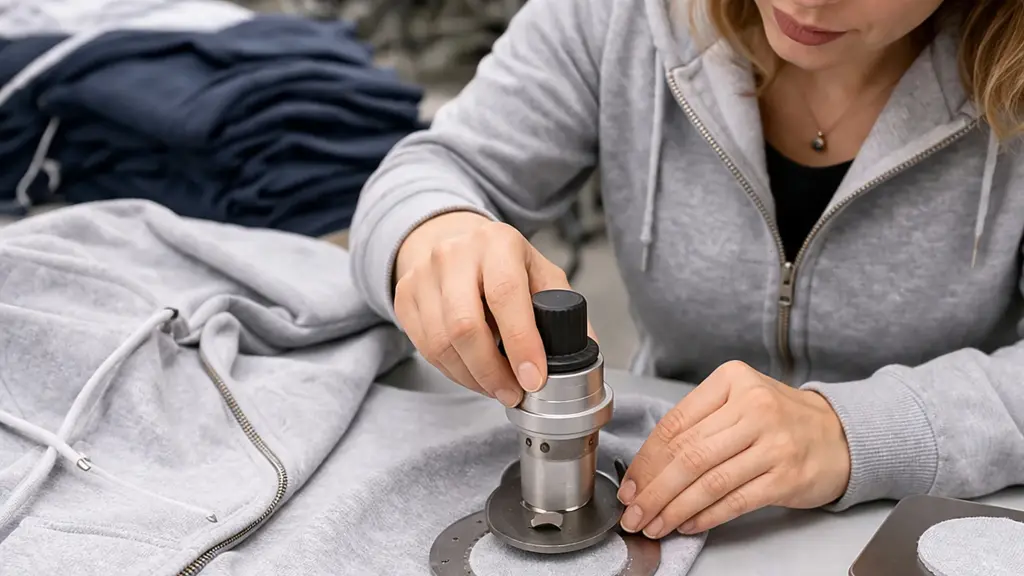
Lucrez în China cu o echipă din fabrică, așa că am la dispoziție multe opțiuni de materiale și le tratez ca pe niște unelte. Pentru un hanorac clasic cu fermoar, folosesc adesea un tricotaj din fleece când vreau căldură și moliciune. Folosesc un țesut terry când vreau un interior mai curat și o senzație mai ușoară. De asemenea, sunt atentă la amestecul de fibre, deoarece afectează contracția și menținerea formei. Dacă prefer un conținut ridicat de bumbac, planific controlul contracției și testez spălarea. Dacă adaug mai mult poliester, planific o recuperare mai bună și o uscare mai rapidă, dar sunt atentă și la formarea scămoșurilor.
Deciziile potrivite care modelează “modernul”
Nu cred că “modern” înseamnă implicit supradimensionat. Cred că “modern” înseamnă intenționat. Fixez căderea umerilor, confortul pieptului și lungimea corpului dintr-un motiv clar. Când creez haine pentru bărbați, tratez “hanoracul cu fermoar pentru bărbați” ca pe o promisiune de potrivire, nu ca pe o etichetă. Verific lățimea bicepșilor pentru confort și verific tensiunea nervurilor de la tiv, astfel încât să stea bine atunci când fermoarul rămâne deschis.
De asemenea, tratez culoarea ca pe o alegere tehnică. Un hanorac negru cu fermoar complet arată simplu, dar vopseaua neagră poate evidenția rapid problemele. Verific consistența nuanței și dacă potrivirea culorii benzii fermoarului se menține după spălare. Dacă banda se estompează mai repede, linia centrală pare ieftină, chiar dacă materialul hainei rămâne bogat.
| Ce decid eu | Ce am stabilit în cifre | Ce se schimbă în purtarea zilnică |
|---|---|---|
| Aleg o greutate mai mică | Țintesc în jur de 240–300 gsm pentru multe climate | Îmi este mai ușor să aplice straturi și obțin mai puțin volum sub haine. |
| Aleg greutatea medie | Țintesc în jur de 300–360 g/m² pentru utilizare generală. | Îmi iau o bluză cu fermoar echilibrată pentru naveta zilnică și pentru casă. |
| Aleg greutatea mare | Țintesc în jur de 360–450 g/m² pentru focalizare la rece. | Am o senzație mai asemănătoare cu o jachetă, fără a o numi jachetă cu fermoar. |
| Aleg o croială normală | Mențin o ușurință controlată a pieptului și o lungime constantă | Purt mai des și returnez mai puține produse. |
| Aleg o croială lejeră | Adaug mai multă ușurință și un corp puțin mai lung | Obțin volumul stilului stradal, dar urmăresc riscul de ondulare a fermoarului |
| Aleg scurt sau scurt | Scurtez corpul și păstrez mâneca proporțională | Înțeleg forma tendinței, dar planific cu atenție feedback-ul privind mărimea. |
Ce ar trebui să verifice cumpărătorii en-gros înainte de a comanda hanorace cu fermoar?
Am văzut livrări întârziate și acte false care au afectat mărcile bune. Îi protejez pe cumpărători transformând “hanoracul simplu” într-o listă de verificare clară.
Îmi procur hanorace cu fermoar verificând specificațiile, testând fermoarul și procesul de fabricație înainte de a vorbi despre preț. Când fac asta, evit surprizele care strică sezonul.
Fluxul pe care îl urmez de la idee la volum
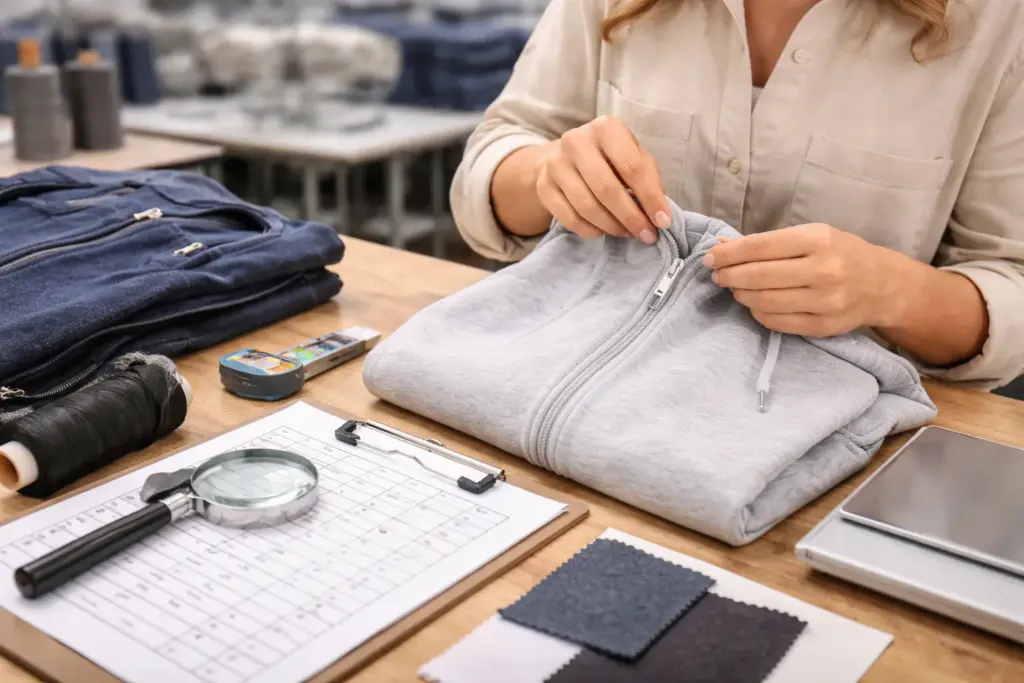
Încep cu un pachet tehnic transparent, chiar și atunci când stilul pare simplu. Listez materialul, greutatea, limita de contracție, specificațiile fermoarului, forma buzunarului, adâncimea glugii și dimensiunea nervurilor. Apoi cer o mostră și o tratez ca pe un instrument de testare, nu ca pe o recuzită foto. Îl spăl, îl închid rapid cu fermoar și îl agăț ca să văd dacă se răsucește partea din față. Dacă observ o problemă, nu accept că “este normal”. Prestez o corecție înainte de a seta mărimea.
După aceea, urmăresc etapele de pre-producție. Solicit o verificare a lotului fermoarului și o verificare a măsurătorilor. De asemenea, cer fabricii să blocheze metoda liniei de cusut, deoarece linia fermoarului este sensibilă la obiceiurile operatorului. Aici protejez cea mai mare problemă a Mariei: livrarea întârziată care duce la pierderea unui sezon. Reduc relucrarea prin rezolvarea problemelor din timp.
Verificările QC și de încredere pe care nu le sar niciodată peste
Întotdeauna tratez documentele ca pe ceva ce verific. Am văzut furnizori care falsifică certificate, iar asta poate afecta grav un brand. Așa că cer rapoarte de testare de la laboratoare cunoscute atunci când piața are nevoie de ele și verific dacă detaliile raportului corespund cu materialul vrac. De asemenea, stabilesc un standard clar de control al calității pentru cusături, măsurători și funcția fermoarului și solicit fotografii de inspecție finală și date cheie.
| Ce verific înainte de a plăti soldul | Ce cer să văd | Ceea ce protejez făcând asta |
|---|---|---|
| Confirm că materialul vrac corespunde mostrei | Verific mostrele în vrac, greutatea și senzația la atingere | Evit deviația culorii și contracția neașteptată |
| Confirm calitatea lotului de fermoare | Testez piese aleatorii pentru o închidere lină cu fermoar și o așezare plată. | Evit retururile și reclamațiile privind fermoarele rupte |
| Confirm măsurătorile pe mărimea setată | Compar cu fișa tehnică cu toleranță | Evit disputele legate de croiala “hanorace bărbătești cu fermoar complet” |
| Confirm etichetarea și ambalajul | Verific eticheta principală, eticheta de îngrijire și regulile pentru pungile de polietilenă | Evit întârzierile vamale și problemele de conformitate cu reglementările din domeniul comerțului cu amănuntul |
| Confirm calendarul de producție | Urmăresc croiul, cusutul, finisarea și datele de livrare | Evit să ratez vânzarea de ferestre |
Realitatea confuză a cuvintelor cheie pe care o văd în solicitările reale
De asemenea, observ un detaliu amuzant în aprovizionarea reală: cumpărătorii și clienții finali tastează multe greșeli de ortografie, iar echipa din fabrică se poate confunda dacă solicitarea nu este clară. Așa că traduc limbajul în specificații. Nu las o greșeală de scriere să schimbe produsul.
| Ceea ce văd scris | Ca pe ce o tratez | Ce scriu în specificații |
|---|---|---|
| Văd “hanorac cu fermoar” sau “hanorac cu fermoar pentru bărbați” | Îl tratez ca pe un hanorac cu fermoar | Blocez fermoarul pe toată lungimea și clasificarea pentru bărbați |
| Văd “haine cu fermoar” sau “haine cu fermoar” | Îl tratez ca pe niște hanorace cu fermoar | Încui corpul hanoracului, forma glugii și buzunarele |
| Văd “hanorac cu fermoar” sau “hanorac cu fermoar” | Îl tratez ca pe un hanorac cu fermoar | Blocez materialul tricotat și garniturile hanoracului, nu căptușeala jachetei |
| Văd “hanorac cu fermoar uo” | Îl tratez ca pe un hanorac cu fermoar | Confirm specificațiile fermoarului și divizarea panoului |
| Văd “hanorac cu fermoar” | Îl tratez ca pe o bluză cu fermoar | Adaug teste de funcționare a fermoarului la QC |
| Văd “pulover cu gemenii mn” | O tratez ca pe o cerere de pulover. | Cer dovada licenței și confirm că nu este un fermoar. |
Concluzie
Un hanorac cu fermoar este un strat care îmbracă primul strat în hanorac, definit de un fermoar frontal complet. Când controlez fermoarul, materialul și croiala, obțin confort în mod repetat și reduc riscul de îmbrăcăminte.
De ce scriu asta
Sunt Lancy Chia din Truekung, China. Conduc producție exclusiv en-gros cu o echipă din fabrică formată din peste 200 de lucrători. Creez haine la modă și programe OEM/ODM pentru branduri și supermarketuri din întreaga lume și tratez hanoracele ca pe un sistem, nu ca pe o presupunere.
- Marcă: Truekung
- Model de afaceri: B2B numai en-gros
- Ce produc: modă pentru femei, jachete, fuste, rochii, blugi, tricouri, hanorace, hanorace cu fermoar, paltoane, genți, îmbrăcăminte sport, îmbrăcăminte pentru copii, lenjerie intimă
- E-mail: [email protected]
- Site web: https://truekung.com
Vizualizări: 71