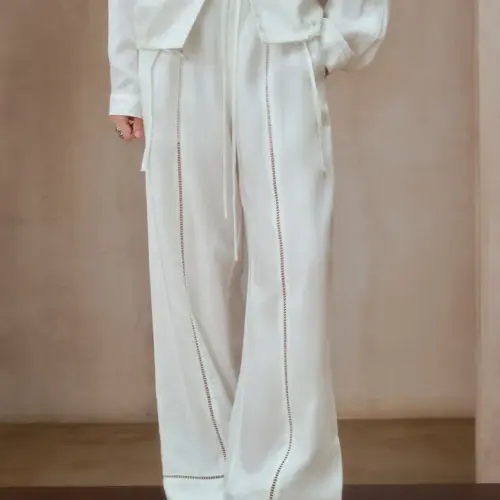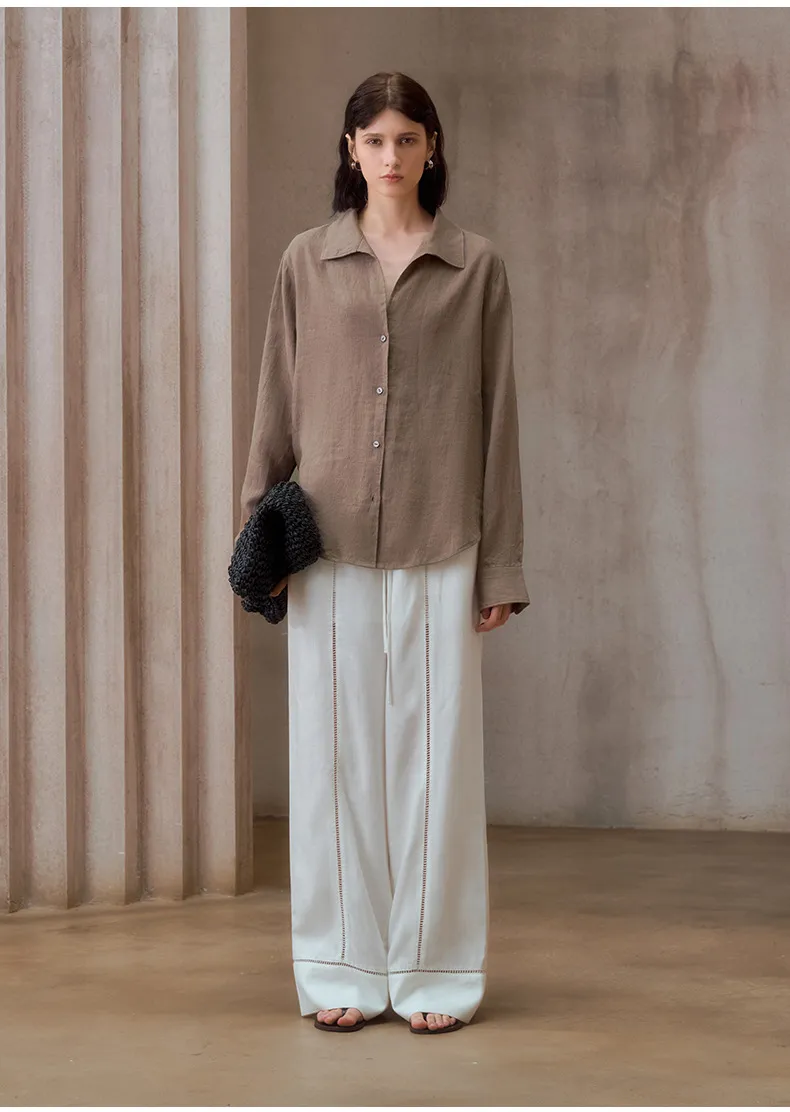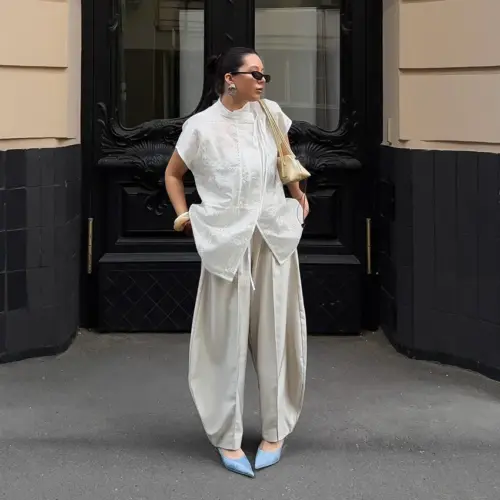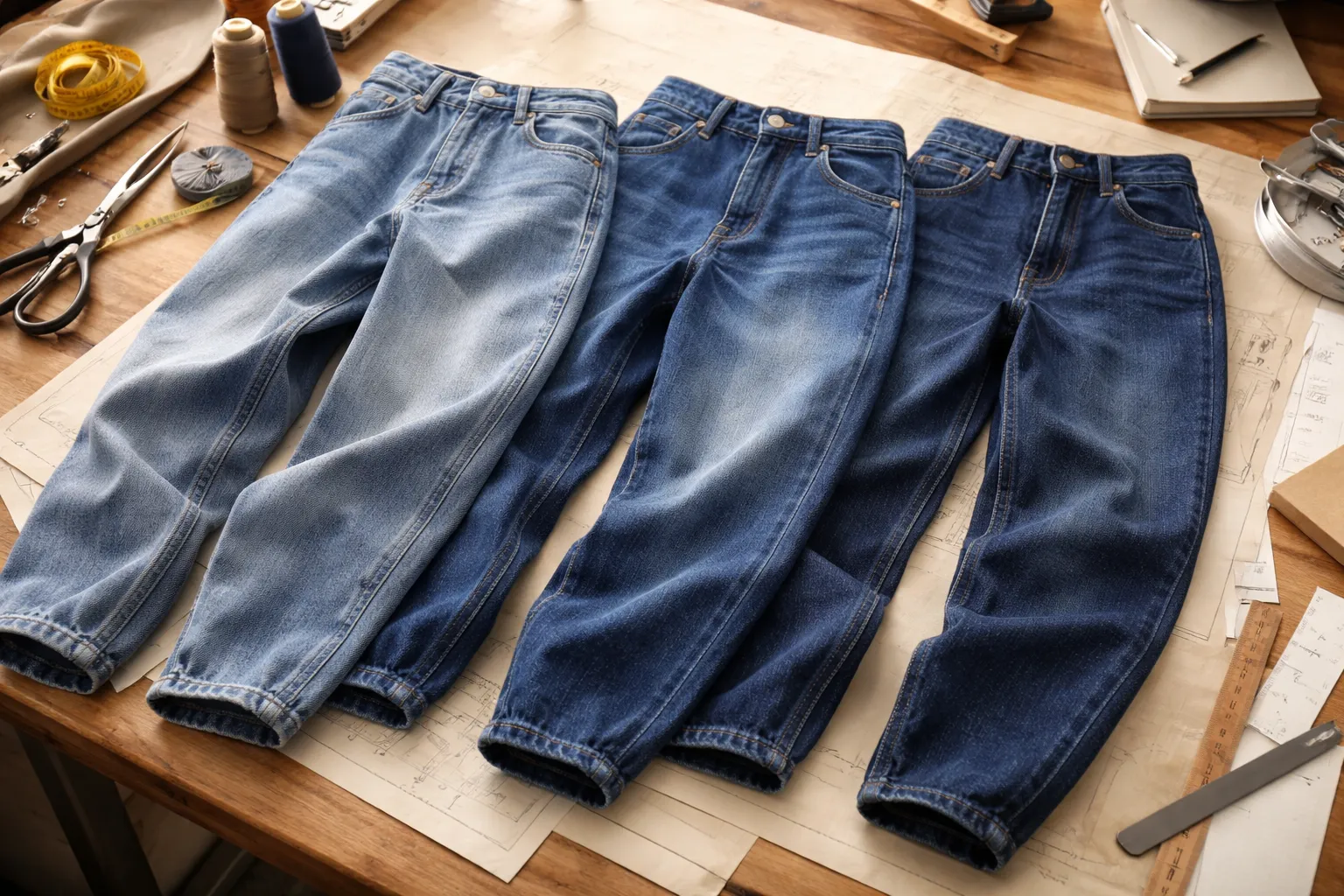

Би нэг удаа "төгс"-ийг туршиж үзсэн“ торх-хөлтэй жинсэн өмд гэтэл муруй хоолой шиг харагдаж байсан. Худалдан авагчид энэ санаа таалагдсан ч тааруухан байсан тул угаалга нь улам дордуулсан.
Торхны хөл жинсэн өмд гурван зүйл тохирч байх үед ажиллана: загвар’'s муруй хэмжээ, биеийн хөдөлгөөнийг дагадаг хөлний хяналттай эргэлт, мөн хэлбэрийг нураадаггүй эсвэл хэт их эргүүлдэггүй угаах төлөвлөгөө.
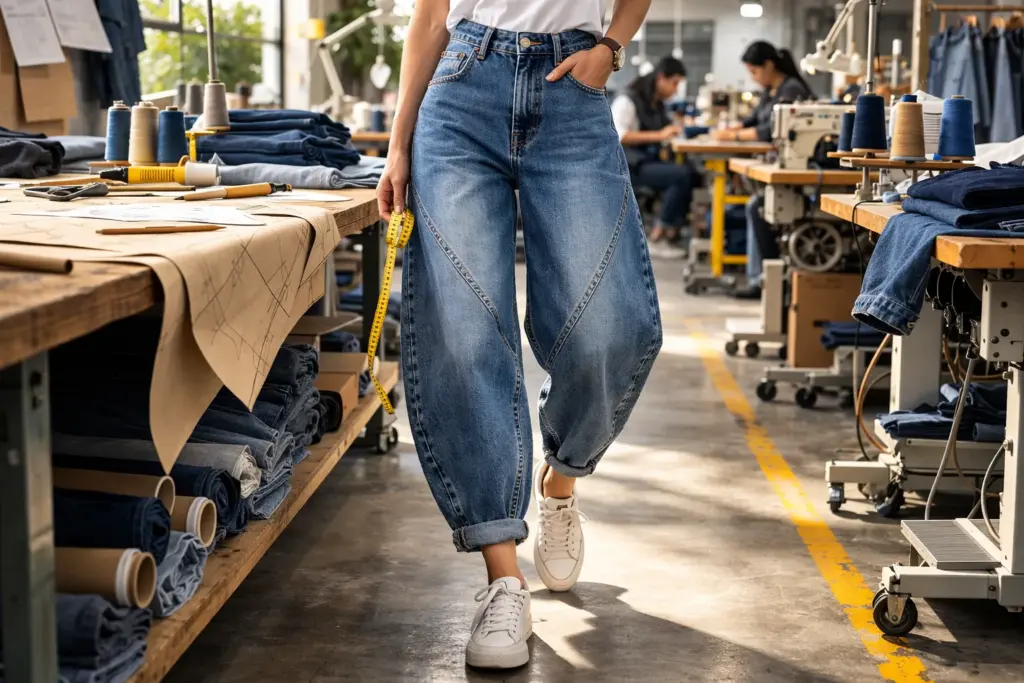
Энэ загвар нь ганц заль мэх биш гэдгийг би ойлгосон. Энэ бол систем юм. Хэрэв би муруйг өөрчилбөл мушгиралтыг шалгах ёстой. Хэрэв би угаалгыг өөрчилбөл муруйг хамгаалах ёстой. Хэрэв би нэг хэсгийг нь буруу хийвэл жинсэн өмд бүхэлдээ хурдан "хямд" харагддаг тул би одоо алхам алхмаар юуг шалгаж, бөөнөөр нь хийхээсээ өмнө юуг туршиж байгаагаа танд тайлбарлахыг хүсч байна.
Хөлөө хавдсан харагдуулахгүйгээр торхны муруйг хэрхэн барих вэ?
Торхны хэлбэр нь орчин үеийн эсвэл алдаа мэт харагдаж болно. Би хоёуланг нь харсан бөгөөд ихэвчлэн хээ нь шалтгаан болдог.
Би хажуугийн болон дотуур оёдол дээр хяналттай бүсэд эзэлхүүн нэмж, дараа нь өвдөгний байрлал, хормойны өргөн, тэнцвэртэй гадна талын оёдлын муруйгаар тэр эзэлхүүнийг "удирдаж", хөл нь дугуй хэлбэртэй боловч цэвэрхэн харагддаг.

Муруй хаана амьдрах ёстой вэ
Би энэ хэв маягийг зурахдаа хөлийг бүхэлд нь томруулахыг хичээдэггүй. Би бүс сонгодог. Ихэнх тохиолдолд энэ бүс нь гуяны дунд хэсгээс өвдөгний доор хүртэл байрладаг. Хэрэв би хэмжээг хэт өндөр болговол ташаа өргөн харагддаг. Хэрэв би хэт доош болговол шилбэний булчин хүнд харагддаг. Тиймээс би загвар дээр гурван цэгийг тэмдэглэдэг: өндөр гуя, өвдөг, шилбэний дунд хэсэг. Дараа нь би эдгээр цэгүүдийн эргэн тойрон дахь өргөнийг нэмж, хасдаг.
Миний ашигладаг үндсэн загварын хөшүүргүүд
Би хөшүүрэг бүрийг товчлуур шиг харьцдаг. Би нэг товчлуурыг эргүүлээд хэлбэрийг нь дахин шалгадаг.
| Хээ хөшүүрэг | Би юуг өөрчилдөг вэ | Энэ нь харааны хувьд юу хийдэг вэ | Нийтлэг эрсдэл |
|---|---|---|---|
| Гадна талын муруй | Гуяны хэсэг илүү муруй, хормой хэсэг бага | Хажуу талаас нь "дугуй" үүсгэдэг | Угаалгын дараах хажуугийн оёдлын долгион |
| Дотор оёдлын муруй | Өвдөгний эргэн тойронд бага зэрэг бөхийх | Зөвхөн гадна талд төдийгүй дууны түвшинг төвлөрүүлдэг | Хэрэв үр тариа буруу байвал оёдлын дотор талын эргүүлэх хүч |
| Өвдөгний цэгийн байрлал | Өвдөгний үзүүрийг бага зэрэг урагшлуул | Урд талыг илүү цэвэрхэн харагдуулна | Арын хөл хавтгай харагдаж болно |
| Хөхний өргөн | Хормойг дээд гуянаас нарийхан байлга | Торхны конусыг жинхэнэ мэт мэдрүүлдэг | Хэт нарийхан лууван таарч байгаа юм шиг санагдаж байна |
| Арын өргөлт ба суудал | Эзлэхүүн биш, харин тав тухыг нэмээрэй | Сүйрсэн хэлбэрийг татахаа болино | Хэтрүүлбэл суудал дүүжин |
Миний биеийн галбир шалгах журам
Би эхний дээжинд үргэлж хурдан "зогсож, суух" туршилт хийдэг. Би өвдгийг ажигладаг. Хэрэв өвдөг нугалаастай бол муруйг дэмжихгүй. Дараа нь би хажуугийн оёдлын шугамыг ташаанаас хормой хүртэл ажигладаг. Хэрэв энэ нь могой бол гадна талын оёдлын муруй хэтэрхий түрэмгий эсвэл даавуу Хээнд хэтэрхий зөөлөн байна. Үүний дараа би цаг хэмнэх нэг зүйлийг хийдэг: би захыг нь зүүгээр зүүгээд, тал бүрээс нь 1-2 см өргөн эсвэл нарийсгаж нээнэ. Энэ нь торхны мэдрэмж нь ухаалаг нарийссанаас үү эсвэл зүгээр л нэмэлт өргөнөөс үү гэдгийг харуулж байна.
Миний баримталдаг энгийн дүрэм
Хэрэв жинсэн өмд зөвхөн хажуу талаасаа дугуй хэлбэртэй харагдаж байвал би буруу хэсэгтээ эзэлхүүн нэмсэн. Хэрэв урд талаасаа дугуй хэлбэртэй харагдаж байгаад хажуу талаасаа цэвэрхэн байвал би бараг л адилхан. Тийм учраас би дотор болон гадна талын оёдлыг хоёуланг нь хэлбэржүүлж, бүх өргөнийг нь нэг оёдолд "хаядаггүй".
Хөлөө мушгих нь санаатай харагдаж, тухтай байхын тулд хаана байрлах ёстой вэ?
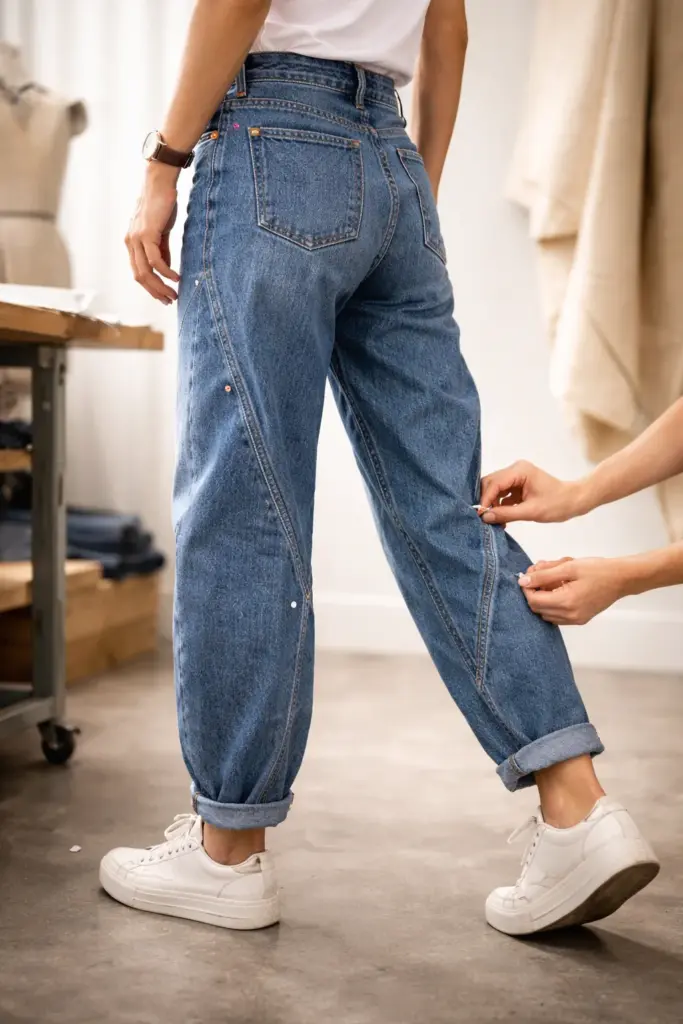
Хөл мушгирахыг олон хүн анзаардаг ч цөөхөн хүн төлөвлөдөг. Би өмнө нь мушгиралтыг согог гэж үздэг байсан бол одоо үүнийг хэрэгсэл гэж үздэг болсон, гэхдээ зөвхөн хяналттай үед л.
Би хөлийг төлөвлөсөн чиглэлд бага зэрэг эргэлдэж, өвдөг нь тогтвортой хэвээр байх бөгөөд өмссөн хүн тулааны даавууны оронд байгалийн хөдөлгөөнийг мэдрэхийн тулд ширхэгийн шугам болон оёдлын тэнцвэрийг зохицуулснаар мушгиралтыг хийдэг.
Жинсэн өмд яагаад мушгиралт үүсдэг вэ?
Жинсэн даавуу угаалга хийсний дараа хөдлөхийг хүсдэг. Эргэлдсэн бүтэц болон утасны таталт нь хөлийг татаж чаддаг. Хэрэв би үүнийг үл тоомсорлож, "төгс" шулуун ширхэгтэй хайчилбал угаалга нь оёдлыг эргүүлж чадна. Тиймээс би үүнийг эртнээс төлөвлөж, угаалга туршилтын дараа баталгаажуулдаг.
Миний мушгиралтыг тохируулдаг гурван газар
Би ганцхан арга барилд найддаггүй. Би гурван зүйлийг тэнцвэржүүлдэг.
1) Үр тарианы шугамын байршил
Би урд болон хойд хавтангийн жинхэнэ өнгөлгөө хаана байрлахыг шийддэг. Хэрэв би хэт их хазайвал их эргүүлэх хүч болон хачин хөшиг үүснэ. Хэрэв би огт хазайхгүй бол угаалт нь миний хувьд эргэлтийг шийдэж чадна. Би бага зэрэг, тогтвортой зорилго тавихыг зорьдог.
2) Оёдлын тэнцвэр
Би гадна талын оёдлын уртыг оёдлын зөвшөөрөгдсөн дараа оёдлын дотор талын урттай харьцуулдаг. Хэрэв нэг оёдол "хожвол" татагддаг. Мөн өвдөгний бүсийн муруйн уртыг шалгадаг. Жижиг зөрүү нь угааж, элэгдсэний дараа том болдог.
3) Хавтан хэлбэржүүлэх болон өвдөгний жолооны систем
Хөлний баррель нь ихэвчлэн өвдөг урагшаа харсан мэдрэмж төрүүлдэг. Заримдаа би өвдөгний үзүүрийг бага зэрэг урагшлуулж, дараа нь арын хөлний хэлбэржүүлэлттэй тохируулан хөлөө шулуун хэвээр нь байлгадаг.
| Хяналтын цэг | Би юу хэмжиж эсвэл тэмдэглэж байна | "Сайн" ямар харагддаг вэ | "Муу" ямар харагддаг вэ |
|---|---|---|---|
| Урд талын үр тариа | Гуянаас хормой хүртэл шугам | Бага зэрэг хазайлттай, хэмжээ бүр ижил байна | Хазайлт нь хэмжээнээс хамааран өөрчлөгддөг |
| Дотор оёдол ба гадна оёдол | Оёдлын шугамын урт | Бага хүлцэл дотор тэнцвэртэй | Том ялгаа нь эргүүлэх хүчийг үүсгэдэг |
| Өвдөгний ховилын байрлал | Урд болон хойд ховил | Ховилууд цэвэрхэн уулздаг | Ховилууд зодолдож, нулимснууд үүсдэг |
| Захын оёдлын байрлал | Хажуугийн оёдол хаана байрлана | Бага зэрэг урагшлах нь зүгээр | Оёдол хэт урагш орооцолдож байна |
Би мушгиралтыг хурдан аргаар хэрхэн туршиж үздэг вэ
Би зөвхөн урьдчилан угаахад итгэдэггүй. Би дор хаяж нэг угаалгын туршилтын дээж авахыг хүсдэг. Дараа нь жинсэн өмдний бүснээс өлгөөд хөлийг нь буулгадаг. Хажуугийн оёдол өвдөг болон хормой дээр хаана байгааг хардаг. Хэрэв оёдол төлөвлөснөөс илүү хөдөлвөл би нэг дор биш, харин ширхэг эсвэл оёдлын тэнцвэрийг тохируулдаг. Мөн алхаж, сууж, дээшээ гишгэж элэгдлийн туршилт хийдэг. Хэрэв дотуур оёдол өвдөг дээгүүр татагдах мэт санагдвал мушгиралт нь "загвар" биш, харин таагүй байдал юм.
Мария шиг худалдан авагчдад зориулсан тэмдэглэл
Хэрэв та энэ загварыг өөрийн брэндэд зориулж худалдаж авбал угаасны дараа мушгирах тэсвэрлэх чадварыг үйлдвэрээсээ асуугаарай. Үүнийг ирмэг дээрх оёдлын шилжилт гэж бичиж болно. Техникийн багц дахь энгийн мөр нь дараа нь маргалдахаас сэргийлнэ.
Ямар угаалгын сонголтууд нь торхны хэлбэрийг нураахын оронд хурц байлгах вэ?
Хэтэрхий хүчтэй угаалтаас болж сайн торхны хэв маяг эвдэрсэн байхыг би харсан. Мөн ухаалаг угаалтын төлөвлөгөө сул хэв маягийг хадгалсан байхыг би харсан. Тиймээс би үргэлж угаалга хийсний дараа биш, харин хээгээр нь угаалга хийдэг.
Хамгийн сайн угаалгын сонголтууд нь агшилт, эргүүлэх хүч болон зөөлөн байдлыг хянаснаар муруйлтыг хамгаалдаг тул жинсэн өмд нь дээд зэргийн харагдахын зэрэгцээ өмсөхөд тохиромжтой мэдрэмжийг төрүүлэхийн зэрэгцээ "дугуй" хэмжээтэй хэвээрээ байдаг.

Даавууны бодит байдлаас эхэл
Хэрэв даавуу хэт хөнгөн, хэт зөөлөн байвал торх нь үрчийж, үрчийж эхэлдэг. Хэрэв даавуу хэт хатуу, хэт хүнд байвал торх нь хатуу, чанга харагдаж болно. Би ихэвчлэн хэлбэрээ хадгалж чаддаг ч элэгдсэний дараа бага зэрэг сулардаг даавуу хүсдэг. Дараа нь би угаах бат бөх чанарыг нь үүнтэй тохируулдаг.
Угаах сонголтууд болон тэдгээр нь хэлбэржүүлэхэд юу хийдэг вэ
Би угаалгыг агшилт, эргүүлэх хүч, гарт мэдрэгдэх мэдрэмж гэсэн гурван зүйлд хуваадаг.
| Угаах арга | Агшилтын эффект | Эргэлтийн моментийн эрсдэл | Гарын мэдрэмжийн өөрчлөлт | Би үүнийг ашиглах үед |
|---|---|---|---|---|
| Угаах / цэвэрлэх | Бага, дунд | Бага | Жижиг зөөлрүүлэлт | Торхны хэлбэрийг сайжруулахын тулд |
| Ферментийн угаалга | Дунд зэрэг | Дунд зэрэг | Илүү зөөлөн | Энгийн даашинз авахыг хүссэн үедээ |
| Чулуун угаалт | Дундаас өндөр | Дундаас өндөр | Илүү зөөлөн | Зөвхөн хэв маяг хүчтэй байвал л |
| Цайруулагч / хүчтэй бүдгэрэлт | Тогтворгүй | Өндөр | Даавууг сулруулж болзошгүй | Загварлаг төрхийн хувьд илүү олон туршилт |
| Давирхай / 3D багц | Бага | Бага | Тогтсон бүсэд илүү хатуу | Муруй эсвэл нугалаасыг түгжихийн тулд |
Миний "эхлээд угаалга хийх" зуршил
Торхтой жинсэн өмдний хувьд би хоёр дээжийг эрт авахыг хүсдэг: нэгийг нь түүхийгээр нь эсвэл зайлж угаана, нэгийг нь угаана. Угаах нь зөвхөн өнгөөр ялгагдахаас илүү ихийг өөрчилдөг тул би үүнийг хийдэг. Энэ нь оёдлын шинж чанарыг өөрчилдөг. Энэ нь муруйн уншилтыг өөрчилдөг. Мөн оёдлын сул талыг илчилж болно. Хэрэв угаалга хийсний дараа гадна талын оёдол долгиж эхэлбэл би гурван шалтгааныг шалгадаг: гадна талын оёдлын хэт их муруйлт, хэт зөөлөн даавуу эсвэл оёдлын хурцадмал байдал. Би шинж тэмдгийг биш, харин шалтгааныг нь засдаг.
Угаалгын дараа муруйлтыг хэрхэн хадгалах вэ
Би гурван практик алхамыг ашигладаг.
1) Тодорхой үзүүлэлтүүдээр агшилтыг хянана
Би зорилтот агшилтын хязгаарыг чиглэлээр бичдэг. Хэрэв гажуудлын агшилт өндөр байвал өвдөг өргөгдөж, баррель бүс дээшээ шилждэг. Энэ нь харагдах байдлыг өөрчилдөг. Тиймээс би өгөгдлийг эрт агшихыг хүсч байна.
2) Угаах явцад оёдлыг хамгаална
Хэт түрэмгий угаах нь оёдлыг мушгируулж болзошгүй. Би угаах хугацаа, чулууны ачаалал, хатаалтыг тохируулаад дахин шалгадаг. Мөн оёдлын утас болон оёдлын төрөл нь үүнийг нугалахгүйгээр зохицуулж чадах эсэхийг шалгадаг.
3) Силуэтийг дэмжихийн тулд өнгөлгөөг ашиглана уу
Заримдаа би торхны эзэлхүүнийг хадгалахын тулд давирхай эсвэл гэрлийн тохируулгын аргыг ашигладаг. Би тав тухыг хүсч байгаа тул хэтрүүлэн хэрэглэдэггүй. Гэхдээ гол бүсэд бага зэрэг тулгуур хийснээр загварыг тавиур дээр дээд зэргийн харагдуулж чаддаг бөгөөд энэ нь жижиглэн худалдааны хувьд чухал юм.
"Ижил төрх, хямд үнэ"-ийг хүсдэг худалдан авагчид би юу гэж хэлдэг вэ?“
Хэрэв өртөг бага байвал би илүү их цаг хугацаа, эрсдэл шаарддаг хүнд угаалгын оронд илүү цэвэрхэн зайлж угаалгах, илүү сайн загварын тэнцвэрийг санал болгож байна. Хүнд угаалга нь зөвхөн өртөг төдийгүй урсах эрсдэлтэй. Хэрэв олон ширхэг эргүүлэх хүч эсвэл гажуудалтай бол нийт өртөг ямар ч байсан өснө.
Дүгнэлт
Муруй хэлбэржүүлэх, эргэлтийг хянах, бүтцийг хамгаалах угаалгын төлөвлөгөөг тохируулах үед би торхтой жинсэн өмд орчин үеийн харагдуулж, илүү сайн биед таарч, дээжээс эхлээд эзлэхүүн хүртэл тогтвортой хэвээр байна.
Яагаад би үүнийг бичиж байна вэ
Намайг Хятадын Труекунг хотын иргэн Ланси Чиа гэдэг. Би 200 гаруй ажилтантай үйлдвэр ажиллуулдаг бөгөөд зөвхөн B2B бөөний худалдаанд анхаарлаа хандуулдаг. Би загварлаг хувцас үйлдвэрлэдэг бөгөөд дэлхий даяарх брэндүүд болон супермаркетуудад OEM/ODM үйлчилгээ үзүүлдэг. Хэрэв та тогтвортой биетэй, тунгалаг угаалгатай, торх хэлбэртэй жинсэн өмд хүсч байвал би танд гэнэтийн зүйлийг багасгах загвар, дээж авах төлөвлөгөө гаргахад туслах болно. Та надтай [email protected] хаягаар холбогдож болох бөгөөд миний ажлын талаар https://truekung.com хаягаар дэлгэрэнгүй мэдээлэл авах боломжтой.
Үзэлт: 218