
Muchos compradores preguntan cómo personalizar una camiseta, pero a menudo se centran únicamente en el diseño. Una elección incorrecta de la tela, una solicitud de muestra poco clara o una mala comunicación con la fábrica pueden aumentar el costo y retrasar la entrega. La solución es comprender todo el proceso de producción antes de realizar un pedido.
Para fabricar camisetas personalizadas, prepara el diseño, elige tejido y método de producción, desarrolla una muestra, confirma los detalles de calidad y trabaja con una fábrica de ropa fiable para producción al por mayor.
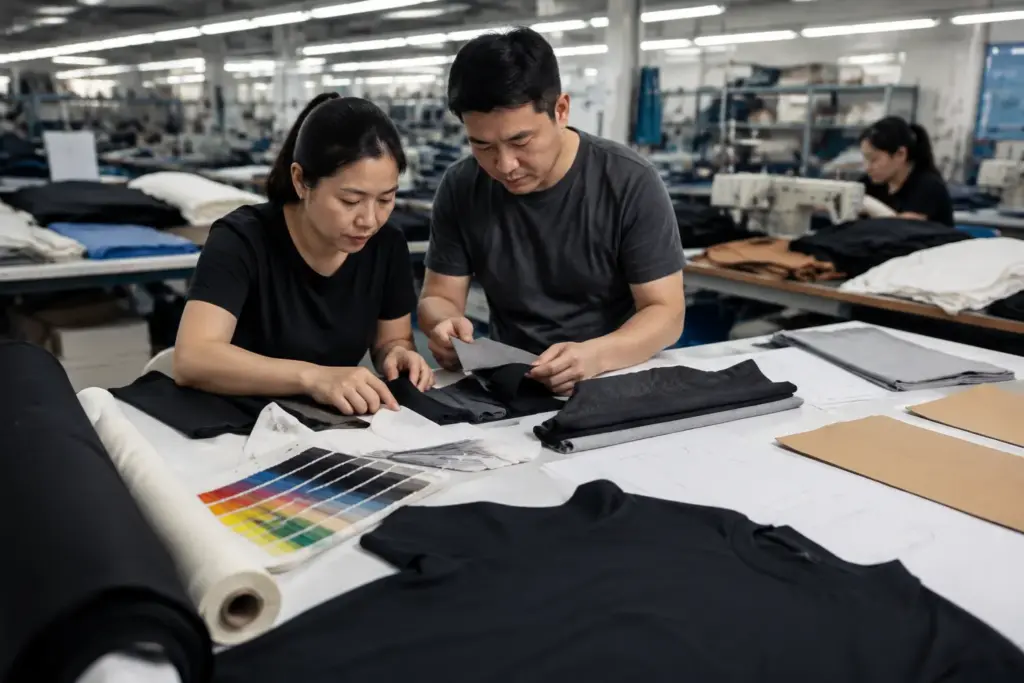
Soy Lancy Chia de Truekung. En mi experiencia en fábrica, he trabajado con compradores internacionales que necesitan producción de ropa OEM/ODM, productos de moda de marca propia y soporte para la venta al por mayor de prendas de vestir. Una camiseta personalizada parece sencilla, pero su producción implica muchas decisiones sobre tela, impresión, tallas, control de calidad, empaquetado y envío.
En esta guía explico cómo fabricar una camiseta personalizada desde la perspectiva de una fábrica. Veremos preparación del diseño, pasos de producción, factores de coste, selección de proveedor y errores comunes que los compradores deben evitar.
¿Cómo diseñar una camiseta personalizada antes de producirla?
Muchas marcas nuevas parten de una idea, pero no saben cómo convertirla en un producto listo para la producción. Un simple problema de diseño puede generar retrasos en el muestreo y costes adicionales. Un proceso de desarrollo claro ayuda a evitar errores.
Antes de la producción, debes preparar el concepto de la camiseta, el diseño, la preferencia de tela, los requisitos de tamaño, el método de impresión y las expectativas de calidad. La fábrica utiliza esta información para crear una muestra y un presupuesto precisos.
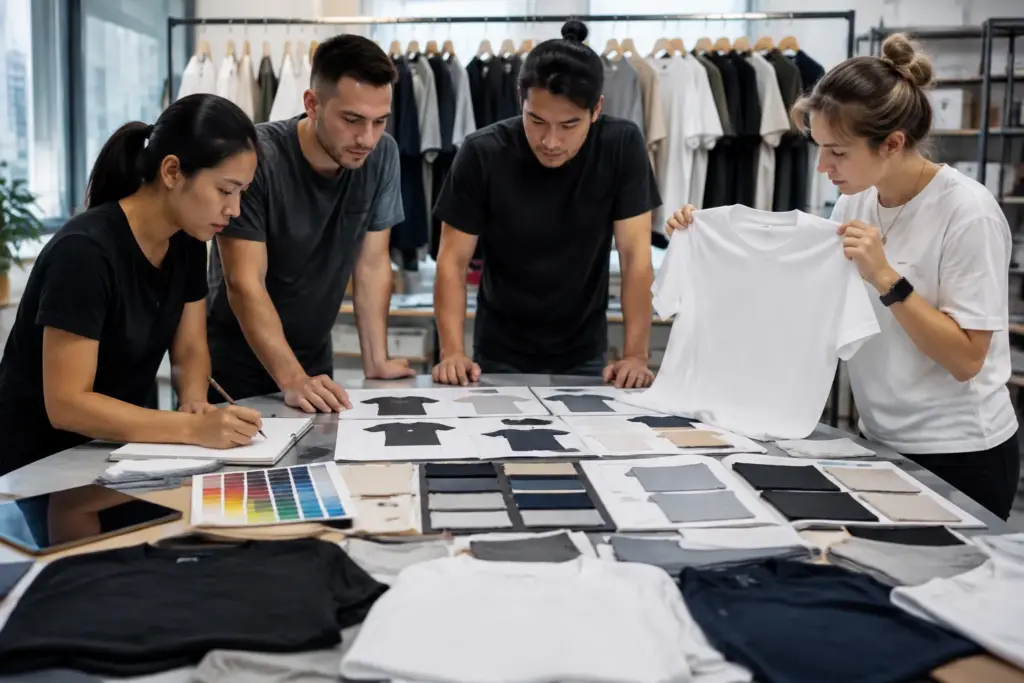
Visión de fábrica
Cuando un comprador pregunta cómo hacer una camiseta personalizada, suelo explicarle que la producción comienza antes de cortar la tela. El primer paso es la planificación del producto.
Una fábrica necesita comprender:
- Estilo de camiseta y mercado objetivo
- Composición y peso de la tela
- Preferencia de ajuste
- Requisitos de color
- Detalles de impresión o bordado
- Necesidades de etiquetado y embalaje
- Cantidad del pedido
Por ejemplo, una marca de ropa urbana podría necesitar una camiseta de algodón extragrande con una textura gruesa. Un comprador de supermercado, en cambio, podría necesitar una camiseta promocional básica con un presupuesto más ajustado. Estos dos productos tienen diferentes opciones de tejido, métodos de confección y precios.
La selección de la tela es una de las primeras decisiones importantes. Las opciones más comunes incluyen algodón, poliéster, mezclas de algodón y telas recicladas. El gramaje, la suavidad, el control de encogimiento y el rendimiento del color de la tela influyen en el producto final.
En el caso de las camisetas de marca propia, los compradores también deben preparar los detalles de la marca, como las etiquetas del cuello, las etiquetas colgantes, las etiquetas de cuidado y los requisitos de embalaje.
Riesgo para el comprador
Muchos compradores solo envían un logotipo y solicitan un precio. Esto genera problemas porque la fábrica desconoce el estándar del producto final.
He visto a compradores perder el tiempo porque solo explican la idea del diseño pero no proporcionan detalles sobre:
- La sensación esperada de la tela
- El precio de venta objetivo
- La posición en el mercado
- La fecha de entrega requerida
Una fábrica puede producir una muestra que parezca aceptable, pero que no cumpla con las expectativas del comprador.
Comprobación práctica
| Por qué importa | Por qué es importante | Mi recomendación |
|---|---|---|
| Fotos de referencia de camisetas | Ayuda a explicar la dirección del estilo | Envía productos similares que te gusten. |
| Requisitos de tejido | Afecta al precio y a la calidad. | Confirmar composición y peso |
| Archivo de ilustraciones | Afecta a la calidad de impresión. | Si es posible, proporcione archivos vectoriales claros. |
| Tabla de tallas | Evita problemas de ajuste | Confirme las mediciones antes de tomar la muestra. |
| Mercado objetivo | Influye en la elección del producto | Indique a la fábrica su grupo de clientes. |
Profundicemos
Diseñar una camiseta personalizada es un equilibrio entre la creatividad y la realidad de la producción. Muchas marcas de ropa nuevas se centran primero en el diseño, pero las fábricas consideran la estructura completa del producto.
En mi experiencia en la industria, un buen diseño de camiseta debe tener en cuenta el comportamiento de la tela, el método de costura, las limitaciones de impresión y el costo de producción. Por ejemplo, un gráfico impreso de gran tamaño puede verse atractivo, pero el método de impresión puede modificar significativamente el costo. La serigrafía funciona bien para grandes cantidades, mientras que la impresión digital puede ser más adecuada para pedidos pequeños o diseños complejos.
Un mismo diseño puede tener precios diferentes según el tipo de tejido. Una camiseta de algodón 100% con acabados de alta calidad costará más que una básica de mezcla de algodón y poliéster. Los compradores deben decidir si compiten por precio, calidad o valor del diseño.
Mi sugerencia es preparar una descripción detallada del producto antes de contactar con una fábrica. Cuanta más información proporcione el comprador, más fácil será para la fábrica sugerir el tejido, el método de producción y el precio adecuados. Un proveedor de ropa serio debería explicar estas opciones en lugar de limitarse a ofrecer un precio bajo.
¿Cómo fabrica una fábrica de ropa camisetas personalizadas?
Muchos compradores comprenden la fase de diseño, pero desconocen lo que sucede dentro de la fábrica. Sin comprender el proceso de producción, resulta difícil evaluar la capacidad del proveedor y el cumplimiento de sus compromisos de entrega.
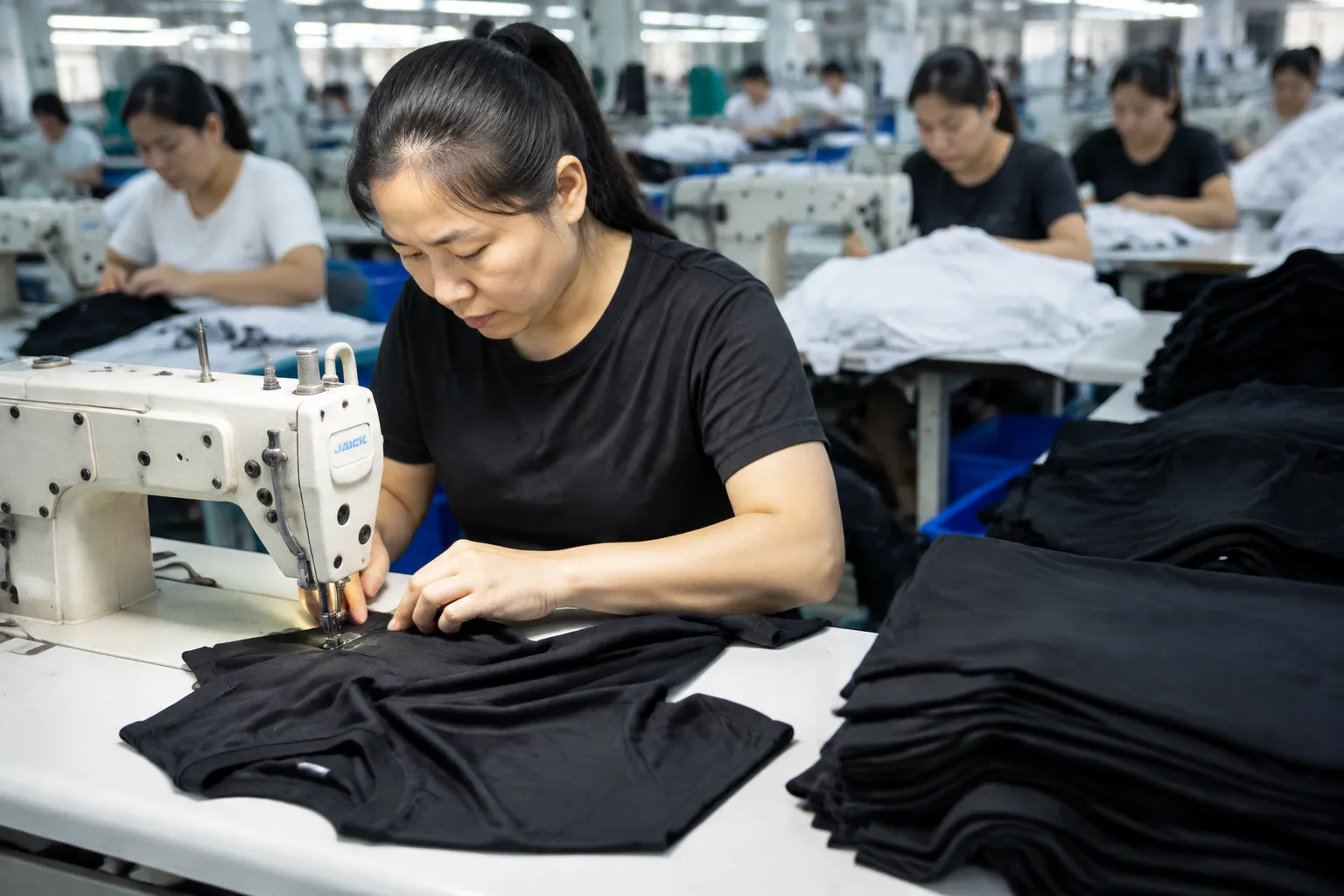
Una fábrica de ropa fabrica camisetas personalizadas en varias etapas: sourcing de tejidos, patronaje, desarrollo de muestras, corte, costura, estampación o bordado, inspección de calidad, embalaje y preparación de exportación.
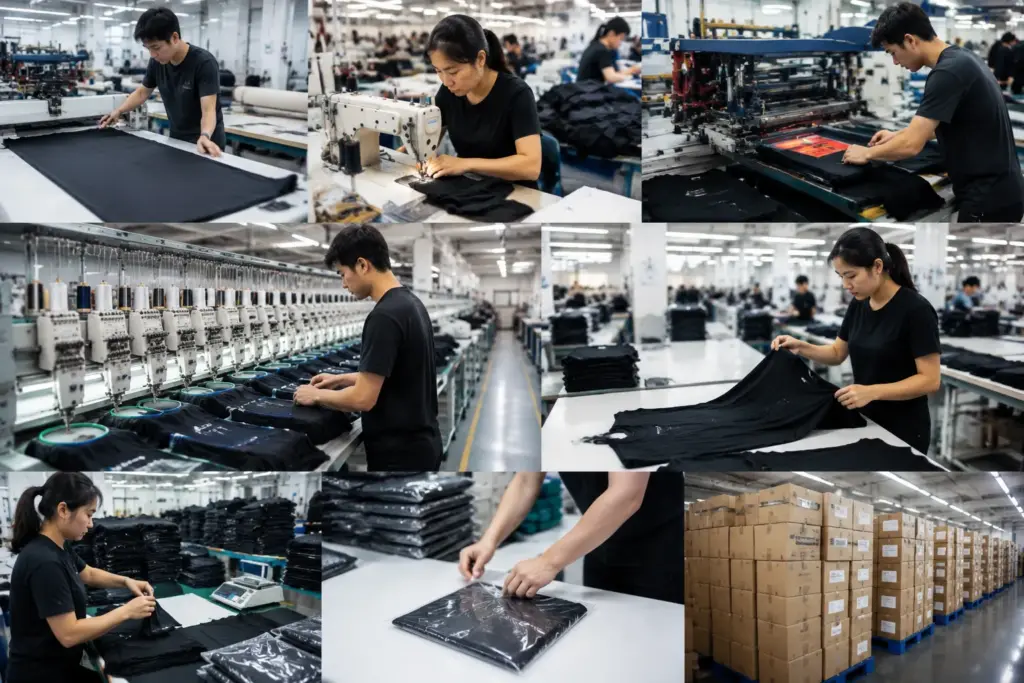
Visión de fábrica
La fabricación de camisetas personalizadas suele comenzar después de la fase de aprobación de la muestra.
El proceso de fábrica normalmente incluye:
- Confirmación de la tela
- Desarrollo de patrones
- Elaboración de muestras
- Aprobación del comprador
- Preparación de telas a granel
- Corte
- De coser
- Proceso de decoración
- Control de calidad
- Embalaje y envío
En Truekung, prestamos atención a la comunicación en cada etapa, ya que los pequeños errores pueden resultar costosos durante la producción en masa.
Por ejemplo, antes de cortar la tela a granel, la fábrica debe confirmar:
- Muestra aprobada
- Tabla de tallas final
- Estándar de color
- Colocación de etiquetas
- Posición de impresión
Puede parecer un detalle sin importancia, pero puede afectar a la entrega.
En la confección de prendas a medida, el muestreo es un paso fundamental. Una muestra permite al comprador y a la fábrica comprobar el ajuste, la confección, el aspecto y la calidad de la mano de obra antes de que comience la producción en masa.
Riesgo para el comprador
El mayor riesgo reside en elegir un proveedor que prometa una producción rápida sin explicar el proceso.
Algunos proveedores pueden omitir la confirmación detallada de las muestras o utilizar materiales diferentes durante la producción en masa. Esto puede generar problemas de calidad.
Los problemas comunes incluyen:
- Sensación de tela diferente a la de la muestra.
- Posición de impresión incorrecta
- Costuras desiguales
- Mediciones incorrectas
- Diferencias de color
Un presupuesto bajo no siempre es una buena oferta si el comprador tiene que dedicar tiempo extra a solucionar problemas.
Comprobación práctica
| Por qué importa | Por qué es importante | Mi recomendación |
|---|---|---|
| Proceso de aprobación de muestras | Confirma el estándar de producción | Apruebe todos los detalles antes de realizar el pedido al por mayor. |
| Calendario de producción | Controla el riesgo de entrega | Solicita un plazo de entrega realista. |
| procedimiento de control de calidad | Protege la calidad del producto | Confirmar los puntos de inspección |
| Velocidad de comunicación | Reduce los errores | Elija un proveedor que responda a sus necesidades. |
Profundicemos
La diferencia entre una empresa comercial y una fábrica propiamente dicha suele hacerse evidente durante la comunicación relacionada con la producción. Una fábrica comprende cómo la tela, la costura y el acabado influyen en el producto final.
Suelo pedir a los compradores que comprueben cómo explica el proveedor los problemas de producción. Un proveedor profesional debería explicar por qué surge un problema y cómo lo solucionará.
Por ejemplo, si un comprador solicita una camiseta extragrande muy suave a un precio bajo, la fábrica debe explicarle las ventajas y desventajas. Un tejido más grueso, un proceso de lavado especial o algodón de primera calidad pueden aumentar el costo y el tiempo de producción.
Una buena regla para tomar decisiones es sencilla: si un proveedor solo habla de precio pero no puede explicar los detalles sobre la tela, la muestra, el control de calidad y la entrega, el comprador debe tener cuidado.
La producción de camisetas personalizadas no se trata solo de fabricar un producto. Se trata de crear un producto reproducible que pueda fabricarse de nuevo con una calidad constante.
¿Cuánto cuesta fabricar camisetas personalizadas y elegir proveedor?
El precio es una de las primeras preguntas que se hacen los compradores, pero el proveedor más barato no siempre es la opción más adecuada. El coste real depende de muchos factores de producción.
El coste de fabricar camisetas personalizadas depende del tejido, cantidad, complejidad del diseño, método de estampación, nivel de personalización, packaging y requisitos de envío.
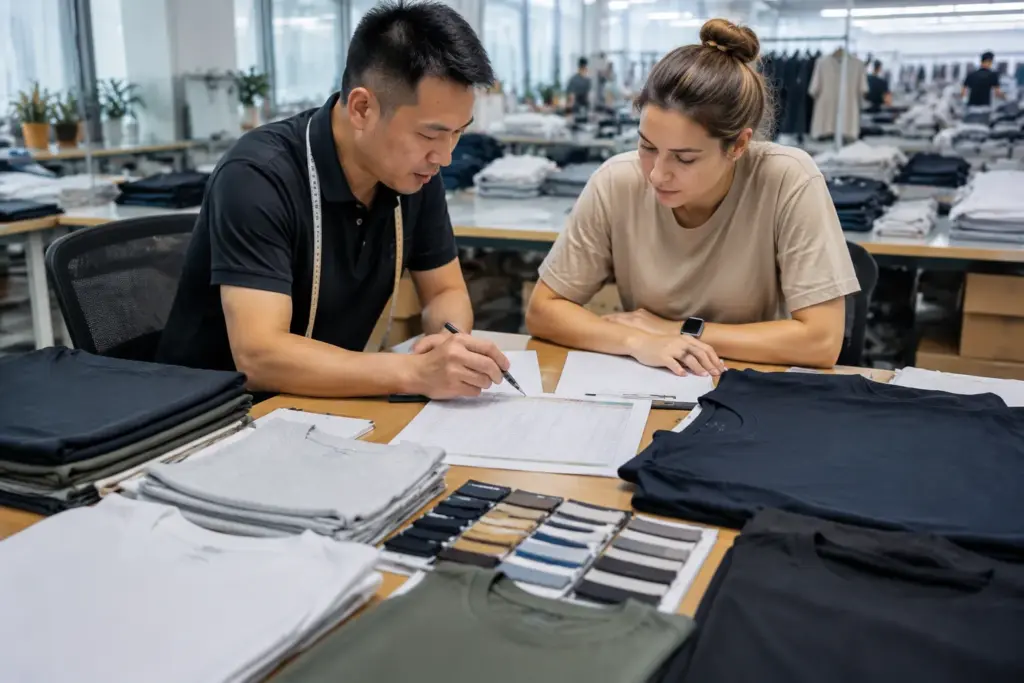
Visión de fábrica
Cuando los compradores solicitan un presupuesto, me fijo en algo más que el diseño de la camiseta.
Entre los factores de costo importantes se incluyen:
- Tipo de tela
- Peso de la tela
- Cantidad del pedido
- Número de colores
- Método de estampación
- Detalles de costura
- Etiquetas y embalaje
- Requisitos de calidad
La cantidad mínima de pedido (MOQ) también influye en el precio. Los pedidos grandes suelen permitir a las fábricas controlar mejor la compra de materiales y la eficiencia de la producción. Los pedidos pequeños pueden tener costes unitarios más elevados, ya que los costes de preparación se distribuyen entre menos unidades.
En el caso de las camisetas de marca propia, los compradores también deben tener en cuenta los costes de desarrollo, como las muestras, las etiquetas personalizadas y el embalaje especial.
Riesgo para el comprador
Muchos compradores comparan únicamente el precio unitario. Esto puede generar problemas posteriormente.
Un precio muy bajo puede significar:
- Menor calidad de la tela
- Personalización limitada
- Control de calidad deficiente
- Tiempo de corrección más prolongado
- Mala comunicación
He visto compradores que eligen proveedores basándose únicamente en el precio y que luego gastan más dinero porque los productos no cumplen con las expectativas del mercado.
Comprobación práctica
| Por qué importa | Por qué es importante | Mi recomendación |
|---|---|---|
| Cotización completa | Evite costos ocultos | Solicite información detallada sobre los precios. |
| Requisito de MOQ | Afecta a la inversión | Ajustar la cantidad a la etapa del negocio |
| Costo de la muestra | Muestra el proceso de desarrollo | Confirmar antes de comenzar |
| Condiciones de envío | Afecta al costo final | Analicen la logística con anticipación. |
Profundicemos
Elegir un proveedor de camisetas personalizadas es una decisión empresarial, no solo una decisión de compra. Los compradores deben considerar si el proveedor puede respaldar el crecimiento futuro.
Una pequeña marca puede empezar con un solo modelo de camiseta, pero más adelante necesitará más colores, nuevos diseños, chaquetas, sudaderas con capucha u otras prendas. Una fábrica que entienda de desarrollo y producción puede convertirse en un socio a largo plazo.
Mi sugerencia es comparar a los proveedores en función de la calidad de la comunicación, el conocimiento de la producción y el control de calidad, no solo del precio.
Un proveedor de ropa serio debe explicar el motivo de su presupuesto. Si el precio es más elevado, debe explicar si se debe a una mejor calidad de la tela, una confección más resistente, un control de calidad más riguroso o una mayor personalización.
¿Qué preparar antes de contactar con una fábrica de ropa en China?
Una consulta clara ayuda a la fábrica a dar un precio, plazo y sugerencia de producción más precisos.
| Información a preparar | Ejemplo | Por qué la fábrica lo necesita |
|---|---|---|
| Categoría de producto | Camiseta personalizada | Comprender los requisitos de producción |
| Fotos de referencia o ficha técnica | Estilos o dibujos similares | Confirmar la dirección del diseño |
| Tejido | Algodón 100%, 240 g/m² | Calcular el costo del material |
| Rango de tallas | S-XXL | Preparar el patrón y el escalado |
| Cantidad por estilo/color | 500 unidades por color | Estimar el plan de producción |
| Mercado objetivo | EE. UU., Europa, Australia | Sugiera estándares adecuados |
| Nivel de calidad | Básico o premium | Método de producción de cerillas |
| Embalaje | Bolsa de polietileno, caja de cartón, etiquetas | Calcular el costo final |
| Etiquetado | Etiquetas de marca y etiquetas de cuidado | Preparar la personalización |
| Fecha límite de entrega | Fecha de envío requerida | Planificar el cronograma de producción |
| Certificados | Documentos requeridos por el mercado | Comprobar la viabilidad |
| Precio objetivo | Rango de costos previsto | Sugiera opciones adecuadas |
Una consulta clara ayuda a la fábrica a proporcionar un precio, un cronograma y una propuesta de producción más precisos.
¿Cuándo pedir presupuesto a Truekung?
Si ya tienes una idea de producto, muestras de referencia, requisitos de marca o un plan wholesale, es buen momento para contactar con Truekung.
Truekung ofrece apoyo a los compradores que necesitan producción de ropa OEM/ODM, productos de moda de marca propia, comunicación de exportación estable y asistencia práctica de fábrica.
Puedes contactarme en:
Conclusión
Aprender cómo fabricar una camiseta personalizada ayuda a controlar calidad, coste y entrega. Con una preparación clara y buena comunicación con la fábrica, tu idea de T-shirt puede convertirse en un producto fiable para tu mercado.
Visitas: 132