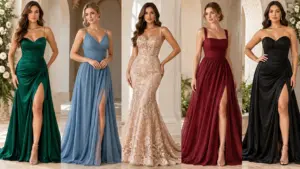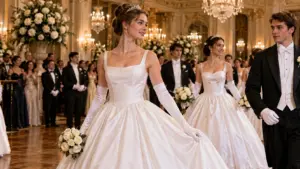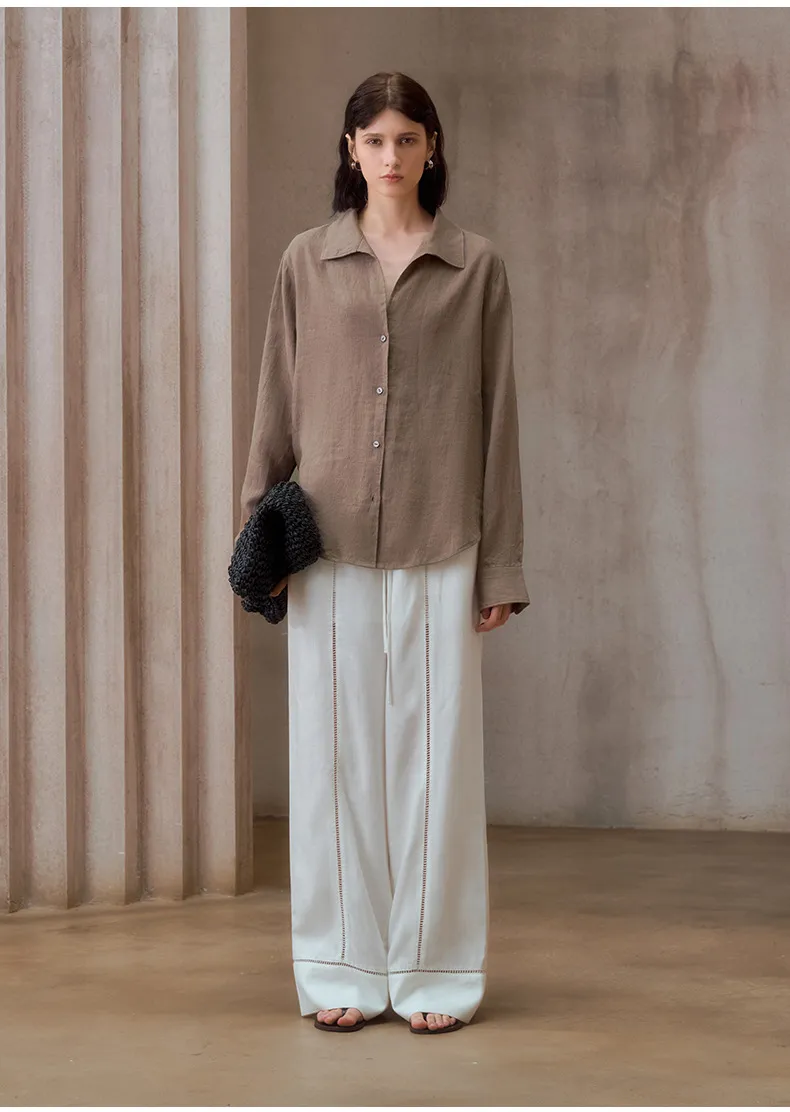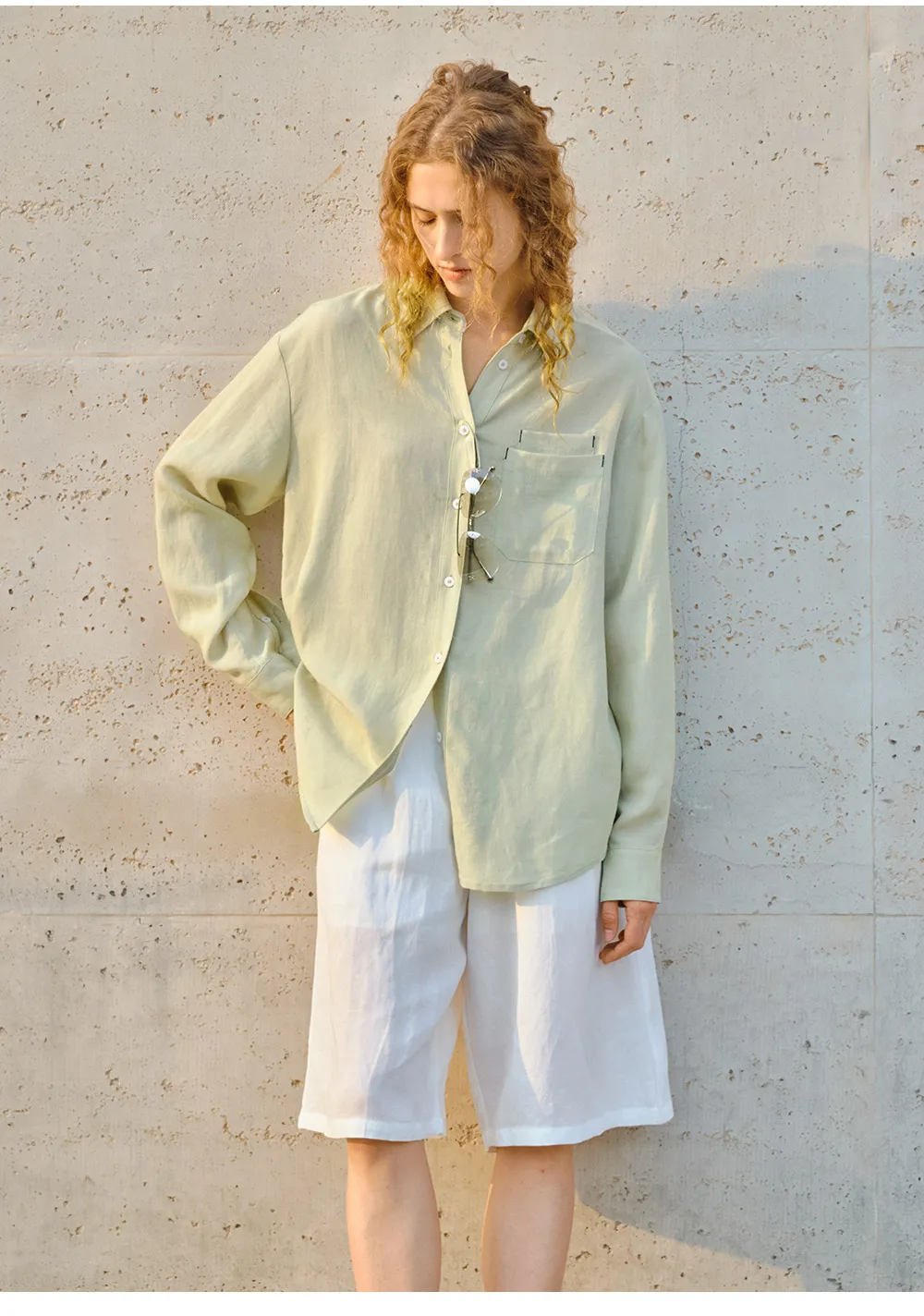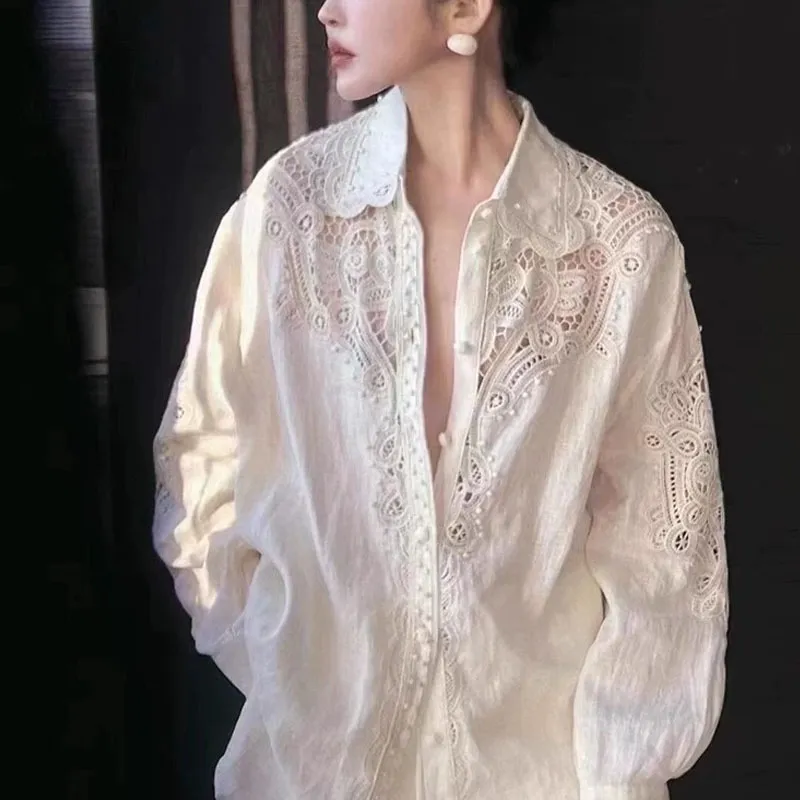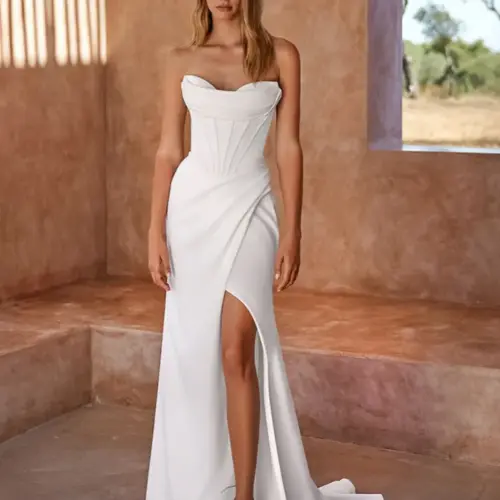

Et forkert stofvalg kan føre til langsom produktion, høje afkast og tabt profit fra et godt design. Jeg har set dette problem mange gange.
At vælge stof til bulkproduktion, match stoffet til beklædningsgenstanden, tjek GSM og fiberindhold, bekræft fabrikkens MOQ og leveringstid, test krympning og farve, og verificer overensstemmelsescertifikater, før du afgiver en stor ordre.
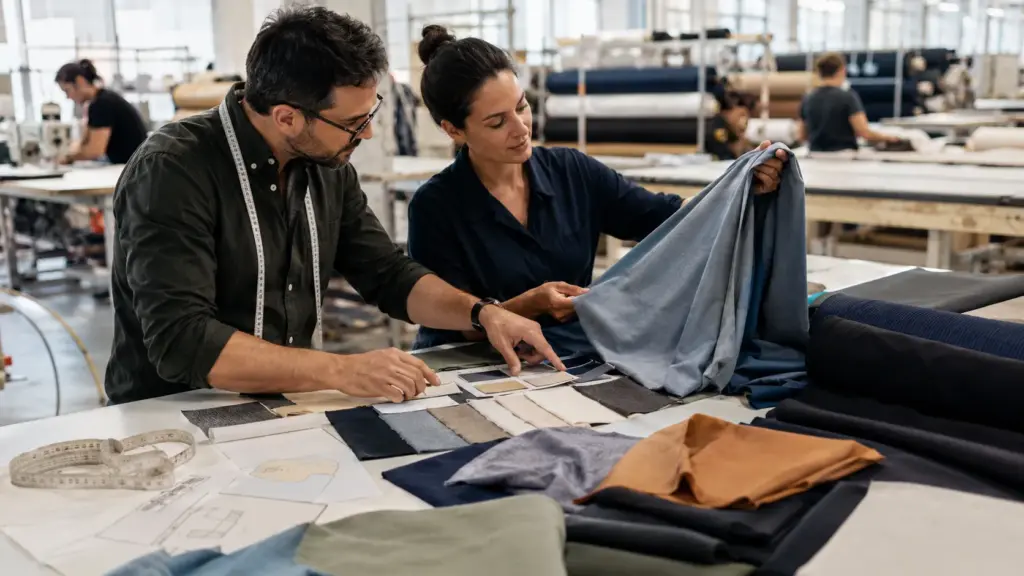
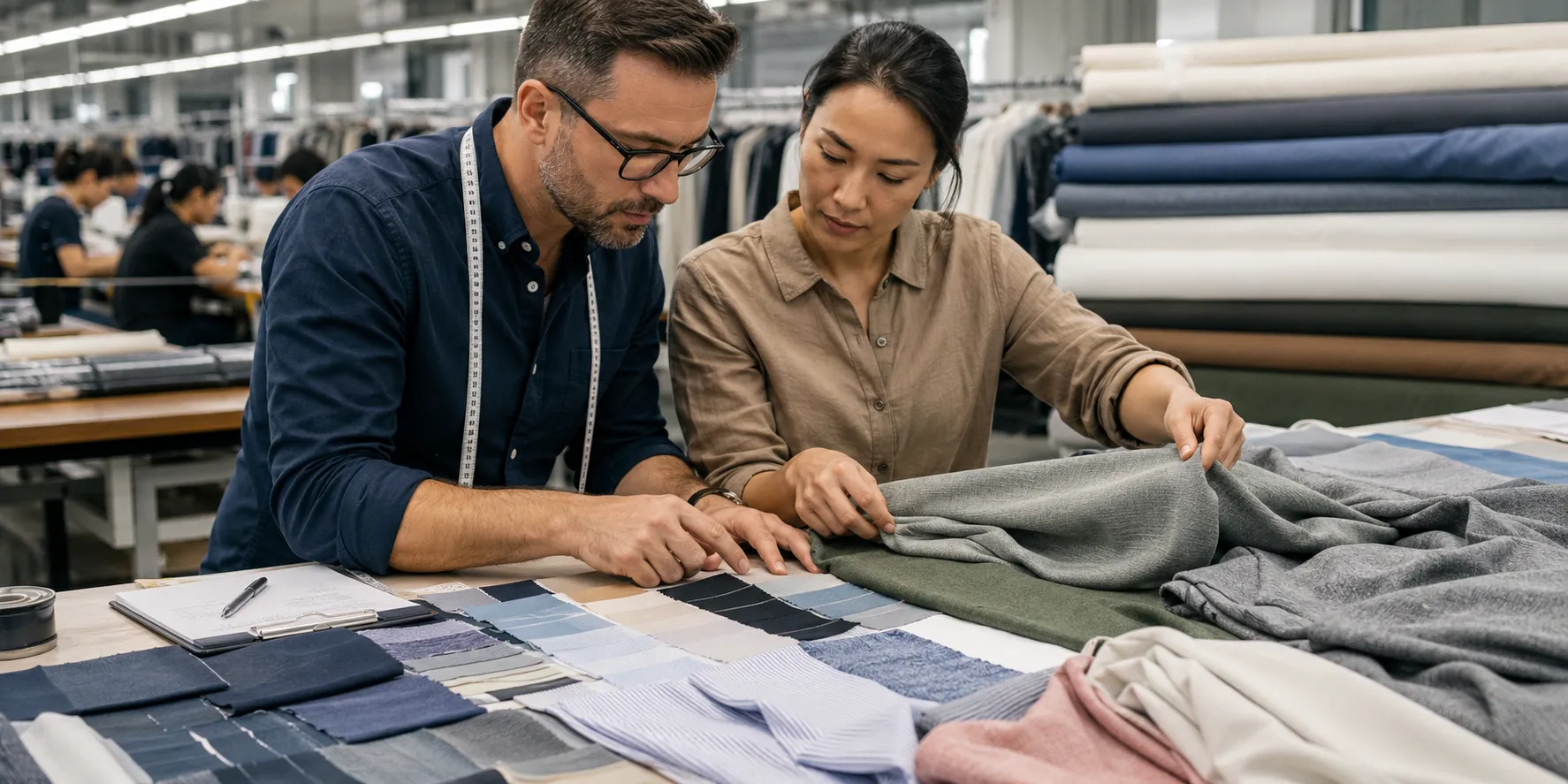
Når jeg hjælper en indkøber med at forberede en bulkordre på tøj, starter jeg ikke med den laveste pris. Jeg starter med tøjet. Et stof skal understøtte designet, målprisen, fabrikkens arbejdsgang og kundens endelige anvendelse. Jeg har lært, at stof ikke bare er et materiale. Det er grundlaget for hele ordren. Hvis grundlaget er forkert, bliver hvert senere trin sværere.
Hvordan matcher jeg stoffet til tøjets formål?
Mange købere forelsker sig i en stofprøve, men tøjet trænger måske til noget andet. Et smukt stof kan stadig gå i stykker i almindelig brug.
Jeg matcher stoffet med tøjets formål ved at kontrollere GSM, fald, stræk, fiberindhold og brugssæson. Let stof passer til sommertoppe. Mellem stof passer til skjorter og kjoler. Kraftigt stof passer til jakker, frakker og struktureret beklædning.
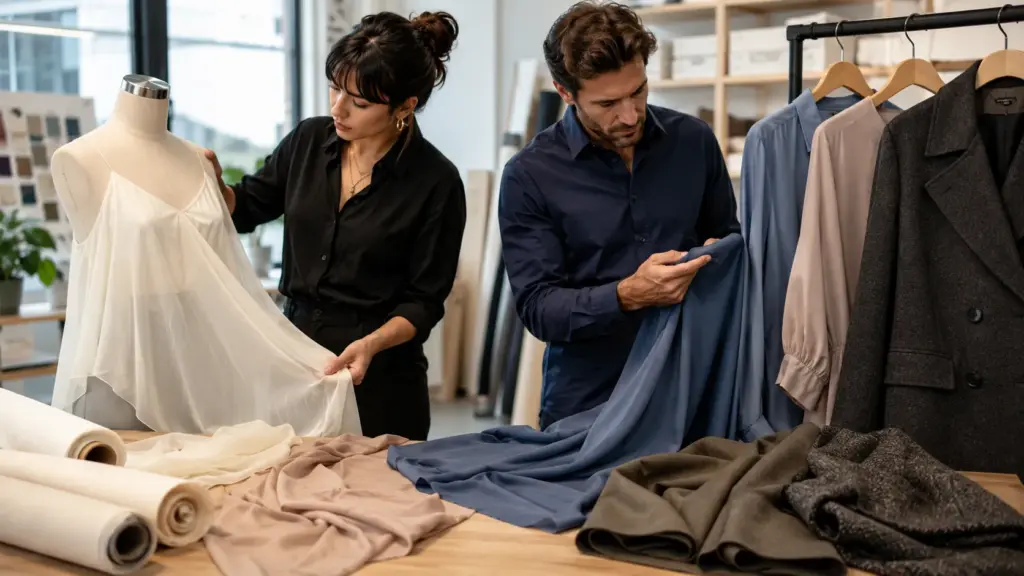
Det første jeg tjekker er GSM. GSM står for gram pr. kvadratmeter. Det fortæller mig stoffets vægt. En jersey på 120 GSM kan fungere godt til en sommer-T-shirt. Et stof på 260 GSM kan fungere bedre til en sweatshirt. En uldblanding på 400 GSM kan være den rigtige til en frakke. Jeg tjekker også, hvordan det føles på tøjet. Nogle stoffer ser tykke ud, men de føles løse. Nogle stoffer ser lette ud, men de har en fast struktur. Jeg spørger, hvad tøjet skal kunne. Skal det være blødt, varmt, åndbart, strækbart eller krølfrit?
Almindelig stofretning efter beklædningstype
| Beklædningstype | Fælles GSM-rækkevidde | Stoffokus | Risiko ved forkert |
|---|---|---|---|
| T-shirts | 100–200 GSM | Blødhed, åndbarhed, krympningskontrol | Vridning, dårlig form, gennemsigtigt stof |
| Kjoler | 120–250 GSM | Drapering, farve, komfort | Dårlig pasform, svag bevægelse |
| Sweatshirts | 240–380 GSM | Varme, børstning, form | Pilling, krympning, høje omkostninger |
| Jakker | 180–350 GSM | Struktur, belægning, styrke | Svag krop, dårlig afslutning |
| Frakker | 350+ GSM | Varme, struktur, foring matcher | Høje omkostninger, langsom syning |
Fiberindholdet betyder også noget. Bomuld føles naturligt og åndbart, men det kan krympe mere. Polyester er stærkt og stabilt, men det kan føles mindre eksklusivt. Viskose falder godt, men det kan krympe og krølle. En blanding kan ofte løse ét problem uden at skabe for mange omkostninger. For eksempel kan en blanding af bomuld og polyester opretholde komforten og samtidig forbedre stabiliteten. I mit fabriksarbejde spørger jeg normalt køberen om den endelige kunde først. En ordre i supermarkedet kan kræve holdbarhed og priskontrol. Et boutiquemærke kan kræve bedre fornemmelse og en fyldigere farve. Det bedste stof er ikke altid det dyreste. Det er det stof, der matcher tøjet og markedet.
Hvordan tjekker jeg møllen MOQ, leveringstid og stofpris?
Et stof kan se perfekt ud, men det kan stadig være umuligt at få tilsendt din ordre. MOQ, leveringstid og den samlede stofpris kan blokere hele planen.
Jeg tjekker stoffets MOQ, leveringstid, farvningstid, leveringstid, pris pr. meter, spild og stofudbytte før bulkproduktion. Dette hjælper mig med at vide, om stoffet kan understøtte ordreprisen og leveringsdatoen.
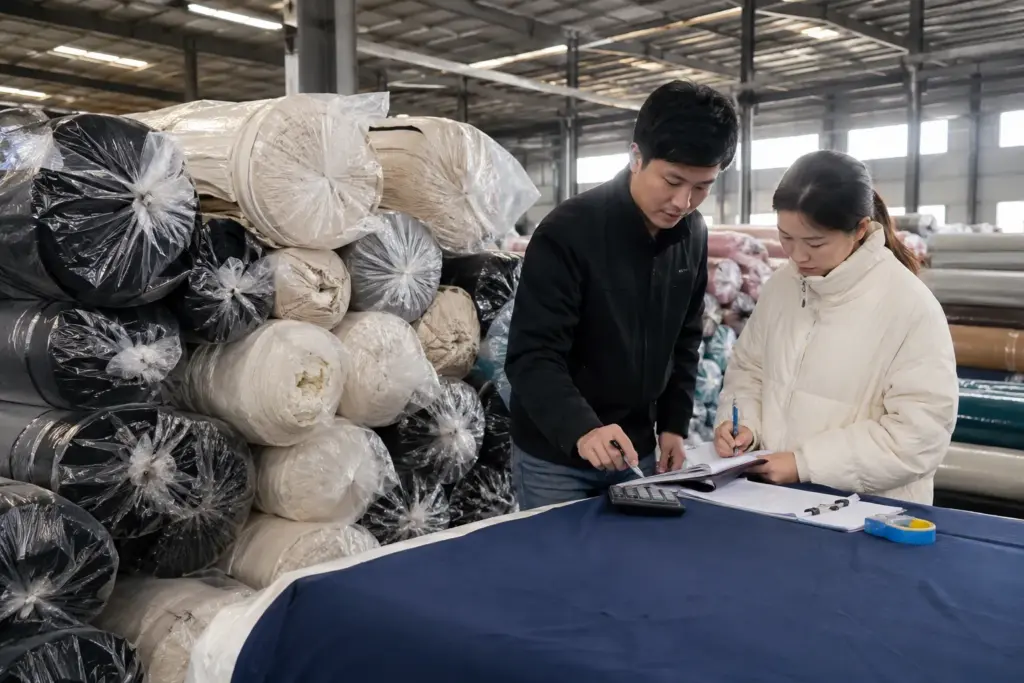
I bulkproduktion stiller jeg altid fabrikken et simpelt spørgsmål først. Kan I understøtte denne ordrestørrelse og denne leveringsdato? Nogle fabrikker har høje MOQ'er. De kan bede om 1.000 meter, 3.000 meter eller mere pr. farve. Dette kan være et problem for små mærkeordrer eller ordrer med mange farver. Hvis køberen kun ønsker 300 stykker pr. farve, kan en MOQ fra fabrikken skabe for meget stofrester. I så fald kan lagerstof eller jobberstof være bedre. Det kan give mindre farvefrihed, men det kan reducere risikoen.
Stofprisen er mere end prisen pr. meter
| Omkostningspost | Hvad jeg tjekker | Hvorfor det er vigtigt |
|---|---|---|
| Stofpris | Pris pr. meter eller yard | Det påvirker tøjprisen direkte |
| Stoffets bredde | Brugbar bredde efter kanter | Det påvirker markørens effektivitet |
| Stofforbrug | Meter brugt pr. beklædningsgenstand | Det bestemmer den reelle materialepris |
| Reduktion af spild | Ekstra stof til at reducere tab | Det beskytter bulkproduktion |
| MOQ | Minimumsbestilling pr. farve | Det påvirker pengestrømmen og aktierisikoen |
| Leveringstid | Greige, farvning, efterbehandling, forsendelse | Det påvirker leveringssæsonen |
Jeg beregner også stofudbyttet. Et billigt stof med smal bredde kan koste mere end et dyrere stof med bedre bredde. Et stof med striber, tern, luv eller retningsbestemt print kan kræve mere spild. Jeg har set købere kun sammenligne prisen pr. meter. Dette er risikabelt. Det virkelige spørgsmål er, hvor meget stof et færdigt beklædningsgenstand kræver. Jeg giver også plads til spild. Storskæring er aldrig perfekt. Der kan være kanttab, nuancetab, panelmatchning og afviste dele. Til udlandet sourcing, Jeg kontrollerer også leveringstiden omhyggeligt. Stofproduktion, farvning, efterbehandling, testning og forsendelse kan tage mange uger. En lav enhedspris er ikke nyttig, hvis varerne går glip af salgssæsonen. God stofplanlægning holder profit og timing under kontrol.
Hvorfor skal jeg teste stof, før jeg bestiller store mængder?
At springe stoftest over kan spare et par dage, men det kan ødelægge hele bulkordren. Stofproblemer bliver meget større efter tilskæring.
Jeg tester stof før jeg bestiller store mængder ved at tjekke farveprøver, prøve meter, krympning, farveaflejring, pilling, håndfølelse, laboratoriedyp og bulknuance. Testning beskytter pasform, farve, kvalitet, og kundernes tillid.
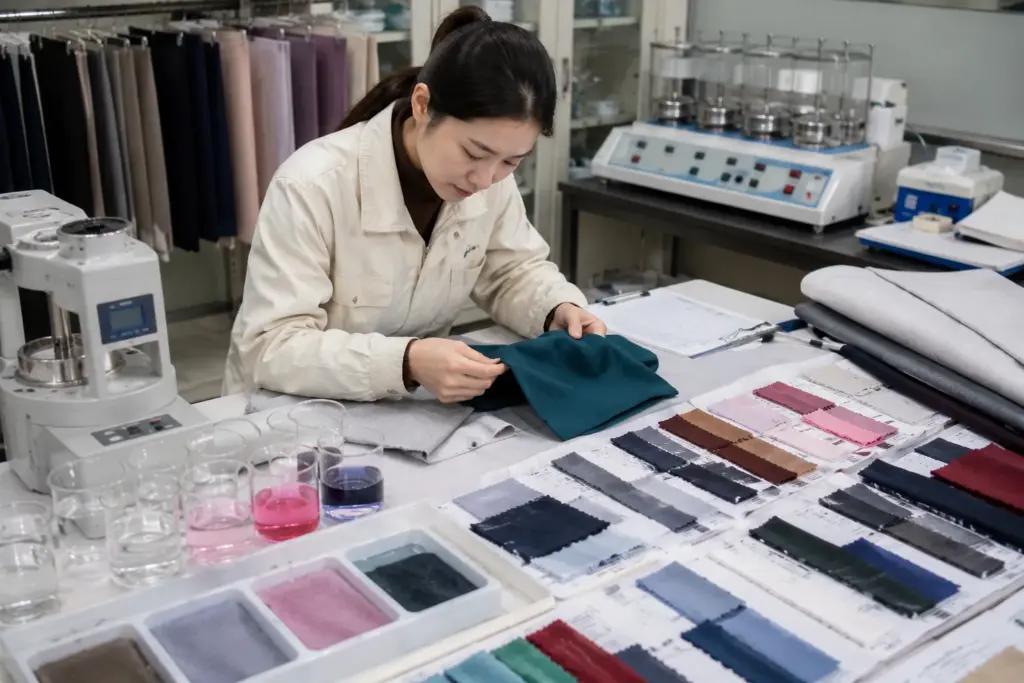
Jeg foreslår aldrig at gå direkte fra et foto til en ordre på stof i store mængder. Billeder skjuler mange problemer. Et stof kan se glat ud på et billede, men det kan føles ru i hånden. En farve kan se korrekt ud på en skærm, men den kan være anderledes i naturligt lys. Jeg beder altid om en fysisk farveprøve først. Ved vigtige ordrer beder jeg om prøvemeter. Prøvemeteren hjælper mønstermageren og syteamet med at forstå den faktiske stofopførsel.
Vigtige stoftests før bulkproduktion
| Prøve | Hvad jeg leder efter | Almindeligt problem |
|---|---|---|
| Håndfølelseskontrol | Blødhed, tykkelse, overflade | Stoffet føles billigere end forventet |
| Krympningstest | Størrelsesændring efter vask | Tøjet bliver for lille |
| Farveblødningstest | Farvestofstabilitet | Farvepletter andre dele |
| Godkendelse af laboratoriedypning | Farvematch før farvning af bulk | Forkert mærkefarve |
| Pillingtest | Overflade efter gnidning | Tøjet ser gammelt ud for hurtigt |
| Strækgendannelse | Stoffet vender tilbage efter strækning | Knæ, albuer eller manchetter deformeres |
| Massekontrol af skygge | Samme farve på tværs af ruller | Panelerne har farveforskel |
Krympning er en af de største risici. Bomuld, viskose, hør og nogle blandinger kan krympe efter vask. Hvis krympningen ikke kontrolleres, kan det færdige beklædningsgenstand gå i stykker, efter kunden har vasket det. Jeg tester også farveafblødning, primært for mørke farver, røde farver og denimlignende stoffer. Laboratoriedypninger er meget vigtige for brugerdefinerede farver. Jeg beder fabrikken om at levere fysiske farveprøver, ikke kun digitale farvebilleder. Så kan køberen sammenligne farven med mærkestandarden. Jeg kontrollerer også stofruller før skæring. Bulkruller kan have nuanceforskelle. Hvis skærerummet blander de forkerte ruller, kan ét beklædningsgenstand have to toner. Denne type fejl er svær at reparere. Testning føles langsom i starten, men det gør bulkproduktion hurtigere og sikrere.
Hvordan vælger jeg stof uden at miste kontrollen over kvalitet og overholdelse af regler?
Et billigt stof kan blive dyrt, hvis det ikke består en test, forårsager returneringer eller bruger falske certifikater. Overholdelse af reglerne skal kontrolleres tidligt.
Jeg vælger overholdelse af reglerne ved at bede om gyldige certifikater, testrapporter, fiberoplysninger, bevis for kemisk sikkerhed og leverandørhistorik. For bæredygtige ordrer eller eksportordrer tjekker jeg standarder som OEKO-TEX eller GOTS, når det er nødvendigt.
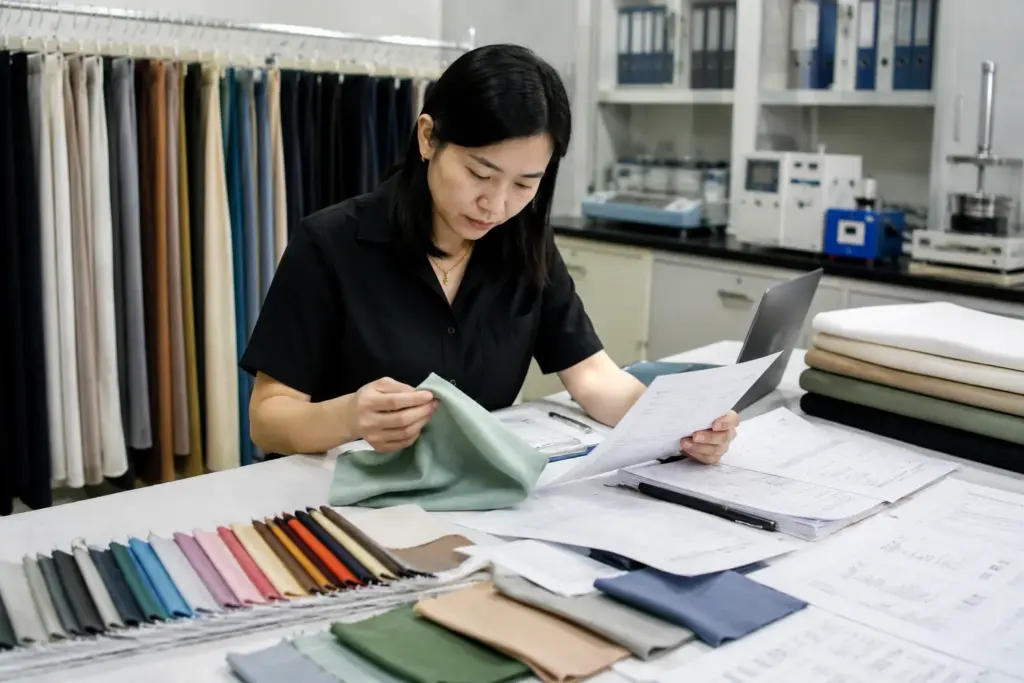
I forbindelse med eksport af tøj er overholdelse af tekstilernes krav ikke en lille detalje. Mange købere sælger til supermarkeder, kædebutikker eller onlineplatforme. Disse kunder kan have behov for kemikaliesikkerhed, fibernøjagtighed og ansvarlig indkøb. Jeg beder leverandører om certifikater tidligt, ikke efter bulkproduktion. Jeg kontrollerer også, om certifikatet tilhører den rigtige fabrik. Nogle leverandører fremviser certifikater fra en anden virksomhed. Dette skaber risiko for køberen og for fabrikken. Jeg har mødt købere, der er bekymrede over falske certifikater, og jeg forstår denne bekymring. En god leverandør bør være villig til at dele klare dokumenter og forklare testprocessen.
Overholdelseskontroller jeg bruger før bulk
| Overholdelsespunkt | Hvad jeg beder om | Hvorfor jeg spørger |
|---|---|---|
| Fiberindhold | Rapport om stofsammensætning | For at undgå forkerte etiketteringspåstande |
| Kemisk sikkerhed | OEKO-TEX eller testrapport | For at reducere risikoen for skadelige stoffer |
| Økologisk påstand | GOTS-certifikat, hvis nødvendigt | For at støtte økologisk markedsføring |
| Genbrugskrav | Genbrugsbestandigt indhold | For at understøtte bæredygtighedspåstande |
| Mølleidentitet | Navn på certifikatindehaver | For at undgå falske dokumenter |
| Eksportmarkedets behov | Købers landsstandard | For at undgå told- eller detailproblemer |
Kvalitetskontrol omfatter også produktionsadfærd. Nogle stoffer er svære at sy. Nogle stoffer glider under skæring. Nogle stoffer kræver specielle nåle, foring, fiksering eller vaskekontrol. Jeg taler med produktionsteamet, før jeg bekræfter stoffet. Et stof kan bestå køberens håndfølelsestest, men stadig gøre sylinjen langsommere. Langsom syning øger lønomkostningerne og leveringstrykket. Derfor kan jeg godt lide at forbinde stofvalg med fabrikkens kapacitet. Hos Truekung tænker jeg på stof som en del af det fulde produktionssystem. Køberen har brug for et godt produkt. Fabrikken har brug for stabilt materiale. Salgssæsonen har brug for levering til tiden. Når disse tre sider matcher, har ordren en meget højere chance for succes.
Hvordan træffer jeg den endelige beslutning om stof til bulkproduktion?
For mange muligheder kan forvirre en køber. En simpel beslutningsproces hjælper mig med at sammenligne stoffer med færre følelser og mere kontrol.
Jeg træffer den endelige beslutning om stoffet ved at sammenligne tøjets formål, målpris, MOQ, leveringstid, testresultater, syadfærd og overholdelse af regler. Jeg godkender kun stof i løs vægt, når stoffet understøtter designet og forretningsplanen.
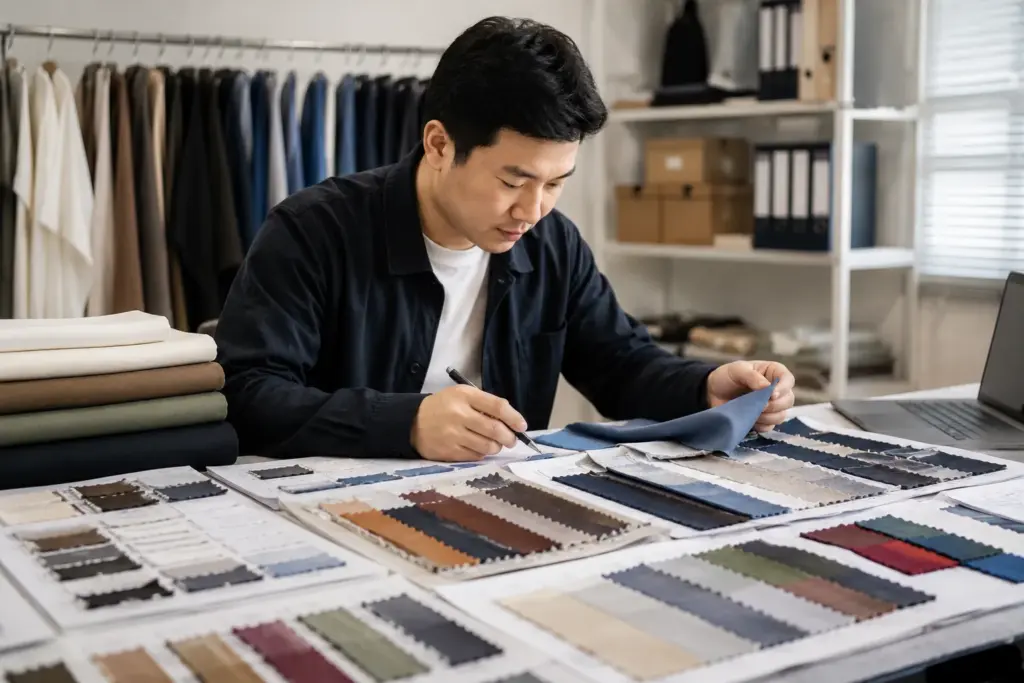
Når jeg træffer en endelig beslutning om stof, ser jeg ikke kun på én faktor. Jeg bruger en simpel score i tankerne. Først spørger jeg, om stoffet passer til designet. For det andet spørger jeg, om det passer til målkunden. For det tredje spørger jeg, om det passer til prisen. For det fjerde spørger jeg, om fabrikken kan levere til tiden. For det femte spørger jeg, om testning er acceptabelt. Denne proces holder køberen væk fra følelsesmæssige beslutninger. Et stof kan føles meget attraktivt, men det kan være for dyrt, for langsomt eller for ustabilt.
Min endelige tjekliste til godkendelse af stof
| Spørgsmål | Godt tegn | Advarselsskilt |
|---|---|---|
| Passer det til tøjet? | Korrekt vægt, fald og håndfølelse | Ser pæn ud, men passer ikke til stilen |
| Passer det til prisen? | Beklædningsomkostninger understøtter marginen | Stofomkostninger giver ingen profit |
| Er MOQ rimelig? | Ordremængden matcher fabrikkens MOQ | For meget reststof |
| Er leveringstiden sikker? | Stoffet ankommer før skæreplanen | Stoffet ankommer nær forsendelsesdatoen |
| Bestod den testen? | Krympning og farve er stabile | Farveblødning eller høj krympning |
| Kan fabrikken sy det? | Stabil klipning og syning | Glidning, rynkning eller nåleskade |
| Er dokumenterne klare? | Gyldige rapporter og certifikater | Manglende eller uklare certifikater |
Jeg foreslår også at beholde backup-stof, når ordren er vigtig. Backup-stoffet bør ikke være tilfældigt. Det skal have ensartet vægt, føling, farveretning og prisniveau. Dette er nyttigt, når det første stof har problemer med MOQ, mislykkede laboratorietests eller lang leveringstid. For købere, der køber fra Kina, er kommunikation også meget vigtig. Et tydeligt stofark hjælper meget. Det bør indeholde stoffets navn, sammensætning, GSM, bredde, farve, finish, MOQ, leveringstid, testbehov og målpris. Dette dokument reducerer misforståelser mellem køber, leverandør, mølle og fabrik. Efter min erfaring er det bedste stofvalg ikke et gæt. Det er en kontrolleret beslutning baseret på beklædningsgenstandens behov, forretningsmæssige begrænsninger og afprøvede fakta.
Konklusion
Det rigtige stof beskytter design, omkostninger, levering og tillid. Jeg vælger det ud fra formål, test, leverandørkontrol og klar produktionsplanlægning.
Hvis du forbereder en bulkbestilling af tøj, og du ikke er sikker på, hvilket stof der er sikkert til dit design, kan jeg hjælpe dig med at kontrollere stoffets retning, MOQ, omkostninger, testbehov og produktionsrisiko, før du afgiver ordren.
Hos Truekung arbejder mit team og jeg med mærker, grossister og supermarkeder om OEM/ODM-tøjproduktion. Du kan kontakte mig på [email protected] eller besøge https://truekung.com for at drøfte dit næste projekt med tøj i store mængder.
Visninger: 114